

Harbor Maintenance Fee HMF Explained for Ocean Freight to the USA
- Verified & Reviewed · Last updated May 2026
The Harbor Maintenance Fee, or HMF, is a U.S. customs-related fee charged on certain commercial cargo imported by ocean freight. If your goods are shipped to the United States by sea, HMF is usually calculated based on the declared cargo value and paid during customs clearance.
This guide explains how HMF is calculated, who pays it, when it applies, and how it differs from the Merchandise Processing Fee, helping importers estimate China-to-USA ocean freight costs more accurately.
Ocean Freight Imports
U.S. Customs Fees
HMF vs MPF

- Experienced China-based logistics specialists
Table of Contents
What Is the Harbor Maintenance Fee?
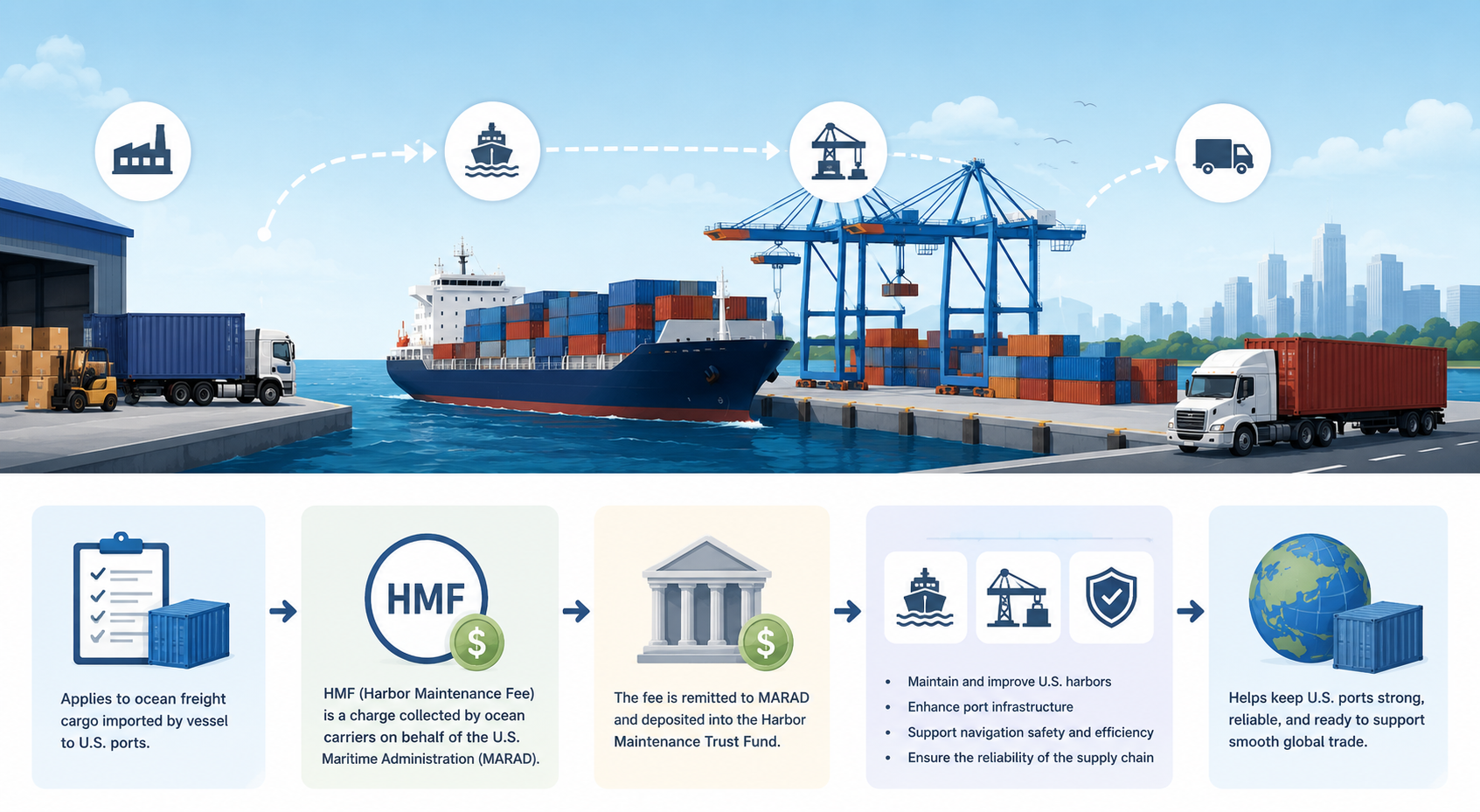
The Harbor Maintenance Fee, also known as HMF, is a U.S. customs-related fee imposed on certain commercial cargo that moves through covered U.S. ports by vessel. For importers using ocean freight to ship goods to the United States, HMF is one of the common charges that may appear during customs clearance.
The fee is collected by U.S. Customs and Border Protection and is connected to the use and maintenance of U.S. harbors, channels, and port infrastructure. It is not a freight charge from the carrier, and it is not the same as terminal handling, customs duty, or final delivery cost.
For most ocean freight imports, the Harbor Maintenance Fee is calculated based on the cargo value declared for customs purposes.
Why Does HMF Exist?
The Harbor Maintenance Fee helps support the Harbor Maintenance Trust Fund, which is used for harbor maintenance, dredging, navigation channels, and related port operation needs. These activities help keep U.S. ports and harbors safe and usable for commercial vessels.
The fee is linked to the Water Resources Development Act and related U.S. port funding rules. In simple terms, when imported cargo uses U.S. port infrastructure, HMF helps fund part of the maintenance and construction work needed to keep those ports operating.
For importers, the practical point is simple: HMF is a port-use cost connected to ocean freight, not a shipping company surcharge.
When Does HMF Apply?
HMF usually applies when imported cargo is unloaded from a commercial vessel at a covered U.S. port. This includes many standard ocean freight shipments entering the United States for consumption, warehousing, or foreign trade zones.
Common examples include:
FCL container shipments from China to the USA
Commercial cargo unloaded at U.S. seaports
Import shipments entered through ports such as Los Angeles, Long Beach, New York, Savannah, Houston, Oakland, Seattle, and Miami
In most cases, if the shipment arrives by sea and the unloading occurs at a covered U.S. port, the cargo is subject to HMF.
HMF usually does not apply to air freight or express courier shipments because those shipments do not arrive by ocean vessel. However, other customs costs such as Merchandise Processing Fee, applicable duties, taxes, and broker fees may still apply.
How Is HMF Calculated?
The Harbor Maintenance Fee (HMF) is calculated as a percentage of the declared cargo value. The standard rate is 0.125%, or 0.00125 in decimal form.
Formula: HMF = Cargo Value × 0.00125
Example Calculations:
| Cargo Value | HMF Calculation | HMF Amount |
|---|---|---|
| $10,000 | $10,000 × 0.00125 | $12.50 |
| $100,000 | $100,000 × 0.00125 | $125.00 |
| $300,000 | $300,000 × 0.00125 | $375.00 |
Note: HMF is based on the cargo’s declared commercial value, not the ocean freight rate. Ensure your commercial invoice shows the correct product value, description, quantity, and currency to calculate the fee accurately.
Who Pays the Harbor Maintenance Fee?
For normal ocean freight imports, the importer or Importer of Record usually pays the Harbor Maintenance Fee. In practice, the customs broker calculates the fee and files it with the customs entry.
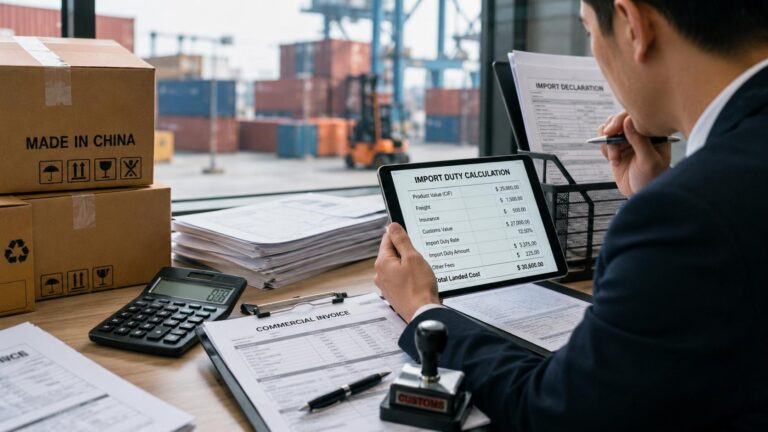
The HMF amount may appear on the entry summary, usually through CBP Form 7501 or its electronic equivalent. It is paid together with normal customs charges, such as duty, taxes, Merchandise Processing Fee, and other related expenses.
The final cost responsibility depends on the shipping terms:
| Shipping Term | Who Usually Pays HMF? |
|---|---|
| FOB | U.S. importer usually pays |
| CIF / CFR | U.S. importer usually pays import customs costs |
| DAP | Buyer/importer usually pays duty, MPF, HMF, and taxes |
| DDP | Seller or logistics provider may include HMF in the total quote |
If you are using DDP shipping from China to the USA, always confirm whether the quote includes duty, MPF, HMF, customs clearance, and final delivery.
HMF vs MPF: What Is the Difference?
Many importers confuse HMF with MPF, but they are different fees.
| Item | HMF | MPF |
|---|---|---|
| Full Name | Harbor Maintenance Fee | Merchandise Processing Fee |
| Main Purpose | Supports harbor and port maintenance | Covers customs processing |
| Applies To | Mainly ocean freight imports | Most formal import entries |
| Transport Mode | Sea freight | Ocean, air, truck, rail, and other modes |
| Calculation Basis | Cargo value | Customs entry value, with specific rules |
| Common for China-USA Ocean Freight | Yes | Yes |
For ocean freight shipments to the USA, both HMF and Merchandise Processing Fee may apply. HMF is connected to port use and harbor maintenance, while MPF is connected to customs processing by Customs and Border Protection.

Are There HMF Exemptions?
Most commercial ocean freight imports are subject to HMF, but some exemptions and special situations may apply. These can include certain domestic shipments, specific movements involving Alaska or the mainland, some government cargo, and other limited cases.
HMF is also no longer collected on exports, although it may still apply to imports, some domestic shipments, foreign trade zone admissions, and passengers in specific vessel-related situations.
For regular businesses importing goods from China to the USA by ocean freight, the safest assumption is that HMF will usually apply unless your customs broker confirms that the shipment qualifies for an exemption.
Why HMF Matters for Importers
HMF is usually not the largest cost in international shipping, but it is still part of your total landed cost. If you only calculate product value, ocean freight, and duty, your final import cost may be incomplete.
A more complete cost estimate should include:
Product value
Ocean freight
Customs duty
Merchandise Processing Fee
Harbor Maintenance Fee
Customs broker fee
Bond fee
Destination charges
Final delivery
For high-value cargo or regular container imports, even small fees can become meaningful over time.
Work with Tonlexing for Ocean Freight to the USA
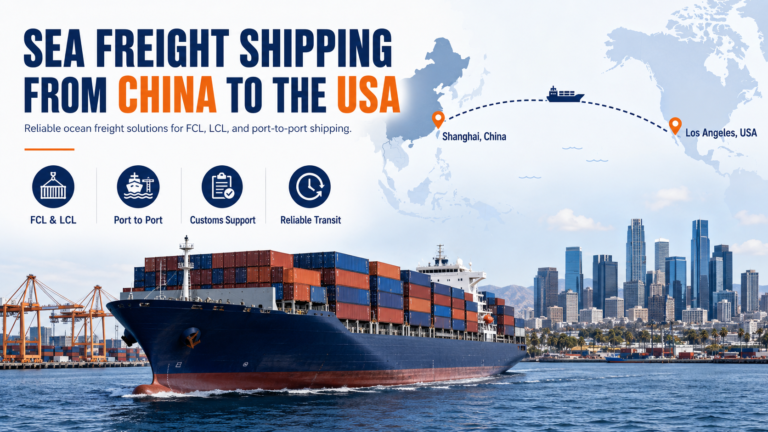
Tonlexing helps importers arrange ocean freight from China to the USA, including FCL, LCL, DDP shipping, customs clearance, and door-to-door delivery.
Our team can help you estimate the full shipping cost, including ocean freight, customs duty, MPF, HMF, destination charges, and final delivery. If you are not sure whether HMF is included in your current quote, send us your cargo details, commercial invoice value, supplier location, and U.S. destination. We can help you check the cost structure before shipping.
Frequently Asked Questions
The Harbor Maintenance Fee is a U.S. customs-related fee charged on certain commercial cargo imported by ocean vessel through covered U.S. ports.
HMF is calculated as 0.125% of the cargo value. The formula is Cargo Value × 0.00125.
Yes. If goods are shipped from China to the USA by ocean freight and unloaded at a covered U.S. port, HMF usually applies.
Usually no. HMF is mainly related to cargo transported by ocean vessel. Air freight may still be subject to MPF, customs duty, taxes, and other fees.
No. HMF is related to harbor maintenance and ocean cargo. MPF is a separate Merchandise Processing Fee related to customs processing.
Related U.S. Import & Customs Guides
CTA Bullet Points
- HMF, MPF, duty and customs fee estimate
- China-to-USA FCL and LCL ocean freight support
- Clear landed cost before your shipment arrives
Send us your cargo value, product details, supplier location, and U.S. destination. Tonlexing can help estimate ocean freight, HMF, MPF, customs duty, and door-to-door delivery costs before shipping.