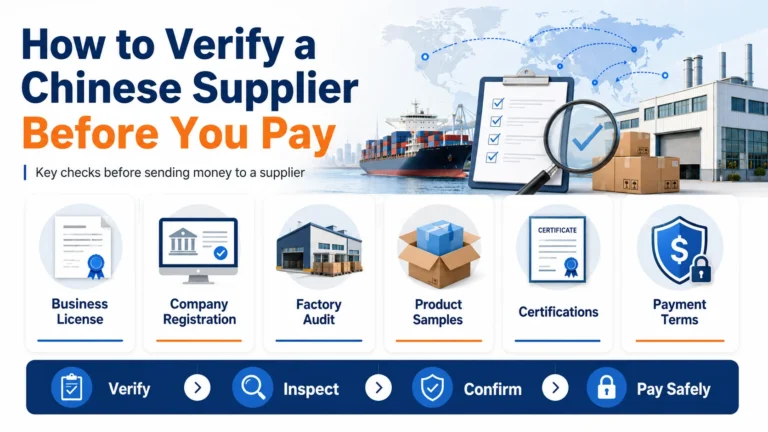
Related Guide
How to Verify a Chinese Supplier Before You Pay
How to Verify a Chinese Supplier Before You Pay Verified & Reviewed · Last updated July 2026 Before you pay a Chinese supplier, do not rely only...
Read guide →

China is a major sourcing market for ceramic and porcelain tiles, offering floor tiles, wall tiles, marble-look products, wood-look tiles, outdoor tiles, and large-format slabs for residential and commercial projects.
This guide explains how to import ceramic tiles from China, from finding suppliers and confirming specifications to quality inspection, landed cost, FCL or LCL shipping, packaging, customs clearance, and final delivery.
Ceramic Tile Sourcing
FCL & LCL Shipping
Customs & Import Duties
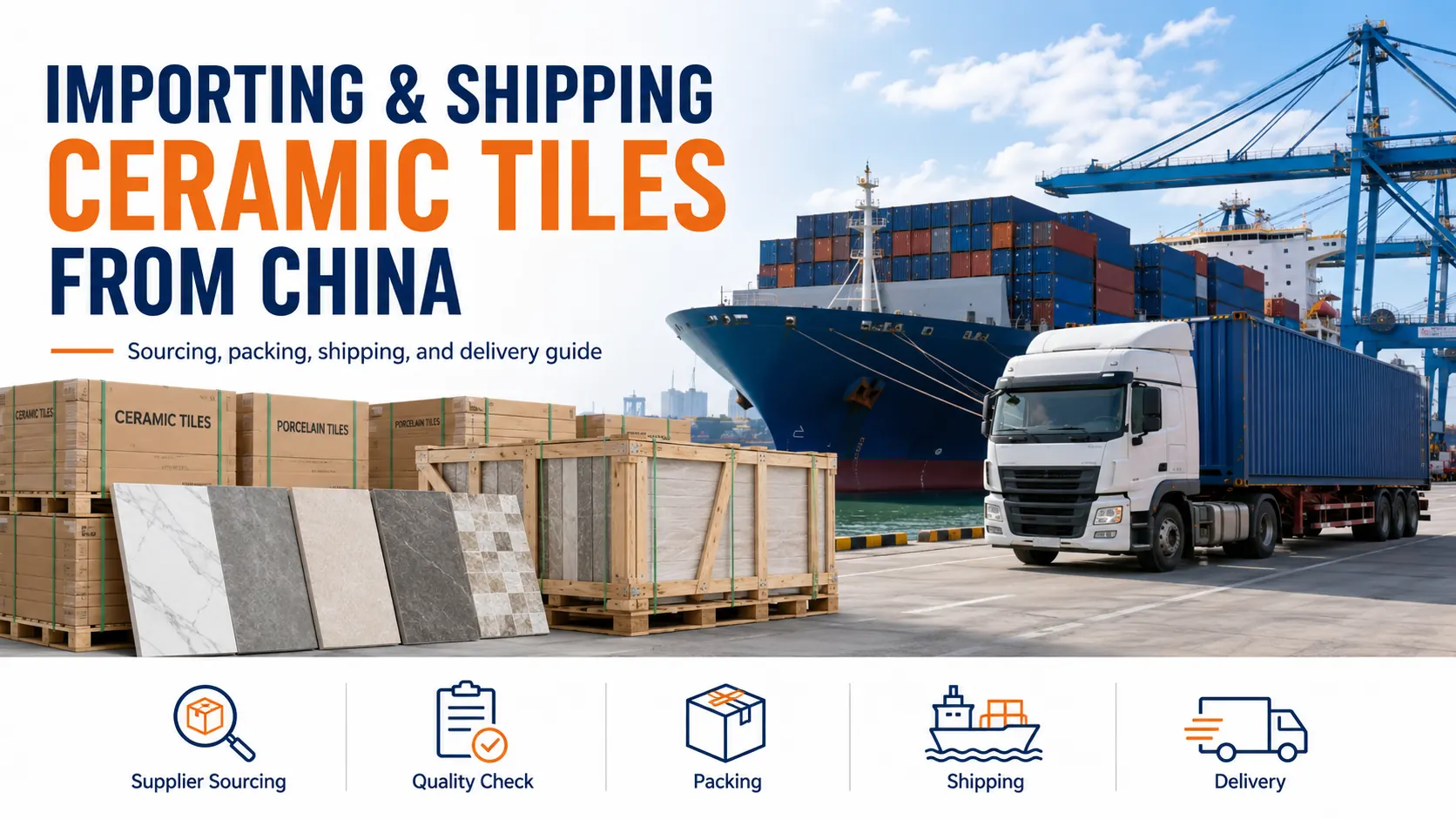
Most commercial shipments of tiles from China move by sea freight because ceramic and porcelain products are heavy relative to their value. Larger orders are generally more suitable for FCL shipping, while smaller orders can move by LCL when the additional handling and destination costs are acceptable.
A typical import process includes:
STAGE 01
Source & Confirm
STAGE 02
Order & Prepare
STAGE 03
Ship & Clear
The important point is to compare the total landed cost, not only the factory price. Freight, destination charges, customs costs, inland transportation, and possible trade-remedy duties can significantly change the final cost of imported tiles.
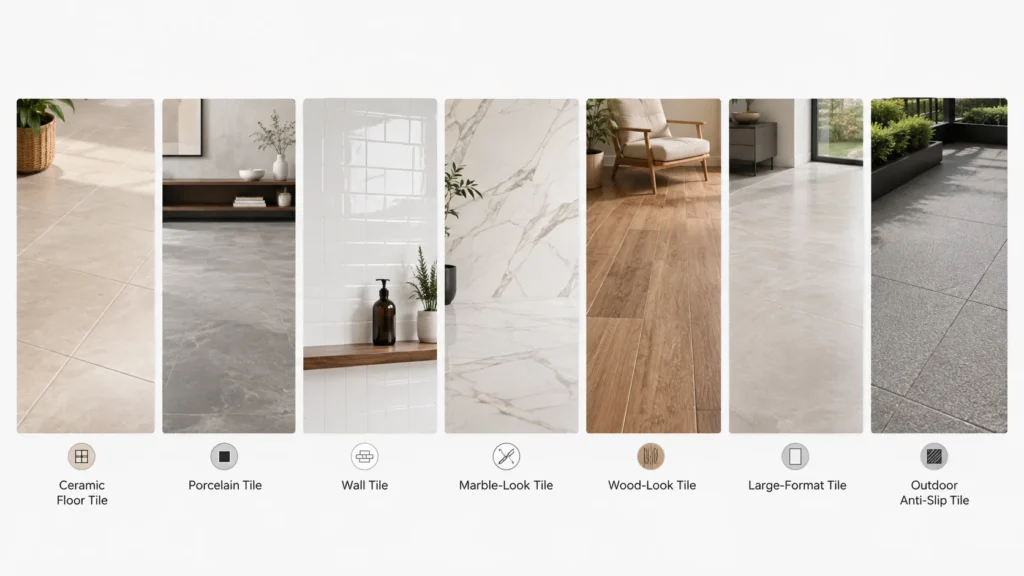
Chinese manufacturers produce a wide range of ceramic and porcelain tiles for residential, commercial, and construction projects.
Common options include:
Ceramic Floor Tiles: Cost-effective products for residential and light commercial applications
Porcelain Tiles: Dense products with relatively low water absorption, widely used for flooring and higher-traffic areas
Wall Tiles: Mainly used for kitchens, bathrooms, and interior walls
Marble-Look Tiles: Ceramic or porcelain tiles designed to imitate natural marble
Wood-Look Tiles: Printed and textured products designed to resemble timber
Large-Format Porcelain Tiles: Large slabs or panels used for floors, walls, and modern interiors
Outdoor and Anti-Slip Tiles: Suitable for balconies, walkways, pool areas, and other locations where slip resistance matters
When comparing tiles from China, buyers should not rely only on appearance. Porcelain tiles generally have lower water absorption than standard ceramic tiles, but actual technical data should still be confirmed with the supplier.
China has several major ceramic tile production regions. The best sourcing location depends on the product type, quality level, production capability, order quantity, and target price.
SOUTH CHINA
A leading sourcing hub for ceramic and porcelain tiles, with a mature supply chain of factories, showrooms, and exporters.
NORTH CHINA
An established production area for standard ceramic floor and wall tiles, often suitable for larger commercial orders and cost-focused sourcing.
SOUTHEAST CHINA
Known for ceramic building materials such as exterior wall tiles, decorative products, and small-format tiles for construction projects.
Buyers who cannot visit China can use B2B platforms as a starting point to find tile suppliers.
Common options include:
Alibaba: Provides access to ceramic and porcelain manufacturers and trading companies
Made-in-China: Useful for comparing industrial suppliers, product ranges, and company profiles
Specific searches such as porcelain floor tile manufacturer, Foshan ceramic tile supplier, or large-format porcelain manufacturer usually produce more relevant results than broad searches.
Online listings should still be verified independently. Marketplace badges, factory photos, and product pages can help buyers build a shortlist, but they do not replace physical samples or supplier checks.
Importers can work directly with Chinese tile manufacturers, purchase through trading companies, or use a sourcing agent in China.
Manufacturers may offer better control over customized or bulk orders. Trading companies can provide a wider range of products from several factories, while a sourcing agent can help coordinate suppliers, samples, production follow-up, and local communication.
The right option depends on order size, sourcing experience, and how much support the buyer needs in China.
Before mass production begins, buyers should confirm the tile specifications and commercial terms in writing. This helps reduce disputes over product quality, batch differences, packaging, and payment.
The purchase order should clearly define:
Tile size and thickness
Product grade
Surface finish and color
Water absorption
Slip resistance where required
Flatness or warpage tolerance
Edge treatment
Quantity per carton
Square meters per carton
Packaging and pallet requirements
For marble-look, wood-look, and other decorative tiles, shade and batch consistency should also be confirmed before production. Different production lots may show visible differences after installation.
Technical requirements should be checked against the intended application and destination-market standards.
Physical samples can be used as a reference for color, finish, dimensions, and overall appearance.
However, an approved sample does not guarantee that the entire production batch will be identical. The final goods should still be checked before shipment, particularly for larger project orders.
Payment terms vary by supplier and order size. A common arrangement is:
30% deposit before production + 70% balance before shipment
This is common but should not be treated as a universal rule.
Before paying the remaining balance, buyers should ideally confirm that:
Production is complete
Quantity matches the order
Tiles meet the agreed specifications
Packing and markings are correct
Any required inspection has been completed
For larger commercial orders, a letter of credit or other negotiated payment method may also be considered.
Payment terms, balance conditions, and bank details should be clearly stated in the purchase order or contract rather than agreed only through informal messages.
Quality inspection is especially important for ceramic and porcelain tiles because defects can affect an entire batch and may become much more expensive to resolve after international shipping.
The finished goods should therefore be checked against the approved sample and purchase specifications before shipment.
A pre-shipment inspection may cover:
Tile dimensions and thickness
Surface defects
Cracks or chipped edges
Color tone and batch consistency
Flatness and warpage
Surface finish and pattern
Quantity and carton markings
Packaging and pallet condition
For products with specific technical requirements, buyers may also need test reports covering water absorption, slip resistance, breaking strength, or other applicable standards.
Batch variation is one of the main risks when importing tiles from China. Different production lots can have visible differences in shade, pattern, or finish even when the product code is the same.
For larger projects, buyers should confirm that the shipment uses the agreed color tone or production batch wherever possible.
For high-value or commercial orders, a third-party inspection can be completed before the final balance is released and before the cargo is loaded. This gives the importer time to correct product or packaging problems while the goods are still in China.
The supplier’s unit price is only one part of the real cost of importing ceramic tiles from China.
Freight, destination charges, customs costs, and inland delivery can significantly affect the final price, so importers should compare suppliers using the total landed cost rather than factory price alone.
A complete calculation normally includes:
Product cost: Value of the ceramic or porcelain tiles
China origin charges: Factory pickup, export handling, documentation, and local port charges
International freight: FCL or LCL shipping from China
Cargo insurance: Recommended for fragile tile shipments
Duties and taxes: Based on destination-country requirements
Trade-remedy duties: Anti-dumping or countervailing duties where applicable
Destination charges: Terminal handling, port fees, and LCL deconsolidation charges
Customs clearance: Broker and import-processing fees
Final delivery: Trucking from the port or warehouse to the final destination
A simple calculation is:
Tile Purchase Cost + Origin Charges + Freight + Import Charges + Destination Costs + Delivery = Total Landed Cost
For ceramic tiles, calculating the landed cost per square meter can make supplier comparisons more meaningful.
A lower factory price does not always result in a lower final cost. Additional domestic trucking, inefficient packing, high destination handling charges, or unsuitable shipping arrangements can make a cheaper supplier more expensive overall.
Sea freight is the normal transportation method for commercial tile orders from China. Air freight is technically possible, but it is generally limited to samples, replacement pieces, or small urgent quantities.
For most importers, the main decision is between FCL and LCL.
| Shipping Method | Best For | Handling | Main Consideration |
|---|---|---|---|
| FCL | Larger commercial orders | Lower | Fewer handling stages |
| LCL | Smaller shipments | Higher | Consolidation and destination charges |
| Air Freight | Samples or urgent replacements | Fast | Usually expensive for bulk tiles |
Full Container Load is generally more suitable for larger shipments of Chinese tiles.
The cargo moves in a dedicated container instead of being consolidated with unrelated freight. This reduces handling and allows pallet placement to be planned specifically for the shipment.
FCL can provide:
Fewer handling stages
Better pallet control
Less interaction with unrelated cargo
Easier coordination with the supplier
More straightforward destination handling
For large commercial orders, these advantages can help reduce breakage risk and make destination operations easier to manage.
LCL can be appropriate when the order is too small to justify a full container.
The pallets are delivered to a consolidation warehouse and shipped together with cargo belonging to other importers. This provides flexibility but introduces additional handling.
Important considerations include:
Consolidation warehouse handling
Pallet strength
Protection from surrounding cargo
Destination handling charges
Local delivery
Possible breakage risk
Some LCL shipments from China may take around 20–35 days, although actual transit time depends on origin, destination, sailing schedule, consolidation time, and routing.
Importers should compare the complete LCL quotation rather than only the base freight rate, especially because destination and deconsolidation charges can materially affect the final cost.
Ceramic and porcelain tiles require strong export packaging because they are both heavy and fragile.
Poor cartons, weak pallets, or unstable loading can result in cracked edges, broken tiles, collapsed stacks, or cargo movement during transportation.
Tiles are normally packed in reinforced cartons and secured on pallets.
Common protection methods include:
Export-grade cartons
Internal separators
Edge and corner protection
Plastic or steel straps
Stretch wrapping
Reinforced wooden pallets
Anti-slip materials where necessary
Cartons should be stacked evenly and secured firmly enough to withstand warehouse handling and ocean transportation.
If solid wood pallets or other solid wood packaging are used, importers should check whether ISPM 15 requirements apply.
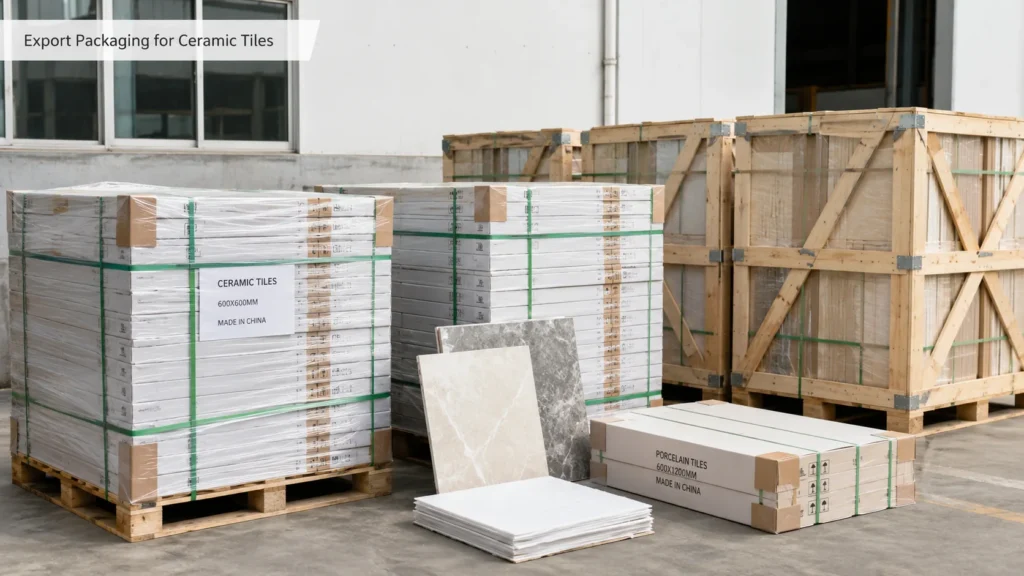
Pallets need to remain stable during forklift handling, port operations, warehouse storage, and final delivery.
Proper palletizing helps reduce carton collapse, chipped edges, cargo movement, and forklift damage.
For LCL shipments, additional protection may be necessary because the cargo is generally handled more frequently during consolidation and deconsolidation.
Tile cargo should not be planned only according to how many cartons physically fit inside a container.
Ceramic tiles are dense, which means the permitted payload may be reached before all available cubic space is used. For some shipments, a 20GP can be more practical than a 40GP or 40HQ.
Before booking, the supplier or freight forwarder should confirm:
Number of cartons and pallets
Gross cargo weight
Pallet dimensions
Loading arrangement
Equipment payload
Relevant port or road restrictions
Container size should therefore be selected according to both cargo density and loading limits, not CBM alone.
Customs requirements should be checked before ceramic tiles leave China. Importers need to confirm the HS classification, estimate expected duties and taxes, review possible trade-remedy measures, and prepare the required documents in advance.
Handling these issues early helps reduce delays and unexpected charges after the cargo reaches the destination port.
Ceramic tiles generally fall under HS heading 6907, but the exact tariff classification depends on the product characteristics and the customs system used by the importing country.
The final HS code can affect:
Customs duty
Import taxes
Customs declarations
Preferential treatment where available
Product-specific import requirements
Importers should not copy a classification from another shipment simply because the products look similar. Material, water absorption, dimensions, and other characteristics may affect the final code.
Customs charges also vary by destination, so buyers should confirm the expected duty and tax treatment before ordering.
Some destinations may impose additional trade-remedy duties on ceramic tiles imported from China.
For example, certain Chinese ceramic tile products entering the United States may be subject to anti-dumping and countervailing duties in addition to ordinary customs charges.
The applicable treatment can depend on the product, manufacturer, exporter, and current customs requirements. U.S. importers should confirm the current scope and applicable rates with a qualified customs broker before placing a large order.
These additional duties can significantly affect the economics of importing tiles from China, so they should be checked before production rather than after shipment.
Common documents include:
Commercial Invoice: Seller, buyer, product description, quantity, value, and trade terms
Packing List: Carton and pallet quantities, dimensions, and gross weight
Bill of Lading: Main transportation document for sea freight
Certificate of Origin: Required in some markets or for preferential treatment
Test Reports or Compliance Documents: Required where local product regulations apply
Insurance Certificate: Provided when cargo insurance is arranged
The commercial invoice, packing list, and bill of lading should contain consistent shipment information.
Depending on the destination, additional licenses, testing, or compliance documents may also be required.
Tonlexing can help importers coordinate ceramic tile shipments from suppliers in China to the destination, with particular attention to the challenges of heavy and fragile cargo.
Our services can include:
Factory pickup and supplier coordination
FCL and LCL sea freight
Cargo consolidation from multiple suppliers
Export customs clearance in China
Packing and loading coordination
Shipping documents and cargo insurance
Destination clearance support
Final delivery arrangements
For ceramic tiles, we recommend contacting Tonlexing before the goods are ready. With the packing list, pickup location, Incoterm, and destination address, we can review the shipment plan, recommend a suitable shipping method, and estimate logistics costs in advance.
If you are importing ceramic or porcelain tiles from China, Tonlexing can provide a shipping solution based on your cargo volume, destination, and delivery requirements, helping coordinate the shipment from China through to final delivery.
Ceramic tile products generally fall under HS heading 6907, but the exact subheading depends on product characteristics and the customs classification used by the destination country.
FCL is generally more suitable for larger tile orders because the cargo goes through fewer handling stages. LCL is useful for smaller shipments but requires stronger packaging and closer attention to destination charges.
The total cost depends on the tile price, shipment size, origin charges, sea freight, insurance, duties and taxes, destination fees, customs clearance, and local delivery. Compare suppliers using total landed cost rather than factory price alone.
Common documents include a commercial invoice, packing list, bill of lading, and sometimes a certificate of origin. Additional compliance or test documents may be required depending on the destination.
They can be in certain markets. Some ceramic tiles from China entering the United States may be subject to anti-dumping and countervailing duties. Importers should verify the current product scope and applicable requirements before ordering.
Useful freight, customs and importing resources related to this shipping guide.
How to Verify a Chinese Supplier Before You Pay Verified & Reviewed · Last updated July 2026 Before you pay a Chinese supplier, do not rely only...
Read guide →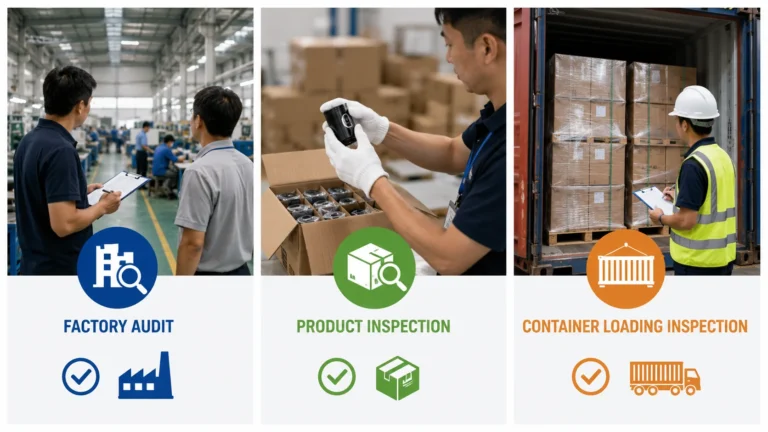
Factory Audit vs Product Inspection vs Container Loading Inspection Verified & Reviewed · Last updated July 2026 Factory audit, product inspectio...
Read guide →
Sea freight is the most cost effective shipping method for large volumes and container load cargo. It is ideal for businesses looking to reduce s...
Read guide →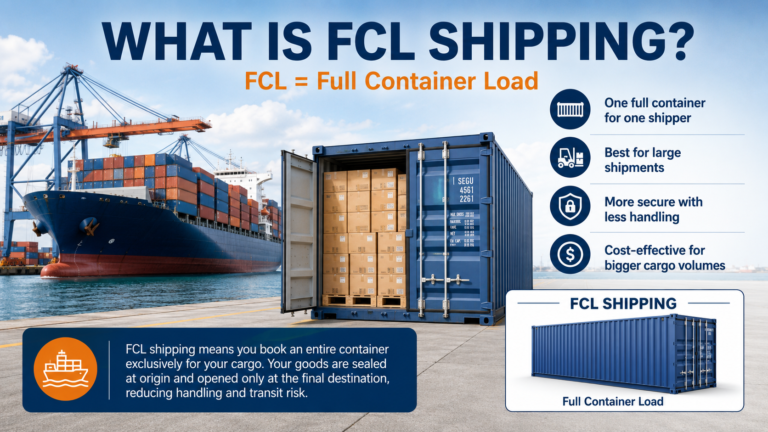
What is FCL Shipping? Verified & Reviewed · Last updated June 2026 FCL shipping, short for Full Container Load shipping, is an international frei...
Read guide →Learn how LCL shipping and consolidated shipments help reduce shipping costs for smaller cargo from China.
Learn more → Useful Resource What Is Cargo Insurance and How Does It Work?What Is Cargo Insurance and How Does It Work? Verified & Reviewed · Last updated April 2026 Cargo insurance protects goods against physical loss...
Learn more →WhatsApp us