Related Guide
Pre-Shipment Inspection in China for Importers
Pre-Shipment Inspection in China for Importers Verified & Reviewed · Last updated July 2026 A pre-shipment inspection helps importers identify de...
Read guide →

China is a major sourcing and manufacturing base for sneakers, casual shoes, boots, sandals, leather shoes and private-label footwear.
This guide explains how to import and ship shoes from China, covering supplier selection, samples, quality control, packaging, shipping methods, costs, customs clearance and final delivery. It also shows how carton volume, materials and destination requirements can affect the total landed cost.
Footwear Suppliers
Shipping Methods
Customs Clearance
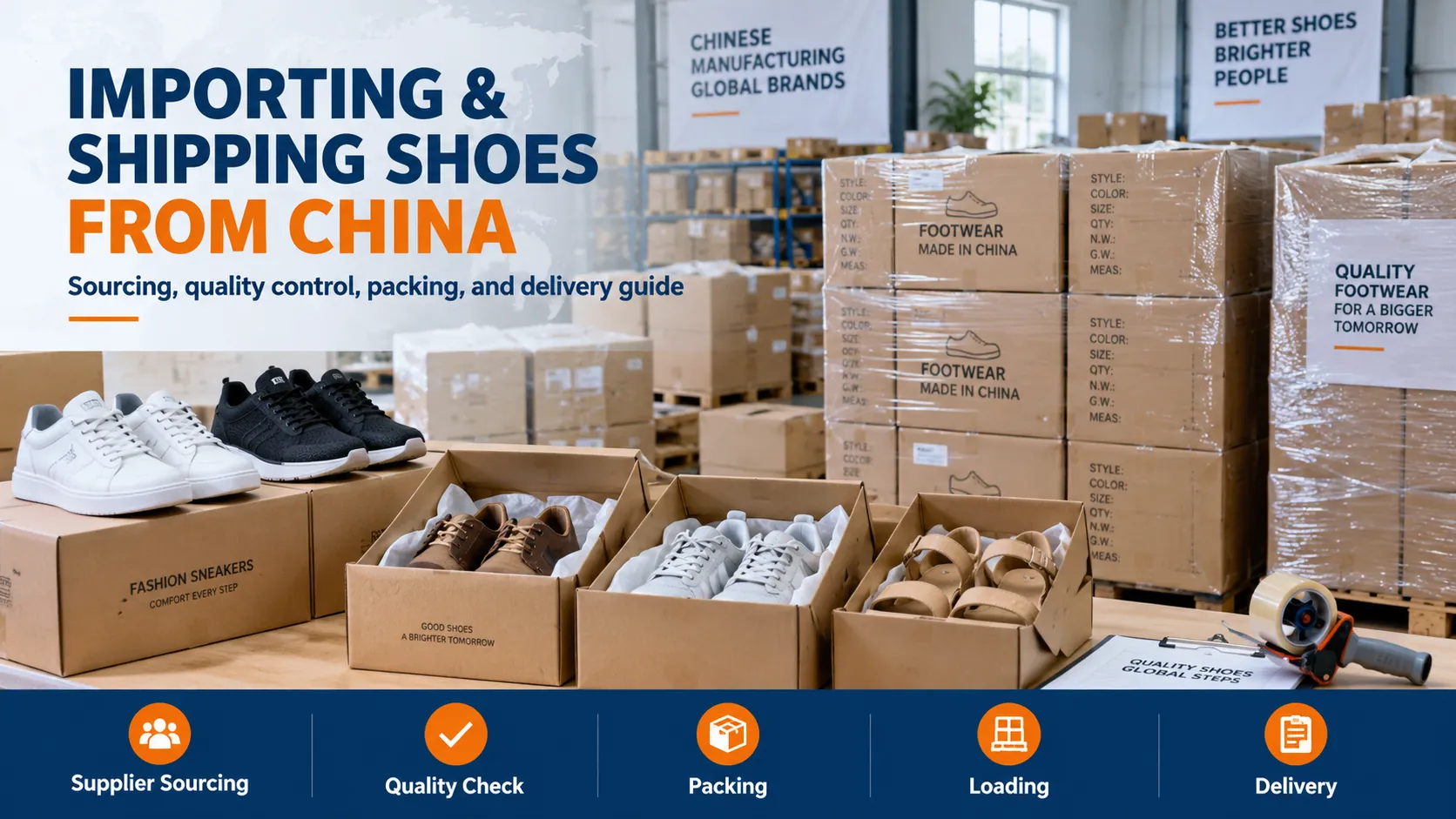
Before contacting a factory, define exactly what you intend to buy and where the products will be sold. Clear requirements make quotations easier to compare and reduce misunderstandings during sample development and manufacturing.
Two pairs of shoes that look almost identical in a catalog may use different soles, linings, construction methods or packaging. If these details are not confirmed at the beginning, a lower quotation may simply represent a different product rather than a genuine cost advantage.
A clear specification gives the manufacturer a consistent reference for quotation, sampling and later quality control. Depending on the shoe type, it should cover:
Upper, lining, insole and outsole
Size range and size ratio
Colors and design variations
Stitching and construction
Logo and branding
Individual shoe box
Pairs per export carton
Labeling and shipping marks
Expected order quantity
For custom designs, buyers may also need drawings, reference samples, color standards, logo files and packaging artwork.
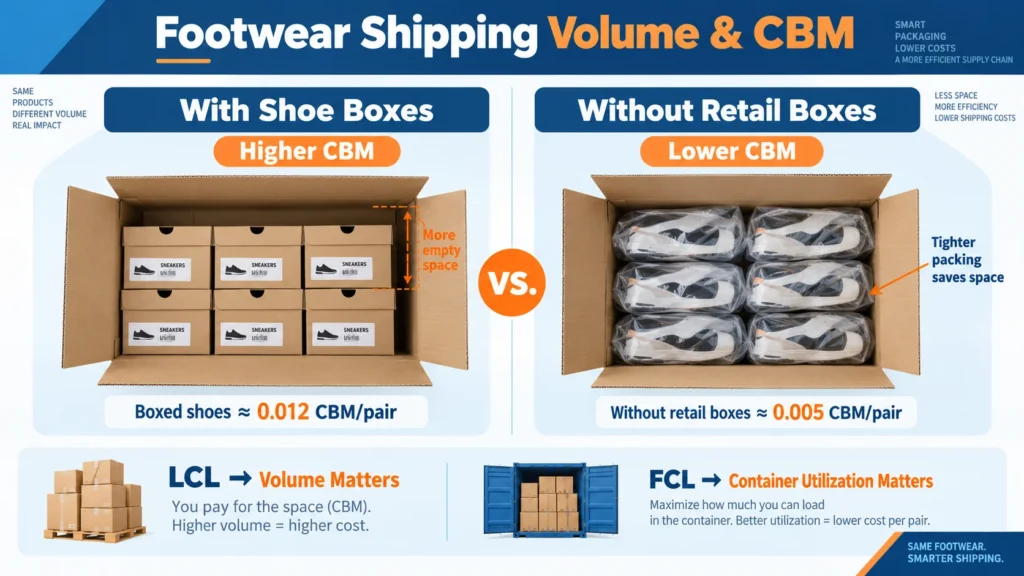
Packaging should be discussed early. Shoes are often relatively light compared with the space they occupy, so oversized retail boxes increase master-carton dimensions and total CBM. This may increase LCL charges, reduce container utilization or raise air freight costs.
The destination should be confirmed before manufacturing begins. Labeling, country-of-origin marking, product testing and other footwear import regulations can vary by country and product category.
Customs requirements also differ between markets. Buyers planning to import shoes from China should therefore check destination rules before approving the final sample and packaging rather than waiting until the order is complete.
China has several established shoe-manufacturing clusters. Quanzhou, Wenzhou and Guangzhou are well-known sourcing areas, although the right location depends on the product. A manufacturer specializing in sneakers may not be the best choice for leather shoes, sandals or safety boots.
The goal is not simply to find the lowest unit cost. Buyers should look for a company that can consistently meet the required specifications, quality level, quantity and delivery timeline.
Major manufacturing regions have developed networks for soles, uppers, accessories, packaging and finished products. This makes it easier for factories to support both standard designs and customized projects.
When comparing Chinese manufacturers, consider their main product category, experience with similar designs, manufacturing capacity, export history and sample quality. A factory with relevant experience is often more valuable than one offering a wide catalog but limited specialization.
Importers may work directly with a factory or purchase through a trading company.
A manufacturer can provide closer control over customization and repeated orders. A trading company may be useful when buyers need several shoe categories produced by different factories.
Neither model is automatically better. What matters is whether the company can provide stable quality, clear communication and reliable order management.
Before paying for a bulk order, check business information, factory capability, export experience, quality-control procedures, sample quality, lead time, MOQ, packaging ability and payment terms.
For customized products, also confirm which processes are completed in-house and which are subcontracted. Soles, printing, embroidery or accessories may come from other manufacturers, which can affect costs and cause delays if the project is not coordinated properly.
Most importantly, compare quotations only after confirming that each factory is quoting against the same product specifications.
A physical sample is one of the most important checkpoints before placing a large order. Photographs can show the general design, but they cannot fully demonstrate size, fit, flexibility, stitching quality, sole bonding or the feel of the finished shoe.
The final sample should become the reference for mass manufacturing. Buyers should check size, color, construction, stitching, bonding, logo position, printing, accessories, labels and packaging before approval.
For customized designs, keep the approved sample together with the specification sheet and packaging artwork. Sample costs and any development charges should also be agreed before the bulk order begins.
ODM usually starts with an existing factory design that can be modified through colors, logos, packaging or selected components. It can be practical for retailers or wholesalers that want to test new products without developing a completely new design.
OEM gives brands more control over the finished product. A custom project may involve a new upper pattern, outsole, tooling or other components, which can require additional development time and budget.
There is no universal MOQ for shoes. Minimum quantities can depend on the model, color, sole, branding and level of customization. Some factories apply one minimum to the entire order, while others apply separate minimums to each style or color.
Custom soles or components may also involve mold fees, especially for OEM projects that require new tooling.
Payment terms should be confirmed before production starts. Buyers should agree on the deposit amount, when the balance is due, the payment method, and whether final payment is linked to inspection approval or shipment release. These conditions should be written clearly in the purchase agreement to avoid disputes later.
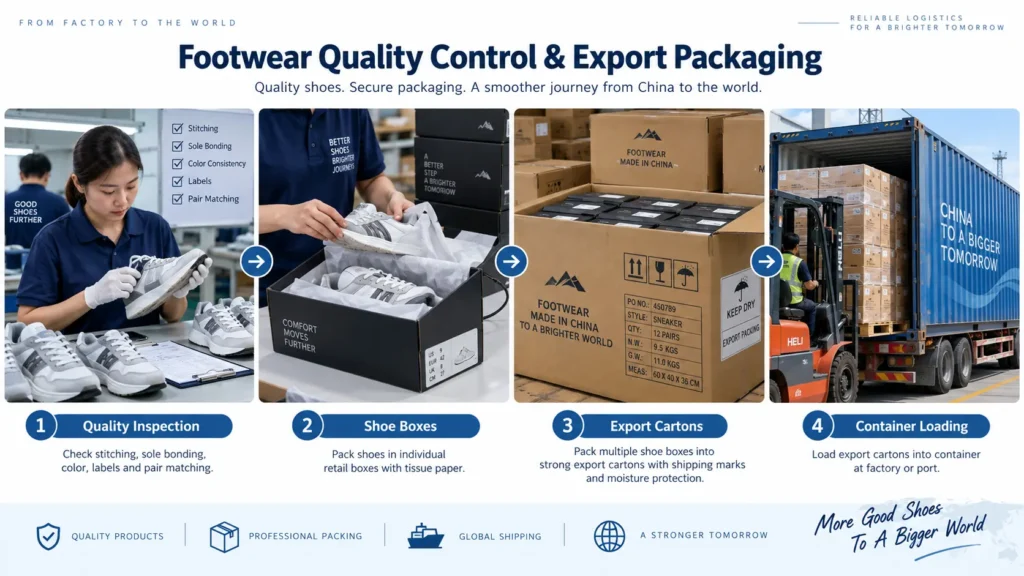
Quality control should take place before the goods leave China. Typical problems can include incorrect sizing, uneven stitching, visible glue, weak sole bonding, color differences, mismatched pairs or damaged shoe boxes.
Finished products should be compared with the approved sample and purchase specifications.
| Check Area | What to Review |
|---|---|
| Quantity | Cartons, pairs and size assortment |
| Appearance | Color, shape and finishing |
| Construction | Stitching, bonding and sole attachment |
| Sizing | Measurements and consistency |
| Branding | Logo, printing and labels |
| Packaging | Shoe boxes and export cartons |
The inspection standard should match the product. Sneakers, sandals, boots and leather shoes may require different checks depending on their construction and intended use.
A pre-shipment inspection is usually carried out when the order is complete or substantially complete. It gives buyers an opportunity to identify quality issues while corrections can still be made at the factory.
Once the cargo has arrived overseas, reworking or replacing defective goods becomes much more expensive. Inspection results should therefore be reviewed before the shipment is released.
Most shoes are packed in individual boxes and then placed into stronger master cartons.
Before freight booking, confirm the carton quantity, carton dimensions, gross weight, pairs per carton and total CBM. Strong cartons, suitable moisture protection and clear shipping marks help protect the cargo during handling and ocean transportation.
For large bulk orders, efficient box and carton dimensions can also improve container utilization and create meaningful cost savings.
The best shipping method depends on cargo volume, delivery deadline, destination and inventory strategy. Samples may move by express service, urgent commercial orders by air, and larger shipments by sea.
Best for samples and small parcels that need fast, simple delivery.
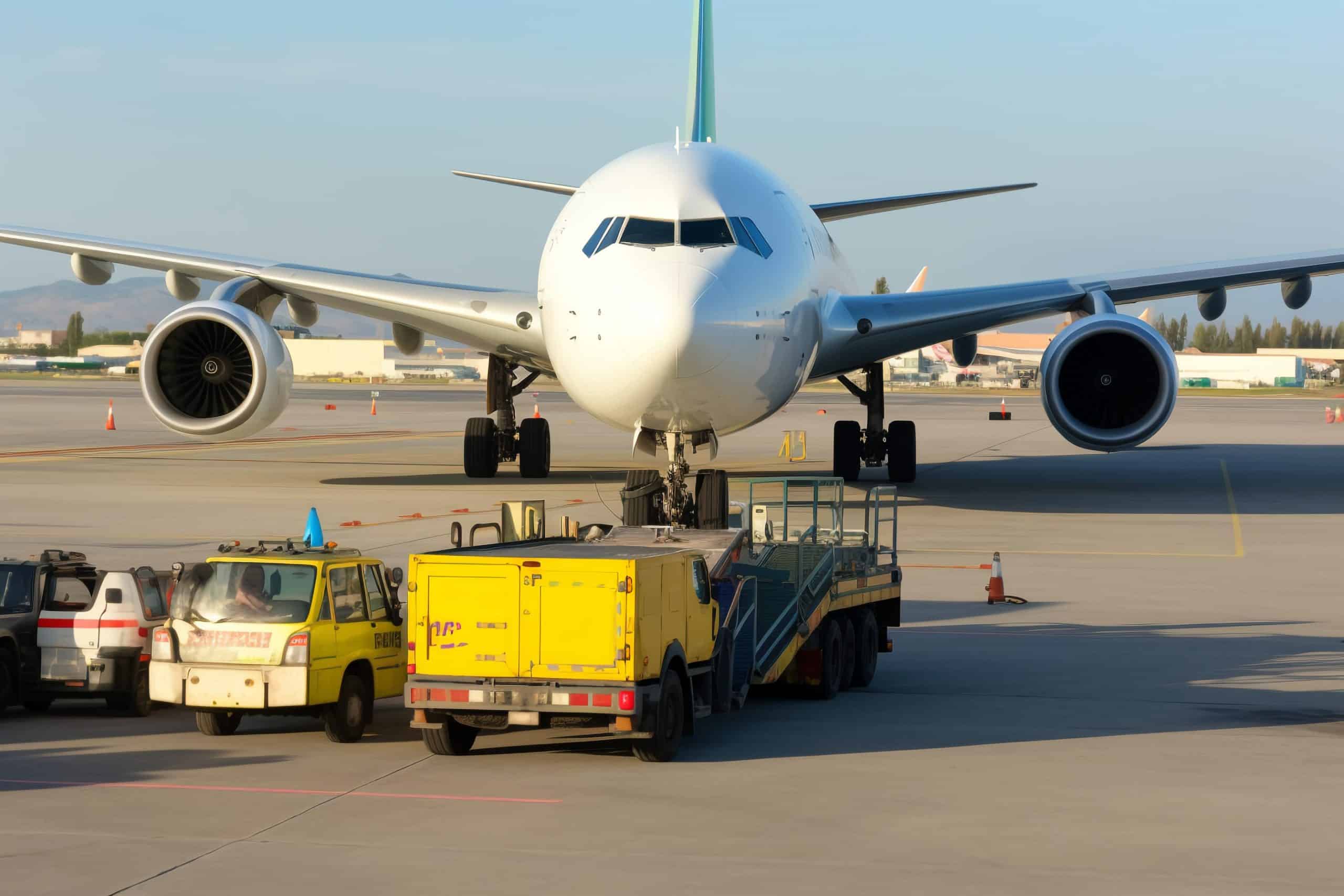
Best for urgent commercial shipments where delivery speed matters most.
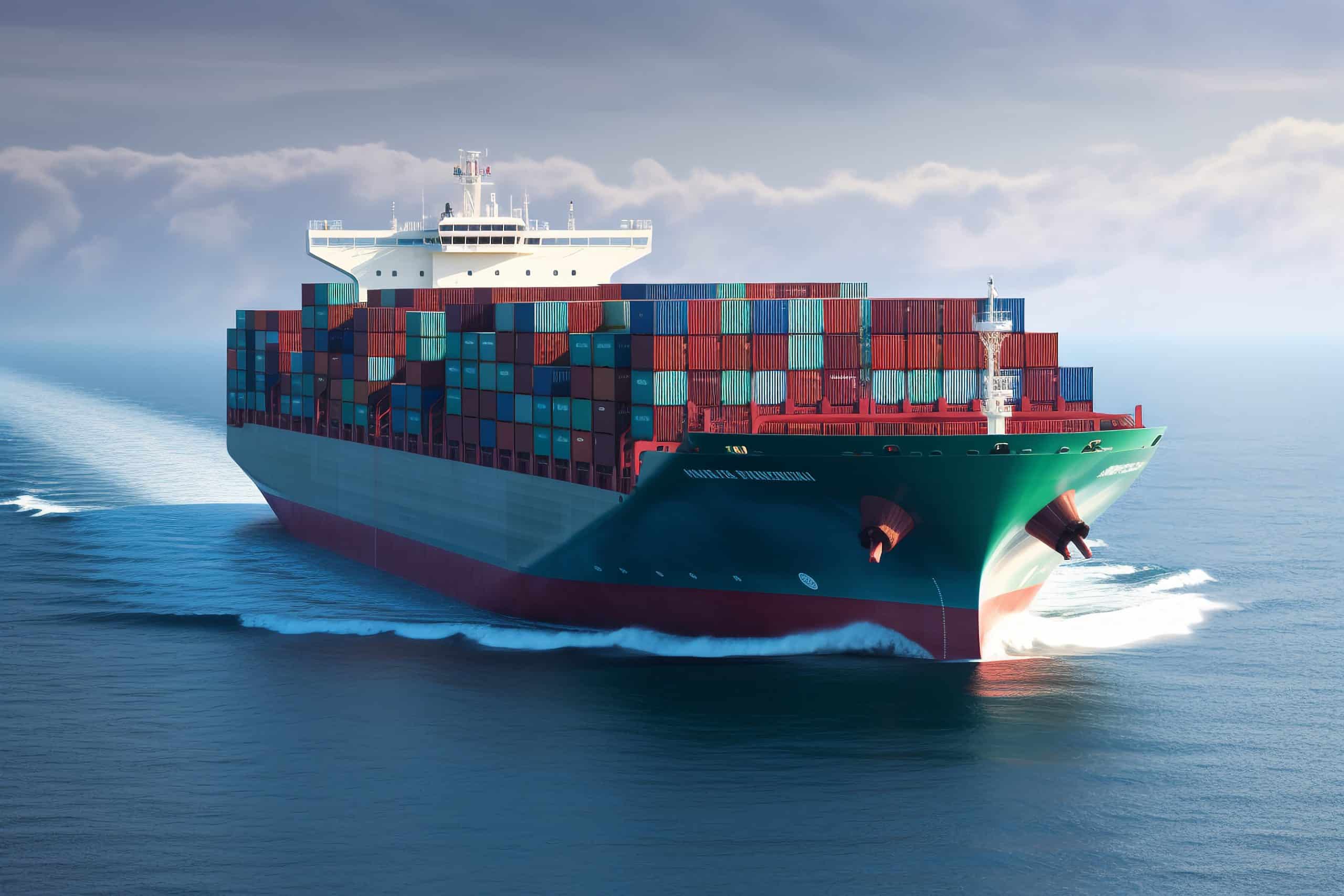
Best for large-volume and non-urgent shipments where lower cost matters more than speed.
Express services are mainly suitable for samples, prototypes, replacement items and very small orders. They provide fast delivery but become expensive when the number of pairs increases.
Air freight is suitable for urgent replenishment, seasonal stock, product launches or higher-value cargo.
Because shoe cartons can be bulky, the rate may be calculated from volumetric weight rather than actual weight. Carton dimensions should therefore be provided together with gross weight when requesting a quotation.
LCL is useful when an order is too large for economical air transport but does not fill a complete container.
The cargo shares container space with other shipments, and charges are closely related to CBM. As LCL involves additional consolidation and deconsolidation handling, strong export cartons are particularly important.
FCL is commonly used for larger shoe orders.
A dedicated container can provide better logistics efficiency when cargo volume is high enough. Shoes usually fill container space before reaching the maximum weight limit, so the choice of container should be based on carton dimensions and total CBM rather than simply the number of pairs.
Door-to-door logistics can combine factory pickup, export handling, international transport, destination coordination and final delivery.
Depending on the route and agreed service, customs clearance and duties may also be included. The exact scope should always be confirmed with the freight forwarder before booking.
Shipping shoes from China is strongly affected by cargo volume. Footwear is usually relatively light, but retail shoe boxes take up considerable space, so freight costs are often driven by CBM rather than weight, especially for sea freight.
As a practical benchmark, a standard pair of shoes packed in a retail box occupies about 0.012 CBM, or roughly 80 pairs per CBM. If the shoes are shipped without individual boxes and packed in polybags, the volume may fall to around 0.005 CBM per pair, or approximately 200 pairs per CBM.
For example, a bulk order of 1,000 pairs of boxed shoes would occupy about 12 CBM. Based on the benchmark shown below, the shipping method can make a significant difference to the freight cost per pair.
| Shipping Method | Typical Transit Time | Estimated Freight Cost | Approx. Cost per Pair |
|---|---|---|---|
| Express Courier | 3–5 days | $14,000–$18,000 | $14.00–$18.00 |
| Air Freight | 7–10 days | $7,500–$10,000 | $7.50–$10.00 |
| LCL Sea Freight | 25–35 days | $2,200–$3,500 | $2.20–$3.50 |
| 20ft FCL Sea Freight | 20–30 days | $4,000–$5,500 | $1.60–$2.20* |
These figures are based on a standard bulk shipment from China to the US West Coast and should be treated as freight-market estimates rather than fixed quotations.
A 20ft container can hold roughly 2,000–2,800 pairs of boxed shoes, depending on carton dimensions and loading efficiency. For an order of only 1,000 pairs, LCL may therefore be more practical because a full container would leave a large amount of unused space.
The final freight cost can vary according to the shipment itself. Important factors include the pickup city in China, destination, total CBM, carton dimensions, gross weight, shipping method, carrier capacity and final delivery requirements.
Packaging can make a particularly large difference. Smaller shoe boxes and more efficient carton packing reduce total volume, while oversized retail packaging increases both LCL charges and container-space requirements.
Freight is only one part of the total import cost. Businesses planning to import shoes from China should calculate the complete landed cost before comparing suppliers or setting a retail price.
A simplified formula is:
Product Cost + China Origin Charges + Inspection + International Freight + Insurance + Customs Duties and Taxes + Destination Charges + Final Delivery = Total Landed Cost
The landed cost per pair can then be calculated as:
Total Landed Cost ÷ Total Number of Pairs = Landed Cost per Pair
This gives importers a more accurate picture of profitability than comparing the factory unit price alone. A lower product price does not always result in a lower landed cost if the packaging uses more space, the factory is farther from the export port, or the shipment requires more expensive logistics.
Customs clearance for shoes requires an accurate product description because different constructions and components can lead to different tariff classifications.
Most shoes fall under HS Chapter 64, but the detailed HS code and duty depend on the actual product and destination country.
Classification can depend on factors such as the upper material, outer sole, construction, intended use and whether the shoe covers the ankle.
Importers should not assume that all sneakers, boots or sandals use the same code or duty rate. Where necessary, provide the customs broker or freight forwarder with detailed product information so the correct classification can be confirmed.
Typical customs documentation for a commercial shipment includes:
Commercial Invoice
Packing List
Bill of Lading for sea freight
Air Waybill for air freight
Certificate of Origin when required
Additional compliance documents where applicable
Descriptions, quantities, values and weights should remain consistent across the documents and the actual cargo.
Country-of-origin marking and product-labeling rules vary by market. Some destinations may also impose requirements relating to chemical substances, children’s products or protective shoes.
These issues should be checked before the order is finished. Correcting labels or packaging after thousands of pairs have already been packed can increase costs and cause avoidable delays.
A clear process keeps sourcing, manufacturing and international logistics connected.
Define the product specifications. Confirm shoe type, size, colors, branding, packaging and destination.
Find and evaluate factories. Compare manufacturing capability, experience, samples and commercial terms.
Approve the sample. Use the final sample as the reference for the bulk order.
Confirm the order. Agree on quantity, price, payment terms, molds if needed and schedule.
Monitor manufacturing. Resolve changes before they affect the finished products.
Inspect the goods. Check quality, sizing, labels and packaging before release.
Confirm packing details. Collect carton dimensions, weight and total CBM.
Arrange international logistics. Select express, air freight, LCL, FCL or door-to-door delivery.
Prepare customs documentation. Review product descriptions, invoices, packing lists and transport documents.
Complete customs clearance and final delivery. Clear the shipment at destination and deliver it to the required address.
Importing shoes can involve several logistics stages between the factory and the final warehouse. Tonlexing coordinates international freight from China based on the actual cargo volume, urgency and destination.
We can arrange air freight, LCL, FCL and door-to-door services for different shipment sizes and delivery timelines. This allows importers to use one solution for urgent stock and another for larger bulk orders.
When shoes, packaging or accessories come from several factories, Tonlexing can coordinate pickup and consolidation before export. Combining cargo can simplify the supply chain and avoid arranging separate international shipments for each order.
We can coordinate carrier booking, export procedures, shipping documents and customs-related logistics according to the agreed service scope.
Accurate carton and destination information allows us to recommend a suitable shipping solution before booking.
After departure, cargo tracking and destination coordination help importers manage inventory and final delivery.
For an accurate quote, provide the pickup location, destination, carton quantity, dimensions, gross weight, total CBM and preferred shipping method.
Start by defining the product and destination requirements. Evaluate manufacturers, approve samples, confirm the bulk order and inspect the finished goods. Once packing details are available, arrange shipping, prepare customs documents and complete destination clearance.
Minimum quantities vary by factory, shoe type, color and customization. Some manufacturers apply separate minimums to each style or color, so buyers should confirm how the requirement is calculated before ordering.
Air freight is better for urgent or smaller commercial orders, while sea freight is generally more suitable for larger bulk shipments. The choice should consider cargo volume, weight, timeline and landed cost.
The cost depends on origin, destination, carton quantity, dimensions, gross weight, total CBM and transportation method. Actual packing information is required for an accurate quotation.
Most shoes fall under HS Chapter 64, but the exact tariff code depends on the shoe type, construction and materials used.
Useful freight, customs and importing resources related to this shipping guide.
Pre-Shipment Inspection in China for Importers Verified & Reviewed · Last updated July 2026 A pre-shipment inspection helps importers identify de...
Read guide →
Importing goods from China can be highly profitable—but only when you understand the necessary documents and import requirements. Whether you’re...
Read guide →
Introduction to Customs Clearance How to clear customs when importing from China is one of the most critical steps in international trade. Whethe...
Read guide →
Sea freight is the most cost effective shipping method for large volumes and container load cargo. It is ideal for businesses looking to reduce s...
Read guide →Air freight from China is the best option for time sensitive and high value shipments. It offers fast delivery, reliable transit times, and effic...
Learn more → Useful Resource LCL vs FCL Shipping: What They Mean, Key Differences, and Which One to ChooseLCL vs FCL Shipping: What They Mean, Key Differences, and Which One to Choose Verified & Reviewed · Last updated January 2026 FCL vs LCL shipping...
Learn more →WhatsApp us