Related Guide
Drayage in the USA Explained
Drayage in the USA Explained: Services, Costs, Types, and How It Works Verified & Reviewed · Last updated March 2026 Drayage in the USA explained...
Read guide →

After cargo arrives at a U.S. port, choosing between LTL and FTL depends on shipment size, weight, delivery requirements, and transportation costs.
Learn how port drayage, transloading, and domestic freight options affect delivery times and costs when shipping imported goods to U.S. warehouses.
LTL vs FTL Shipping
US Port Drayage
Inland Freight
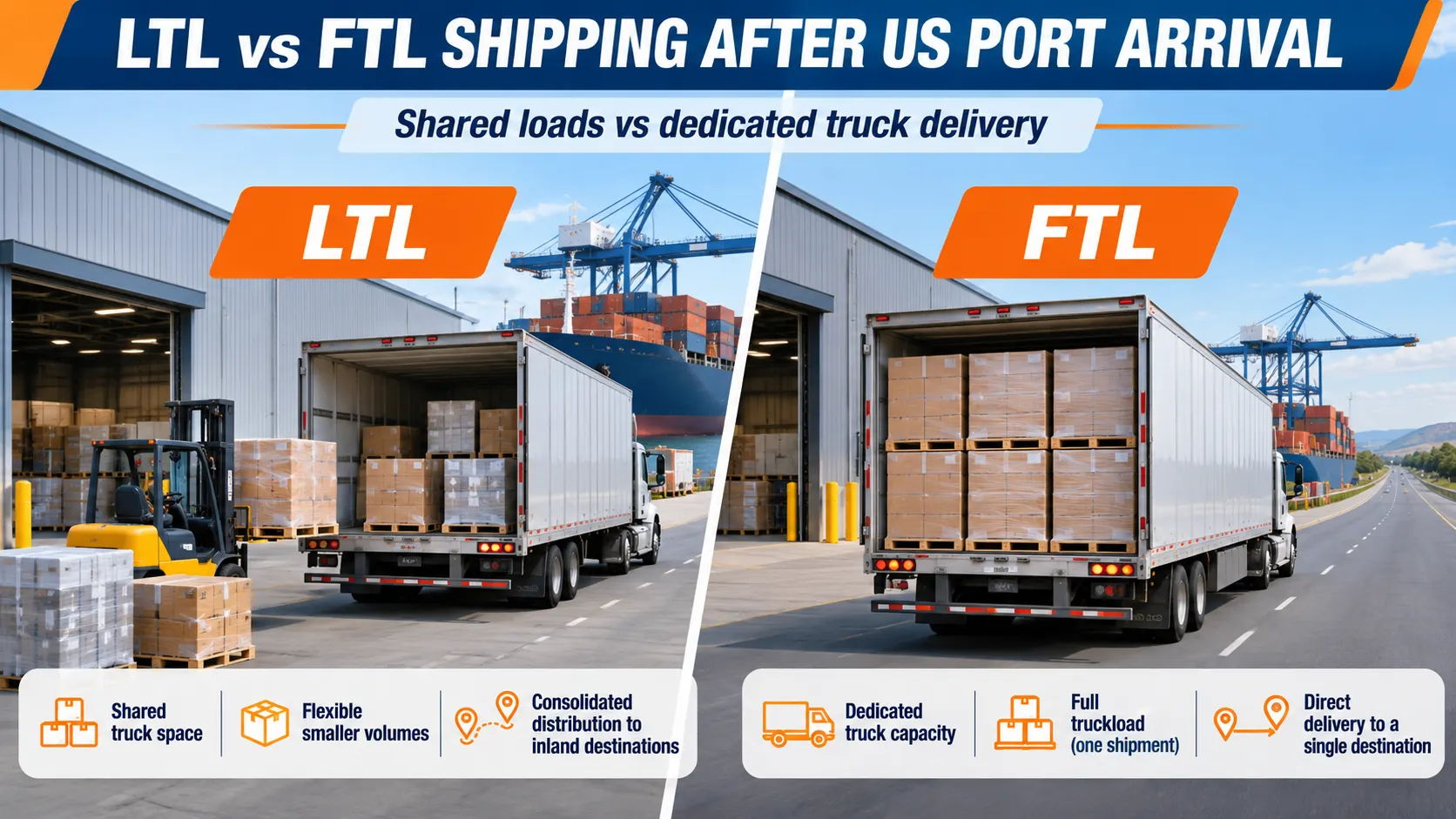
When an ocean container reaches a U.S. port, importers must arrange cargo release and inland transportation before the goods can reach their warehouse or distribution center.
The next step depends on whether the shipment will remain inside the ocean container or be unloaded for domestic transportation.
Before arranging pickup, confirm that customs clearance is complete and that the shipping line and terminal have released the container.
Importers should also check terminal availability, pickup appointments, and the last free day. Delays can result in additional port or equipment charges.
Port drayage is the short-distance movement of shipping containers between a port terminal, warehouse, rail yard, or other nearby facility.
For example, a 40-foot container arriving at Los Angeles or Long Beach may be collected by a drayage truck and delivered to a transloading warehouse.
Learn more about how drayage works in the USA and available USA container drayage services.
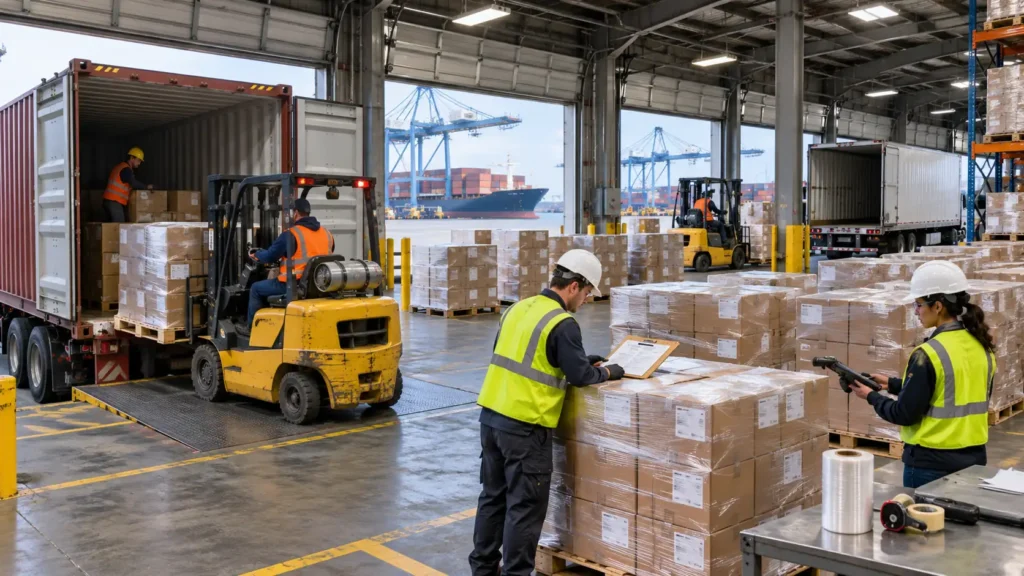
If the importer does not need to deliver the entire ocean container intact, the goods can be transferred to a warehouse for unloading and preparation.
This process may include:
Removing cartons or pallets from the container
Checking quantities and visible cargo condition
Sorting and palletizing the goods
Preparing shipping labels and freight documents
Arranging pickup by an LTL or FTL carrier
Not every shipment requires transloading. Some importers can arrange direct container drayage to their own warehouse, while others use a transloading facility to prepare smaller loads for domestic distribution.
LTL (Less-Than-Truckload) shipping is a transportation method in which multiple shippers share space in the same truck.
Instead of paying for an entire trailer, each shipper pays for the capacity used by their freight. This makes LTL a practical option for smaller shipments that do not require a dedicated truck.
After cargo has been unloaded and prepared, an LTL carrier collects the pallets and moves them through its transportation network.
The process generally involves:
Pickup from the warehouse or distribution facility
Transportation to a local carrier terminal
Consolidation with other shippers’ freight
Transfer through regional terminals when required
Final delivery to the receiving address
Because LTL shipments share truck space, they may pass through several terminals before reaching the destination.
LTL rates are typically calculated using shipment weight, dimensions, density, freight class, and additional service requirements.
This option is particularly useful for businesses that need to move smaller quantities of imported goods without paying for unused trailer capacity.
FTL (Full Truckload) shipping means reserving an entire truck for one shipper’s freight.
Unlike LTL, the shipment does not share trailer capacity with unrelated cargo. The truck is assigned to one load and generally follows a more direct route from pickup to delivery.
A 53-foot dry van is commonly used for domestic truckload transportation in the United States, although equipment requirements depend on the cargo.
Once the goods are ready for pickup, a dedicated truck is dispatched to the warehouse or loading facility.
The process usually includes:
Confirming cargo dimensions, weight, and loading requirements
Booking the appropriate truck and trailer
Loading and securing the freight
Transporting the goods to the destination
Unloading at the receiving facility
FTL is often preferred for larger shipments, heavy cargo, and goods that benefit from fewer handling points.
An important distinction: FTL is not the same as container drayage or FCL shipping. FCL refers to ocean freight transported in a full shipping container, while FTL refers to domestic transportation using an entire truck trailer.
An imported FCL container may first be moved by drayage, unloaded at a warehouse, and then transferred to a domestic FTL truck. See our guide to FCL shipping for more information about ocean container transportation.
Both transportation methods can deliver imported cargo across the United States, but they differ in capacity, pricing, handling, and delivery arrangements.
| Factor | LTL Shipping | FTL Shipping |
|---|---|---|
| Shipment Size | Smaller palletized loads | Larger loads requiring substantial trailer space |
| Cost Structure | Based on weight, dimensions, freight class, and services | Quoted per truckload or transportation lane |
| Transit Time | May take longer due to consolidation and terminal transfers | Generally more direct |
| Cargo Handling | More handling and transfers may be involved | Usually fewer intermediate handling points |
| Damage Exposure | More handling can increase exposure to damage | Fewer transfers can reduce handling risks |
| Delivery | Depends on carrier network and scheduled routes | Dedicated truck and more direct scheduling |
| Best For | Smaller shipments and flexible delivery schedules | Large, heavy, or time-sensitive loads |
Most China to Libya services are transshipment-based, so routing can vary by week and carrier space. Common patterns include:
East China to Tripoli or Misurata via Mediterranean transshipment hubs
South China to Tripoli with transshipment depending on the sailing plan
North China to Benghazi when delivery is focused on eastern Libya
To keep costs predictable, ask your freight forwarder to confirm the planned route, cut-off time, and destination handling requirements before booking.
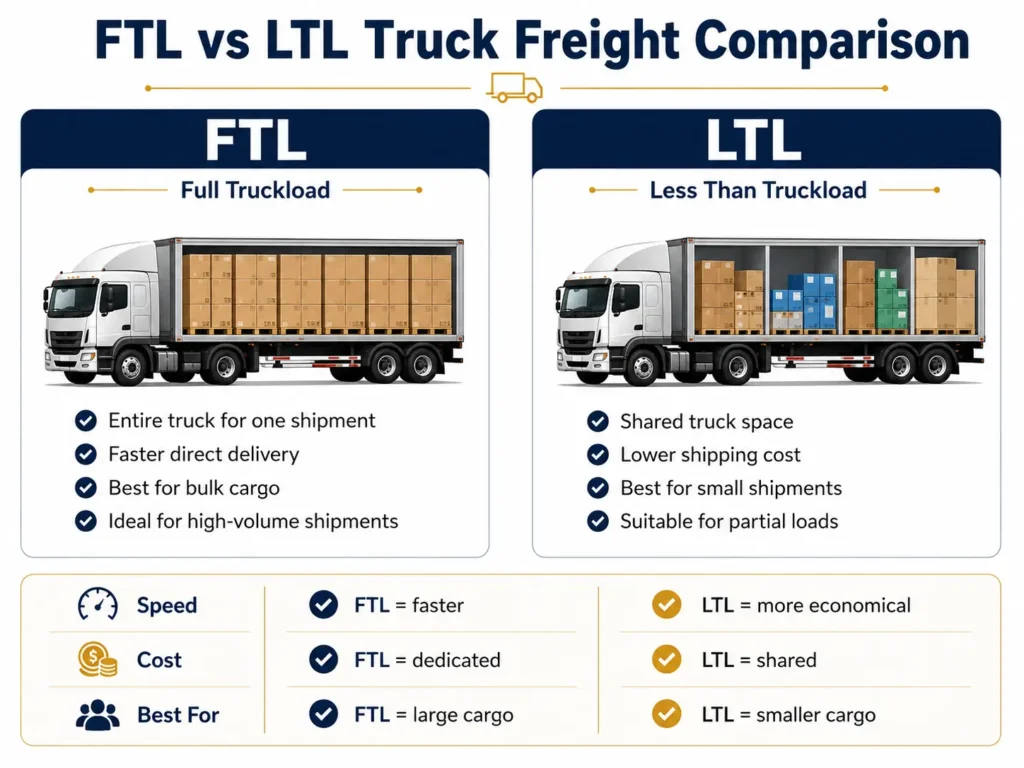
The best shipping method depends on how much trailer capacity your cargo needs and how quickly it must reach the final destination.
LTL is generally worth considering when:
Your shipment contains only a few pallets.
The cargo is properly packaged and easy to handle.
You do not need an exclusive truck.
Your delivery schedule allows time for consolidation.
Sharing transportation costs is a priority.
For example, an importer receiving several pallets of packaged consumer goods may find LTL more economical than booking an entire trailer.
However, unusually heavy, oversized, or difficult-to-handle freight may require special arrangements and additional charges.
FTL is often a better option when:
The shipment occupies a significant portion of a trailer.
The goods are heavy or bulky.
The cargo is fragile or high-value.
You need more control over pickup and delivery scheduling.
A direct route is preferable to multiple terminal transfers.
A dedicated truck can also simplify transportation when the entire load needs to reach one warehouse or distribution center.
Partial Truckload (PTL) offers another option between standard LTL and FTL.
It is designed for shipments that need more capacity than a typical LTL load but do not justify reserving an entire truck.
Depending on the carrier, PTL may provide more direct transportation and fewer handling points than standard LTL.
For shipments that fall between the two options, request LTL, volume LTL, PTL, and FTL quotes where available. Compare the total cost and service conditions rather than relying only on pallet count.
There is no universal pallet or weight threshold at which FTL automatically becomes cheaper.
The total cost of moving imported cargo inland includes more than the domestic truck rate. Several services may be required between container pickup and final delivery.
Drayage costs cover moving the ocean container from the terminal to a warehouse or another designated location.
Depending on the arrangement, additional charges may include:
Chassis rental or usage
Fuel surcharges
Pre-pull and storage
Waiting time or truck detention
Additional stops or special equipment
Rates vary by port, distance, carrier, and operating conditions.
If the goods must be removed from the ocean container, the warehouse may charge for unloading, sorting, palletization, handling, and temporary storage.
These expenses should be included when comparing the total cost of LTL and FTL.
LTL pricing depends on several shipment characteristics, including weight, dimensions, density, freight class, and handling requirements.
Additional charges may apply for:
Liftgate pickup or delivery
Residential or limited-access delivery
Inside delivery
Delivery appointments
Reweighing or reclassification
Providing accurate cargo information helps reduce unexpected adjustments to the freight quote.
FTL is generally priced per load or transportation lane. The rate depends on the pickup and delivery locations, distance, trailer availability, shipment weight, and equipment requirements.
Fuel surcharges, waiting time, detention, and special delivery services may also affect the final amount.
Importers should also monitor container free time and understand the differences between demurrage, detention, and storage charges. Delays in container pickup or empty return can increase the overall cost of an import shipment.
A well-planned transportation process helps importers avoid unnecessary handling and delays.
Follow these steps when arranging inland delivery:
Check that customs clearance is complete and the shipping line and terminal have released the container.
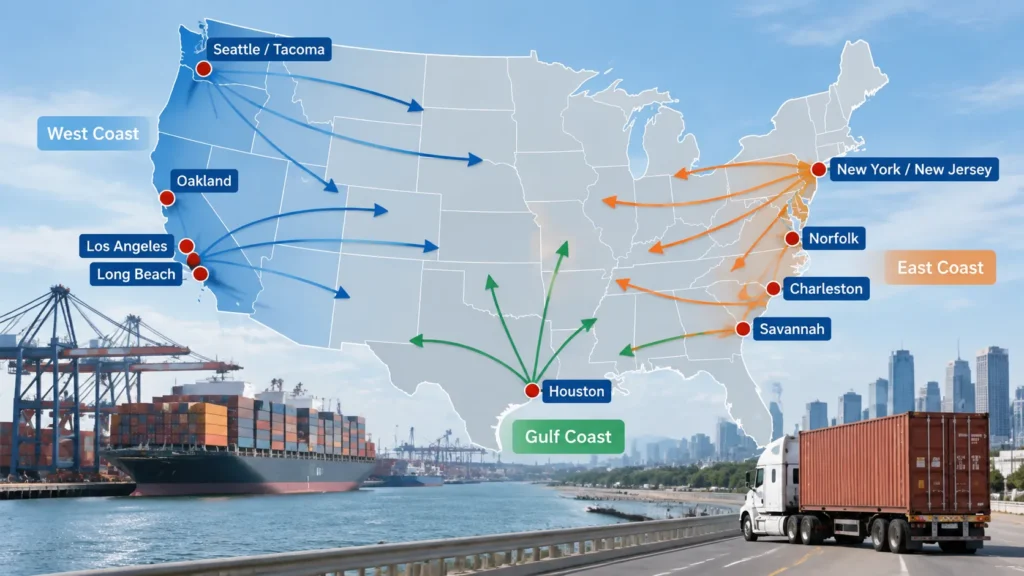
Book a suitable drayage carrier to collect the container and transport it to the warehouse or designated delivery location.
Determine whether the container should be delivered intact or unloaded at a warehouse. If the cargo will move through LTL, it generally needs to be prepared as individual freight rather than remain inside the ocean container.
Provide accurate pallet counts, dimensions, total weight, pickup details, and delivery information. Compare LTL, PTL, and FTL options based on the complete transportation requirements.
Confirm the receiving appointment, warehouse operating hours, unloading equipment, and any special delivery instructions. If an ocean container was used, arrange its empty return within the applicable free time.
For cargo arriving at Southern California ports, importers can also review Los Angeles and Long Beach port drayage services.
Even when the transportation method is suitable, poor planning can create additional costs and delivery problems.
Avoid these common mistakes:
Using estimated cargo dimensions: Incorrect measurements or weight can lead to rate adjustments and reclassification.
Ignoring freight preparation: Unstable pallets, inadequate packaging, or missing shipping labels can delay carrier pickup.
Booking before cargo is ready: Confirm that unloading, inspection, and warehouse handling are complete before scheduling the truck.
Overlooking delivery restrictions: Check whether the receiving facility requires appointments, liftgate service, or special unloading equipment.
Comparing incomplete freight quotes: Confirm that pickup, line-haul transportation, accessorial services, and final delivery are clearly included.
Ignoring container return deadlines: Arrange the empty return promptly to avoid unnecessary equipment-related charges.
Providing complete shipment details before booking helps carriers select suitable equipment and reduces avoidable changes during transportation.
Moving imported cargo from a U.S. port to its final destination requires coordination between port terminals, drayage carriers, warehouses, and domestic trucking companies. Choosing the right transportation arrangement can help importers control costs and avoid unnecessary delays.
At Tonlexing, we help importers coordinate U.S. inland transportation as part of their international shipping arrangements. From port drayage and container transloading to LTL and FTL delivery, we help organize suitable transportation based on shipment size, destination, and delivery requirements.
Our services include:
Port Drayage: Coordinate container pickup from major U.S. ports and transportation to designated warehouses.
Transloading: Arrange container unloading, cargo handling, and pallet preparation for domestic delivery.
LTL and FTL Shipping: Help compare trucking options based on cargo volume, weight, budget, and delivery schedules.
Final Delivery: Coordinate transportation to warehouses, distribution centers, and commercial addresses.
Shipment Coordination: Help manage transportation arrangements and communicate with the parties involved throughout the delivery process.
By coordinating international freight and U.S. inland transportation, Tonlexing helps importers simplify logistics arrangements from port arrival to final delivery.
Standard LTL carriers generally collect prepared freight rather than full ocean containers. In most import workflows, the container is first moved by drayage to a warehouse or transloading facility, where the goods are unloaded and prepared for LTL pickup.
No. FCL refers to Full Container Load ocean freight, while FTL refers to Full Truckload domestic transportation. An FCL container arriving at a U.S. port may be moved by drayage before its contents are transferred to an FTL truck.
There is no fixed pallet threshold. The decision depends on cargo dimensions, weight, trailer capacity, transportation distance, and carrier rates. Importers should compare LTL and FTL quotes when a shipment begins occupying a substantial amount of trailer space.
LTL is often more economical for smaller loads because the shipper pays for the capacity used rather than an entire truck. However, FTL may offer better overall value for larger or heavier shipments.
FTL generally offers more direct transportation and fewer intermediate terminal transfers. LTL may take longer because freight is consolidated with other shipments. Actual delivery times depend on the route, carrier availability, and receiving arrangements.
Useful freight, customs and importing resources related to this shipping guide.
Drayage in the USA Explained: Services, Costs, Types, and How It Works Verified & Reviewed · Last updated March 2026 Drayage in the USA explained...
Read guide →
Find the cheapest shipping methods for heavy cargo, bulk shipments, and oversized items from China.
Read guide →
In today’s global economy, businesses and individuals are increasingly turning to international shipping to meet their needs. Door-to-door shippi...
Read guide →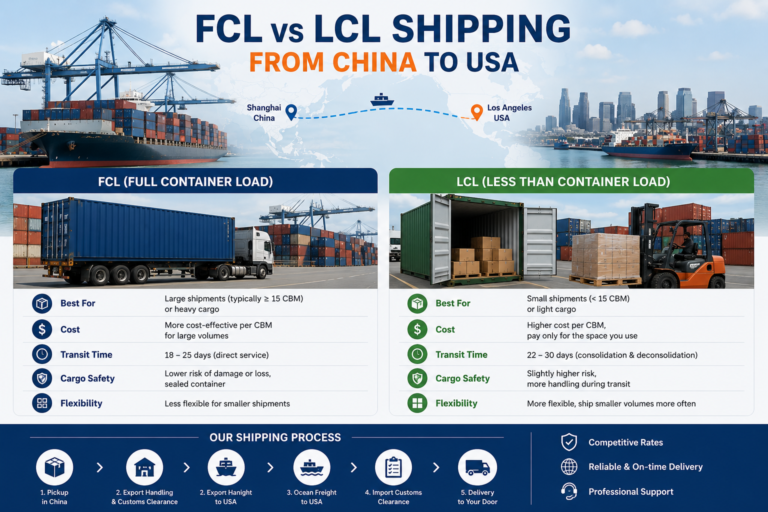
FCL vs LCL shipping from China to USA Verified & Reviewed · Last updated June 2026 FCL vs LCL shipping from China to USA depends on your cargo vo...
Read guide →Demurrage vs Detention vs Storage Verified & Reviewed · Last updated January 2026 Demurrage vs detention vs storage is one of the most expensive...
Learn more → Useful Resource Origin Charges vs Destination Charges in International ShippingOrigin Charges vs Destination Charges in International Shipping Verified & Reviewed · Last updated July 2026 Origin charges and destination charg...
Learn more →WhatsApp us