Related Guide
Shipping from China to Hungary
Shipping from China to Hungary – Sea, Air & DDP in 2026 Fast, reliable shipping from China to Hungary for B2B importers, eCommerce sellers, and p...
Read guide →

Rail freight from China to Hungary offers a practical balance between faster transit and lower shipping costs for commercial cargo moving to Budapest and other Hungarian destinations.
This 2026 guide covers rail transit times, FCL and LCL shipping costs, China-Europe railway routes, customs clearance, and door-to-door delivery from major Chinese manufacturing regions to Hungary.
Rail Freight Service
15–24 Days Transit
FCL / LCL / Door-to-Door
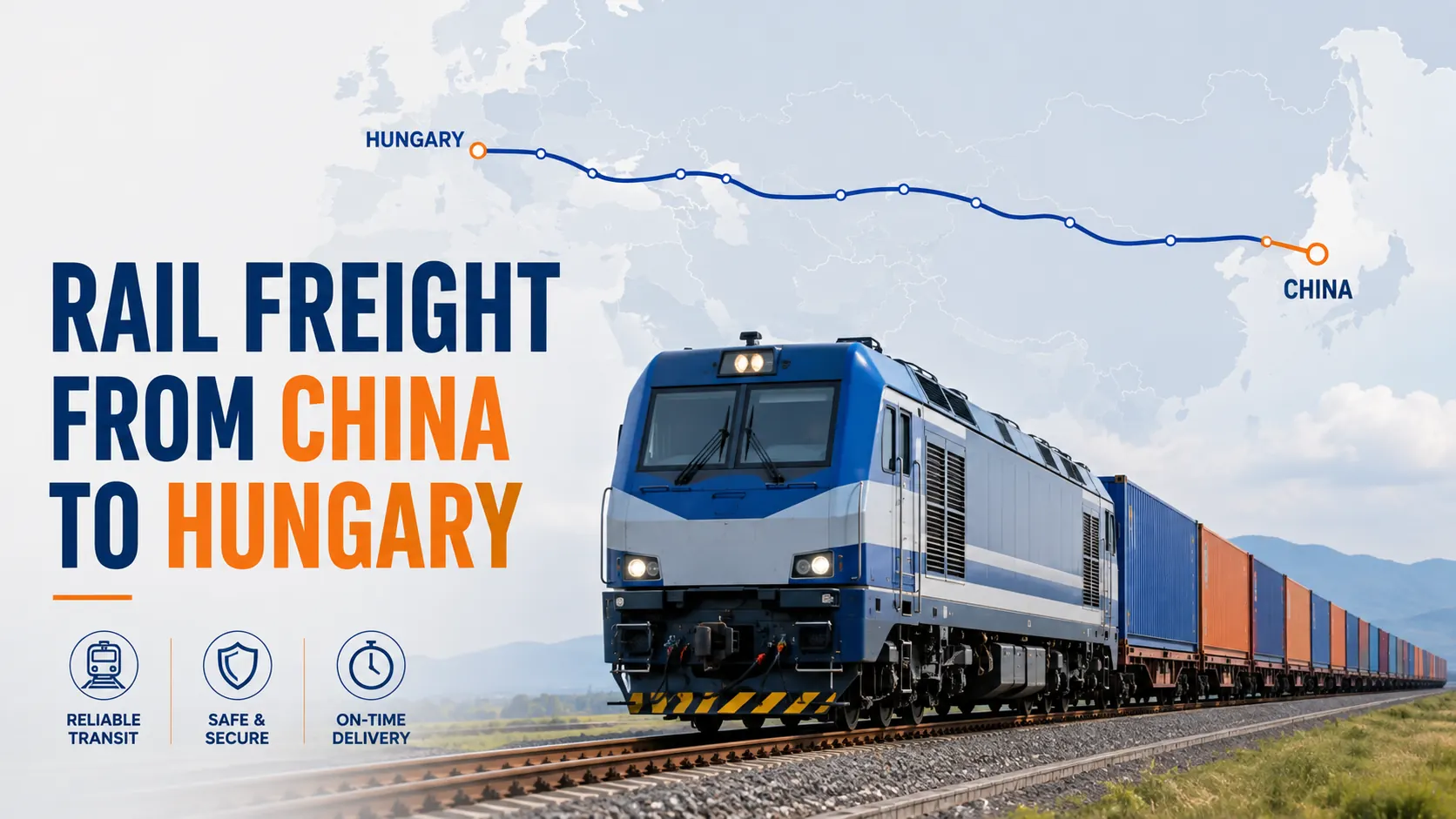
Rail freight from China to Hungary generally takes around 15–24 days from a major Chinese rail hub to Budapest. As a 2026 market reference, FCL rates for a 40ft or 40HQ container are around USD 6,500–9,000, while LCL rail freight is approximately USD 350–500 per CBM.
| Shipping Stage | Estimated Time |
|---|---|
| Pickup and transfer to China rail hub | 1–4 days |
| China rail hub to Budapest | 15–24 days |
| Budapest handling and inland delivery | 1–3 days |
The actual transit time depends on the departure hub, train schedule, border conditions and available capacity. Cargo collected from Shenzhen, Guangzhou, Shanghai or other coastal cities may require additional first-mile transport before joining the China-Europe rail service.
Selected fixed-schedule trains can be faster, but 15–24 days is a more practical planning range for standard rail shipments.
| Rail Service | Reference Cost |
|---|---|
| FCL – 40ft / 40HQ | USD 6,500–9,000 / container |
| LCL Rail Freight | USD 350–500 / CBM |
| Door-to-Door FCL | USD 7,500–11,150+ |
FCL is priced per container, while LCL is normally calculated by cubic meter (CBM) or chargeable measurement.
Door-to-door rates can also include pickup in China, terminal handling, customs clearance and inland delivery in Hungary. Import duties and VAT are normally separate unless specifically included in the quotation.
The main factors are:
Departure city and rail hub
FCL or LCL shipment
Cargo volume and weight
Train capacity and departure schedule
Peak-season demand
Final delivery location in Hungary
For an accurate quote, provide the cargo description, dimensions, gross weight, pickup city and delivery postcode in Hungary.
Hungary-bound cargo uses the wider China-Europe Railway Express network rather than one single railway route. The departure hub is selected according to the supplier location, available train schedule, container space and total transport cost.
A typical movement is:
Supplier in China → China rail hub → Eurasian rail corridor → Budapest → customs clearance → inland delivery
Rail shipments travel overland through Eurasia before entering the European railway network. At certain border interchange points, containers may need to be transferred between wagons because different railway systems use different track gauges.
These transfers are part of normal international rail operations and can influence the overall transit time when interchange terminals are congested.
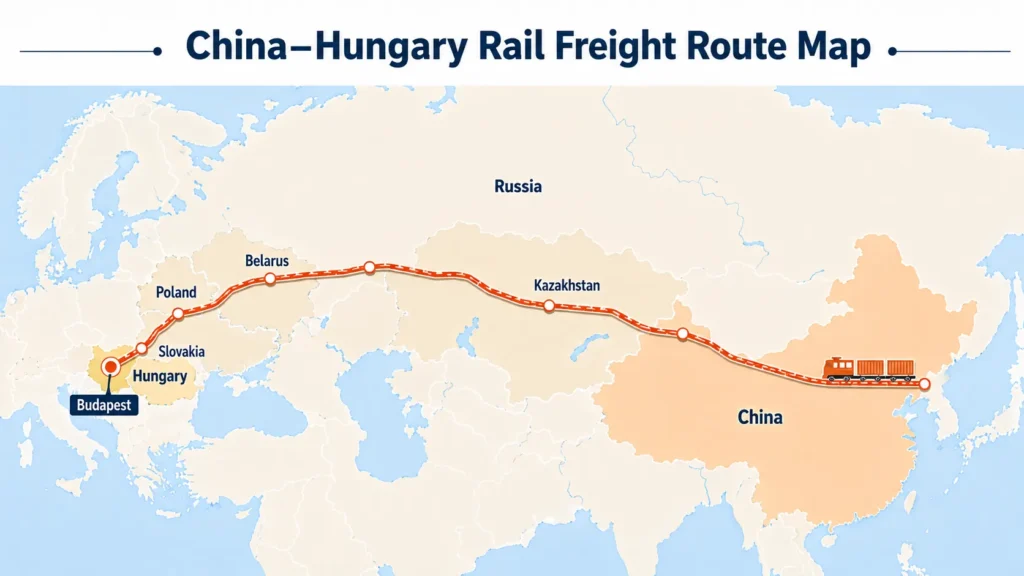
Xi’an is one of the key departure hubs for rail cargo moving toward Hungary. Other major China-Europe railway gateways include Chongqing, Chengdu, Zhengzhou, Wuhan and Yiwu.
Cargo does not need to be manufactured near an international rail terminal. Goods from Shenzhen, Guangzhou, Dongguan, Shanghai, Ningbo and other manufacturing regions can first be collected by truck and transferred to a suitable inland hub.
The best departure terminal depends on:
Supplier location
First-mile transport cost
Train frequency
Available container space
Current rail capacity
Required transit time
For example, a shipment from Shenzhen may use an inland terminal with a better Europe-bound schedule rather than simply choosing the geographically closest rail connection.
An established routing toward Hungary can move through the China–Kazakhstan border and continue through Central Europe before reaching Budapest. The exact rail corridor depends on the current train operator and schedule.
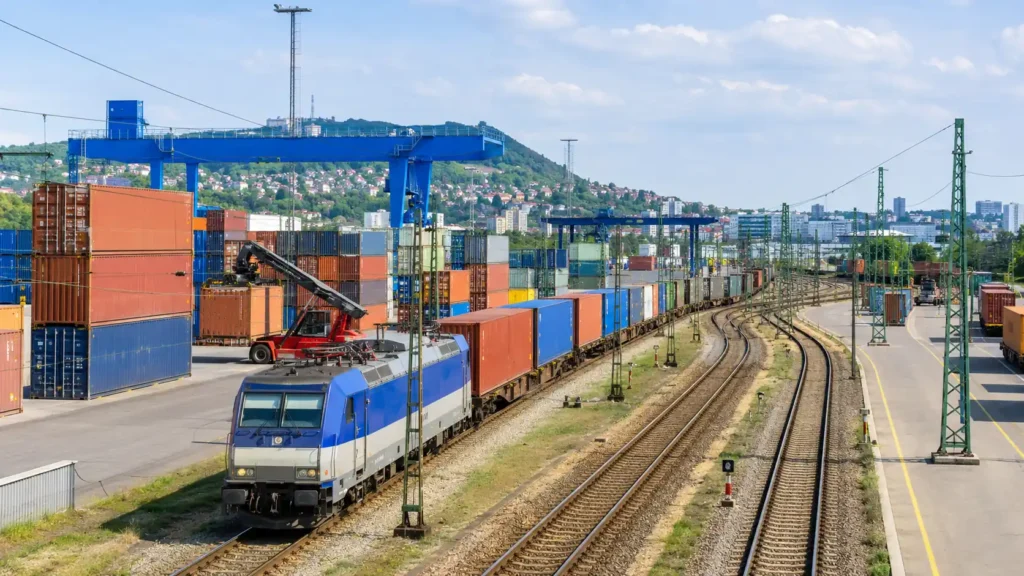
Budapest is the main logistics and distribution hub for Hungary-bound cargo arriving by rail.
The BILK intermodal terminal in the Budapest area connects international container trains with terminal handling and road transportation. After arrival and customs release, cargo can continue by truck to warehouses, factories and distribution centers throughout Hungary.
Typical destinations include:
Budapest
Győr
Debrecen
Kecskemét
Miskolc
Székesfehérvár
For many shipments, Budapest is therefore the end of the international rail journey rather than the final delivery address.
Selected fixed-schedule China-Europe services may provide a shorter transit time than standard trains, but availability depends on the departure date, route and available capacity. The current schedule and expected transit time should always be confirmed before booking.
Rail shipments to Hungary can move as FCL, LCL or door-to-door service. The right option depends mainly on cargo volume, handling requirements and whether the importer wants to manage pickup and inland delivery separately.
FCL (Full Container Load) is usually the better choice for larger shipments that justify dedicated container space.
A full container load reduces consolidation and deconsolidation handling because the container is used by one shipper. FCL is commonly used for machinery, automotive parts, industrial equipment, electronics and larger commercial orders.
FCL is normally priced per container and can become more cost effective as cargo volume increases. The practical container load also depends on cargo dimensions, gross weight and railway payload limits.
For particularly heavy cargo, the allowable payload should be checked before booking.
LCL (Less than Container Load) is designed for smaller shipments that do not require a full container.
Cargo from different shippers is consolidated into the same container, making an LCL shipment suitable for several pallets, cartons or smaller commercial orders. Pricing is generally based on cubic meter (CBM) or the applicable chargeable measurement.
LCL includes additional consolidation and destination handling, so the total cost should be compared with FCL once the shipment volume becomes larger.
For smaller shipments, LCL provides access to rail transportation without paying for an entire container.
Door-to-door rail is suitable for importers that want one freight forwarder to coordinate the shipment from the supplier in China through to the final address in Hungary.
A typical door-to-door service can include:
Supplier pickup → China rail hub → export handling → international rail transport → Budapest → customs clearance → inland delivery
This option is particularly useful when the supplier is located away from a major rail terminal or when the consignee does not want to arrange local trucking and customs coordination separately.
DAP or DDP arrangements may also be available depending on the cargo, destination and importer setup. The exact customs and tax responsibilities should be confirmed before booking.
Rail shipments arriving in Hungary from China must comply with European Union (EU) customs procedures. The importer normally needs a valid EORI number, and the shipment must be declared using the correct HS or TARIC classification.
The main documents normally include:
Commercial invoice
Packing list
Railway transport document
EORI number
HS or TARIC code
Import declaration
Product certificates or permits where required
Depending on the rail service and route, a CIM/SMGS railway consignment note may be used as the transport document for the international rail movement.
The commercial invoice and packing list should match the actual cargo details, value, quantity and weight. Incorrect classifications or inconsistent information can lead to additional customs checks and delays.
For certain declarations, the Single Administrative Document (SAD) may form part of the EU customs declaration process.
Hungarian customs authorities assess applicable customs duties according to the product classification, origin and declared customs value.
There is no single customs duty rate for all imports from China. The applicable rate depends on the product’s TARIC classification, customs value and origin under European Union tariff rules.
Hungary applies a standard 27% VAT rate to imports. The taxable amount can include the customs value, applicable duty and certain transport-related costs.
Accurate HS codes and customs values help support smoother clearance and reduce the risk of customs delays or additional documentation requests.
Rail cargo entering the European Union is also subject to advance safety and security requirements.
Under ICS2, an Entry Summary Declaration (ENS) is required for goods entering or transiting the EU by rail before arrival.
Providing accurate cargo descriptions, HS codes and customs values in advance helps Hungarian customs and other EU customs authorities process the shipment more efficiently.
After customs clearance in the Budapest area, the cargo can be released for inland delivery to the consignee.
Rail freight is most suitable for shipments that need a better balance between speed and cost than sea or air transport can provide. It works especially well for commercial cargo where a 15–24 day transit time is acceptable but ocean shipping is too slow.
Typical Hungary-bound rail cargo includes:
Automotive parts and components
Machinery and industrial equipment
Electronics and electrical products
Consumer goods
E-commerce inventory
High-value goods that are not urgently required
General cargo moving in FCL or LCL
Rail can be a cost-effective solution for medium-sized and time-sensitive shipments that would otherwise be expensive to move by air.
Rail is not the best option for every shipment. Urgent samples, replacement parts and very small shipments are usually better suited to air or express shipping, while large low-value cargo with flexible schedules may be more economical by sea.
Dangerous goods and lithium batteries require separate acceptance checks. Availability depends on the cargo classification, packaging, railway operator, route and terminal requirements, so DG cargo should be confirmed before booking.
Rail sits between air and sea freight in both speed and cost.
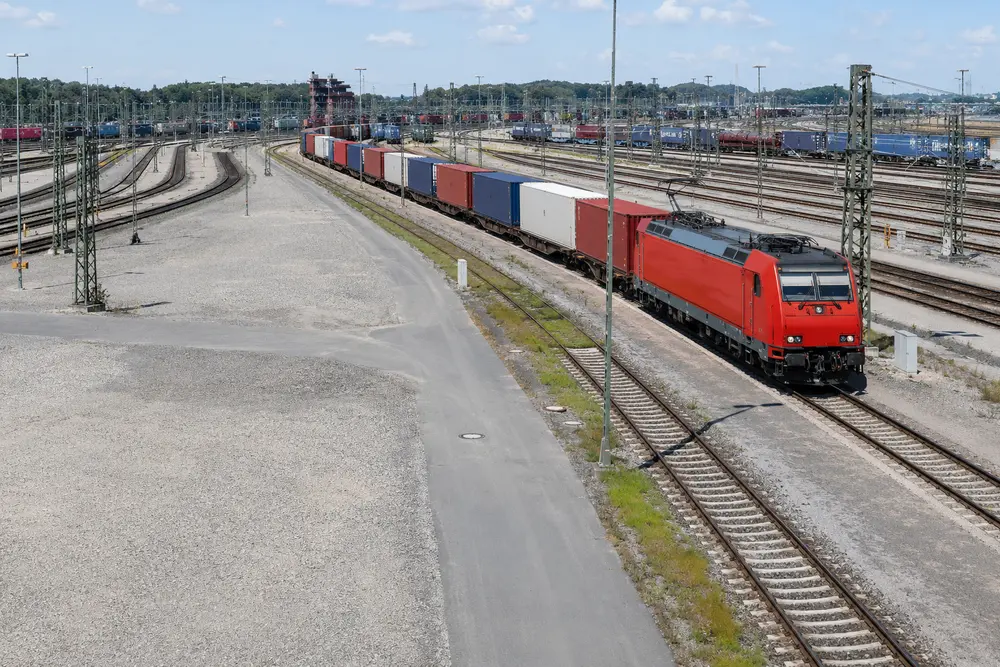
Commercial cargo balancing time and cost
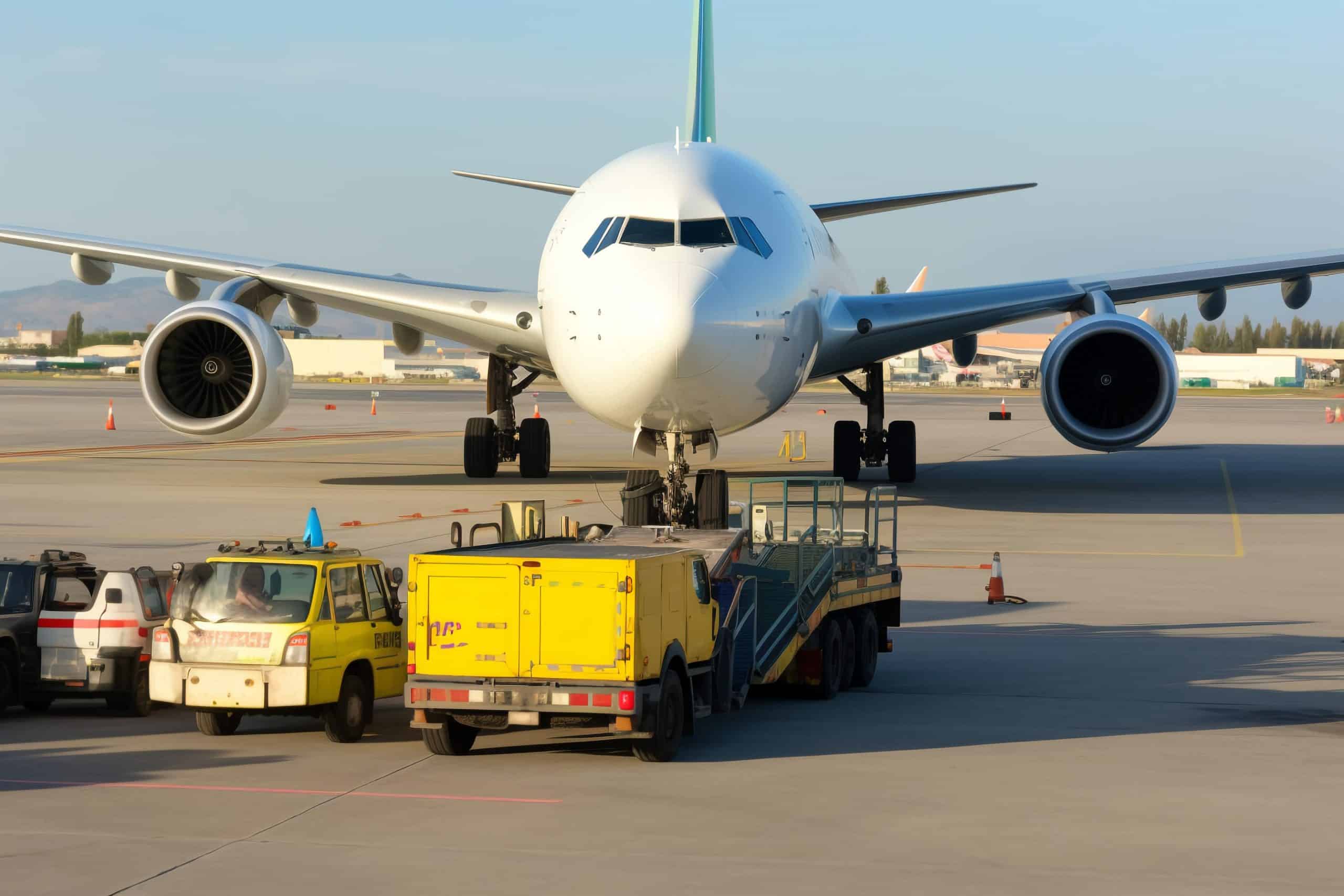
Urgent and high-value cargo
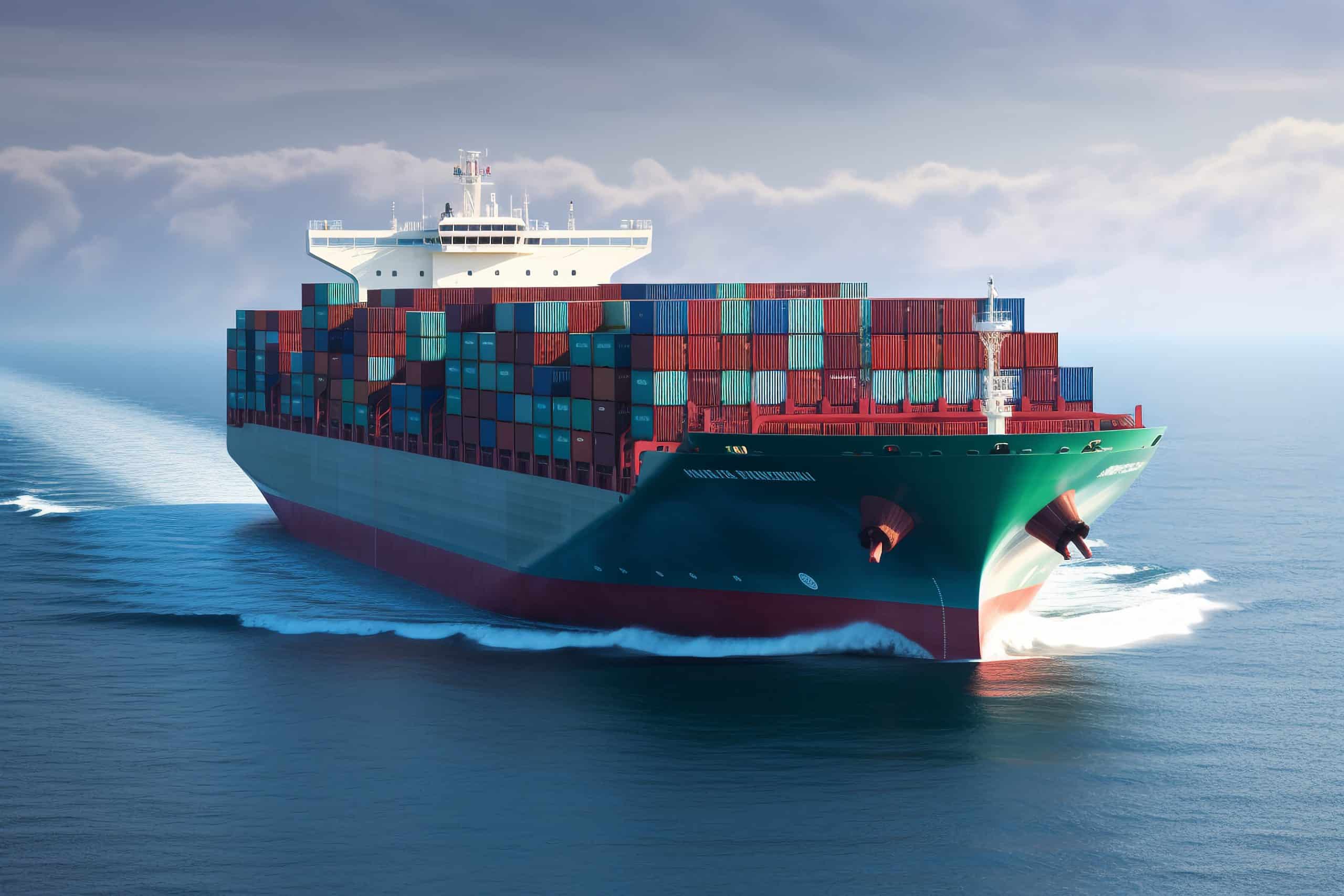
Bulk and cost-sensitive shipments
Air freight is normally the better shipping method for urgent samples, spare parts and time-sensitive shipments. It provides much faster transportation, but air freight costs increase quickly for heavy or bulky goods.
Sea freight is usually more cost effective for large-volume cargo that can accept a longer transit time. Since Hungary is landlocked, sea shipments must arrive through a European port before continuing inland.
Rail can be a cost-effective shipping method when sea freight is too slow but air freight costs are difficult to justify.
For many commercial shipments, rail provides the middle option, balancing transit time, cargo capacity and total landed cost.
Tonlexing is a freight forwarder providing FCL, LCL and door-to-door service for rail shipments from major manufacturing regions across China to Budapest and other destinations in Hungary.
We can collect cargo from suppliers in Shenzhen, Guangzhou, Shanghai, Ningbo and other Chinese cities and move it to a suitable China-Europe rail terminal.
The departure hub is selected according to the supplier location, first-mile cost, train schedule, available capacity and expected transit time rather than simply choosing the nearest terminal.
Tonlexing can arrange both full container and consolidated rail shipments.
We compare cargo volume, current train schedules, transit time and available container space before recommending a suitable option. This helps determine whether FCL, LCL or door-to-door rail service is more practical for the shipment.
After the cargo reaches Budapest, we can assist with customs documentation coordination and arrange inland trucking to the final address in Hungary.
To prepare an accurate quotation, provide the cargo description, number of packages, dimensions, gross weight, pickup city in China and delivery postcode in Hungary.
Standard rail services generally take around 15–24 days from a major Chinese rail hub to Budapest. The actual transit time depends on the departure hub, train schedule, border operations and available capacity. First-mile pickup, customs clearance and inland delivery can add additional time.
As a 2026 market reference, a 40ft or 40HQ container may cost around USD 6,500–9,000, while LCL rail freight may cost approximately USD 350–500 per CBM.
Rail services connect major China-Europe Railway Express hubs in China with Budapest. The exact route, departure terminal and transit time depend on the train operator and current schedule.
Cargo normally moves from a major Chinese rail hub through the Eurasian railway network and Central Europe before reaching Budapest. Exact border crossings and intermediate terminals vary by service.
able for larger shipments that require dedicated container space. LCL is better for smaller shipments that can share a container and be charged according to cargo volume.
Useful freight, customs and importing resources related to this shipping guide.
Shipping from China to Hungary – Sea, Air & DDP in 2026 Fast, reliable shipping from China to Hungary for B2B importers, eCommerce sellers, and p...
Read guide →
Shipping Cost from China to Hungary (2026 Guide) Verified & Reviewed · Last updated May 2026 Shipping cost from China to Hungary in 2026 typicall...
Read guide →
How long does it take to ship from China to Hungary? This is one of the most common questions importers ask when sourcing goods from Asia. Shippi...
Read guide →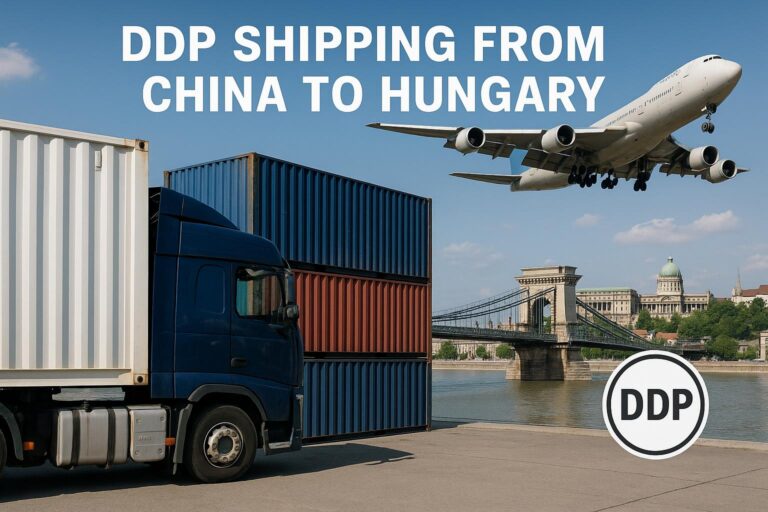
As trade between China and Hungary continues to grow, more businesses are seeking reliable and cost-effective logistics solutions to move their g...
Read guide →Shipping from China / Rail Freight from China International Rail Freight Services · China to Europe & Eurasia Rail Freight from China Move cargo...
Learn more → Useful Resource Railway Freight from China to Europe: A Comprehensive GuideRailway freight has become an increasingly popular shipping solution for businesses looking to transport goods from China to Europe. The rise of...
Learn more →WhatsApp us