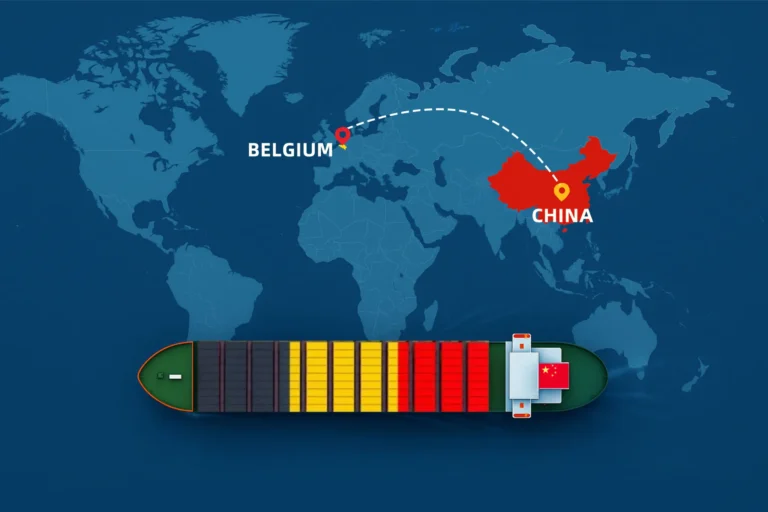
Related Guide
Shipping from China to Belgium
Shipping from China to Belgium – Sea, Air & DDP in 2026 Fast, reliable shipping from China to Belgium for B2B importers, eCommerce sellers,and pr...
Read guide →

Sea Freight from China to Belgium is a cost effective shipping solution for importers moving full container load, LCL cargo, bulk goods, and commercial shipments to Antwerp, Zeebrugge, Brussels, Liège, and other Belgian destinations.
This guide explains sea freight from China to Belgium, including shipping costs, transit times, major ports, FCL and LCL options, customs clearance, import VAT, DDP shipping, and door to door delivery.
Sea freight rates
Transit time range
FCL / LCL shipping
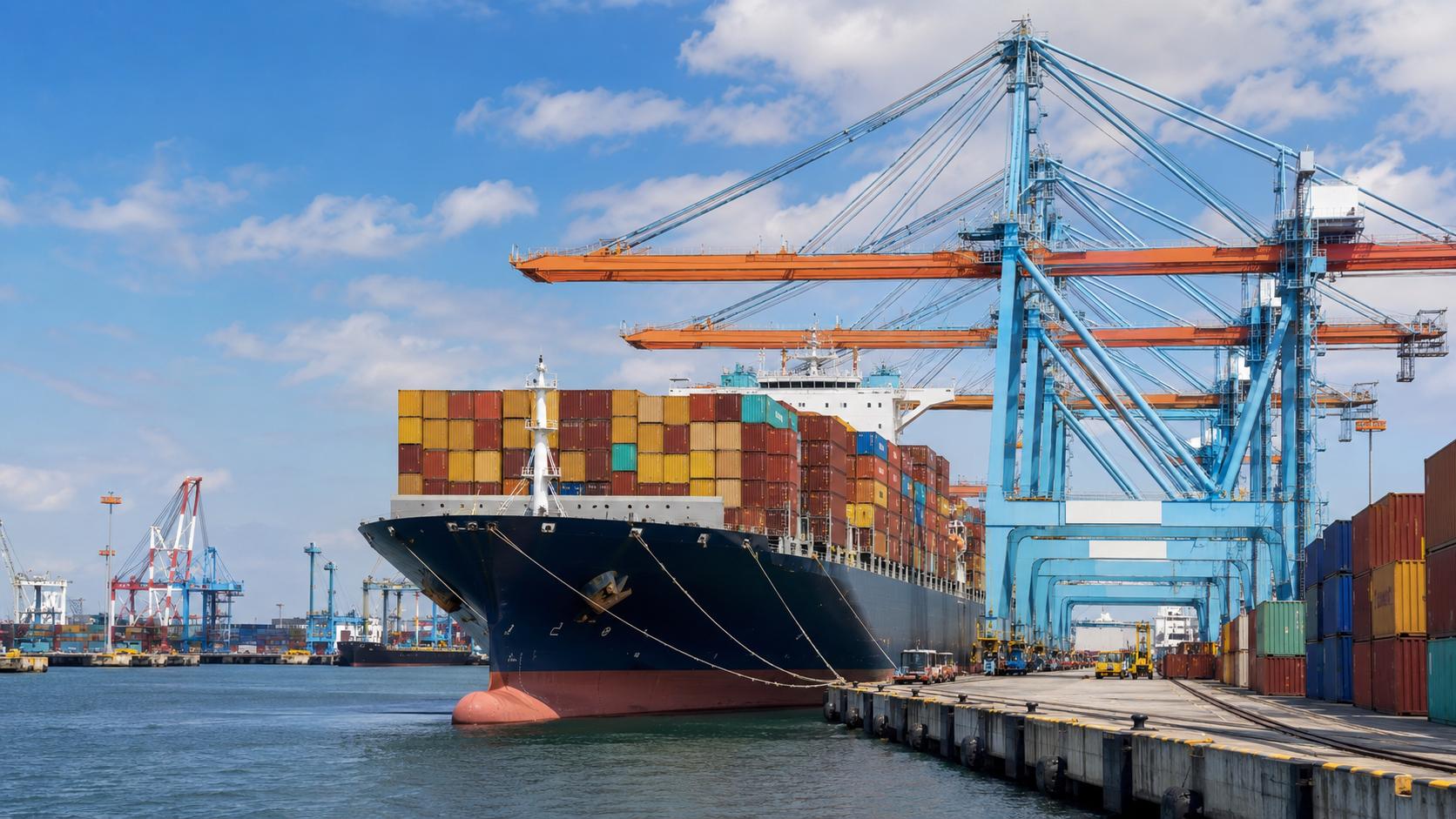
Importers can choose sea freight, air freight, rail freight, express shipping, or DDP shipping when shipping goods from China to Belgium. The right shipping method depends on cargo volume, delivery deadline, product value, budget, customs requirements, and final destination.
Sea freight is usually the most cost effective option for large cargo, while air freight and express shipping are better for urgent or smaller shipments. Rail freight can be a middle option when importers need faster transit times than ocean freight but lower logistics costs than air shipping.
| Shipping Method | Best For | Estimated Transit Time | Cost Level |
|---|---|---|---|
| Sea Freight | FCL, LCL, bulk goods, commercial cargo | 35–45 days | Low |
| Air Freight | Urgent cargo and high value goods | 5–7 days | High |
| Rail Freight | Faster delivery than sea freight | 18–24 days | Medium |
| Express Shipping | Samples, parcels, small packages | 2–5 business days | Very high |
| DDP Shipping by Sea | Tax-paid door delivery | 40–50 days | Medium |
Sea freight from China to Belgium is the preferred option for larger shipments that are not extremely urgent. It is suitable for full container load, LCL shipping, heavy cargo, bulky products, and regular supply chain imports.
Common products shipped by sea include furniture, machinery, auto parts, electronics, lighting products, building materials, textiles, packaging goods, wholesale products, Amazon FBA inventory, and eCommerce stock. The main advantage is lower cost per unit, especially when the shipment uses a full container or a well-planned LCL shipment.
Air freight from China to Belgium usually takes 5 to 7 days to Brussels Airport or nearby European air cargo hubs. It is suitable for urgent cargo, high value cargo, lightweight products, and shipments where delivery speed is more important than cost. Air freight typically costs around $4 to $8 per kilogram, depending on chargeable weight, route, season, and airline capacity.
Rail freight from China to Belgium is faster than sea freight and cheaper than air freight. Some terminal-to-terminal services to Liège may be quoted at around 12 to 14 days, while a more realistic door to door rail freight transit time is usually 18 to 24 days.
Express shipping usually takes 2 to 5 business days. It is mainly used for samples, documents, parcels, small replacement parts, and kg express courier shipments. For larger commercial cargo, express shipping is usually not economical.
Sea freight transit time from China to Belgium typically ranges from 35 to 45 days port to port, depending on the departure port, carrier schedule, routing, and destination port. Most shipments move from major Chinese ports such as Shanghai, Shenzhen, Ningbo, Guangzhou, or Qingdao to the Port of Antwerp or Zeebrugge.
While some faster vessel schedules to Antwerp may average around 25 to 26 days, importers should generally plan for 35 to 45 days when considering vessel schedules, transshipment, port handling, customs clearance, and inland delivery. Door to door shipping usually takes longer because it includes pickup, export customs procedures, ocean freight, Belgian customs clearance, and final delivery.
Actual transit times can vary based on several factors throughout the shipping process. Importers should build extra time into their supply chain planning, especially during busy shipping periods.
Common factors that may affect transit times include:
Peak season demand from September to December
Port congestion in China or Europe
Limited container availability
Customs inspections and document reviews
Vessel schedule changes
Weather disruptions
Transshipment delays
Final delivery arrangements
Geopolitical disruptions can also affect major shipping routes and may add 10 to 14 days or more to the overall voyage time. Working with an experienced freight forwarder helps importers monitor schedules, secure container space, and reduce unexpected delays.
Sea freight from China to Belgium mainly moves through established Asia-Europe shipping routes connecting China’s manufacturing hubs with Belgium’s key logistics gateways. Choosing the right departure and arrival port can help reduce logistics costs, improve transit efficiency, and simplify final delivery arrangements.
Belgium’s strategic location in Western Europe makes it an important distribution center for cargo moving not only to Belgium but also to neighboring countries such as Germany, France, the Netherlands, and Luxembourg.
Most shipments from China to Belgium depart from one of China’s major export ports. The best option depends on the supplier’s location, cargo type, sailing schedule, and inland transportation cost.
Common departure ports include:
Shanghai Port – One of the world’s busiest container ports and a major gateway for East China exports.
Ningbo-Zhoushan Port – Popular for manufacturers in Zhejiang Province.
Shenzhen Port – A key export hub for electronics, consumer goods, and eCommerce products.
Guangzhou / Nansha Port – Frequently used for shipments from Guangdong and South China.
Qingdao Port – Serves many industrial and manufacturing regions in North China.
Tianjin Port – Important for cargo originating from Beijing, Hebei, and surrounding areas.
Shanghai, Shenzhen, and Guangzhou remain among the most commonly used ports for China to Belgium shipping because of their frequent sailings and strong carrier networks.
The two primary arrival ports for sea freight from China to Belgium are Antwerp and Zeebrugge.
Port of Antwerp is one of Europe’s leading container gateways and the second-largest port in Europe by cargo throughput. It handles large container volumes annually and offers extensive connections to inland trucking, rail, barges, warehouses, and distribution centers throughout Europe.
Port of Zeebrugge is another important entry point, particularly for automotive cargo, roll-on/roll-off services, and specific ocean freight routes. It also provides efficient access to Belgium and nearby European markets.
For air cargo shipments, Liège Airport is one of Europe’s most important cargo airports and serves as a major hub for cargo-only flights and eCommerce logistics from China.
A standard China to Belgium sea freight shipment usually follows these steps:
Cargo is collected from the supplier or delivered to a consolidation warehouse.
Goods are loaded into an FCL or LCL shipment.
Export customs clearance is completed in China.
The container departs from a major Chinese port.
Ocean freight moves through Asia-Europe shipping routes.
Cargo arrives at Antwerp or Zeebrugge.
Belgian customs clearance is completed.
Final delivery is arranged to the consignee’s warehouse or business address.
When comparing shipping routes, importers should evaluate total logistics costs rather than focusing only on ocean freight rates. Port charges, customs clearance fees, inland transportation, and final delivery costs can significantly affect the overall shipping budget.
FCL and LCL are the two main container load options for sea freight from China to Belgium. The right choice depends on cargo volume, product type, delivery schedule, budget, and risk level.
FCL shipping is better for larger shipments that need an entire container. LCL shipping is better for smaller shipments that only need part of the container space.
FCL shipping means full container load. Your cargo uses the entire container and does not share container space with other shipments. This gives you better control, less handling, and usually faster release after arrival.
FCL shipping is suitable when:
Your cargo volume is over 15 CBM
You need a full container for your own goods
The shipment is heavy, bulky, fragile, or high value
You want fewer handling steps
You import regularly from China to Belgium
You need direct delivery from factory to warehouse
Common full container options include 20GP, 40GP, and 40HQ. A 20GP container is often used for heavier cargo, while a 40HQ container is better for light but bulky goods. Before booking, your freight forwarder should check carton size, gross weight, loading method, and whether the cargo requires special handling.
LCL shipping means less than container load. Your goods share container space with other shipments moving toward the same destination. This is a cost effective option when your cargo is too small for a full container.
LCL shipping from China to Belgium is commonly used for small commercial orders, sample batches, replacement parts, retail goods, and multiple shipments from different suppliers. LCL rates from China to Belgium are often around $35 to $100 per CBM, but importers should also check warehouse handling fees, destination charges, and final delivery costs.
LCL is usually suitable when:
Your cargo volume is between 1 and 15 CBM
You do not need an entire container
You want to reduce upfront shipping costs
You are testing a new supplier
You need flexible shipping options
You have several small shipments from different suppliers
The main advantage of LCL is flexibility. The main disadvantage is that it may take longer than FCL because cargo must be consolidated in China and separated after arrival in Belgium. Since LCL involves more handling, strong packaging is important.
| Factor | FCL Shipping | LCL Shipping |
|---|---|---|
| Cargo Volume | Usually over 15 CBM | Usually 1–15 CBM |
| Container Space | Entire container | Shared container space |
| Handling | Less handling | More handling |
| Transit Time | Usually more stable | May take longer |
| Cost Structure | Per container | Per CBM |
| Best For | Large or regular shipments | Small or flexible shipments |
If your shipment is close to 15 CBM, ask your freight forwarder to compare FCL and LCL. In many cases, a full container may offer better value, faster handling, and lower risk than a large LCL shipment.
Sea freight cost from China to Belgium depends on the shipping method, container type, cargo volume, departure port, arrival port, final destination, and customs clearance requirements. Importers should compare total shipping costs instead of only checking the base ocean freight rate.
A complete quote may include China pickup, export customs, local port charges, ocean freight, Belgian port charges, customs broker fees, customs duties, import VAT handling, inland trucking, and final delivery.
| Shipping Mode | Estimated Cost |
|---|---|
| 20GP FCL | $1,440–$1,760 |
| 40GP / 40HQ FCL | $2,205–$2,695 |
| LCL Shipping | $35–$100 per CBM |
| Air Freight | $4–$8 per kg |
| Express Shipping | Charged by kg or volumetric weight |
These rates are general references only. Actual freight rates change with peak season, fuel surcharges, carrier adjustments, port congestion, container space, and cargo details.
Even for the same China to Belgium route, logistics costs can vary widely. A shipment from Shenzhen to Antwerp may have a different cost structure from a shipment from Qingdao to Zeebrugge because local trucking, sailing frequency, port charges, and final delivery distance are different.
The main cost factors include:
Cargo volume and gross weight
FCL or LCL shipment type
Departure port in China
Arrival port in Belgium
Final destination after customs clearance
Container availability
Peak season demand
Product category and HS code
Customs inspection risk
Door to door services or port only delivery
For larger shipments, sea freight is usually the most economical solution. For urgent shipments, importers may compare sea and air freight or use rail freight as a middle option.

Customs clearance is a critical step when shipping goods from China to Belgium. Even if the cargo arrives on time, incomplete documentation or incorrect declarations can delay release and increase storage or handling costs. Belgian customs reviews the shipment’s value, classification, origin, and supporting documents before goods can enter the European Union market.
For commercial imports, businesses must ensure that all customs information is accurate and consistent. Working with an experienced freight forwarder or customs broker can help avoid unnecessary delays and compliance issues.
Accurate documentation is mandatory for customs clearance in both China and Belgium. The information provided on each document should match the actual cargo details.
Key documents include:
Commercial Invoice – Shows the buyer, seller, product description, quantity, unit price, and total transaction value.
Packing List – Details carton quantities, dimensions, gross weight, and net weight.
Bill of Lading – Required for sea freight shipments and cargo release.
Certificate of Origin – May be required to determine eligibility for preferential duty treatment.
EORI Number – Mandatory for all EU commercial imports.
Product Certifications – Required for regulated products such as electronics, machinery, batteries, toys, and certain consumer goods.
Discrepancies between the commercial invoice and packing list are one of the most common reasons for customs delays.
Harmonized System (HS) Codes are used to classify products and determine import duty percentages. EU customs duties vary depending on the product category, country of origin, and customs value of the goods.
Belgium applies a standard VAT rate of 21% on imported goods. Import VAT is generally calculated based on the CIF value of the shipment plus any applicable customs duties and import-related charges.
Before shipping goods from China, importers should verify:
The correct HS code
Customs value declaration
Applicable duty rates
Product compliance requirements
VAT obligations
Accurate declarations help prevent customs audits, delays, and unexpected costs.
Most customs issues are caused by documentation errors rather than transportation problems. Importers can reduce risk by reviewing all paperwork before the shipment departs China.
Common causes of delays include:
Incorrect HS codes
Missing EORI number
Incomplete commercial invoice
Inconsistent packing list information
Incorrect customs value declaration
Missing compliance certificates
Customs inspections
Unpaid duties or VAT
For products subject to European regulations, additional compliance documents may be requested before customs release.
A customs broker helps manage import declarations, duty calculations, customs documentation, and communication with Belgian customs authorities. For first-time importers or businesses shipping complex cargo, professional customs support can simplify the process and reduce compliance risks.
Many freight forwarders provide customs clearance assistance as part of their door-to-door shipping services, helping importers move goods from China to Belgium more efficiently and avoid unnecessary delays.
Door to door shipping from China to Belgium is a complete logistics service from the supplier’s address in China to the buyer’s final destination in Belgium. It can include pickup, export customs, sea freight, Belgian customs clearance, port release, inland trucking, and final delivery.
This service is useful for first-time importers, Amazon FBA sellers, eCommerce businesses, and companies that do not want to manage multiple logistics providers separately. Instead of coordinating with a supplier, trucking company, carrier, customs broker, and local delivery provider, the importer works with one freight forwarder.
DDP shipping, or delivered duty paid shipping, goes further because customs clearance, customs duties, import VAT handling, and final delivery are included or managed under the service arrangement. It is popular with small businesses that want all-inclusive pricing and a simpler logistics process.
Door to door and DDP services are suitable for:
Amazon FBA inventory
eCommerce stock
Small business imports
Buyers without local customs experience
Shipments requiring final delivery to warehouse or business address
Importers who want one freight forwarder to manage the full process
However, DDP shipping should not be used as a shortcut for unclear declarations. The cargo still needs accurate product descriptions, HS codes, customs value, commercial invoice, and compliance documents. A reliable freight forwarder should explain what is included, what is excluded, and what information is required before shipment.
Choosing the right freight forwarder is important when shipping from China to Belgium. A good forwarder should not only quote freight rates, but also help you choose the right shipping method, arrange container space, check documents, manage customs clearance, and coordinate final delivery.
For sea freight from China to Belgium, the forwarder should understand FCL, LCL, door to door shipping, Belgian customs requirements, and common delays during the shipping process.
Before booking, check whether they can provide:
FCL and LCL shipping from China to Belgium
Pickup from Chinese suppliers
Customs clearance support in Belgium
Door to door and DDP shipping
Cargo tracking during transit
Clear breakdown of origin, freight, destination, and delivery costs
Support for complex cargo or regulated products
The lowest quote is not always the best option. A reliable freight forwarder should provide competitive pricing, clear communication, accurate documentation support, and practical solutions when delays or customs issues occur.
Sea freight from China to Belgium usually takes 35 to 45 days port to port. Some faster schedules to Antwerp may be around 25 to 26 days, but importers should use 35 to 45 days as a safer planning range. Door to door shipping usually takes around 40 to 50 days because it includes pickup in China, export customs, ocean freight, Belgian customs clearance, port release, and final delivery.
The cost depends on cargo volume, container type, departure port, arrival port, final destination, and current freight rates. As a general reference, a 20GP container may cost around $1,440 to $1,760, while a 40GP or 40HQ container may cost around $2,205 to $2,695. LCL shipping is often around $35 to $100 per CBM.
FCL is better for larger shipments, especially when cargo volume is over 15 CBM or when goods are heavy, fragile, bulky, or high value. LCL is better for smaller shipments that do not need an entire container. It is flexible but may involve more handling and longer processing time.
The main documents include commercial invoice, packing list, bill of lading, HS code information, importer EORI number, and product certificates when required. A certificate of origin may also be needed for some products or preferential duty treatment.
Yes. DDP shipping from China to Belgium is available for many types of cargo. It can include freight shipping, customs clearance, customs duties, import VAT handling, and final delivery. Importers still need accurate cargo details, correct customs value, and proper compliance documents.
Useful freight, customs and importing resources related to this shipping guide.
Shipping from China to Belgium – Sea, Air & DDP in 2026 Fast, reliable shipping from China to Belgium for B2B importers, eCommerce sellers,and pr...
Read guide →
Shipping Cost from China to Belgium (2026 Guide) Verified & Reviewed · Last updated May 2026 Shipping cost from China to Belgium in 2026 typicall...
Read guide →
How long does it take to ship from China to Belgium? This is one of the most common questions importers ask when sourcing goods from Asia. Shippi...
Read guide →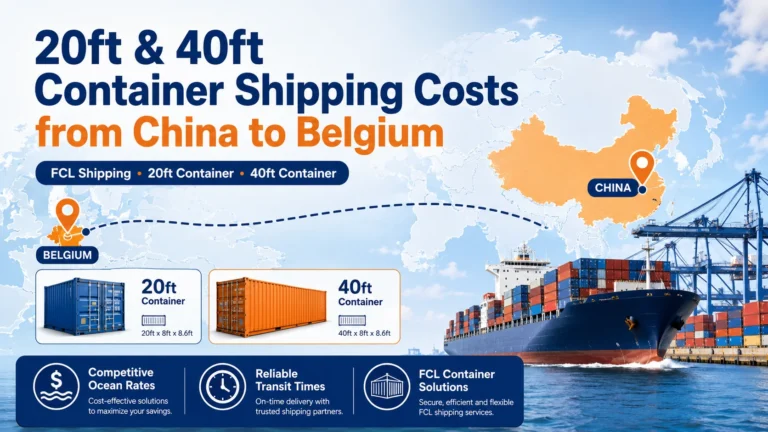
20ft 40ft Container Shipping Costs from China to Belgium Verified & Reviewed · Last updated June 2026 Shipping containers from China to Belgium i...
Read guide →When it comes to air freight from China to Belgium, importers and exporters often consider it the most reliable option for urgent or high-value s...
Learn more → Useful Resource DDP shipping from China to BelgiumIn recent years, trade between China and Belgium has grown rapidly, driven by the increasing demand for electronics, machinery, textiles, and con...
Learn more →WhatsApp us