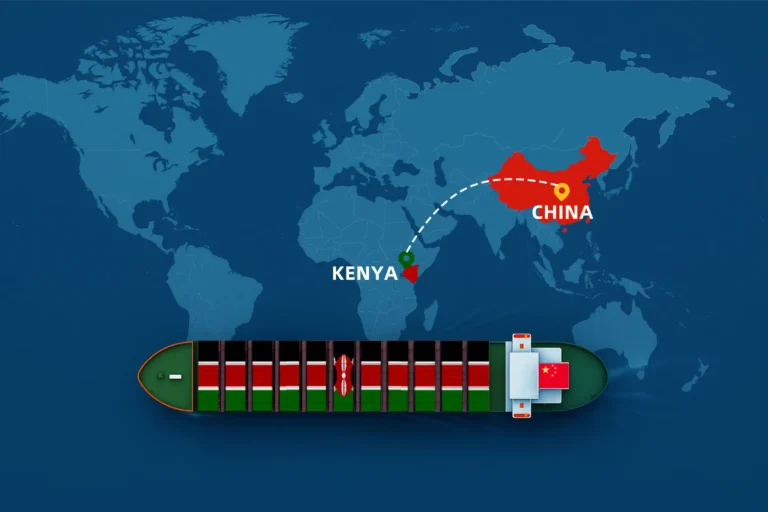
Related Guide
Shipping from China to Kenya
Shipping from China to Kenya (Sea, Air & DDP) | 2026 Guide Fast, reliable shipping from China to Kenya for B2B importers, eCommerce sellers,and p...
Read guide →

Sea freight from China to Kenya is a cost-effective option for machinery, furniture, building materials, solar products, textiles, electronics and other larger commercial shipments.
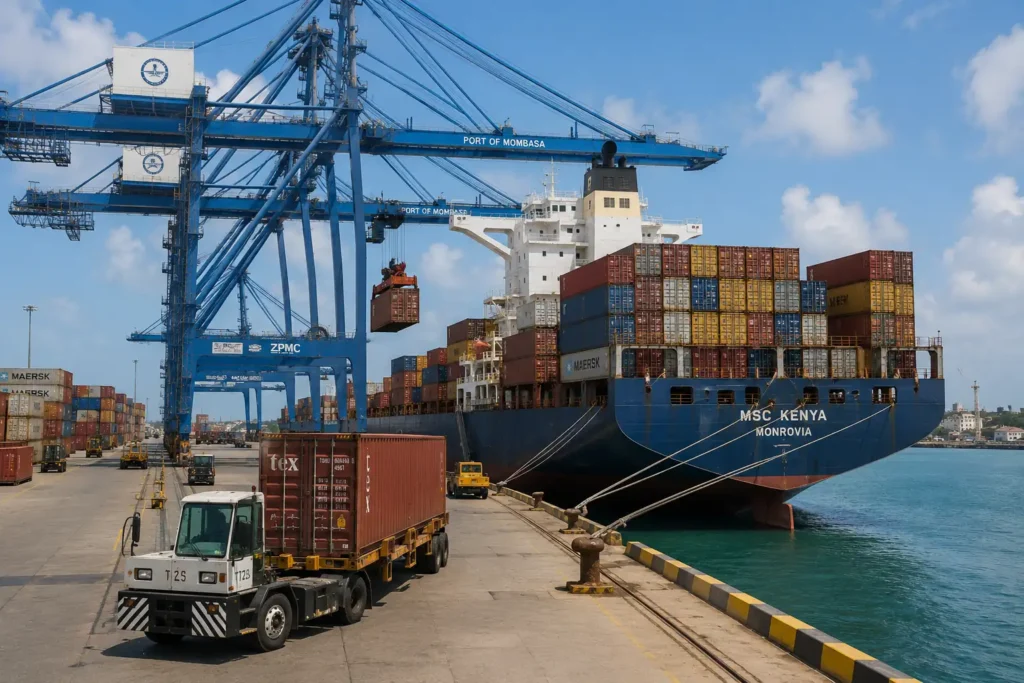
Most cargo arrives through Mombasa, Kenya’s main seaport, before continuing to Nairobi and other inland destinations by road or rail. The port also serves as an important gateway to East and Central Africa.
Sea Freight Cost
Transit time range
FCL / LCL Shipping
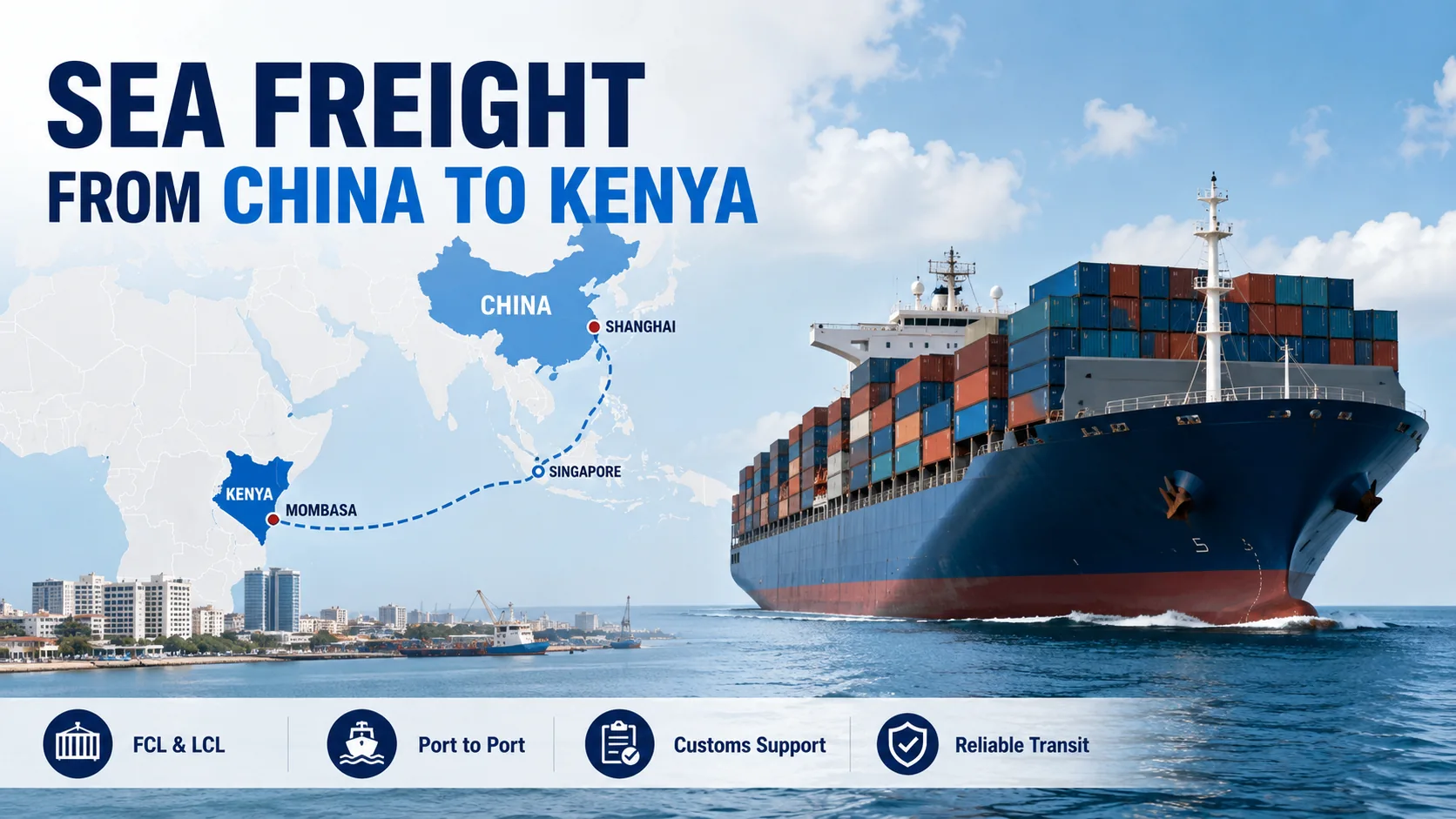
The table below summarizes the main shipping options. These are planning ranges rather than guaranteed schedules or fixed quotations.
| Shipping option | Typical transit time | Best for | Main consideration |
|---|---|---|---|
| LCL sea freight | 30–47 days | Smaller loads that do not fill a container | More cargo handling and destination charges |
| FCL sea freight | 22–34 days port to port | Larger shipments and dedicated containers | Container size, free time and return arrangements |
| Door-to-door sea freight | 35–50 days total | Pickup, clearance support and final delivery | Confirm whether duties and taxes are included |
| Air freight | About 4–7 days | Commercial cargo with a firm deadline | Charged by actual or volumetric weight |
| Express shipping | About 3–5 days | Samples, documents and small parcels | Expensive for bulky cargo |
Sea freight is normally the best value when inventory can be planned in advance. Air freight and courier services remain useful for urgent spare parts, samples and time-sensitive shipments. See Tonlexing’s air freight from China to Kenya guide for a more detailed comparison.
The sea freight cost from China to Kenya depends on the departure port, container type, cargo volume, shipping season and final delivery location. Ocean freight is only one part of the total cost, so importers should also consider origin charges, destination fees, customs clearance and inland delivery.
| Shipping mode | Indicative cost (July 2026) |
|---|---|
| LCL sea freight to Mombasa | USD 70–270/CBM |
| 20GP FCL to Mombasa | USD 2,400–4,700/container |
| 40GP FCL to Mombasa | USD 3,800–6,300/container |
| 40HQ FCL to Mombasa | USD 4,400–5,700/container |
| Door-to-door sea freight | Quoted by cargo details and destination |
These figures are indicative market ranges. Actual shipping rates may change depending on the carrier, booking date, cargo details and included services.
Door-to-door shipping simplifies logistics by managing the entire process from pickup through delivery, and a complete sea freight quotation from China to Kenya may include:
Supplier pickup and warehouse handling
Export customs clearance in China
Ocean freight and carrier surcharges
Documentation fees
Mombasa Port or CFS handling
Customs clearance support
Import duties, VAT and applicable levies
Inland transportation to the final destination
The total landed cost can be calculated as:
Total shipping cost = China origin charges + ocean freight + Kenya destination charges + customs taxes + inland delivery
A lower ocean freight rate does not always mean a lower final cost. Confirm all destination items upfront, including handling, customs clearance, and local delivery fees, so there are no hidden charges at the final stage.
The final sea freight price is mainly affected by:
Cargo volume and weight: Larger shipments may be more suitable for FCL containers, while smaller shipments may benefit from LCL consolidation.
Departure port: Shenzhen, Shanghai, Ningbo and other ports have different freight levels, sailing schedules and local charges.
Cargo type: Batteries, chemicals, machinery and oversized goods may require additional handling or documentation.
Final destination: Delivery to Nairobi or other inland cities adds transportation costs after arrival at Mombasa Port.
Shipping season: Peak periods and limited container availability can influence freight rates.
When comparing quotations, importers should review the complete service scope and look for cost effective solutions instead of focusing only on the ocean freight rate.
Need a shipping cost comparison? Tonlexing can help with reducing costs by comparing LCL, 20GP and 40HQ options against your cargo profile, supplier location and delivery requirements.
LCL and FCL are the two main sea transport services used when shipping goods from China to Kenya.
LCL means less than container load. The shipment shares container space with cargo from other importers and is normally charged by volume or revenue ton. It is practical for smaller loads, trial orders and cargo collected from several suppliers.
FCL means full container load. The importer books the entire shipping container even when it is not completely full. FCL is usually preferred for larger shipments, fragile products, high-value equipment or cargo that should not be mixed with other goods.
| Decision factor | LCL shipping | FCL shipping |
|---|---|---|
| Shipment size | Small and medium cargo | Larger shipments |
| Pricing | CBM or revenue ton | Flat container rate plus local charges |
| Handling | Consolidated and deconsolidated | Fewer handling stages |
| Transit time | Usually longer | Usually faster |
| Packaging | Strong cartons or pallets required | Secure loading still required |
| Destination cost | Can be high per CBM | Spread across the container load |
There is no universal CBM point where FCL becomes cheaper. The answer depends on origin fees, destination charges, cargo density and container availability. Request both calculations when the cargo approaches half a container or has unusual dimensions.
FCL sea freight from China to Kenya generally requires around 22–34 days port to port based on the July 2026 planning ranges. LCL normally requires about 30–47 days because the shipping process includes warehouse receiving, consolidation in China and deconsolidation after the goods arrive.
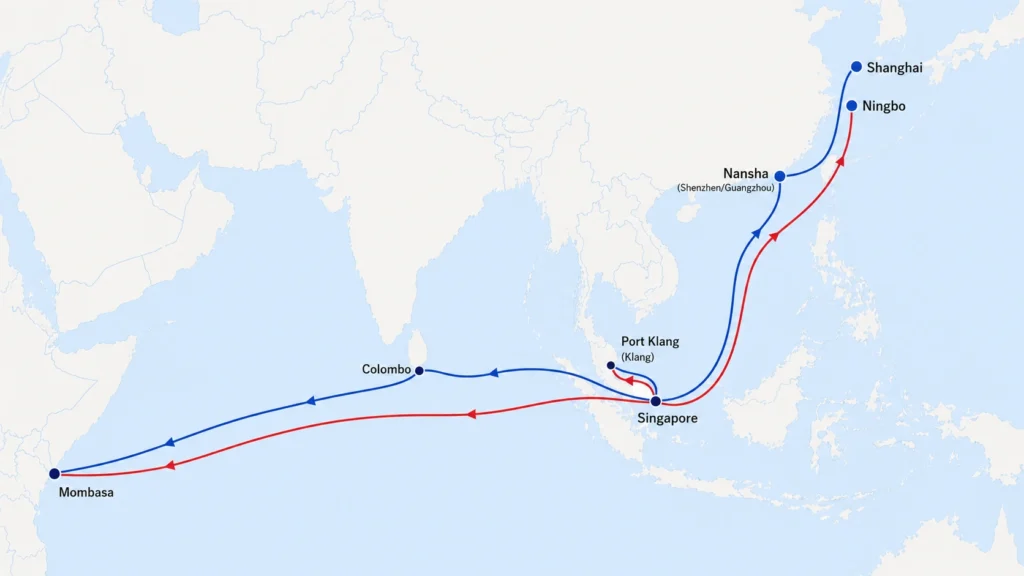
Common departure ports include Shenzhen, Guangzhou, Ningbo, Shanghai, Qingdao and Tianjin. The actual route may be direct or involve transshipment.
| Chinese origin port | Destination | Estimated transit time |
|---|---|---|
| Shenzhen or Guangzhou | Mombasa | 22–30 days |
| Ningbo | Mombasa | 25–35 days |
| Shanghai | Mombasa | 25–35 days |
| Qingdao | Mombasa | 28–38 days |
| Tianjin | Mombasa | 30–40 days |
These shipping times are estimates for route planning. They are not guaranteed schedules. The selected carrier, sailing frequency, transshipment, weather conditions, customs inspections and congestion may extend the timeline.
Most sea freight from China to Kenya follows routes from major Chinese container ports to Mombasa Port. It is Kenya’s largest container port, with 16 deep-water berths and two oil terminals.
Common departure ports include:
Shenzhen and Guangzhou: Suitable for suppliers in Guangdong and nearby manufacturing areas.
Shanghai and Ningbo: Common choices for factories in East China, including Jiangsu, Zhejiang and surrounding regions.
Qingdao and Tianjin: Often used for suppliers in North China.
After arriving at Mombasa, cargo can be delivered locally or transported inland to destinations such as Nairobi, Nakuru and other locations across the wider East Africa corridor by road or rail, and Mombasa Port also serves landlocked countries like Uganda and Rwanda.
Port-to-port transit time only covers the ocean movement between China and Mombasa. Importers should also consider the additional time required for pickup, export procedures, customs clearance and final delivery.
A typical door-to-door sea freight timeline includes:
Factory pickup in China: 1–5 days
Export handling and documentation: 2–7 days
Ocean freight to Mombasa: 22–40 days
Kenya customs clearance: 3–10 days
Inland delivery: 1–5 days
For most commercial shipments, a realistic door-to-door timeline is around 35–50 days, depending on the cargo type, destination and clearance requirements.
Need a transit time estimate for your shipment? Tonlexing can check suitable routes based on your supplier location, cargo volume and delivery destination in Kenya.
A well-managed shipping process starts before the freight forwarder books container space. Each stage should have a responsible party and document deadline.
Ask the supplier for the final product description, HS code, quantity, carton dimensions, gross weight and cargo value. Use final export packaging measurements, not catalogue dimensions. For multiple suppliers, prepare one master file and separate packing lists.
Before shipping from China to Kenya, confirm whether the goods require PVoC certification, a Certificate of Conformity, an import permit, special labelling or approval from another Kenyan authority. Product safety checks should be completed early enough for the supplier to correct problems before loading.
Compare the shipment size, deadline and total landed cost. Decide whether the service ends at Mombasa Port, includes customs clearance, or continues to the final address.
Tonlexing can arrange pickup from one or more factories or receive deliveries at a China warehouse. Quantities, shipping marks and visible packaging condition should be checked against the packing lists.
The freight forwarder confirms the route, cutoff date, estimated departure and transit time. The exporter provides the commercial documents needed for China export customs clearance.
LCL goods are consolidated with other shipments. FCL goods are loaded, secured and sealed in a dedicated container. Cargo under an applicable PVoC route may also require sealing coordinated with an approved inspection contractor.
The importer sends the bill of lading, invoice, packing list, CoC and other documents to the licensed clearing agent. Pre-arrival preparation supports efficient customs clearance and gives time to correct discrepancies.
After assessment, payment and any inspection, the cargo is released. The provider can deliver goods in Mombasa or transport goods to Nairobi and other destinations. Monitor free time to avoid delays, demurrage and detention.
Customs clearance is a critical step when shipping from China to Kenya. Even if the ocean freight arrives on schedule, incomplete documents, incorrect HS codes or missing compliance certificates can delay cargo release and increase storage costs.
For most commercial shipments, importers work with a licensed clearing agent in Kenya to submit customs declarations, arrange inspections when required and complete cargo release procedures.
The customs clearance process normally includes:
Document preparation: The importer or supplier prepares the commercial invoice, packing list, bill of lading and supporting certificates before arrival.
Import declaration: The clearing agent submits the shipment information through the Kenyan customs system.
Assessment and inspection: Kenyan Customs reviews the HS classification, declared value and documents and may request a physical inspection.
Payment: Customs duties, VAT and applicable levies are settled.
Release: After approval, the cargo leaves the terminal or CFS and continues to the final destination.
The required documents depend on the product category, but most commercial shipments from China require:
Commercial invoice
Bill of lading
Import Declaration Form (IDF)
Certificate of Conformity (CoC) where applicable
Certificate of origin when required
Freight invoice
Insurance documents where applicable
Import permits or licences for regulated products
All shipment details should match across the documents. Differences in product description, quantity, value or consignee information can cause customs delays.
Import costs in Kenya depend on the HS code, product category and current customs regulations.
Common charges may include:
Import Duty: Based on the applicable East African Community tariff classification.
VAT: The standard VAT rate for imports is 16%.
Import Declaration Fee (IDF): Currently applied according to Kenya Revenue Authority requirements.
Railway Development Levy (RDL): Applied to eligible imports according to current regulations.
Excise Duty: Applicable to certain products only.
The exact duty rate should always be confirmed using the correct HS code before shipment. A small classification difference can significantly change the final landed cost.
Certain products imported into Kenya require Pre-Export Verification of Conformity (PVoC) before shipment. The process helps confirm that imported goods meet Kenyan standards before entering the market.
Importers should check:
Whether the product requires PVoC inspection
Whether testing or factory inspection is needed
Whether a Certificate of Conformity must be issued before shipment
Whether product labels and documents meet Kenyan requirements
Completing compliance checks before cargo leaves China helps reduce the risk of inspection delays, additional costs or clearance problems after arrival.
To make the customs clearance process smoother:
Confirm the HS code before booking shipment.
Prepare complete and consistent documents.
Check PVoC requirements before production is finished.
Provide accurate product descriptions and values.
Work with an experienced Kenya clearing agent.
Arrange customs preparation before vessel arrival.
Tonlexing can help coordinate shipping documents, export procedures in China and communication with local clearance partners to support smoother delivery from China to Kenya.
Door to door shipping simplifies logistics by having one provider manage supplier pickup, China export handling, sea freight, customs clearance coordination and final delivery. It is useful for importers who want one freight forwarder to manage the movement rather than appointing separate companies at every stage.
However, door to door service does not automatically mean duties are included. A quotation may be based on DAP, DDP or another agreed scope.
Under DAP, the seller or shipping company arranges transport to the named place, while the buyer normally handles import clearance and pays customs duties and taxes. Under DDP, the seller accepts broader responsibility for customs clearance procedures, taxes and delivery, provided the structure is legally workable and documented, and matches local consumers, consignee responsibilities and Kenyan clearance arrangements.
Before accepting a door to door quote, ask:
Who is the importer of record?
Who appoints the clearing agent?
Are customs duties, VAT, IDF and RDL included?
Does the quote include delivery fees and unloading?
Are restricted goods excluded?
What happens if Kenyan Customs changes the assessment?
Who pays demurrage caused by missing importer documents?
Tonlexing provides door to door shipping options for suitable cargo, but the service scope must be confirmed for each product and destination. Importers needing an all-inclusive structure can review DDP shipping from China to Kenya.
Many shipping problems can be avoided by preparing the cargo, documents and customs requirements before the vessel departs.
Common mistakes include:
Comparing only ocean freight rates
Low rates may exclude origin charges, Mombasa fees, customs clearance and inland delivery.
Ignoring import compliance requirements
Confirm PVoC, permits and product requirements before shipping to avoid inspections and delays.
Using incorrect cargo measurements
Final LCL charges are based on actual volume, so always provide accurate packed dimensions.
Submitting inconsistent documents
Differences between invoices, packing lists and bills of lading can delay customs clearance.
Choosing the wrong container size
Compare weight and volume before selecting 20GP, 40GP or 40HQ containers.
Ignoring destination free time
Delayed clearance or pickup may result in storage, demurrage or detention charges.
Using insufficient cargo protection
Proper packaging and cargo insurance help reduce risks for fragile or high-value goods.
For shipping from China to Kenya, Tonlexing Logistics supports importers that need coordinated services rather than a stand-alone ocean booking, with a strong focus on customer satisfaction through reliable communication, supplier coordination and follow-through across the shipping process. The service can cover supplier communication, consolidation, export documentation, FCL and LCL booking, cargo handling, customs support and final delivery coordination.
Its China to Kenya shipping services can be adjusted for sea freight, air freight and expedited delivery options where suitable for different cargo needs, including LCL, FCL or door to door delivery.
Tonlexing’s shipping services can include:
FCL and LCL sea shipping through major Chinese ports
Pickup and consolidation from multiple suppliers
Export documentation and packing review
Route and container selection
Coordination with the importer’s clearing agent
Door to door service for suitable shipments
Insurance arrangements when requested
Shipment updates from pickup to delivery
These efficient shipping solutions are planned around the actual cargo rather than a generic rate card. Efficient customs clearance still depends on correct documents, product compliance and timely importer cooperation; no shipping company can guarantee a customs result.
Ready to ship? Use Tonlexing’s freight quote form and include the product name, HS code, cartons, dimensions, weight, supplier address, cargo-ready date and final destination. Tonlexing can compare LCL, full containers and door to door options on a consistent basis.
FCL sea freight usually takes about 22–34 days port to port. LCL normally takes 30–47 days. Total door-to-door delivery may require around 35–50 days after pickup, export handling, customs clearance and inland transport are included.
Indicative July 2026 ranges are USD 2,400–4,700 for a 20GP, USD 3,800–6,300 for a 40GP and USD 4,400–5,700 for a 40HQ. LCL may range from USD 70–270 per cubic meter depending on the included services. Confirm the current rate for the actual shipment and booking date.
Typical documents include the commercial invoice, packing list, bill of lading, Import Declaration Form, freight invoice, Certificate of Conformity where applicable, certificate of origin and product permits when required.
Many regulated products fall within the KEBS PVoC programme, but requirements and exemptions vary. Confirm the product scope and current inspection route before shipping.
Air freight is better for urgent, lightweight or valuable cargo. Sea freight is generally more economical for bulky cargo, larger shipments and dedicated containers. Express shipping is mainly used for documents, samples and small urgent consignments.
Useful freight, customs and importing resources related to this shipping guide.
Shipping from China to Kenya (Sea, Air & DDP) | 2026 Guide Fast, reliable shipping from China to Kenya for B2B importers, eCommerce sellers,and p...
Read guide →
Shipping Cost from China to Kenya (2026 Guide) Verified & Reviewed · Last updated May 2026 Shipping cost from China to Kenya in 2026 typically ra...
Read guide →
Kenya is one of Africa’s fastest-growing economies, with a strong trade relationship with China. Many businesses and importers rely on container...
Read guide →
How long does it take to ship from China to Kenya? This is a common question for importers, online resellers, and business owners who rely on Chi...
Read guide →As global trade continues to grow, DDP (Delivered Duty Paid) shipping from China to Kenya has become a popular and efficient solution for busines...
Learn more → Useful Resource Air Freight from China to Kenya (2026 Guide)Air Freight from China to Kenya Verified & Reviewed · Last updated June 2026 Air freight from China to Kenya is a fast and reliable shipping solu...
Learn more →WhatsApp us