Related Guide
Shipping Factory Machines from China
Shipping Factory Machines from China Verified & Reviewed · Last updated July 2026 Shipping factory machines from China requires careful planning...
Read guide →

Shipping food processing machinery from China requires careful planning because the equipment can be heavy, bulky, moisture-sensitive, and subject to destination compliance requirements.
Sea freight is usually the main option for large machines and production lines, while LCL suits smaller units. Oversized equipment may require open-top or flat-rack containers, and air freight is mainly used for urgent parts or compact machines.
Sea Freight
Machinery Packing
Customs & Compliance
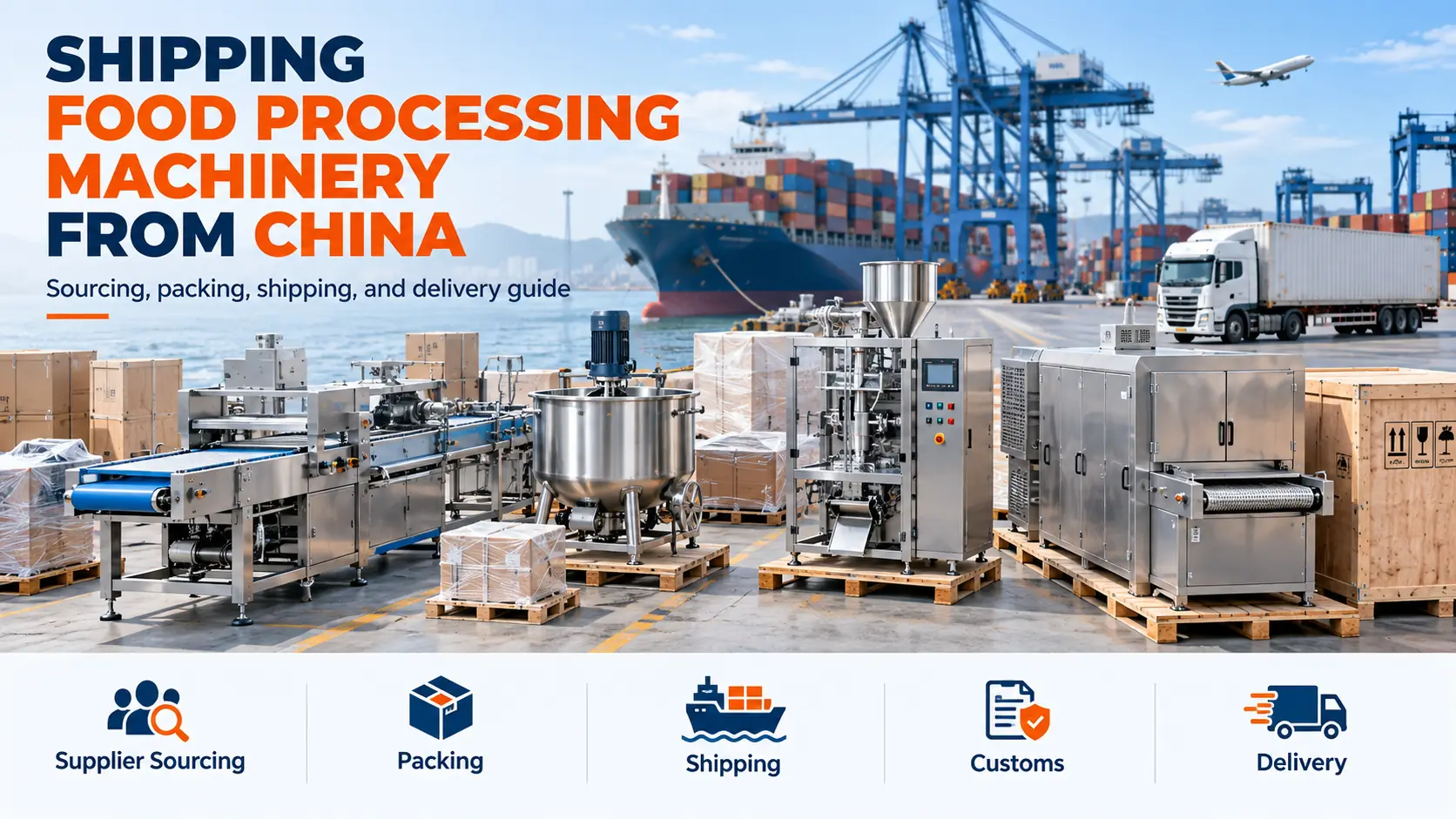
China supplies a broad range of food processing machinery for commercial kitchens, food factories, agricultural processors and large-scale production facilities. The equipment shipped internationally can range from compact standalone machines to complete automated processing and packaging lines.
Because different machines vary greatly in size, weight, structure and level of assembly, their shipping requirements are not the same. A small mixer or slicer may be suitable for LCL shipping, while an industrial oven, filling line or grain processing system may require a full container or even oversized cargo handling.
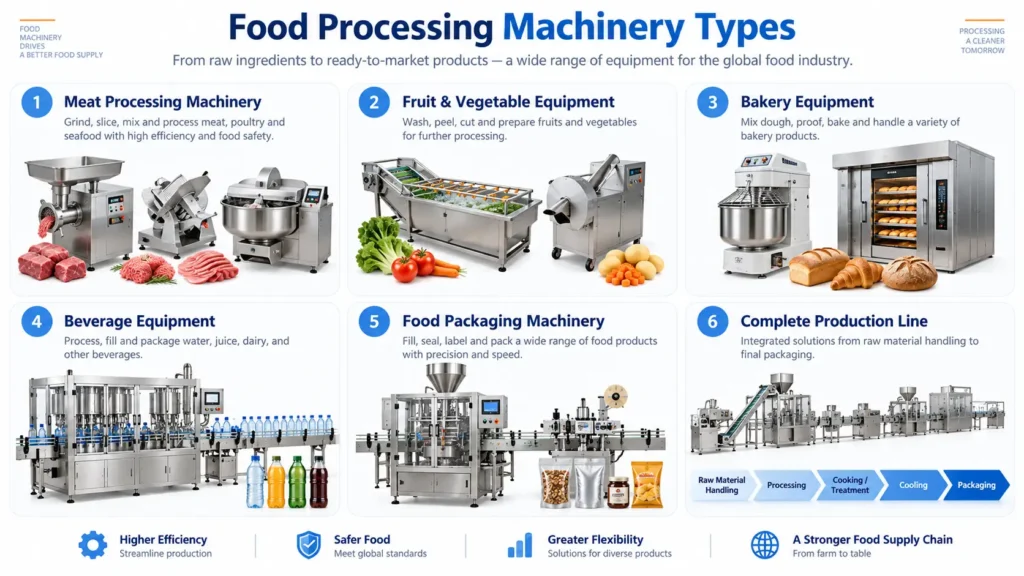
Common food machinery exported from China includes:
| Machinery Type | Typical Shipping Characteristics | Main Logistics Concern |
|---|---|---|
| Meat processing machinery | Dense and relatively heavy | Crating and lifting |
| Fruit and vegetable equipment | Multiple stainless steel modules | Consolidation and labeling |
| Industrial mixers | Heavy for their footprint | Weight distribution |
| Bakery ovens | Bulky equipment | Container space |
| Filling and packaging lines | Multiple connected machines | Parts identification |
| Grain processing machinery | Large production systems | FCL or project planning |
| Refrigerated equipment | Sensitive components may be involved | Carrier acceptance |
| Complete production lines | Multiple cases and accessories | Packing list and loading sequence |
For buyers, the product name alone is not enough to determine the right shipping method. The final transport plan should be based on the packed dimensions, gross weight, number of packages, lifting method and machine configuration.
This is especially important for customized food processing equipment. Additional conveyors, control cabinets, motors or packaging modules can change the final cargo size significantly, so shipping should only be arranged after the supplier confirms the finished packing data.
Before booking freight, buyers should confirm the final machine specifications, packing data and destination requirements. These details affect container selection, customs clearance and final delivery.
Check the finished machine against the purchase order and confirm:
Machine model and quantity
Final packed dimensions and gross weight
Lifting points and center of gravity
Voltage, frequency and phase
Control system configuration
Spare parts and accessories
Always use the final packed dimensions, because export packaging can increase the machine size and affect whether it fits a standard container.
For food processing equipment, confirm that food-contact materials are suitable for the intended application. 304 stainless steel is common, while 316 or 316L may be used where stronger corrosion resistance is needed.
Buyers should also check food safety, hygienic design, voltage and other electrical requirements before shipment to ensure the machine matches the destination facility.
A Factory Acceptance Test (FAT) is recommended for customized machinery and production lines. Testing may include:
Target output
Operating speed
Temperature control
Sensors and safety functions
Final machine configuration
Pre-shipment quality control helps identify missing parts or performance issues before the equipment leaves China. Buyers should also confirm the supplier’s after-sales service, including installation guidance, spare parts and technical support.
The best shipping method depends on the machine’s size, weight, urgency and destination. For most food processing machinery, sea freight is the main option, while air freight is more suitable for urgent or smaller shipments.
| Shipping Method | Best For |
|---|---|
| FCL Sea Freight | Large machines and complete production lines |
| LCL Sea Freight | Small standalone machines and low-volume orders |
| Open Top / Flat Rack | Oversized or irregular machinery |
| Air Freight | Small machines, spare parts and urgent components |
FCL is usually preferred for large or high-value food machinery because the cargo stays in a dedicated container and requires less handling. LCL can be more economical for smaller machines but involves additional consolidation and handling.
Machines that exceed standard container dimensions may require an open-top container or flat rack. These shipments often involve special loading, securing and destination handling.
Air freight is mainly used for compact equipment, motors, control systems and urgent spare parts. It offers faster delivery but is generally more expensive for heavy machinery.
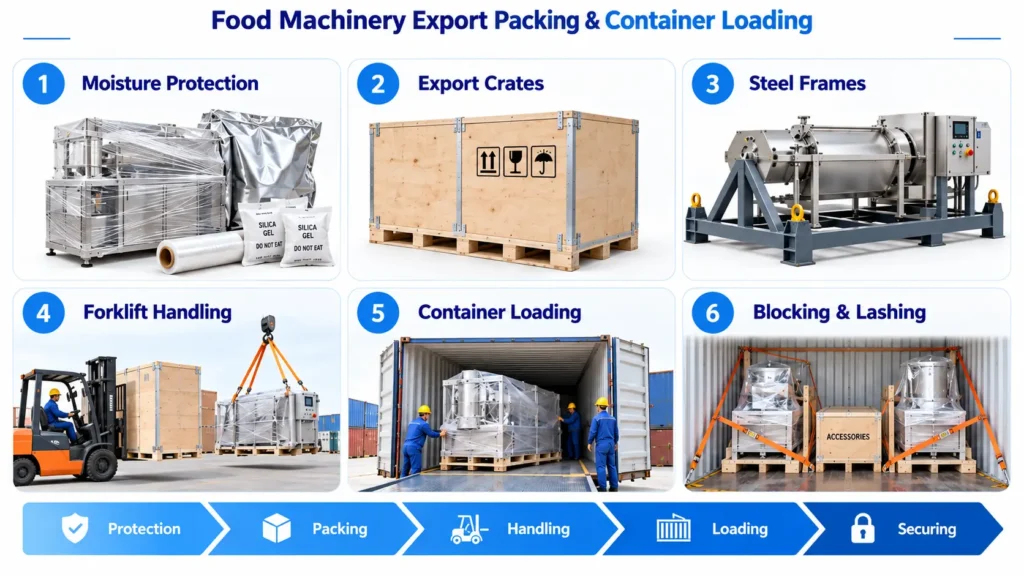
Export packaging is one of the most important stages of machinery logistics. Good packaging should protect equipment during factory handling, inland trucking, container loading, ocean transit, unloading, and temporary storage.
The correct packaging material and support structure depend on machine dimensions, weight, sensitivity, and lifting method.
Food machinery often combines stainless steel frames with motors, bearings, control cabinets, sensors, wiring, and other sensitive parts.
Export packaging may include:
moisture barriers
protective film
desiccants
cushioning
rust protection for exposed metal
sealed protection for electrical components
Stainless steel improves corrosion resistance, but it does not remove the need for suitable protection during a long sea voyage. The packaging method should also prevent loose accessories from moving inside the case.
Common machinery packaging includes plywood cases, treated solid-wood crates, reinforced skids, and steel frames.
If raw solid wood is used as international packaging material, check whether ISPM 15 treatment and marking requirements apply at destination. Processed wood products such as plywood are generally treated differently from raw wood packaging under plant-health rules.
The packaging base should support the full weight of the machine and allow safe forklift or crane handling.
For top-heavy units, the packaging design should also take the center of gravity into account.
Heavy machinery should not simply be placed inside a container without a securing plan.
Before loading, confirm:
lifting method;
package weight;
center of gravity;
container floor loading;
clearance from doors and walls;
blocking and bracing points;
lashing points;
overall weight distribution.
When one production line is divided into multiple cases, packing and packaging records should match the commercial Packing List.
Clear labels such as Machine 1, Machine 2, Control Cabinet, Accessories, and Spare Parts make receiving, unpacking, and packaging verification easier at destination.
Tonlexing can coordinate factory pickup, container selection, loading requirements, and international transportation based on the final machine information. Send us the packing list and dimensions before booking so the loading plan can be reviewed in advance.
Incoterms determine how transportation responsibilities, costs, and risks are divided between the seller and buyer. They should be agreed before the order is finalized rather than when production has already finished.
For machinery shipments, buyers commonly encounter EXW, FOB, CIF, and DDP.
| Incoterm | Typical Seller Scope | Typical Buyer Scope |
|---|---|---|
| EXW | Makes goods available at the factory | Pickup, export arrangements, freight, import, delivery |
| FOB | Handles agreed China-side delivery and export process | Main freight, import clearance, final delivery |
| CIF | Arranges freight and insurance to the named port | Import clearance and inland delivery |
| DDP | Provides a broader delivery service to the named place | Depends on agreed scope and legal import setup |
For a detailed comparison, see DDP vs CIF vs FOB.
FOB can be practical when buyers want their own freight forwarder to control international shipping. With CIF, the customer still needs to understand destination charges, customs clearance, and inland transportation.
DDP offers a wider service scope, but it should not be assumed that choosing DDP automatically transfers every product-compliance responsibility away from the importer.
The selected term should also be consistent with the quotation, purchase order, insurance arrangement, and commercial documents.
Customs clearance for food processing machinery depends on the destination country, HS classification, machine function, value, and applicable regulations.
These requirements should be checked before production is complete. Modifying machinery after arrival can be expensive, particularly when food-contact components, electrical systems, heating systems, pressure equipment, or refrigeration technology are involved.
Typical documents include:
Commercial Invoice
Bill of Lading or Air Waybill
HS Code
Certificate of Origin when required
Technical specifications and manuals
Compliance or material documents where applicable
Product descriptions should be specific and consistent across the shipping documents rather than using general terms such as “machine” or “equipment.”
There is no universal “FDA machinery certificate” applying to every food processing machine.
For machinery imported into the United States, buyers should verify the regulatory status and suitability of relevant food-contact materials for their intended use.
Depending on the equipment and installation, sanitary, electrical, workplace, or local standards may also apply. NSF/ANSI standards can be relevant to certain food equipment categories, but the applicable requirements depend on the product, processing technology, and end use.
Importers should therefore identify applicable standards before manufacturing is completed.
For equipment placed on the European Union market, buyers should confirm the applicable machinery safety framework and other relevant EU requirements.
Regulation (EU) 2023/1230 is scheduled to apply from 20 January 2027. Equipment intended to enter the EU around this transition should therefore be reviewed carefully against the rules applicable when it is placed on the market.
A supplier holding ISO 9001 may demonstrate that it operates a quality management system, but ISO 9001 does not by itself prove that an individual machine complies with every applicable safety, electrical, or food-contact requirement.
Manufacturers should provide technical documentation relevant to the equipment supplied, while the importer should confirm destination-specific compliance requirements before shipping.
Shipping costs for food processing machinery from China vary according to the cargo size, weight, container type, destination and current freight market. A compact standalone machine may move as LCL cargo, while larger machines or complete production lines are usually better suited to FCL shipping.
The figures below should be used only as planning estimates. Actual freight rates can change with carrier capacity, season, fuel costs, port congestion and the exact origin and destination.
| Destination | 20ft FCL | 40ft FCL | LCL |
|---|---|---|---|
| US West Coast | USD 5,000–6,500 | USD 6,700–7,600 | USD 80–140/CBM |
| US East Coast | USD 6,500–8,000 | USD 8,200–9,500 | USD 120–180/CBM |
| Europe / UK | USD 5,500–7,200 | USD 7,500–9,200 | USD 90–160/CBM |
| Australia | USD 2,200–3,500 | USD 4,000–5,500 | USD 60–100/CBM |
FCL shipping is generally more suitable when the machinery occupies most of a container or when the equipment is heavy and should remain isolated from other cargo.
LCL shipping can be more economical for smaller standalone machines, but charges are usually calculated by CBM or chargeable volume, and the cargo will pass through additional consolidation and handling stages.
These estimates normally refer to standard containerized ocean freight. They may not include factory pickup, export packaging, customs clearance, terminal charges, destination delivery or unloading equipment.
Food processing machinery that cannot fit safely inside a standard container may require an open-top container, flat rack or another OOG solution.
Additional costs can result from:
Crane or forklift loading
Special trucking from the factory
Flat-rack or open-top equipment
Port handling for oversized cargo
Blocking, bracing and lashing
Destination heavy-haul delivery
Unloading equipment at the customer’s facility
For this reason, the lowest ocean freight price does not always represent the lowest total shipping cost. Buyers should compare the complete quotation and service scope before selecting a transport option.
Ocean transit depends on the departure port, destination, carrier schedule and whether the shipment moves directly or through a transshipment hub.
| Route | Typical Port-to-Port Transit |
|---|---|
| China → US West Coast | 15–25 days |
| China → US East Coast | 30–40 days |
| China → Europe / UK | 30–45 days |
| China → Australia | 18–25 days |
These figures represent approximate port-to-port ocean transit rather than total door-to-door delivery time.
A shipment may require additional time for factory pickup, export customs clearance, container loading, port operations, destination customs clearance and inland delivery.
When scheduling factory installation or production startup, buyers should not plan around vessel transit time alone.
A more realistic timeline includes:
Factory pickup → Export handling → Port departure → Ocean transit → Import customs clearance → Final delivery → Unloading
For example, a route with a 25-day ocean transit may require considerably longer from the day the machinery leaves the supplier until it reaches the final production facility.
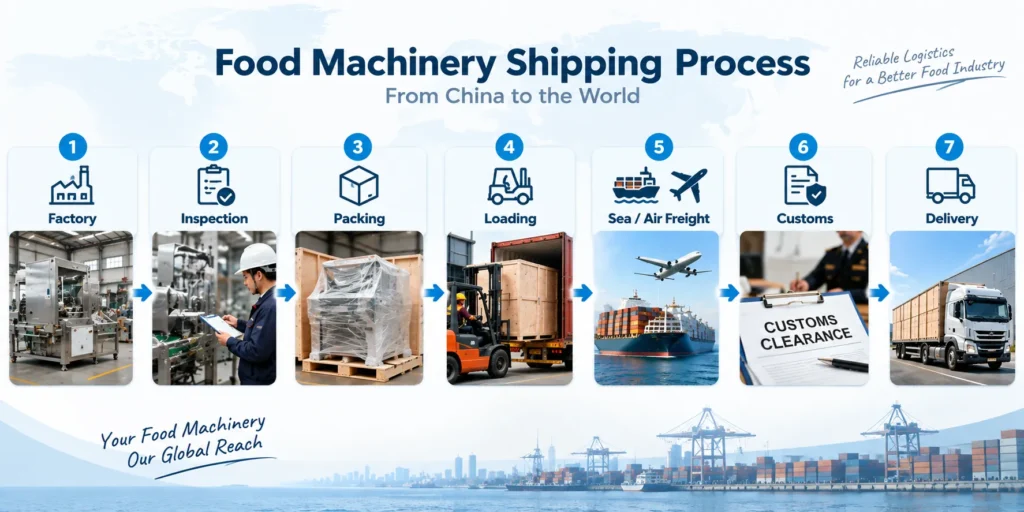
Shipping food machinery from China should be planned from the factory stage through final delivery. A typical process includes:
Confirm machine specifications
Check the model, quantity, configuration, voltage and destination requirements.
Complete inspection and FAT
Verify machine performance, accessories and final condition before packing.
Prepare export packaging
Protect sensitive parts and secure the machinery with suitable crates, skids or steel frames.
Confirm final dimensions and weight
Record the packed length, width, height and gross weight before freight booking.
Select the shipping method
Choose between LCL, FCL, open-top, flat rack or air freight according to the cargo size and urgency.
Arrange export and international transport
Coordinate factory pickup, customs declaration, container loading and carrier booking.
Complete customs clearance and final delivery
Prepare destination documents and confirm unloading equipment before the machinery arrives.
For complete production lines, all machines, control cabinets and spare parts should be clearly labeled to simplify unloading and installation.
Small mistakes made before shipment can result in higher costs, delays or installation problems at destination.
Common issues include:
Booking freight with bare-machine dimensions instead of final packed dimensions
Skipping FAT or pre-shipment inspection
Using insufficient export packaging
Ignoring voltage, frequency or electrical configuration
Using an incorrect HS code or incomplete customs documents
Failing to check destination compliance requirements
Not planning forklift or crane unloading in advance
Assuming DDP automatically solves product compliance
Buyers should confirm these points with the supplier and freight forwarder before the cargo leaves the factory. For heavy or customized machinery, early planning can reduce both shipping risk and unexpected destination costs.
Confirm the supplier, machine specifications, destination compliance requirements, FAT, export packaging, HS classification, shipping method, customs documents, and unloading arrangements before the equipment leaves the factory.
Sea freight is generally more suitable for large and heavy machines. Air freight is more practical for compact food processing equipment, spare parts, and urgent components where delivery speed is important.
Yes. If the final packed dimensions, gross weight, and loading method fit the container limits, a standard container may be used. Oversized machinery may require a 40HQ, open-top container, flat rack, or another project cargo solution.
There is no single FDA machinery certification covering every food processing machine. For the US market, importers should verify applicable requirements for food-contact materials and other regulations or standards relevant to the specific equipment and installation.
Common documents include a Commercial Invoice, Packing List, and Bill of Lading or Air Waybill. HS classification, Certificate of Origin, technical documents, and compliance records may also be required depending on the machine and destination.
Useful freight, customs and importing resources related to this shipping guide.
Shipping Factory Machines from China Verified & Reviewed · Last updated July 2026 Shipping factory machines from China requires careful planning...
Read guide →
Introduction: Why Import Restaurant Equipment from China How to ship restaurant equipment from China is a crucial topic for restaurant owners and...
Read guide →
Sea freight is the most cost effective shipping method for large volumes and container load cargo. It is ideal for businesses looking to reduce s...
Read guide →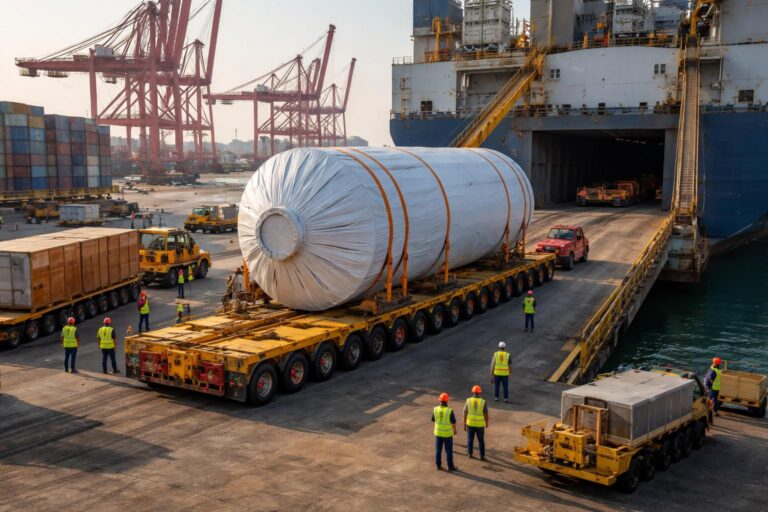
Shipping Oversized Cargo from China Verified & Reviewed · Last updated February 2026 Shipping oversized cargo from China depends on cargo dimensi...
Read guide →Pre-Shipment Inspection in China for Importers Verified & Reviewed · Last updated July 2026 A pre-shipment inspection helps importers identify de...
Learn more → Useful Resource Documents Required to Import from China (2025 Guide)Importing goods from China can be highly profitable—but only when you understand the necessary documents and import requirements. Whether you’re...
Learn more →WhatsApp us