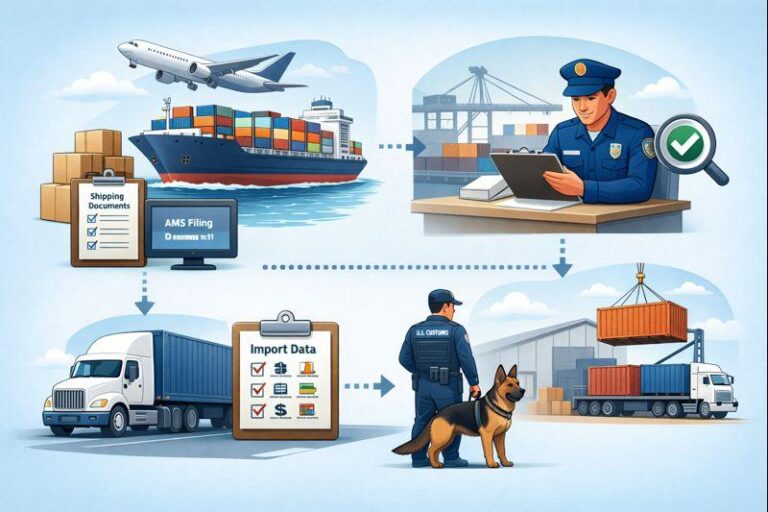
Quick Answer: Why Is Your China Shipment Held by U.S. Customs?
Your shipment from China may be held because customs officers need to verify the goods, documents, declared value, duties, or compliance status before allowing delivery in the USA.
The most common reasons include:
Missing documents
Incorrect paperwork
Unclear commercial invoice
Wrong HS code
Under-declared value
Unpaid duties, tariffs, or taxes
Random inspection
Restricted items or prohibited goods
Counterfeit or unauthorized branded products
Missing permits or safety certificates
Incorrect importer, seller, or shipper information
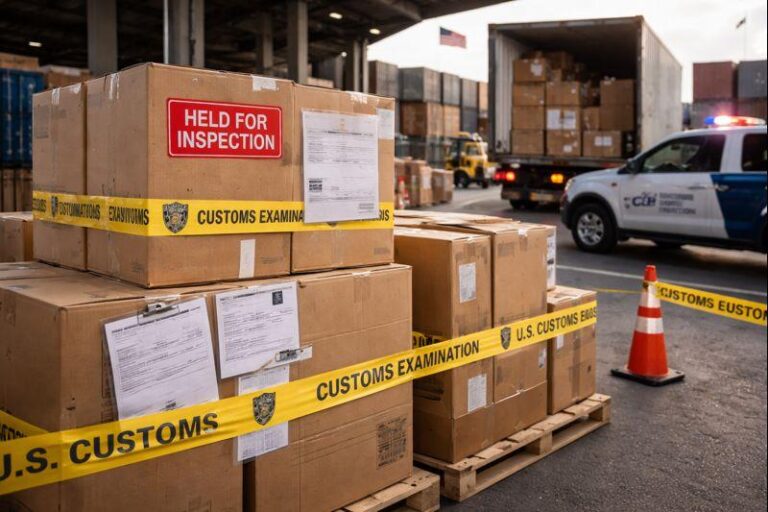
Package selected for physical inspection
China Post, USPS, FedEx, UPS, or DHL clearance delay
If your tracking shows customs clearance pending, held in customs, or clearance exception, it does not always mean something is wrong. The shipment may simply be waiting for document review, payment confirmation, or inspection.
However, if the carrier, customs broker, or freight forwarder asks for extra information, you should respond quickly. Long waiting time can lead to storage costs, delivery delays, and additional handling fees.
Why China Shipments Are More Likely to Be Checked
Shipments from China are common in U.S. international shipping, but they are also closely reviewed because of high import volume, product variety, tariff rules, intellectual property risks, and regulatory requirements.
Many goods shipped from China include electronics, apparel, accessories, toys, furniture, machinery, beauty products, batteries, household items, and branded products. Some of these products require accurate classification, proper labeling, safety compliance, or special paperwork before release.
Customs officials may pay extra attention to shipments involving:
High-value commercial goods
Low declared value
Multiple product types in one shipment
Brand names or logos
Electronics and wireless devices
Batteries or battery-powered products
Cosmetics, food, or health-related goods
Children’s products
Textiles and apparel
Chemicals or liquids
Wood products
Goods from high-risk supply chains
This does not mean every shipment from China will be delayed. Many shipments clear smoothly when the paperwork is complete, the value is accurate, and the importer is prepared. Problems usually happen when the shipment details are unclear, inconsistent, or incomplete.
Main Reasons Your China Shipment Is Held by U.S. Customs
There are many reasons why a shipment from China may be delayed during customs clearance. Some customs holds are caused by missing paperwork or unpaid duties, while others happen because customs officers need to inspect the goods or verify compliance requirements.
Below are the most common reasons a China shipment gets stuck in customs.
Missing Documents or Incorrect Paperwork
Missing documents and incorrect paperwork are one of the biggest causes of customs delays.
Customs authorities may hold the shipment if the commercial invoice, packing list, HS code, importer information, or shipping details are incomplete or inaccurate.
Common paperwork problems include:
Wrong product description
Incorrect HS code
Missing country of origin
Different details between documents
Incorrect quantity or value
Missing importer address
For smooth customs clearance, all shipping documents should match the actual cargo.
Unpaid Duties, Tariffs, or Taxes
A shipment may remain on hold until all import duties, tariffs, taxes, and customs fees are paid.
This often happens when the importer does not realize additional charges apply after the package arrived in the United States.
If payment is required, the carrier, customs broker, postal service, or freight forwarder will usually contact the importer before delivery.
Wrong HS Code or Product Classification
The HS code determines duty rates, tariffs, and import regulations.
If customs officials believe the product classification is incorrect, the shipment may be delayed while they verify the product details.
This is common with electronics, machinery parts, batteries, textiles, furniture, and other commercial goods shipped from China.
Declared Value Looks Too Low
CBP may inspect or hold a shipment if the declared value appears lower than the actual market value.
Undervaluing goods to reduce duties and taxes can lead to customs delays, additional charges, or penalties. Customs officers may request payment proof, invoices, or order records to verify the shipment value.
Restricted Items or Illegal Goods
Certain products are restricted or prohibited from entering the USA.
Examples may include:
Counterfeit products
Unauthorized branded goods
Illegal goods
Hazardous materials
Certain chemicals or weapons
Products requiring special permits
If the shipment contains restricted items or violates import regulations, customs authorities may hold or seize the goods.
Product Compliance Review
Some products must comply with U.S. safety and compliance regulations before they can be released.
For example:
Electronics may require FCC compliance
Cosmetics and food products may require FDA review
Children’s products may require CPSC compliance
If certificates or required documentation are missing, the shipment may stay on hold until customs officials complete the review.
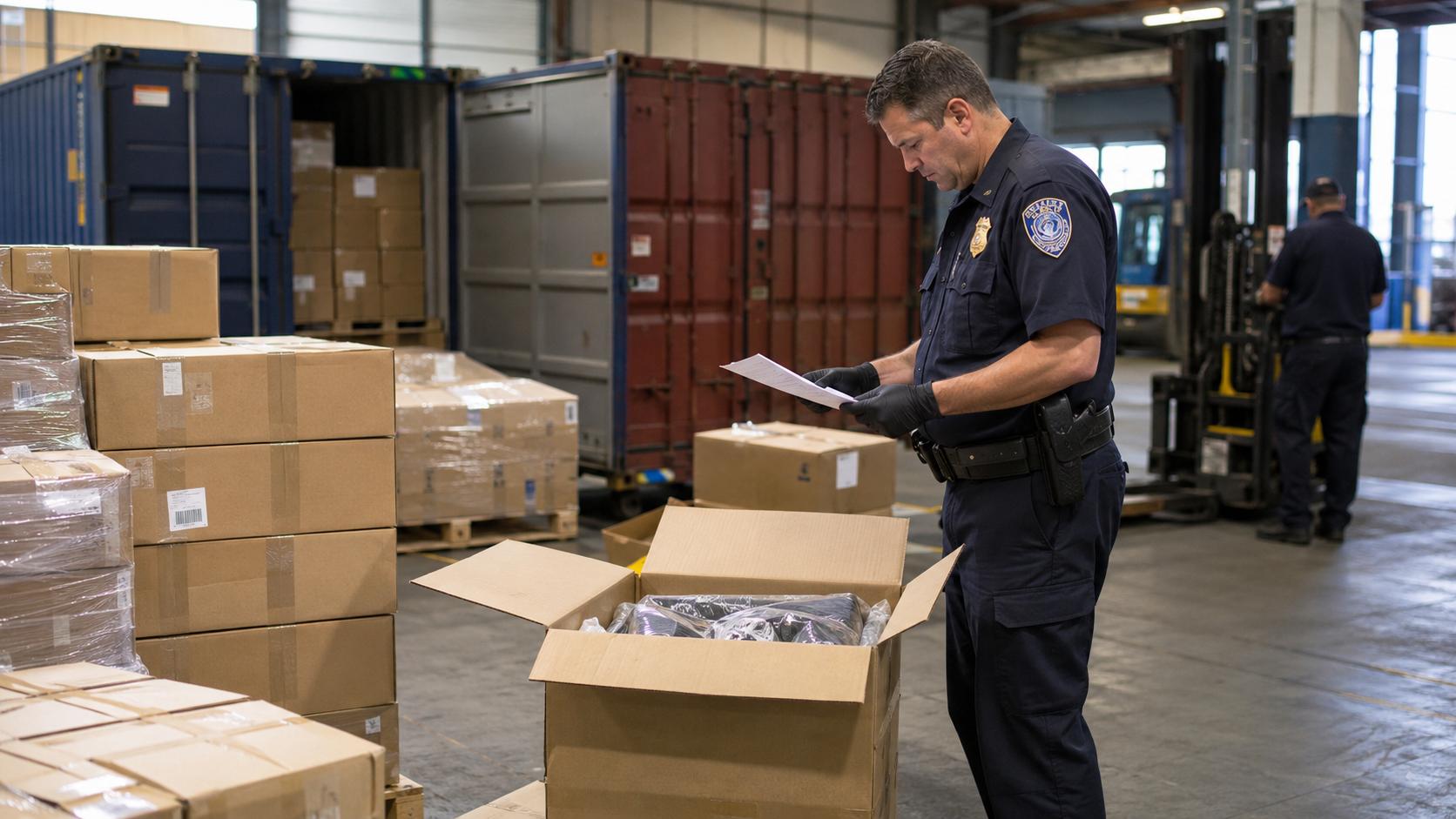
Random Check or Physical Inspection
Not every customs hold is caused by a problem. Some shipments are selected for random inspection.
Customs officers may perform:
X-ray inspection
Physical inspection
Cargo examination
Documentation review
This can happen to postal packages, air cargo, express shipments, or sea freight containers entering ports such as Los Angeles or other major U.S. gateways.
Even properly prepared shipments can experience delays during inspection.
How Long Can U.S. Customs Hold a Package or Shipment?
The time depends on the reason for the customs hold.
A simple missing document may be resolved in a few business days after the correct paperwork is submitted. A duty payment issue may also be cleared quickly once payment is confirmed. However, physical inspection, compliance review, or suspected violations can take much longer.
These are only general estimates. Actual timing depends on the port, carrier, customs workload, product type, document quality, and how quickly the importer responds.
If your package is stuck in customs for only a short time, it may simply be waiting for clearance. If it has been waiting for many days with no update, contact the carrier, postal service, customs broker, or freight forwarder to check what action is required.
What Should You Do If Your Shipment Is Stuck in Customs?
If your shipment is stuck in customs, the most important thing is to identify the exact reason for the customs hold as quickly as possible.
Check the Tracking Info
Review the latest tracking update carefully. Common messages include:
Held in customs
Customs clearance pending
Clearance delay
Shipment under inspection
Awaiting payment of duties and taxes
For China Post packages, also check USPS tracking after the package arrived in the United States.
Contact the Carrier or Freight Forwarder
The carrier, customs broker, or freight forwarder can usually see more detailed clearance information than the public tracking page.
Ask them:
Why is the shipment being held?
Are any documents missing?
Is payment required?
Is the package under inspection?
Has customs requested additional paperwork?
Do not wait too long to respond because delays may increase storage or handling costs.
Provide Documents or Payment Quickly
If customs authorities request paperwork, submit it as soon as possible.
Commonly requested documents include:
If duties or taxes are unpaid, arrange payment quickly to avoid further customs delays.
Work With a Customs Broker for Commercial Shipments
For air cargo, sea freight, or business imports, a customs broker can help resolve customs clearance problems faster.
A customs broker or experienced freight forwarder can:
Review shipping documents
Communicate with customs officials
Verify product classification
Arrange duty payment
Help release the shipment for delivery
This is especially useful for commercial shipments from China to the USA.
Small Package vs Freight Shipment: Different Customs Hold Situations
Customs holds can happen to both small packages and commercial freight shipments, but the clearance process is often different depending on the shipping method.
China Post or USPS Package Held by Customs
For small postal packages shipped through China Post or USPS, customs delays are usually caused by missing paperwork, unpaid duties, unclear product descriptions, or random inspection.
In some cases, the tracking info may stop updating after the package arrived in the United States and before USPS completes local processing.
If the package is stuck in customs, check both the China Post and USPS tracking number for updated delivery or clearance information.
Express Shipment Held by Customs
Express carriers such as DHL, FedEx, and UPS normally handle customs clearance faster, but shipments can still be delayed.
Common reasons include:
The carrier may contact the receiver for documents, payment, or additional product details before delivery.
Air Cargo or Sea Freight Held by Customs
Commercial air cargo and sea freight shipments usually involve customs brokers, freight forwarders, warehouses, and port inspections.
A customs hold may happen because of:
For sea freight containers entering ports such as Los Angeles or Long Beach, inspections may also create storage, demurrage, or warehouse handling costs if the shipment is delayed for too long.
For business imports, it is important to prepare accurate documents before the cargo is shipped from China.
When Should You Contact a Freight Forwarder or Customs Broker?
If your shipment is a small personal package, you can usually start by contacting the carrier, postal service, or post office.
If your shipment is commercial cargo, it is better to contact a freight forwarder or customs broker as early as possible.
You should get professional help when:
The shipment is for business use
The goods are high value
The cargo is shipped by air freight or sea freight
The shipment includes many product types
The goods require certificates or permits
The package is stuck in customs for several days
You do not know who should pay duties and taxes
Customs asks for documents you do not understand
The shipment may include restricted commodities or branded goods
A reliable freight forwarder can help review documents before shipping, arrange transportation from China, coordinate with a customs broker, and reduce avoidable clearance problems.
For importers shipping regularly from China to the USA, this can save time, reduce costs, and improve delivery reliability.