

If you’re comparing 20ft & 40ft container shipping costs from China to Tunisia, the safest way to avoid overpaying is to separate the ocean freight you see in ads from your real total shipping cost to get cargo released and delivered. Many quotes look low at first, then the final invoice grows after China origin charges, Tunisia terminal fees, inland transport costs, and customs clearance steps.
This guide is written for importers shipping China to Tunisia through Rades or Sousse. You’ll learn how freight rates are formed, how to choose between sea freight and air freight, what the real shipping process looks like, and how to protect timely delivery without surprise charges.
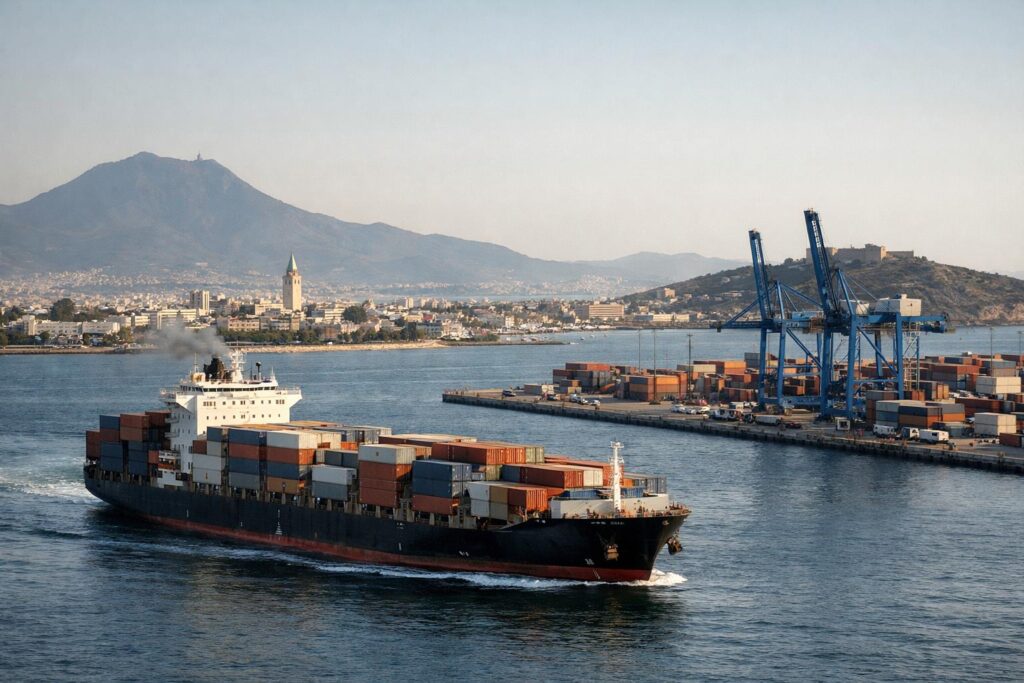
Overview: What China to Tunisia Container Shipping Costs Really Mean
When people search “20ft and 40ft shipping costs China to Tunisia,” they are usually trying to answer three business questions:
- What should I budget for this lane right now
- Which container size is the most cost effective for my cargo
- How do I avoid delays, holds, and extra charges after arrival
A good answer is not just a single number. A good answer is a repeatable method.
Ocean freight vs total shipping cost
Ocean freight is only one part of the bill. It is the line-haul price charged by the carrier for moving the container from a China port to a Tunisia port. The real number importers care about is the total shipping cost, meaning the total amount required to get the cargo released and ready for pickup or delivered to the final address.
Here is the simplest way to think about it:
- Ocean freight is what moves the box across the water
- The total shipping cost is what gets the goods from your supplier to your warehouse, store, or project site in Tunisia
This difference matters because a quote can look cheap when it highlights ocean freight, then become expensive when you add origin charges, destination handling, documentation, and inland delivery.
The fastest way to compare prices and avoid hidden charges
If you want an apples-to-apples comparison, you need a consistent quote format. Ask each provider to quote the same scope and to state it in a clear cost structure, not a vague “all-in” line.
Your comparison becomes much easier if you request these items in every quote:
- The carrier and the shipping line service they will book
- The shipping route, including whether it is direct or transshipment via the Mediterranean Sea
- A list of China origin charges
- A list of Tunisia destination charges
- Delivery scope, if you need door delivery
- What triggers extra fees, including storage and time-related charges
This approach is used by experienced buyers in international shipping because it prevents partial quotes that look attractive but hide expensive destination charges.
Quick Price Ranges: 20ft vs 40ft FCL Sea Freight
Below are budgeting ranges for sea freight on full container load movements from major China ports to Tunisia. Use them to set expectations, then request a route-based quote for your exact cargo, origin city, and sailing week.
Typical freight rates for 20GP and 40GP or 40HQ
| Container type | Budget range in USD | Notes |
|---|---|---|
| 20ft 20GP | 3,250 to 5,750 | Common for heavy cargo and easier weight control |
| 40ft 40GP or 40HQ | 3,650 to 7,000+ | Better for high volume cargo and light bulky cartons |
These ranges are for Tunisia lane budgeting and reflect the ocean leg for sea freight planning. Real shipping costs still vary depending on origin handling, Tunisia terminal fees, available space, and the weekly freight market.
What the ranges include and exclude
In most cases, these budgeting ranges represent the carrier line-haul portion, not the entire shipment.
They usually do not include:
- China pickup or local trucking
- Export documentation handling
- Tunisia terminal handling and release fees
- Inland delivery in Tunisia
- Duties and taxes
- Storage, demurrage, detention, or inspection costs
That is why you should always ask for a quote with a clear breakdown. It is the only reliable way to compare actual shipping costs across providers.
Cost Breakdown: Clear Cost Structure for Sea Freight
This section is designed to help you read a quote like a logistics manager. Once you understand the structure, you can spot missing items quickly and avoid budget surprises.
China origin charges and transport costs
China origin charges are the costs required to move goods from the supplier to the port and to prepare the export side of the shipment. For China to Tunisia, common origin items include:
- Factory pickup and local trucking to the port
- Terminal handling at origin
- Export documentation processing
- Container loading support if you use a warehouse or consolidation point
- Weighing and compliance steps as required by the port and carrier
Origin transport costs can be a major driver if the supplier is far from the loading port, or if the cargo requires special handling such as palletization, crating, or careful loading.
Tunisia destination charges and additional costs
Tunisia destination charges are what you pay after the vessel arrives. These fees can differ by port and by terminal operator, but the common categories are consistent.
For China to Tunisia, destination items often include:
- Terminal handling at Rades or Sousse
- Documentation release and delivery order fees
- Storage charges if free time is exceeded
- Handling fees for inspections or special release processes
Destination charges are also where many “cheap ocean freight” quotes become expensive. A quote that excludes Tunisia terminal fees is not wrong, but it is incomplete. You should treat it as a partial quote and ask for the missing destination side costs before deciding.
Demurrage, detention, storage, and port congestion risk
Time-related charges are the most common reason budgets break. These charges usually come from one of three things:
- The importer is not ready with documents and payments
- The customs process takes longer than planned
- The terminal is busy and pickup is delayed
Key terms you will see:
- Storage is charged by the terminal when cargo stays too long in the port area
- Demurrage is often linked to the time the container stays under terminal control beyond free time
- Detention is often linked to time the container stays outside the terminal beyond free time after pickup
During peak weeks, port congestion increases risk. Congestion does not always mean a huge delay, but it increases variability. If you want stable costs, plan documents early and book delivery quickly after release.
20ft vs 40ft vs 40HQ: How to Choose the Right Container Load
Choosing the right container size is one of the easiest ways to improve cost efficiency. It also reduces operational risk, especially weight issues and loading stability.
Heavy cargo vs light bulky cargo
Use these quick rules for China to Tunisia:
- 20ft 20GP is usually better for heavy cargo where weight is the main limit.
- 40ft 40GP or 40HQ is usually better for light but bulky cartons where space is the main limit.
Standard container planning CBM
Container space varies slightly by carrier and equipment, so use ranges:
- 20GP: about 25–27 CBM
- 40GP: about 59–61 CBM
- 40HQ: about 68–70 CBM
To confirm the best choice, share your packing list with carton size, pallet size, and any stacking limits. Your forwarder can quickly check the loading plan.
Large quantities and high volume cargo tips
If you ship large quantities, your biggest lever is stability, not just price. To improve stability for China to Tunisia:
- Book earlier when possible, especially in peak season
- Use consistent packaging so loading plans repeat
- Standardize documentation templates for invoices and packing lists
- Build a routine for pre-checking customs documents before the vessel arrives
For high volume cargo, small operational improvements often save more money than chasing the absolute lowest ocean freight.
Shipping Routes and Gateways: China Ports and Major Ports in Tunisia
Routing decisions matter because they shape transit time reliability, connection risk, and destination handling.
Rades and Sousse
For China to Tunisia, most full containers arrive at two major ports:
- Rades in the Tunis area, widely used for national distribution
- Sousse, often used depending on carrier network and delivery region
The best choice depends on your delivery location and the sailing options that week, and a slightly higher ocean freight can still lower the total cost by reducing inland delivery, so if possible request two quotes, one to Rades and one to Sousse, and compare the totals with inland delivery included.
North China vs South China export hubs
China to Tunisia shipments commonly load out of these export hubs:
Your choice is usually driven by supplier location and factory readiness, but if you can ship from more than one port, the origin can change trucking cost and sailing options, and Shanghai is often mentioned mainly because its carrier network is dense, which usually means more schedule choices.
Shipping line networks and shipping route options
A shipping route can be direct or can involve transshipment. On China to Tunisia, transshipment via Mediterranean hubs is common depending on the shipping line and service string.
Here is how to evaluate route options:
- Direct routes can reduce connection risk, but may have fewer sailings
- Transshipment routes can offer more sailings, but depend on hub connections
- A route with better buffer time can be more reliable than a route with a shorter theoretical transit
When comparing routes, ask how many connections are involved, and whether the carrier has stable weekly schedules on that lane. Reliability is a core part of timely delivery.
Transit Time and Timely Delivery: What to Expect
Transit time is not only the number of days on the water. It includes operational steps at origin, port cutoffs, and destination handling.
Typical sea freight transit time
For China to Tunisia, many importers plan a port-to-port sea freight window of about 30 to 45 days. Your actual time varies depending on:
- Origin port and feeder connections
- Whether the shipping route is direct or transshipment
- Weekly shipping schedules and connection buffers
- Terminal handling speed at destination
- Peak season space and port congestion
How shipping schedules affect timely delivery
Shipping schedules are not just departure days. They are a chain of deadlines.
A shipment can miss its planned sailing because of:
- Late cargo readiness
- Missed port cutoff
- Documentation issues
- Container equipment shortage
If timely delivery matters, ask your provider for the next two or three sailing options and choose the plan that offers a realistic buffer. This protects timely delivery better than chasing the earliest departure that leaves no margin.
Practical ways to reduce delay risk
These steps are simple but effective for China to Tunisia execution:
- Confirm cargo readiness date before booking
- Share a complete packing list early
- Pre-check invoice descriptions and HS code logic with your broker
- Send documents to Tunisia side before arrival
- Prepare local pickup and delivery arrangements early
Most delays on this lane are not caused by the ship. They are caused by missing documents, unclear descriptions, or slow responses during clearance.
Sea or Air Freight: Which Shipping Method Fits You
The best shipping method depends on urgency, cargo value density, and shipment size.
When sea freight is more cost effective
Sea freight is usually the most cost effective choice for:
- Large quantities
- Bulky shipments
- Heavy cargo
- Regular replenishment cycles
If your product is not extremely time sensitive, sea freight offers better unit economics and a more predictable cost structure.
When air freight works for urgent shipments
Air freight is often used for:
- Urgent shipments
- Samples
- Time-sensitive replenishment
- High-value goods that justify the premium
Air freight is not just about speed. It is also about control. If your supplier is late and your customer deadline is fixed, air can protect timely delivery and reduce business losses from stockouts or project delays.
Air cargo vs express delivery for smaller shipments
Air cargo is designed for commercial shipments, cartons, and pallets. It fits B2B flows where documentation and customs steps are planned like a normal import.
Express delivery is designed for small parcels and is often fastest, but it typically costs more per kilogram and has stricter commodity limits. If you ship smaller shipments frequently, it can be useful for samples. For commercial goods, air cargo is usually the better balance of cost and control.
Explore more shipping guides:
- Shipping Cost from China to Tunisia
- 20ft & 40ft Container Shipping Costs from China to Algeria
- 20ft & 40ft Container Shipping Costs from China to Egypt (2025 Guide)
- 20ft & 40ft Container Shipping Costs from China to France
- 20ft & 40ft Container Shipping Costs from China to Italy

Shipping Process from China to Tunisia Step by Step
A predictable shipping process is the difference between a smooth import and a surprise bill. Below is a practical shipping process map for China to Tunisia that covers both sea and air.
FCL shipping operations timeline
Step 1: Confirm shipment basics
- Product description and HS code
- Total cartons or pallets
- Gross weight and total volume
- Packaging type and stacking limits
Step 2: Choose service and container type
- Decide 20ft or 40ft plan
- Confirm whether you need port-to-port or door delivery
Step 3: Book space and confirm schedule
- Confirm carrier space and shipping schedules
- Confirm cutoff dates and documentation deadlines
Step 4: Pickup and loading
- Arrange pickup from supplier
- Coordinate container loading and sealing
- Move the container to the port terminal
Step 5: Export documentation
- Prepare commercial invoice and packing list
- Submit carrier shipping instructions
- Confirm bill of lading details
Step 6: Main transport
- Sea freight movement across the lane
- Track milestones and connection points if transshipment is used
Step 7: Arrival handling
- Prepare release steps and local fees
- Coordinate pickup or delivery plan
Step 8: Release and final delivery
- After customs release, arrange pickup
- Deliver to consignee address if requested
This shipping process can be smooth when documents are consistent and the consignee is ready with broker steps and payments.
LCL shipments logistics process
If your volume is not enough for a full container load, you may consider LCL shipments.
LCL process differences:
- Cargo is delivered to a consolidation warehouse
- It is consolidated with other shipments into a shared container
- Handling touchpoints increase
- Transit time can be less predictable because consolidation and deconsolidation take time
LCL can be a good choice for smaller shipments, market testing, and early-stage importing. But it requires good packaging and clear documents because more handling means more risk.
Final delivery handover
Final delivery is where many buyers feel the difference between a basic booking agent and a strong freight forwarder.
A clean handover includes:
- A clear release plan and pickup timing
- A confirmed delivery appointment if required
- A check that all destination documents match
- A plan for exceptions such as inspection or missing data
This is the part of shipping operations that protects timely delivery and prevents extra storage charges.
Customs Clearance in Tunisia: Customs Regulations and Procedures
For China to Tunisia, customs clearance is often the most sensitive stage. Done well, it is routine. Done poorly, it becomes a delay and a cost problem.
Documents and commercial invoice requirements
Most imports require:
- Commercial invoice with specific product descriptions
- Packing list with clear quantities, weights, and packaging details
- Bill of lading for sea freight or airway bill for air cargo
- Any certificates required for regulated categories
The invoice description is where many problems start. Avoid vague wording. A broker and customs authorities need a clear description to confirm classification and valuation.
Customs duties and import duties basics
Duties and taxes depend on HS code, declared value, and local rules. On China to Tunisia, your broker will calculate customs duties and import duties based on the classification and valuation method.
If you want predictable clearance:
- Confirm HS classification early
- Keep declared value consistent with supporting documents
- Ensure all totals match across invoice, packing list, and transport documents
How to ensure smooth clearance and avoid holds
To ensure smooth clearance for China to Tunisia:
- Use clear, specific product descriptions
- Keep carton count and weight consistent across documents
- Send documents to your broker before vessel arrival
- Confirm who will respond quickly if customs questions arise
- Prepare any certificates required for the product category
Most delays happen because the importer is not ready when the container arrives. Plan ahead and customs clearance becomes routine.
You will notice that customs clearance appears throughout this guide because it directly affects both cost and timing. For China to Tunisia imports, it is one of the biggest drivers of timely delivery.
Door to Door Shipping to Tunisia
Door service can be very convenient, but it must be defined clearly. Many buyers use door to door shipping when they want fewer handoffs, clearer accountability, and a simpler workflow.
Door to door services scope checklist
If you request door to door services, confirm the scope in writing. A good scope checklist includes:
- Pickup location in China
- Export handling and documentation
- Ocean freight or air freight movement
- Tunisia destination handling and document release
- Customs clearance responsibility
- Inland delivery to the final address in Tunisia
When the scope is clear, door to door shipping can create a hassle free shipping experience for buyers who prefer a single provider to coordinate the entire chain.
What door shipping often excludes
Door shipping wording can be misleading if it is not detailed. Common exclusions include:
- Duties and taxes
- Storage and time-related charges
- Special inspection handling
- Redelivery if the consignee is not available
- Remote area delivery surcharges
Ask for a list of exclusions and triggers. This is how you avoid unexpected additional costs.
Hassle free shipping experience tips
If you want door service to be smooth on China to Tunisia:
- Share a complete consignee address and contact details
- Confirm delivery access rules, especially for large trucks
- Provide documents early and respond quickly during clearance
- Confirm the delivery time window and any appointment needs
Door service is most effective when the importer is ready with documents and the delivery site is prepared.
Special Cargo Notes
Some cargo types require extra attention. Planning early reduces delays and prevents damage.
Bulk cargo and raw materials
Bulk cargo and raw materials often move by sea freight because it is cost effective for high volume cargo. The key risk is not the ocean crossing, it is documentation and classification.
For raw materials:
- Confirm HS code logic early
- Ensure invoice descriptions match the actual material
- Confirm any required certificates for chemical or controlled categories
For bulk cargo, packaging and loading method also matter. If goods are bagged or palletized, the packing list should reflect that clearly.
Perishable goods, refrigerated containers, reefer containers
If you transport perishable goods from China to Tunisia, planning becomes more technical.
For sea freight, refrigerated containers, also called reefer containers, are used to control temperature. Key points:
- Book early because equipment availability can be limited
- Confirm set temperature and tolerance range
- Ensure packaging supports airflow and stability
- Plan power supply at terminals and during any transshipment
- Prepare documents clearly to avoid customs clearance delays that break the cold chain
For some perishable products, air cargo may be used to reduce time, but cost can be high if volume is bulky.
Medical supplies notes
Medical supplies can require additional compliance documents. Requirements depend on the product type. Common needs include clear product identification, lot and batch data where relevant, and regulatory certificates.
For China to Tunisia medical supplies, confirm document requirements with your broker before shipping. This reduces the risk of holds during customs clearance.
Quote Checklist and How to Compare Prices Fairly
This section turns the guide into an actionable tool. You can copy and paste the checklist into an email or message and get cleaner quotes.
Copy-paste checklist to request quotes
Send the following details for China to Tunisia quoting:
- Product name and description
- HS code if available
- Total cartons or pallets
- Gross weight and total volume
- Packaging type, cartons, pallets, crates
- Pickup city in China
- Destination port in Tunisia, Rades or Sousse
- Desired shipping method, sea freight or air freight
- Service scope, port-to-port or door to door services
- Delivery address and postal code if delivery is needed
- Any special requirements, fragile, stack limits, temperature control
The more accurate your inputs, the more accurate the quote. This also reduces the chance of price changes later.
How to compare shipping options across providers
To compare shipping options, request quotes in the same structure:
- Ocean freight or air line-haul portion
- China origin charges
- Tunisia destination charges
- Inland delivery charges if needed
- Duties and taxes handling scope
- Exclusions and extra fee triggers
Then compare on three metrics:
- Total cost at the same scope
- Schedule reliability and transit risk
- Operational support and document checks
A quote is not just a price. It is a service plan.
Freight forwarder vs shipping companies, who controls what in shipping operations
Many buyers search for shipping companies when they want to ship China to Tunisia. But shipping companies and a freight forwarder play different roles.
- Shipping companies and shipping lines provide vessel space and ocean movement
- A freight forwarder coordinates the entire shipping process, including routing, documentation, customs coordination, and delivery handoff
If you want predictable execution, the forwarder’s control of shipping operations matters. A good forwarder can book different shipping lines and select the shipping route that fits your timeline and cargo type. They also reduce errors by checking documents before export and before arrival.
This matters because most costly delays come from operational gaps, not from the vessel itself.
FAQs: China to Tunisia Shipping Costs and Process
How much does it cost to ship a 20ft container from China to Tunisia
For sea freight budgeting, a 20ft 20GP is often in the range shown in the table earlier for the ocean leg. Your final shipping costs depend on origin charges, Tunisia terminal fees, customs clearance, and inland transport costs if delivery is required.
If you want the fastest accurate quote, share gross weight, total volume, pickup city, and destination port. Those inputs determine equipment choice and routing.
How much does it cost to ship a 40ft container from China to Tunisia
A 40ft 40GP or 40HQ often has a higher ocean freight number but can be more cost effective per cubic meter for high volume cargo. The real shipping costs vary depending on the sailing week, route design, and destination charges at Rades or Sousse.
Sea freight vs air freight, which is cheaper for China to Tunisia
Sea freight is usually cheaper for large quantities and bulky cargo. Air freight is used when speed protects revenue or deadlines. If the shipment is urgent and delays are costly, air can be the better business decision even when transport cost is higher.
How long does China to Tunisia shipping take
Sea freight is often planned with a 30 to 45 day port-to-port window, but timelines depend on the shipping route, the shipping line schedule, and local handling. Air cargo is much faster but requires careful planning around chargeable weight and flight acceptance windows.
What causes delays in customs clearance in Tunisia
Most delays are caused by vague invoice descriptions, inconsistent totals across documents, missing certificates for regulated items, and slow responses to customs authorities. The best prevention is to send documents early and keep invoice and packing list data consistent.
What documents are required to ship goods from China to Tunisia
Commonly required documents include a commercial invoice, packing list, and the transport document, bill of lading for sea freight or airway bill for air cargo. Some product categories require additional certificates. Confirm requirements with your broker early to avoid holds.
Can I arrange door to door shipping from China to Tunisia
Yes, door to door shipping is common. Confirm scope clearly, especially whether customs clearance is included and whether duties and taxes are included or excluded. Also confirm delivery constraints and appointment requirements. Clear scope is the key to stable costs.
Should I use Rades or Sousse
Rades is commonly used for national distribution and can offer more options depending on shipping line networks. Sousse can be attractive depending on delivery region and route availability. The best method is to price both ports and compare inland delivery distance and destination handling costs.
How do I reduce shipping costs without increasing risk
The most reliable ways are operational:
- Confirm cargo readiness before booking
- Standardize packaging and documents
- Pre-check HS code and invoice descriptions
- Choose the right container size for weight and volume
- Avoid free time overruns by planning pickup early
- Compare quotes with the same scope
These steps reduce additional costs and protect timely delivery.
Conclusion: Cost Effective Way to Ship China to Tunisia
For China to Tunisia shipments, focus on a clear cost structure, clean customs documents, stable routing, and realistic schedules, not just the lowest ocean freight. This approach reduces delays, avoids unexpected fees, and supports timely delivery.
Tonlexing can support sea freight and air freight from major China ports to Tunisia, with clear quotes, practical routing options, and coordination from pickup to final delivery when needed.