

Understanding 20ft & 40ft container shipping costs from China to Venezuela is a critical step for importers planning international shipments to Latin America. Venezuela relies heavily on imported goods from China, including industrial machinery, raw materials, household products, electronics, and bulk commercial cargo, making container shipping the most common and cost-effective transportation solution.
When shipping from China to Venezuela, total shipping costs are influenced by multiple factors, such as container size, shipping method, destination port, transit time, and customs procedures. Many importers underestimate costs by focusing only on the ocean freight rate, while ignoring destination charges, customs clearance, and inland transportation.
In 2025, Venezuela shipping costs continue to fluctuate due to changes in global freight rates, fuel surcharges, shipping schedules, and port conditions across Latin America. As a result, having a clear understanding of container shipping pricing and the overall shipping process is essential for accurate budgeting and risk control.
This guide provides a complete and practical explanation of container shipping from China to Venezuela, including:
- 20ft and 40ft container shipping cost ranges
- Sea freight shipping options and transit time
- Major ports and destination ports in Venezuela
- Customs clearance process and required documents
- The role of a freight forwarder and door-to-door service
- How to reduce shipping expenses and avoid delays
Whether you are shipping a full container load (FCL) for the first time or optimizing an existing supply chain, this guide is designed to help you make informed and cost-effective shipping decisions.
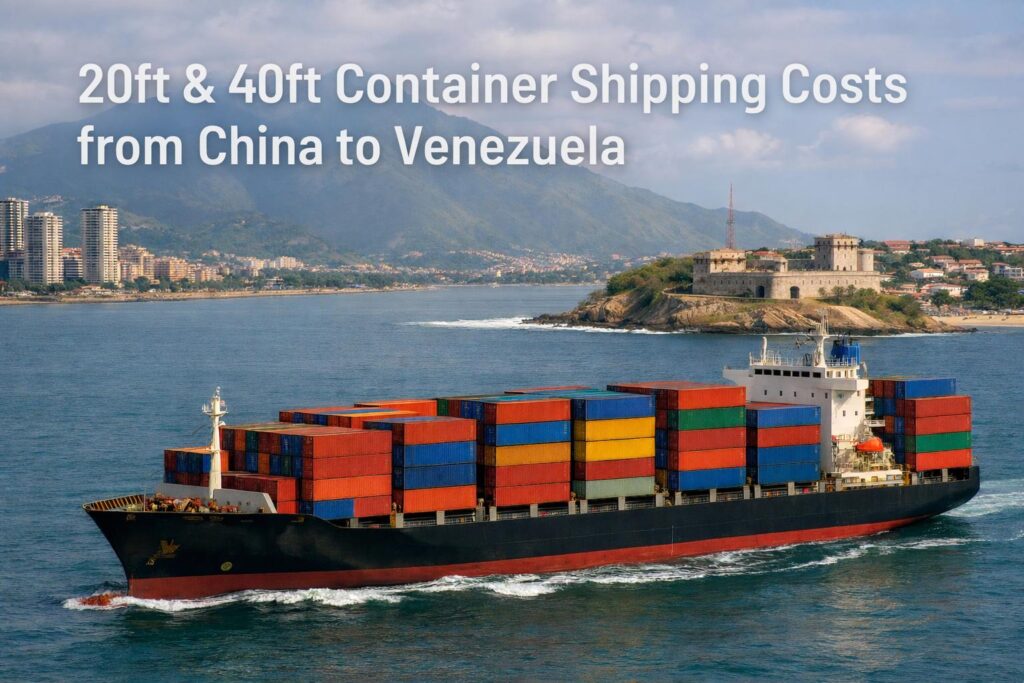
Sea Freight & Container Shipping Overview
Sea Freight Shipping from China to Venezuela
For most international shipments, sea freight is the primary and most reliable shipping method from China to Venezuela. Compared with air transportation, sea freight shipping offers significantly lower shipping costs, making it the preferred solution for transporting large volumes of goods over long distances.
Because Venezuela is located in Latin America and does not have frequent direct sailings from Asia, most cargo moves through established international shipping networks operated by major shipping lines. These networks allow containerized cargo to move efficiently despite longer transit times.
How Container Shipping Works
Container shipping involves transporting goods in standardized shipping containers from the origin port in China to a destination port in Venezuela. Containers are sealed after loading and remain closed throughout the journey, reducing cargo handling and minimizing the risk of damage.
For shipping goods internationally, container shipping provides:
- Better cargo protection
- Predictable shipping schedules
- Easier customs documentation
- More stable cost control
As a result, container shipping is widely used for international shipping of industrial machinery, raw materials, consumer goods, and commercial cargo.
Sea Freight vs Other Shipping Methods
While sea freight dominates the China–Venezuela route, importers may consider other shipping methods in limited cases:
- Air freight for urgent or high-value cargo
- LCL shipping for smaller shipments that do not require a full container
However, for most businesses focused on cost efficiency rather than speed, sea freight remains the most practical option. It allows importers to manage shipping expenses more effectively while supporting long-term supply chain planning.
Why Sea Freight Is Cost-Effective for Venezuela
Sea freight shipping is especially suitable for Venezuela-bound cargo due to:
- Long transit distance from Asia
- High container demand for bulk imports
- Limited air cargo capacity
By using container shipping, importers can move large quantities of goods at a lower unit cost, making sea freight the backbone of international trade between China and Venezuela.
20ft vs 40ft Containers & FCL Shipping Explained
20ft and 40ft Containers in International Shipping
When calculating container shipping costs from China to Venezuela, the first decision importers must make is choosing between a 20ft container and a 40ft container. These two container types are the standard equipment used in international container shipping and are suitable for different cargo profiles.
A 20ft container is commonly used for heavy cargo with lower volume. It is ideal for:
- Industrial machinery
- Metal products
- Construction materials
- Dense raw materials
Because weight limits are easier to manage in a 20ft container, it is often preferred for cargo that is heavy but compact.
A 40ft container offers significantly more loading space and is designed for high-volume shipments. It is widely used for:
- Consumer goods
- Furniture and household products
- Packaged commercial cargo
- Light but bulky shipments
For many importers, a 40ft container provides a lower cost per cubic meter, even though the total freight rate is higher than a 20ft container.
What Is Full Container Load (FCL) Shipping?
Most shipments from China to Venezuela are booked as full container load (FCL shipping). Under FCL terms, one shipper uses the entire container exclusively, without sharing space with other cargo.
FCL shipping offers several operational advantages:
- Reduced cargo handling
- Lower risk of damage or loss
- Faster port processing
- Simpler customs clearance procedures
Once the container is loaded and sealed at the origin, it remains unopened until it reaches the destination port, providing better security throughout the shipping process.
FCL Shipping vs LCL Shipping
For smaller shipments, LCL shipping (less than container load) may be an alternative. In LCL shipping, cargo is consolidated with other shipments inside shared shipping containers.
However, LCL shipping often involves:
- Additional handling during consolidation and deconsolidation
- Longer transit times
- Higher cost per cubic meter
For shipments above 15–18 cubic meters, FCL shipping is usually more cost effective and provides better control over shipping schedules and final delivery.
Choosing the Right Container Size
Selecting the correct container size depends on:
- Cargo volume and weight
- Packaging method
- Budget and shipping timeline
Understanding how container size affects space utilization and handling efficiency allows importers to optimize container usage and avoid unnecessary shipping expenses later in the process.
20ft & 40ft Container Shipping Costs from China to Venezuela
The table below shows estimated container shipping costs from China to Venezuela for 20ft and 40ft full container load (FCL) shipments. These figures represent average sea freight shipping rates in 2025 and are intended to help importers understand current market levels.
Important: The rates below are for ocean freight only. Total shipping costs may vary depending on destination charges, customs clearance, and inland transportation.
Estimated Ocean Freight Rates (FCL)
| Origin Port (China) | Destination Port (Venezuela) | 20ft Container Cost | 40ft Container Cost | Transit Time |
|---|---|---|---|---|
| Shanghai | Puerto Cabello | USD 1,500 – 1,800 | USD 3,300 – 4,300 | 35–45 days |
| Ningbo | Puerto Cabello | USD 1,600 – 1,900 | USD 3,500 – 4,500 | 38–48 days |
| Shenzhen | Puerto Cabello | USD 1,700 – 2,000 | USD 3,700 – 4,700 | 40–50 days |
| Guangzhou | Puerto Cabello | USD 1,600 – 1,900 | USD 3,500 – 4,400 | 38–48 days |
| Qingdao | Puerto Cabello | USD 1,800 – 2,100 | USD 3,800 – 4,800 | 42–52 days |
What These Container Shipping Costs Include
The above 20ft and 40ft container shipping costs apply to standard dry containers under full container load (FCL shipping) terms and generally include:
- Ocean transportation from China to Venezuela
- Use of an entire shipping container
- Basic carrier surcharges
These rates do not include:
- Export customs clearance in China
- Destination port handling charges
- Customs clearance process in Venezuela
- Import duties and taxes
- Inland transportation to the final destination
- Cargo insurance (optional)
As a result, the final Venezuela shipping costs may be higher than the ocean freight rate shown above.
Why Container Shipping Rates Vary
Container shipping rates from China to Venezuela may vary due to:
- Shipping schedules and vessel availability
- Selected shipping route and transshipment ports
- Seasonal demand and fuel surcharges
- Container availability at origin ports
For accurate pricing, importers should always confirm rates with a professional freight forwarder before booking international shipments.
FCL vs LCL Pricing Note
The table above applies to FCL shipping only. For smaller shipments, LCL shipping may be an alternative, but it often results in:
- Higher cost per cubic meter
- Longer transit time
- Additional handling charges
For cargo volumes above 15–18 CBM, FCL shipping is generally more cost effective.
Major Ports in China for Venezuela-Bound Cargo
Container shipping from China to Venezuela typically departs from China’s main export gateways. These major ports offer better vessel frequency, stronger connections with global shipping lines, and more stable container availability, which helps control shipping costs and transit time.
Common origin ports include:
Shipping from major Chinese ports usually results in more competitive container shipping rates and more reliable shipping schedules, especially during peak seasons.
Puerto Cabello: Main Destination Port in Venezuela
For most international shipments, Puerto Cabello is the primary destination port in Venezuela. It handles the majority of containerized imports and serves as the main gateway for commercial cargo arriving from Asia.
Puerto Cabello is preferred because it offers:
- Established container terminals
- More consistent customs procedures
- Better coordination with customs brokers
- Improved inland transport access
As a result, shipping goods to Puerto Cabello generally provides more predictable Venezuela shipping costs and fewer delays compared with secondary ports.
Shipping Routes from China to Venezuela
There are very limited direct sailings between China and Venezuela. Most container shipping follows indirect shipping routes that include one or more transshipment points.
Typical routing options involve:
- Transshipment via Caribbean hubs
- Connections through Central American ports
- Routes serving Latin America through regional gateways
These routes are operated by international shipping lines and, in some cases, supported by bulk carriers for specific cargo types. Although transshipment adds time, optimized route planning helps balance cost, reliability, and transit time.
Shipping Schedules and Route Planning
Shipping schedules on the China–Venezuela trade lane vary depending on carrier availability, vessel deployment, and seasonal demand. Delays may occur due to port congestion or schedule adjustments.
Working with an experienced freight forwarding company allows importers to:
- Compare multiple shipping routes
- Select reliable shipping lines
- Adjust departure dates for cost efficiency
- Monitor shipment status more effectively
Proper route planning is essential for achieving timely deliveries and maintaining supply chain stability.
Explore more shipping guides:
- Air Freight from China to Venezuela
- How Long Does It Take to Ship from China to Venezuela?
- 20ft & 40ft Container Shipping Costs from China to Panama
- 20ft & 40ft Container Shipping Costs from China to Mexico
- 20ft & 40ft Container Shipping Costs from China to Argentina
Customs Clearance Process & Import Procedures in Venezuela
Customs Clearance in Venezuela: What Importers Should Know
A smooth customs clearance process is essential for controlling total shipping costs and ensuring timely deliveries when shipping from China to Venezuela. All international shipments entering Venezuela are subject to inspection and approval by Venezuelan customs, and clearance procedures vary depending on cargo type, declared value, and import regulations.
Delays at customs can quickly increase shipping expenses due to port storage fees, container demurrage, and missed delivery schedules. For this reason, understanding local customs requirements is a critical part of the overall shipping process.
Required Documents for Customs Clearance
To complete the customs clearance process, importers must prepare accurate and complete documentation. Commonly required documents include:
- Commercial invoice showing cargo value and description
- Packing list detailing weight, dimensions, and container load
- Bill of lading issued by the shipping company
- Import license (if required for regulated goods)
- Cargo insurance certificate (if applicable)
Errors in the commercial invoice or packing list are among the most common causes of customs delays and re-inspections.
Role of Customs Brokers in Venezuela
Working with a licensed customs broker is highly recommended when importing goods into Venezuela. A professional customs broker understands local customs procedures, tariff classifications, and documentation standards, helping importers avoid penalties and unnecessary delays.
Customs brokers assist with:
- Submission of customs declarations
- Communication with Venezuelan customs authorities
- Coordination of cargo inspections
- Release of goods for final delivery
Close coordination between the customs broker and the freight forwarder is key to achieving smooth customs clearance.
Import Duties and Clearance Procedures
Import duties in Venezuela depend on the HS code classification, cargo category, and declared value. Some goods may require additional permits or inspections before clearance can be completed.
Typical customs procedures include:
- Document verification
- Physical inspection (if selected)
- Duty and tax assessment
- Clearance approval and cargo release
Failure to comply with import regulations may result in cargo being held at the destination port, increasing both transit time and shipping expenses.
From Customs Clearance to Final Delivery
Once customs clearance is completed, the container can be released from the port and transported to the final destination. Proper coordination between the customs broker, freight forwarding company, and local transport provider ensures that goods arrive without unnecessary delays.
Planning documentation in advance and working with experienced partners are the most effective ways to achieve reliable customs clearance in Venezuela.
Freight Forwarder & Door-to-Door Service from China to Venezuela
Role of a Freight Forwarder in China–Venezuela Shipping
A professional freight forwarder plays a central role in managing container shipping from China to Venezuela. Instead of coordinating separately with shipping lines, customs brokers, and transport providers, importers can rely on a single freight forwarding company to manage the entire shipping process from origin to final delivery.
An experienced freight forwarder helps importers:
- Select the most suitable shipping method
- Book container space with reliable shipping lines
- Prepare export and import documentation
- Coordinate customs clearance procedures
- Monitor shipment status throughout transit
This centralized coordination reduces operational risk and helps control overall shipping costs.
Door-to-Door Service Explained
Many importers choose door to door service to simplify international shipping. Under a door-to-door arrangement, the freight forwarder manages the shipment from the supplier’s location in China all the way to the consignee’s address in Venezuela.
A typical door shipping process includes:
- Cargo pickup from the factory or warehouse in China
- Export customs clearance and documentation
- Sea freight shipping or air transportation
- Import customs clearance in Venezuela
- Inland transportation to the final destination
Door-to-door service is especially useful for businesses without local logistics teams or experience with Venezuelan customs procedures.
Shipping Process Managed by a Freight Forwarder
A structured shipping process helps ensure efficiency and compliance. When handled by a freight forwarder, the process usually follows these steps:
- Cargo inspection and pickup
- Container loading and sealing
- Export documentation preparation
- Booking with the shipping company
- International transportation
- Customs clearance process at destination
- Final delivery to the consignee
By managing each step, the freight forwarder helps prevent delays, reduce shipping expenses, and ensure goods arrive safely.
Communication, Tracking, and Shipment Status
Effective communication is critical in international shipping. Professional freight forwarding companies provide regular updates on shipment status, allowing importers to track progress and respond quickly to changes in shipping schedules or customs procedures.
Clear communication between the freight forwarder, customs broker, and consignee helps maintain transparency and ensures smoother final delivery.
Why Freight Forwarders Matter for Venezuela Shipping
Shipping to Venezuela involves complex regulations, variable shipping schedules, and limited direct sailings. Working with an experienced freight forwarder helps importers navigate these challenges while maintaining cost control and delivery reliability.
For most businesses, using a freight forwarding company is the most efficient way to manage container shipping from China to Venezuela.
Air Freight & Air Cargo Shipping from China to Venezuela
When Air Freight Is Used for China–Venezuela Shipping
Although container shipping and sea freight remain the main solutions for international shipments, air freight is sometimes used for urgent, time-sensitive, or high-value cargo. Importers typically choose air freight shipping when delivery speed is more important than cost.
Air freight is commonly used for:
- Emergency replacement parts
- High-value electronics
- Documents and samples
- Time-critical commercial cargo
Compared with sea freight, air transportation significantly reduces transit time but results in much higher shipping expenses.
Air Freight Cost and Pricing Factors
Air freight cost is calculated based on chargeable weight, which considers both actual weight and volumetric weight. As a result, air shipping is most suitable for compact, lightweight cargo with high value density.
Key factors affecting air freight cost include:
- Cargo weight and dimensions
- Airline regulations and fuel surcharges
- Routing and transit airports
- Seasonal demand and capacity availability
Because of these variables, air freight costs fluctuate more frequently than container shipping rates.
Major Airports and Air Cargo Routes
Most air cargo shipments to Venezuela arrive at Simón Bolívar International Airport, the country’s primary international airport for air freight handling. This airport serves as the main gateway for inbound air transportation.
Due to limited direct flights between China and Venezuela, air freight shipments usually transit through international hubs operated by major airlines. Freight forwarders coordinate routing to ensure compliance with airline regulations while minimizing delays.
Air Freight vs Sea Freight: Practical Comparison
Air shipping offers faster delivery but at a significantly higher cost. For this reason, most importers use air freight only when necessary and rely on sea freight shipping for regular cargo flow.
In practice:
- Sea freight shipping is used for bulk cargo, industrial machinery, and large volumes
- Air freight is used selectively for urgent or high-value shipments
Combining both shipping methods allows businesses to maintain flexibility while controlling overall supply chain costs.
Role of Freight Forwarders in Air Transportation
A professional freight forwarder manages air transportation by coordinating airline bookings, documentation, customs clearance, and final delivery. By integrating air freight with sea freight solutions, freight forwarding companies help importers build efficient and responsive logistics strategies.
How to Reduce Shipping Costs & Optimize the Supply Chain
Practical Ways to Reduce Shipping Costs
Managing shipping costs from China to Venezuela requires more than choosing the cheapest freight rate. Importers who focus on cost effective shipping look at the entire shipping process and identify where costs can be optimized without increasing risk.
Effective cost-reduction strategies include:
- Selecting the correct container size to avoid unused space
- Booking shipments in advance to secure better shipping schedules
- Avoiding peak seasons when freight rates are higher
- Choosing reliable shipping routes instead of the fastest options
- Working with experienced freight forwarders who understand the local market
These steps help reduce unnecessary shipping expenses while maintaining delivery reliability.
Consolidating Shipments and Container Utilization
For businesses sourcing from multiple suppliers, consolidating cargo can significantly reduce costs. By consolidating smaller shipments into a single container, importers can improve container utilization and lower the cost per unit.
Common consolidation options include:
- Supplier consolidation at origin
- Warehouse-based consolidation before export
- Switching from multiple LCL shipments to one FCL shipment
When shipment volume grows beyond 13–16 CBM, switching to full container load shipping is often more economical than continuing with LCL shipments.
Cargo Insurance and Risk Management
Cargo insurance is an important part of international shipping risk control. Although insurance represents a small portion of total shipping costs, it protects importers against loss, damage, or unexpected incidents during transportation.
Cargo insurance is especially recommended for:
- High-value goods
- Industrial machinery
- Long-distance sea freight shipments
Proper insurance coverage helps stabilize the supply chain and reduces financial exposure during international shipments.
Warehousing Services and Supply Chain Flexibility
Some freight forwarding companies offer warehousing services at origin or near destination ports. Warehousing allows importers to:
- Store goods before shipment
- Improve container loading efficiency
- Respond quickly to changes in demand
By integrating warehousing into the logistics plan, businesses gain greater flexibility and improve overall supply chain efficiency.
Long-Term Cost Optimization Through Planning
Sustainable cost savings come from planning rather than short-term rate chasing. Importers who work closely with a freight forwarding company can develop long-term shipping strategies that balance cost, transit time, and reliability.
This approach leads to more predictable shipping expenses, fewer delays, and smoother international shipping operations over time.
Frequently Asked Questions
How much does it cost to ship a 20ft container from China to Venezuela?
In 2025, the average 20ft container shipping cost from China to Venezuela ranges from USD 1,500 to 2,000 for ocean freight only. Final shipping costs may increase depending on destination charges, customs clearance, and inland delivery.
How much does it cost to ship a 40ft container from China to Venezuela?
A 40ft container typically costs between USD 3,000 and 4,500 for sea freight shipping. The final price depends on the origin port, shipping route, destination port, and market conditions.
How long is the transit time for container shipping?
Average transit time for sea freight shipping from China to Venezuela is 30 to 45 days. Transit time may vary based on transshipment schedules, port congestion, and customs procedures.
What is the main destination port in Venezuela?
Puerto Cabello is the primary destination port for container shipping into Venezuela. It handles most international shipments and offers more stable shipping schedules and customs infrastructure.
Is air freight available from China to Venezuela?
Yes. Air freight shipping is available for urgent or high-value cargo. Most air cargo arrives via Simón Bolívar International Airport, though direct flights are limited and most shipments transit through international hubs.
What documents are required for customs clearance?
Commonly required documents include a commercial invoice, packing list, bill of lading, and an import license if applicable. Accurate documentation is essential for smooth customs clearance and timely delivery.
Should I use a freight forwarder for shipping to Venezuela?
Yes. A professional freight forwarder or freight forwarding company helps manage the entire shipping process, including booking, documentation, customs clearance, and final delivery. This reduces risk and improves cost control.
Final Summary: 20ft & 40ft Container Shipping from China to Venezuela
Shipping goods from China to Venezuela requires careful planning, especially when managing 20ft and 40ft container shipping costs. In 2025, container shipping remains the most reliable and cost-effective solution for transporting large volumes of cargo between the two countries.
By choosing the right container size, understanding sea freight shipping rates, selecting appropriate shipping routes, and preparing accurate customs documents, importers can significantly reduce shipping expenses and avoid delays. Working with an experienced freight forwarder further improves efficiency by coordinating customs clearance, inland transportation, and final delivery.
Whether you are shipping industrial machinery, raw materials, or commercial goods, a structured approach to container shipping from China to Venezuela ensures predictable costs, stable transit times, and long-term supply chain success.