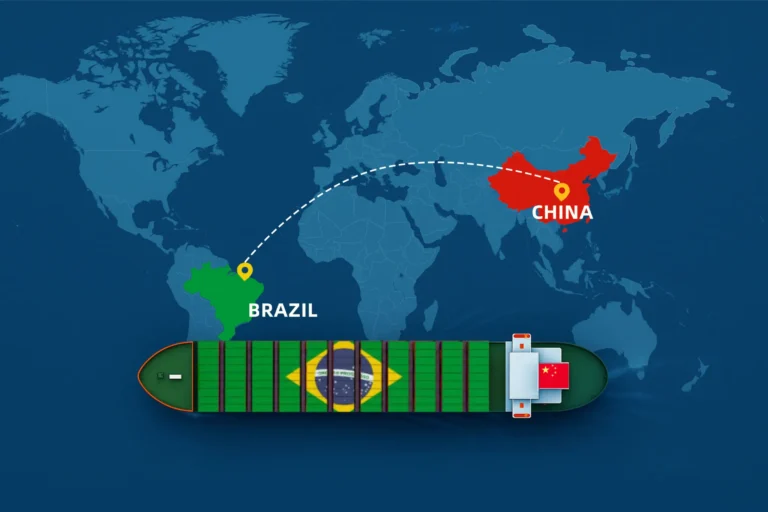
Related Guide
Shipping from China to Brazil
Shipping from China to Brazil – Sea, Air & DDP in 2026 Fast, reliable shipping from China to Brazil for B2B importers,industrial cargo, and gener...
Read guide →

Reliable & Cost-Effective Shipping from China
Tailored Logistics Solutions for Your Business
Shipping containers from China to Brazil has become an essential part of international trade, connecting two of the world’s most dynamic economies. As Brazil continues to expand its role in global trade, the demand for reliable and cost-effective sea freight shipping solutions has grown significantly.
From electronics and machinery to textiles and consumer goods, thousands of products are transported via container shipping every day. Importers in Brazil rely heavily on 20ft and 40ft containers for full container loads (FCL) and less-than-container loads (LCL), depending on their cargo volume and budget.
China’s strategic position as a manufacturing hub allows for competitive shipping costs, while Brazil’s location and market size make it a prime recipient of bulk international shipments. Whether you’re shipping to Rio de Janeiro, Santos, or another major port, choosing the right shipping method and understanding the total logistics costs involved is critical to staying profitable.
In this comprehensive guide, we will break down everything you need to know about shipping containers from China to Brazil, including average container shipping rates, transit times, customs procedures, and how to work with a trusted freight forwarder to streamline the process.
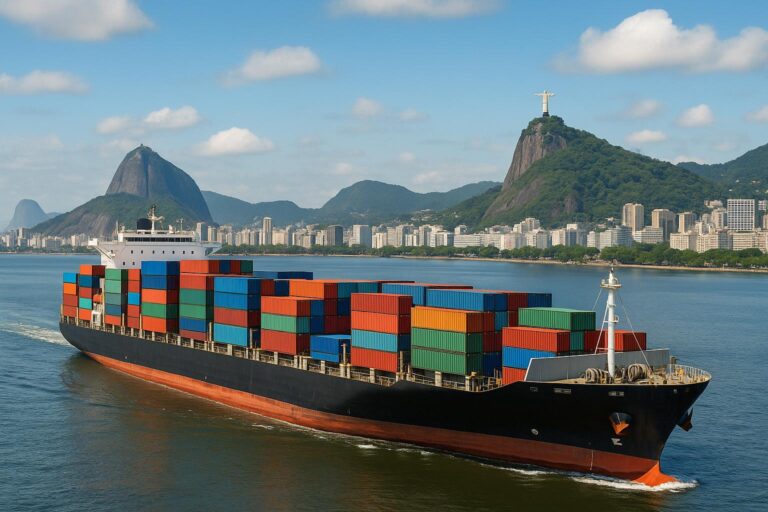
China is home to some of the busiest and most advanced container ports in the world, making it a global leader in international shipping. When exporting to Brazil, several major Chinese ports stand out due to their infrastructure, efficiency, and high volume of container load handling.
Among them, Shanghai Port, Ningbo-Zhoushan, Shenzhen (Yantian Port), and Guangzhou (Nansha Port) are the most common departure points for sea freight shipments to Brazil. These ports are equipped with state-of-the-art cranes, digital customs platforms, and efficient cargo handling systems, which help reduce delays and improve overall cost efficiency.
For Brazilian importers, choosing the right port of origin in China can directly impact shipping time and container shipping costs. For instance, ports in southern China such as Shenzhen or Guangzhou may offer faster routes to South America compared to northern ports like Tianjin.
Additionally, these ports support both full container load (FCL) and less-than-container load (LCL) shipments, allowing flexibility based on cargo volume. Businesses looking for cost-effective shipping solutions should coordinate with experienced freight forwarders who can consolidate goods from multiple suppliers into a single container to optimize space and reduce logistics costs.
Brazil’s extensive coastline and well-established container terminals make it a major hub for ocean freight in South America. When importing goods from China, selecting the right destination port in Brazil is essential to ensure fast clearance, lower inland transportation costs, and reliable cargo delivery.
The most commonly used Brazilian ports for container shipments include:
Port of Santos – The largest and busiest port in Brazil, handling nearly 30% of the country’s container traffic. Located in São Paulo state, it offers excellent connectivity to major inland cities.
Port of Rio de Janeiro – A key entry point for goods destined for the southeast of Brazil. It has strong capabilities for handling full container loads and supports various shipping methods.
Port of Paranaguá – Known for its efficient cargo handling, this port is ideal for bulk goods and containers headed to southern Brazil.
Port of Itajaí and Port of Suape – Growing in popularity due to their modernization and ability to manage international shipments from Asia.
Choosing a major port close to your final delivery location in Brazil can reduce not only logistics costs but also lead times. Importers should also consider the port’s capacity for hazardous materials, peak season congestion, and customs processing speed.
Experienced freight forwarders can advise on the best routing based on cargo type, urgency, and cost constraints, ensuring your containers reach their destination ports without unnecessary delays.
The transit time for container shipping from China to Brazil depends on several key factors, including the port of origin, destination port, shipping route, and whether the cargo is shipped as FCL or LCL. On average, sea freight shipments take between 28 to 45 days from loading at a Chinese port to unloading in Brazil.
Here’s a breakdown of the estimated transit time for some popular routes:
Route | Estimated Transit Time |
|---|---|
Shanghai → Santos | 35–42 days |
Shenzhen → Rio de Janeiro | 30–38 days |
Ningbo → Paranaguá | 32–40 days |
Qingdao → Itajaí | 36–45 days |
Factors such as weather conditions, port congestion, transshipment (if indirect), and customs procedures can all influence the average transit time. FCL shipments are typically faster because they go directly from the shipper to the consignee without consolidation or deconsolidation delays, unlike LCL shipments.
If your business handles time-sensitive shipments, it’s important to plan ahead and work with a freight forwarder who can provide real-time updates, identify the most reliable shipping routes, and adjust schedules in case of delays.
Understanding the ocean freight rates for shipping containers from China to Brazil is essential for effective budgeting and decision-making. Rates vary based on the container size, cargo type, shipping line, and seasonality. For 2025, here are the average shipping costs for 20ft and 40ft containers on popular sea routes:
| Route | 20ft Container (USD) | 40ft Container (USD) |
|---|---|---|
| Shanghai → Santos | $2,250 | $3,450 |
| Shenzhen → Santos | $2,280 | $3,480 |
| Ningbo → Rio de Janeiro | $2,320 | $3,500 |
| Qingdao → Santos | $2,260 | $3,460 |
| Xiamen → Itajaí | $2,300 | $3,530 |
| Tianjin → Santos | $2,290 | $3,470 |
| Guangzhou → Paranaguá | $2,250 | $3,450 |
| Dalian → Rio Grande | $2,310 | $3,490 |
| Hong Kong → Santos | $2,270 | $3,460 |
| Fuzhou → Santos | $2,280 | $3,480 |
These rates apply to full container load (FCL) shipments and are port-to-port estimates. If you’re shipping as LCL, rates are charged per cubic meter (CBM), and total costs may include additional charges such as documentation, terminal handling, and customs clearance.
Working with a freight forwarder can help you lock in more competitive pricing, especially for cost-effective options like booking space on consolidated vessels or optimizing the shipping method for your cargo type.
Remember, container rates can fluctuate due to fuel prices, carrier capacity, and international demand. To get the most accurate pricing, always request a detailed quote based on your cargo’s specifications, preferred schedule, and delivery terms.
You may be interested:
20ft & 40ft Container Shipping Costs from China to France
Cost of Shipping 20ft & 40ft Containers from China to UAE
20ft & 40ft Container Shipping Costs from China to Saudi Arabia
20ft & 40ft Container Shipping Costs from China to Germany
Shipping Costs for 20ft & 40ft Containers from China to Russia
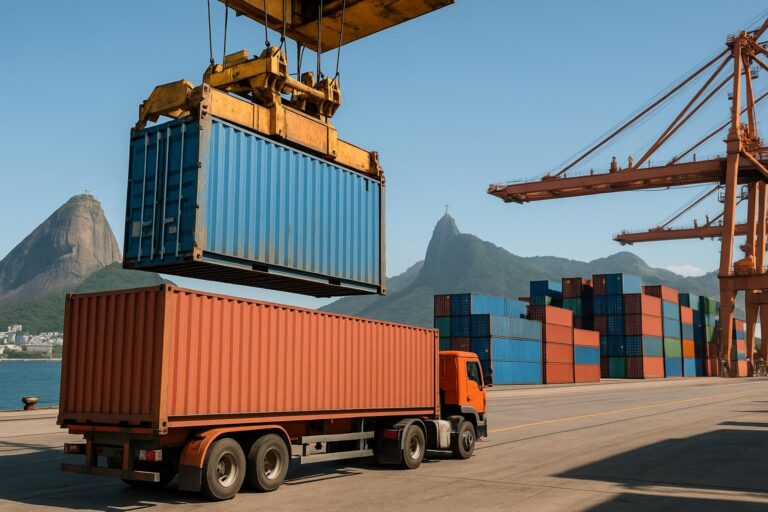
When planning your shipment from China to Brazil, one of the first decisions is whether to use a full container load (FCL) or less than container load (LCL) service. The right choice depends on your cargo volume, budget, and delivery requirements.
Choosing an entire container—either a 20ft or 40ft unit—gives you full control over the space and allows your cargo to be transported directly from origin to destination. This is ideal for large shipments, heavy goods, or time-sensitive cargo. FCL shipping generally offers:
Lower shipping costs per unit for high-volume cargo
Faster transit time with fewer handling points
Reduced risk of damage or loss
FCL is typically the best choice when your shipment exceeds 15 CBM (cubic meters) or 12,000 kg in weight.
For smaller shipments, LCL shipping allows multiple shippers to share space within one container. You only pay for the volume you use, making this a good cost-effective option for startups and small businesses. However, LCL may involve:
Additional handling, increasing the risk of delays
Shipping costs based on CBM rather than container size
Consolidation and deconsolidation at both origin and destination
While LCL is budget-friendly for light or small-volume goods, delays and added logistics costs should be considered in your overall shipping budget.
Partnering with a reliable freight forwarder ensures that you receive the best advice on choosing between FCL and LCL, along with optimized routing, pricing, and consolidation opportunities.
The cost of shipping containers from China to Brazil can vary significantly depending on several factors. Whether you’re booking a 20ft, 40ft, or sharing an LCL shipment, understanding what drives logistics costs can help you make more informed decisions and reduce expenses.
Larger containers (e.g., 40ft containers) generally cost more than 20ft containers, but they offer better value per unit if you’re maximizing space. Special container types such as reefers or open-top units also come with higher shipping rates.
Choosing between FCL, LCL, or express shipping will impact your total cost. FCL is usually more economical for large shipments, while LCL may involve additional costs for consolidation, handling, and deconsolidation.
The route taken—from origin port in China to the destination port in Brazil—affects the transit time and fuel surcharges. For example, direct services to Santos may be faster but more expensive than indirect routes.
Global container prices fluctuate throughout the year, especially during Chinese New Year, Brazil’s import surge seasons, and other international shipping peaks. Booking early can help secure better rates.
Premium carriers may charge more but offer faster, more reliable service. If your cargo is time-sensitive, you may opt for priority loading or fast delivery options at a premium.
You should also budget for customs clearance, duties, port handling charges, and possible inspection fees based on Brazilian customs regulations.
Working with a freight forwarder ensures that you receive an accurate breakdown of all logistics charges, avoid surprises, and choose the most cost-efficient shipping solutions tailored to your needs.
When arranging container shipping from China to Brazil, the choice of trade terms—DDP, FOB, or CIF—can significantly affect your overall shipping process, responsibilities, and costs. Each option has its own advantages depending on how much control you want over the logistics chain and which party is handling key tasks such as customs clearance and inland delivery.
Under FOB terms, the seller in China is responsible for getting the goods to the departure port and loading them onto the vessel. Once on board, the buyer takes full responsibility for the freight, export customs clearance, shipping insurance, and import duties in Brazil. This method offers:
Greater flexibility in choosing your freight forwarder
Transparent shipping costs beyond the port of origin
Control over the shipping company and route
However, it also requires the importer to manage the more complex aspects of the international shipping process.
CIF includes the cost of goods, marine insurance, and ocean freight to the destination port in Brazil. While the seller covers more steps than under FOB, the buyer still manages customs clearance and pays duties at the destination. CIF is common when importers want a semi-inclusive solution without full responsibility during transit.
Moderate importer control
Predictable upfront costs
Responsibility starts at arrival port
For importers who want an all-inclusive, door-to-door delivery, DDP shipping is the most convenient option. The supplier or freight forwarder handles everything—from pickup in China, export and import customs clearance, freight, duties, taxes, and final delivery in Brazil. Though it usually comes with a higher ddp shipping cost, it simplifies the entire shipping process.
No surprise shipping documents or customs delays
Ideal for small businesses or non-experts
Reduces administrative burden and hidden logistics costs
Each pricing method suits different risk tolerances and operational capabilities. Partnering with a reliable freight forwarder helps you evaluate the best term based on cargo size, customs knowledge, and delivery preferences.
Navigating the complexities of international shipments between China and Brazil requires expertise, coordination, and trusted partners. That’s why working with an experienced freight forwarder is one of the smartest moves an importer can make.
A professional freight forwarder acts as your logistics partner, managing every part of the shipping process—from booking vessels and handling shipping documents, to coordinating customs clearance and tracking cargo in real time. For businesses unfamiliar with Chinese port procedures or Brazilian customs regulations, their support is invaluable.
Access to optimized shipping services tailored to your cargo size and type
Connections with multiple shipping companies and carriers to ensure competitive pricing
Management of complex logistics costs including duties, taxes, handling fees, and inland delivery
Solutions for both FCL and LCL shipping, as well as door-to-door delivery
Support for hazardous materials, time-sensitive shipments, and consolidated cargo
When selecting a partner, look for a reliable freight forwarder with a strong track record in China–South America trade. An experienced freight forwarder will not only reduce your risk of delays and penalties but also improve cost efficiency by offering trusted freight forwarding solutions.
By partnering with the right logistics provider, businesses can streamline operations, stay compliant with both export and import regulations, and focus on growing their trade with confidence.

Reducing your overall shipping budget is a key priority when managing container shipments from China to Brazil. With the right strategy and expert guidance, you can significantly lower your logistics costs while maintaining efficient and reliable cargo delivery.
Here are practical tips to help you improve cost efficiency without compromising service quality:
Evaluate whether FCL, LCL, or door-to-door delivery is best for your cargo. While FCL is ideal for bulk orders, LCL shipping may offer a cost-effective option for lower volumes. Consider sea freight over air freight if timing allows.
If working with multiple suppliers in China, ask your freight forwarder to provide cargo consolidation services. Grouping shipments helps optimize space in each container and lowers the per-unit shipping cost.
Rates can spike during peak seasons like Chinese New Year, Golden Week, or Brazil’s year-end holidays. Booking during off-peak months can reduce container shipping rates and ensure smoother handling.
Efficient packing can reduce wasted space and help you avoid unnecessary fees for oversized goods. Use a CBM calculator to determine the most economical configuration before booking.
Working with multiple freight forwarders gives you access to better market pricing and diversified routing options. A trusted freight forwarder can identify cost-saving shipping solutions tailored to your needs.
Budget for customs clearance, port handling, documentation, and potential storage fees in advance to avoid last-minute surprises that inflate your shipping costs.
With smart planning, professional support, and proactive logistics management, businesses of all sizes can reduce their international shipping expenses while maintaining fast, secure, and scalable delivery from China to Brazil.
For importers who value convenience and time, door-to-door shipping and express shipping offer streamlined solutions that simplify the entire shipping process from factory to final destination. These methods are ideal for businesses that want to avoid managing multiple service providers and focus on fast, hassle-free logistics.
With door shipping, a freight forwarder or logistics company manages every stage of the journey—including pickup at the Chinese factory, export procedures, international shipping, customs clearance in Brazil, and final delivery to your warehouse or business location.
Benefits of door-to-door services include:
Full-service solution that reduces administrative burden
Clear timeline and all-inclusive shipping costs
Suitable for both FCL and LCL shipping
This is a preferred method for many first-time importers or companies shipping to multiple locations within Brazil.
When speed is essential, express shipping via international couriers like DHL, FedEx, or UPS is the go-to choice. Though significantly more expensive than sea freight, it offers:
Fast delivery in as little as 3–7 days
End-to-end tracking and customs brokerage included
Ideal for time-sensitive shipments, documents, and small parcels
While express is typically used for air cargo, it can also serve as a supplement to slower ocean freight for urgent samples or backup stock.
Both door shipping and express services provide peace of mind by minimizing your involvement in the logistics process, making them efficient solutions for companies seeking simplicity, speed, and reliability.
To ensure smooth customs clearance when shipping containers from China to Brazil, importers must provide accurate documentation and comply with Brazilian customs regulations. Failure to do so can result in delays, fines, or the seizure of goods at the destination port.
Here are the essential shipping documents needed for container imports:
Commercial Invoice: A detailed bill from the seller that outlines the product description, quantity, value, and Incoterms (e.g., FOB, CIF, DDP).
Packing List: Lists package dimensions, weight, and the number of units per carton.
Bill of Lading (B/L): The official transport document issued by the shipping line, confirming that the cargo has been loaded onto the vessel.
Certificate of Origin (if applicable): Indicates where the goods were manufactured, which may impact tariff rates.
Import License: For restricted goods that require authorization before entering Brazil.
A qualified freight forwarder will help prepare and double-check all documents to meet international trade standards and customs clearance requirements.
Brazil enforces strict customs clearance procedures, particularly for commercial container shipments. Some key considerations include:
Taxation: Import duties, VAT (ICMS), and other fees apply and vary by product category and value.
Inspection: Random or risk-based inspections may apply to certain cargo, especially high-value, hazardous, or mislabeled items.
Regulatory Bodies: Agencies such as Receita Federal and ANVISA (for health-regulated goods) may be involved in approvals.
It’s important to budget for customs clearance fees and possible inspection delays. For smoother entry, always ensure all documentation is aligned with your shipping method, container content, and applicable regulations.
To wrap up, here are answers to some of the most common questions importers ask when arranging container shipping from China to Brazil:
As of 2025, 20ft container shipping costs range from $1,270 to $1,350, while 40ft container shipping rates typically fall between $2,040 to $2,120, depending on the route and season. These prices are for ocean freight only and exclude customs clearance and additional charges.
The delivery time by sea ranges from 28 to 45 days, depending on the port of origin, destination port, and whether it’s FCL or LCL shipping. FCL is usually faster due to fewer stops.
FCL (Full Container Load) means you book an entire container, ideal for bulk cargo. LCL (Less than Container Load) allows you to share space with other shippers and is better for smaller shipments.
If you’re shipping large volumes or heavy goods, FCL sea freight is most cost-effective. For light or urgent cargo, consider LCL shipping or express shipping. Door-to-door services are ideal for convenience, especially for small businesses.
You’ll need a commercial invoice, bill of lading, packing list, and possibly a certificate of origin or import license. A freight forwarder will help prepare and verify all shipping documents.
Yes. Use a CBM calculator to optimize packing, avoid peak seasons, consolidate shipments, and work with an experienced freight forwarder to find cost-effective shipping solutions.
Useful freight, customs and importing resources related to this shipping guide.
Shipping from China to Brazil – Sea, Air & DDP in 2026 Fast, reliable shipping from China to Brazil for B2B importers,industrial cargo, and gener...
Read guide →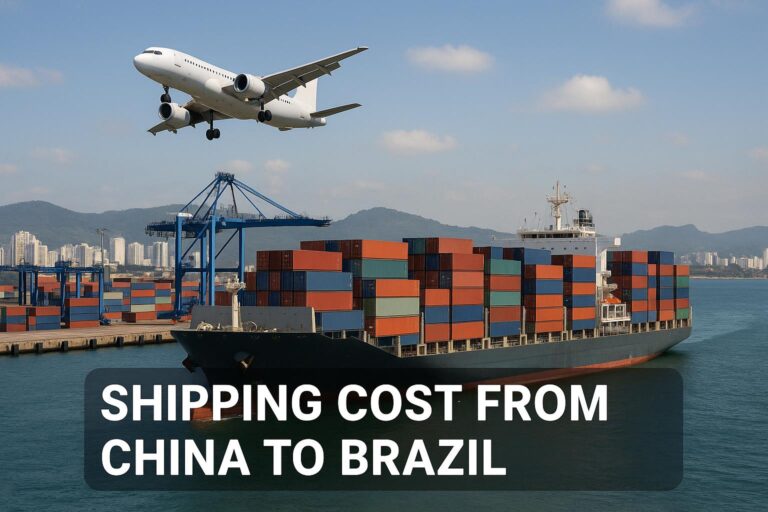
Shipping Cost from China to Brazil (2026 Guide) Verified & Reviewed · Last updated May 2026 Shipping cost from China to Brazil in 2026 typically...
Read guide →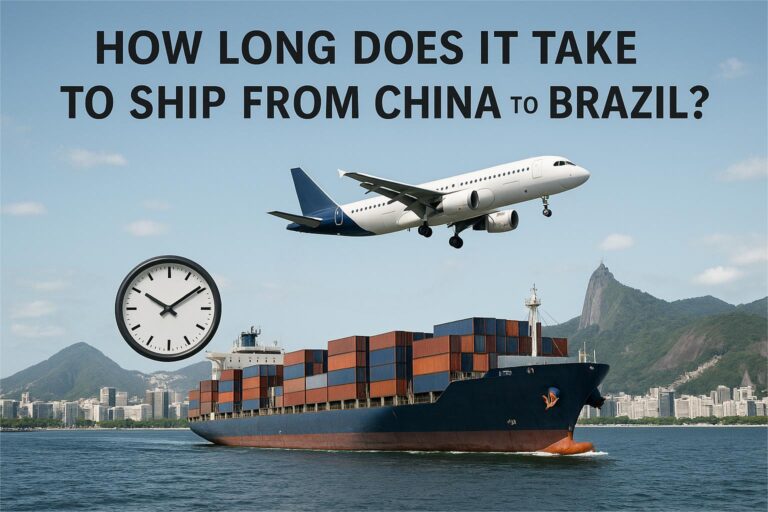
How long does it take to ship from China to Brazil? This is one of the most common questions asked by importers navigating international logistic...
Read guide →
Sea freight is the most cost effective shipping method for large volumes and container load cargo. It is ideal for businesses looking to reduce s...
Read guide →Air freight from China is the best option for time sensitive and high value shipments. It offers fast delivery, reliable transit times, and effic...
Learn more → Useful Resource DDP Shipping from China to BrazilShipping goods from China to Brazil has become a critical role in global trade. Brazilian importers rely heavily on Chinese suppliers for electro...
Learn more →WhatsApp us