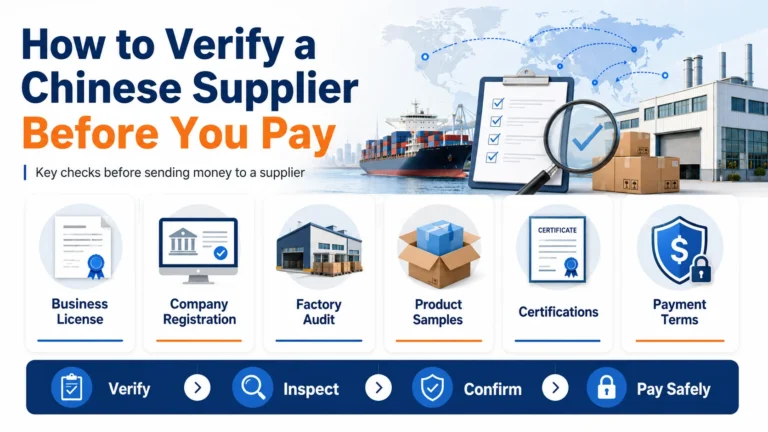
Related Guide
How to Verify a Chinese Supplier Before You Pay
How to Verify a Chinese Supplier Before You Pay Verified & Reviewed · Last updated July 2026 Before you pay a Chinese supplier, do not rely only...
Read guide →

A factory audit in China helps importers verify a supplier’s production capacity, quality control, manufacturing processes, and overall reliability before placing a major order.
It can reveal weak quality systems, limited capacity, hidden subcontracting, and other supply chain risks before production begins, helping buyers make better supplier decisions.
Supplier Verification
Quality Control
Production Capacity
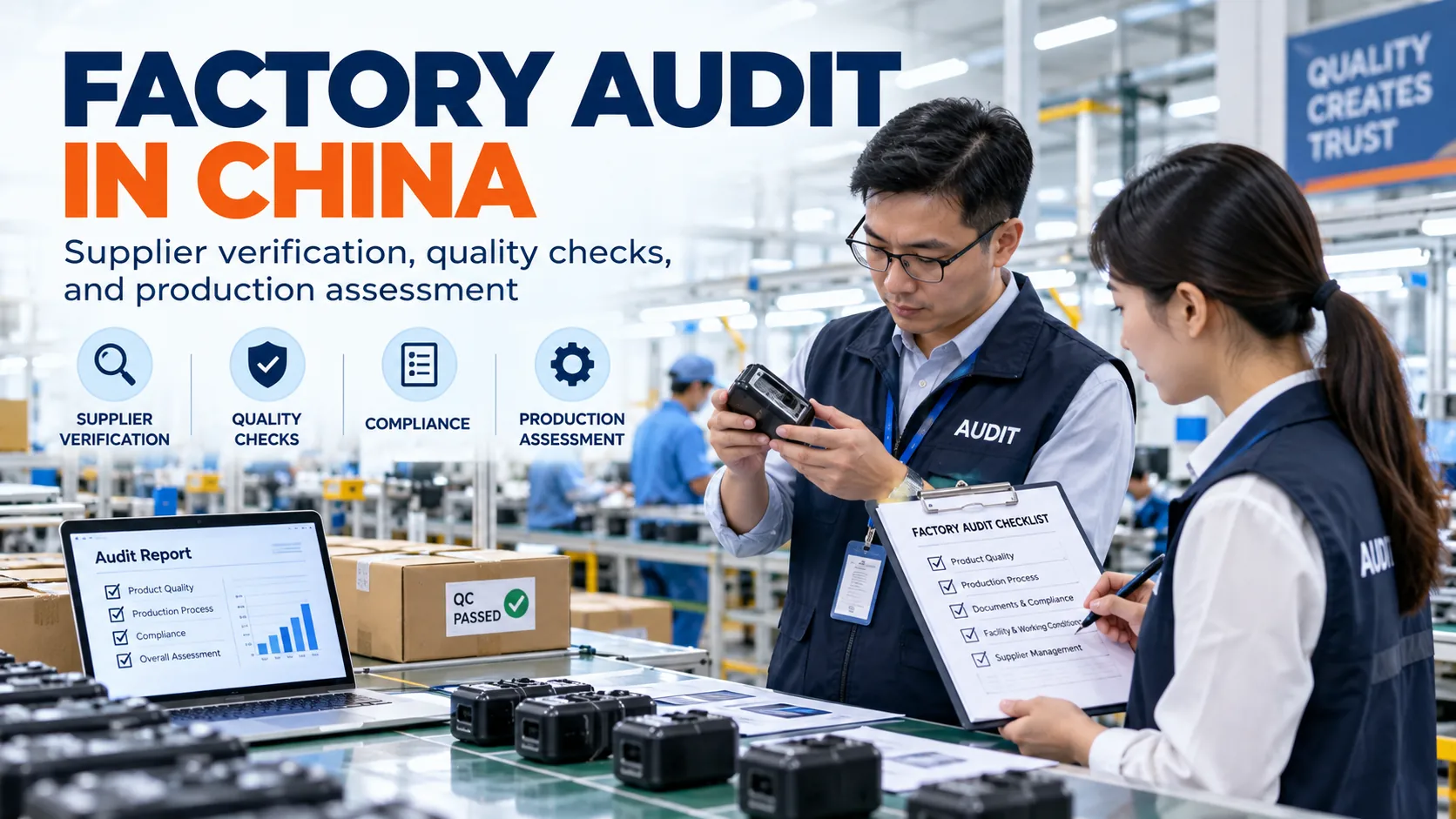
A factory audit is a structured review of a manufacturer’s facility, manufacturing operations, quality management, and relevant compliance controls. It focuses on the factory behind the quotation rather than only on company documents or finished products.
A typical audit in China may examine factory ownership, production lines, machinery, workforce, manufacturing processes, material control, quality standards, subcontracting, traceability, safety, and working conditions. The exact scope should depend on the product, order value, industry standards, destination-market requirements, and the buyer’s own quality requirements.
There is no single checklist that fits every supplier. A basic factory audit in China for consumer products may focus on manufacturing capability and quality control. A technical audit for industrial equipment, electronics, or customized products may require deeper review of testing, technical staff, and operating procedures.
The audit may cover:
Supplier identity and manufacturing location
Equipment, workforce, and supplier capabilities
Quality management systems and testing controls
Materials, traceability, and subcontracting
Social compliance, safety, and working conditions
A factory audit is also different from product inspection. The factory audit evaluates the supplier and its systems, while product inspection checks goods from a specific order.
Factory audits are an important part of supplier due diligence. They help buyers move from what a supplier says to what can actually be verified on site.
This matters because supplier problems can appear later as inconsistent product quality, missed schedules, material substitutions, hidden subcontracting, or delays across the supply chain.
A supplier may be a manufacturer, a trading company, an export company connected to a factory, or a business working with several manufacturing partners. None of these structures is automatically unsuitable, but the relationship should be clear.
During the factory audit, the auditor can compare company information with the physical facility, manufacturing activities, staff, and records. The buyer should understand which business signs the contract, receives payment, and actually manufactures the goods.
This helps verify factory ownership and reduces the risk of relying on unsupported supplier claims.
A supplier may claim that it can produce a certain quantity each month, but the figure should be checked against actual factory conditions.
The audit can review production lines, machinery, workforce, shift arrangements, current workload, and recent production output. The key distinction is between theoretical production capacity and available capacity.
A factory may have enough equipment on paper but still be overloaded with other clients’ orders. For buyers with strict delivery dates, this can directly affect the supply chain.
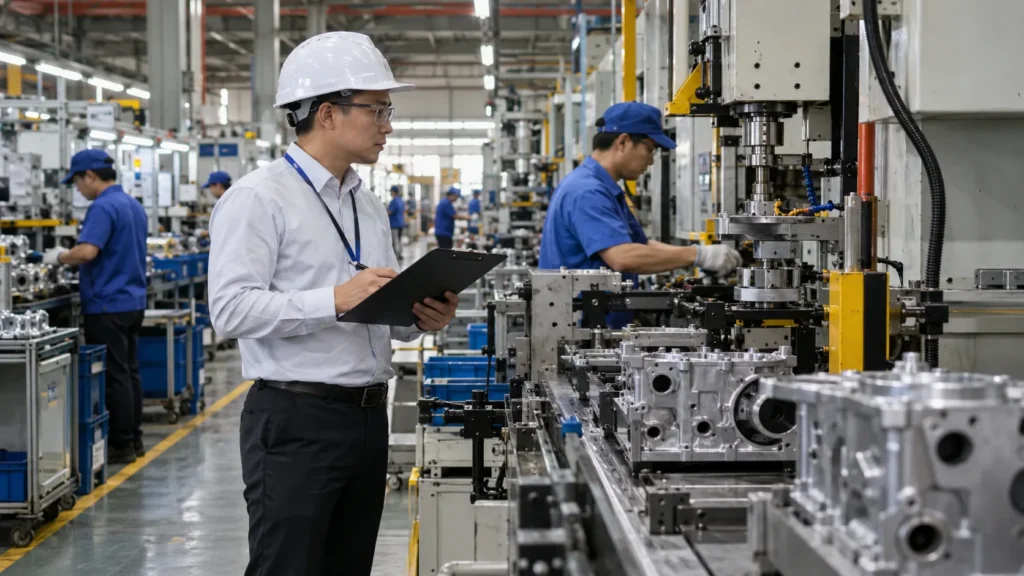
Quality control should not begin only when finished products are ready for shipment.
A reliable factory should manage quality from incoming materials through final testing. During the audit, the auditor can review inspection procedures, production records, testing records, calibration logs, defect handling, and corrective actions.
Factory audits can help you see whether quality assurance is part of normal manufacturing operations or depends mainly on final inspection.
Subcontracting is common in many industries. The issue is not outsourcing itself, but poor control or lack of transparency.
Supplier audits should identify which processes are completed inside the factory, which are outsourced, and how subcontractors are approved and monitored. This is especially important when outsourced work affects safety, appearance, performance, or product quality.
Different factory audits serve different purposes. Some focus on manufacturing capability, while others review quality management, social compliance, safety standards, or environmental practices.
The audit scope should match the main sourcing risk rather than using the same checklist for every factory.
A supplier audit is commonly used before approving a new manufacturer. It looks at whether the factory has the resources and experience required for the buyer’s order.
The auditor typically reviews factory size, key machinery, workforce, technical staff, warehouse management, current workload, and experience with similar products.
The assessment should also consider:
Available capacity and delivery pressure
Critical manufacturing processes
Material flow and warehouse control
Main bottlenecks
Subcontracting arrangements
For larger orders, the important question is not simply whether the factory can make the product, but whether its capabilities are sufficient to maintain stable production and deliver the required volume consistently and on time.
Quality audits focus on how the factory prevents, identifies, records, and corrects quality problems during production.
The auditor may review incoming material checks, in-process inspection, final testing, calibration, traceability, defect handling, document control, and customer complaints. Where relevant, quality management systems may also be reviewed against ISO 9001, buyer procedures, or other applicable quality standards.
An ISO 9001 certificate can support the review, but it should not replace verification of actual factory practices.
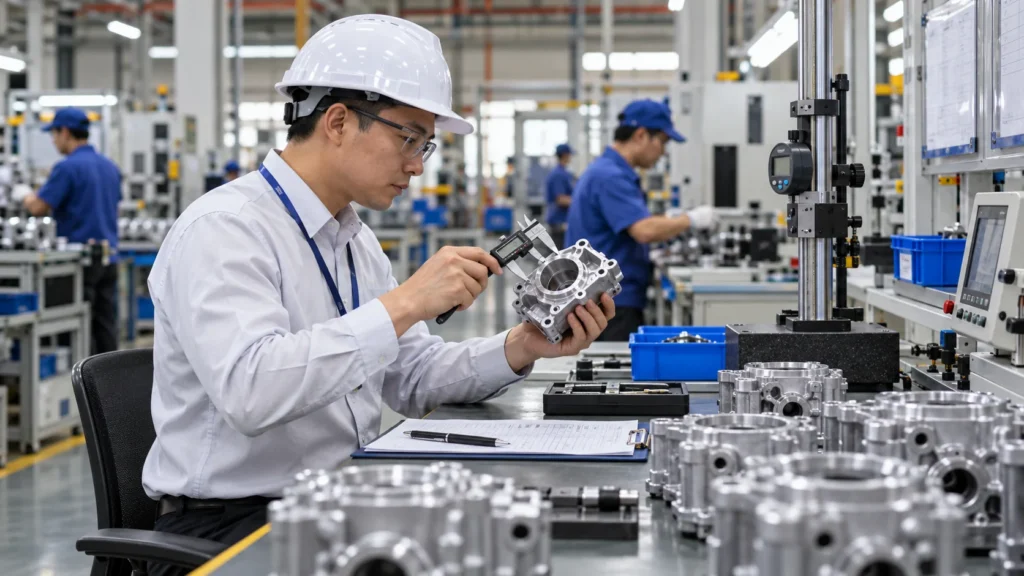
Social compliance audits examine whether working conditions and employment practices meet buyer requirements, applicable labor standards, and local rules.
Depending on the scope, a social compliance review may cover working hours, employment records, wages, emergency procedures, fire safety, occupational health, and personal protective equipment.
The auditor should compare documentation with actual working conditions. For buyers with formal supplier codes or customer requirements, social compliance audits may be conducted separately from quality audits.
Environmental and safety audits may be necessary when manufacturing involves chemicals, heavy machinery, emissions, hazardous materials, or regulated waste.
The review may include chemical storage, waste handling, machine guarding, electrical safety, emergency exits, fire protection, training, and permits. Where relevant, companies may also reference occupational health and safety standards such as ISO 45001.
The scope should reflect the actual manufacturing and compliance risks rather than applying the same requirements to every supplier.
A good factory audit checklist should guide the auditor toward evidence rather than become a long box-ticking exercise. It should also reflect the actual production process for the buyer’s product.
The most useful factory audits connect documents with what can be observed on site. If the supplier claims a certain capacity, the auditor should look for records and equipment that support it.
The audit should confirm the supplier’s legal identity and how it relates to the manufacturing site.
Important points include the registered company name, factory address, business scope, relevant licenses, and the entities shown on quotations, contracts, invoices, and payment information.
A mismatch does not always mean fraud because some suppliers use a related trading or export company. However, the business relationship should be clear before payment is made.
This part supports due diligence, but it does not replace the manufacturing review. A legally registered company may still have weak factory capabilities.
The production floor provides some of the strongest evidence during an audit in China.
The auditor should check whether key equipment is present, operating, and suitable for the intended product and normal production volume. Workforce levels, technical staffing, maintenance practices, and bottleneck processes also matter.
The review should answer practical questions:
Can the current setup support the required order volume?
Are critical machines in regular use?
Are technical processes controlled consistently?
Is there enough trained staff for normal output?
This gives buyers a clearer view of real capabilities rather than brochure claims.
Quality control should be reviewed across the manufacturing flow.
The auditor may check how incoming materials are accepted, how critical processes are monitored, how finished products are tested, and how defects are handled.
Testing equipment and measuring devices should also be reviewed where they affect product quality. A mature quality management system should identify non-conforming products, investigate recurring problems, and implement corrective action rather than simply sorting defects at the end.
Material control matters when performance depends on a specific grade, component, formulation, or approved source.
The factory should be able to show how critical materials are purchased, identified, stored, and released into manufacturing. Where traceability is required, records should connect materials or components with the relevant batch.
The audit should also identify outsourced processes and how subcontractors are controlled. This can reveal supply chain risks that may not be visible during final product inspection.
Factory audits can also review working conditions, safety, and compliance where these issues are relevant to the buyer.
The auditor may look at emergency exits, fire equipment, machine guards, electrical risks, PPE, chemical storage, worker training, and workplace organization.
These observations should be evaluated against applicable requirements and relevant safety standards rather than treated only as visual impressions.
A successful factory audit in China begins before the auditor arrives on site and continues after the report is issued.
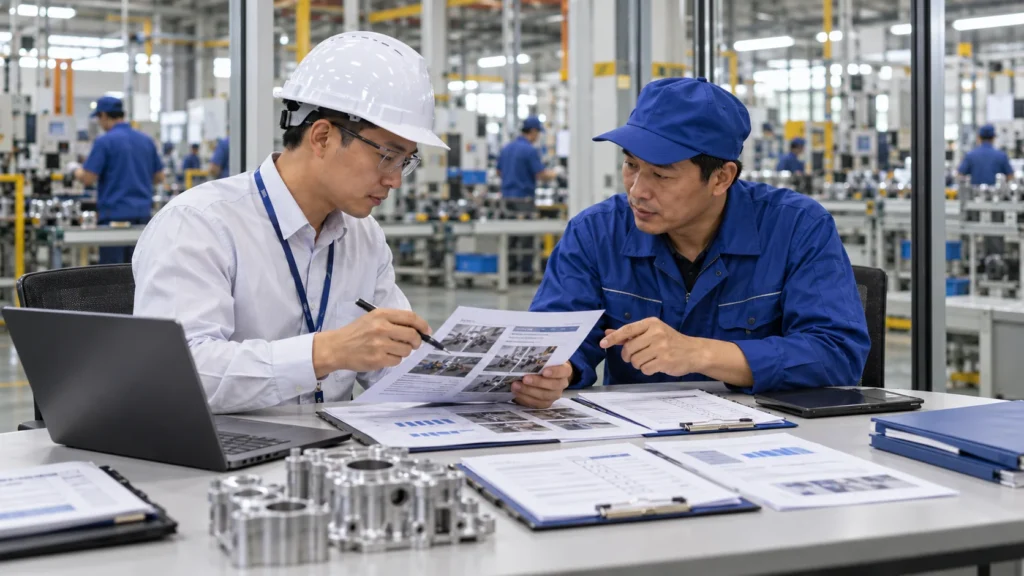
Start with the product, order, and main risks. Provide specifications, critical materials, key manufacturing processes, expected order volume, quality requirements, and known supplier concerns.
The scope should also state whether the audit needs to cover quality management, social compliance, safety, or other industry standards.
A focused audit usually produces more useful results than a generic checklist.
Before the audit in China, collect available background information such as the business license, factory profile, organization chart, certifications, product information, quality procedures, and previous audit reports if available.
This allows the auditor to identify claims that need to be verified on site.
During the audit, the auditor should combine a factory tour with document review, interviews, record sampling, and observation of manufacturing operations.
If management claims a certain monthly capacity, that claim should be compared with equipment, staffing, schedules, and output records.
A useful audit report should explain the findings clearly rather than provide only a total score.
Buyers should review the seriousness of each issue, supporting evidence, and the possible effect on quality, delivery, safety, or compliance. Audit reports may use different rating systems, but the important point is understanding which findings are minor and which indicate deeper supplier risks.
The audit should not end when the report is delivered.
For important audit findings, the supplier should explain the root cause, corrective action, responsible person, target date, and evidence of completion. Some issues can be verified remotely, while serious problems may require another supplier audit.
The practical process is:
Audit → Findings → Corrective Action → Verification → Supplier Approval
This follow-up turns factory audit services into an ongoing risk-control process rather than a one-time report.
These activities are related, but they answer different questions.
| Check | Main Question | Main Focus | Typical Timing |
|---|---|---|---|
| Supplier Verification | Is this business legitimate? | Company identity, registration, payment details | Before payment |
| Factory Audit | Can the factory manufacture reliably? | Capabilities, systems, quality, compliance | Before supplier approval |
| Product Inspection | Does this order meet specifications? | Actual goods, quantity, workmanship, function, packaging | During or before shipment |
| Container Loading Inspection | Is the correct cargo loaded properly? | Quantity, packaging, container condition, loading | During loading |
The difference between these checks matters.
A factory audit does not guarantee that every shipment will be defect-free. Even a well-managed factory can produce a problematic batch. Product inspection is still useful when the buyer wants to verify goods from a specific order.
At the same time, one successful inspection does not prove that the supplier has stable capacity, strong quality management, or reliable compliance controls.
For higher-risk sourcing, buyers may combine supplier verification, factory audits, sample approval, in-process checks, and pre-shipment inspection.
Factory audit cost varies because different audits require different levels of time and expertise.
Standard factory audits in the research material you provided are referenced at approximately US$150–US$398 per auditor-day, while complex audits may cost substantially more. Digital audits are also referenced at around US$100 per report, although they do not provide the same level of on-site verification as a physical visit.
The final factory audit cost can depend on:
Factory location and travel
Number of auditor-days
Factory size and audit scope
Product and process complexity
Technical or compliance expertise
Reporting and follow-up requirements
Buyers should compare audit services by scope and deliverables rather than price alone.
A low-cost audit may provide limited value if the auditor follows a generic checklist that does not address the main risks of the product.
A basic supplier audit may be completed within one auditor-day, while a more comprehensive factory audit can take around 2–5 days, depending on factory size, manufacturing complexity, and compliance requirements. Your supplied research also notes that audit scope should be clearly defined before the visit and that more complete audits can require several days.
Larger facilities, multiple manufacturing areas, technical processes, extensive records, or social compliance interviews can increase the time required.
The right duration is the amount of time needed to collect enough evidence to answer the buyer’s key questions.
When selecting third party factory audit services, buyers should look beyond the brand name of the audit company.
Relevant manufacturing experience, auditor independence, technical knowledge, local language ability, evidence quality, reporting standards, and corrective-action support are more important than a long generic checklist.
A good third party audit service should help the buyer understand the factory and the risks behind the supplier relationship.
Factory audits are most valuable when the findings can still influence the purchasing decision.
Common situations include:
Before approving a new supplier for a significant order
Before paying for molds or customized development
Before substantially increasing order volume
After repeated quality or delivery problems
After a factory relocation or ownership change
When critical manufacturing moves to subcontractors
Not every small order requires a full audit in China. The level of due diligence should reflect the financial, quality, compliance, and supply chain risk.
Once a supplier is approved, attention moves from supplier capabilities to order execution.
A typical sourcing from China workflow is:
Supplier Verification → Factory Audit → Supplier Approval → Production → Product Inspection → Packing → Pickup → Consolidation → International Shipping → Customs Clearance → Delivery
A freight forwarder does not replace supplier audits, quality assurance, or compliance audits. After product quality has been approved, however, Tonlexing can coordinate pickup, consolidation, export arrangements, international freight, shipping documentation, and destination delivery.
For importers working with several manufacturing partners in China, coordinating supplier completion dates with consolidation and freight booking can also improve supply chain efficiency.
A factory audit in China is an on-site assessment of a supplier’s manufacturing capabilities, quality management, operating procedures, and relevant compliance controls. It helps buyers verify whether the factory is suitable before committing to significant production.
Factory audit cost depends on the audit scope, factory size, location, number of auditor-days, product complexity, and expertise required. Buyers should compare what is included in the audit service rather than choosing only by the lowest price.
A basic supplier audit may take about one auditor-day, while a more comprehensive audit can take around 2–5 days depending on factory size, manufacturing processes, and compliance requirements.
A factory audit evaluates the supplier, manufacturing systems, capabilities, and compliance controls. A product inspection evaluates goods from a specific order. The two activities address different risks.
In many cases, yes. Factory audits evaluate the supplier and its systems, while product inspection checks the actual products being shipped. Passing a factory audit does not guarantee that every batch will meet the buyer’s specifications.
Useful freight, customs and importing resources related to this shipping guide.
How to Verify a Chinese Supplier Before You Pay Verified & Reviewed · Last updated July 2026 Before you pay a Chinese supplier, do not rely only...
Read guide →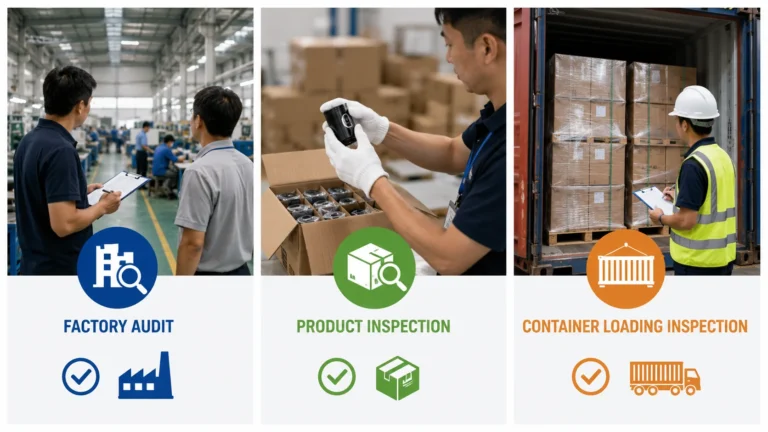
Factory Audit vs Product Inspection vs Container Loading Inspection Verified & Reviewed · Last updated July 2026 Factory audit, product inspectio...
Read guide →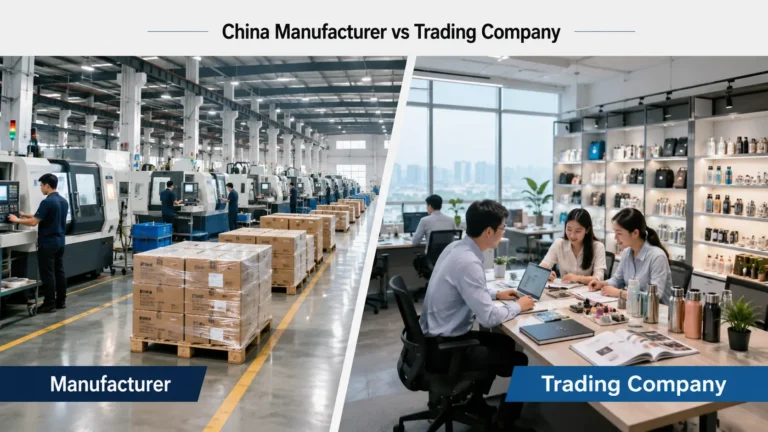
China Manufacturer vs Trading Company Verified & Reviewed · Last updated July 2026 Choosing between a China manufacturer and a trading company ca...
Read guide →
Pre-Shipment Inspection in China for Importers Verified & Reviewed · Last updated July 2026 A pre-shipment inspection helps importers identify de...
Read guide →China Sourcing Trip Guide Verified & Reviewed · Last updated June 2026 China Sourcing Trip Guide for importers: A sourcing trip to China can be o...
Learn more → Useful Resource How to Pay Chinese Suppliers SafelyHow to Pay Chinese Suppliers Safely Verified & Reviewed · Last updated July 2026 Paying Chinese suppliers safely is one of the most important ste...
Learn more →WhatsApp us