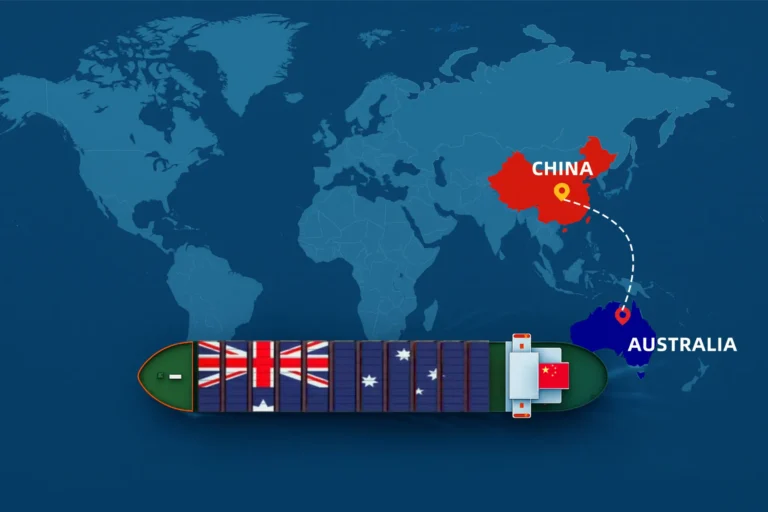
Related Guide
Shipping from China to Australia
Shipping from China to Australia includes reliable sea freight and fast air shipping. Compare delivery time, shipping costs, and logistics option...
Read guide →

Importing from China to Australia requires checking product compliance, supplier reliability, shipping terms, customs duty, GST, and biosecurity requirements before goods are shipped.
This guide explains the complete import process, from supplier verification and shipping methods to Australian customs clearance, documents, taxes, and final delivery.
Import Requirements
Customs Duty & GST
Shipping & Clearance
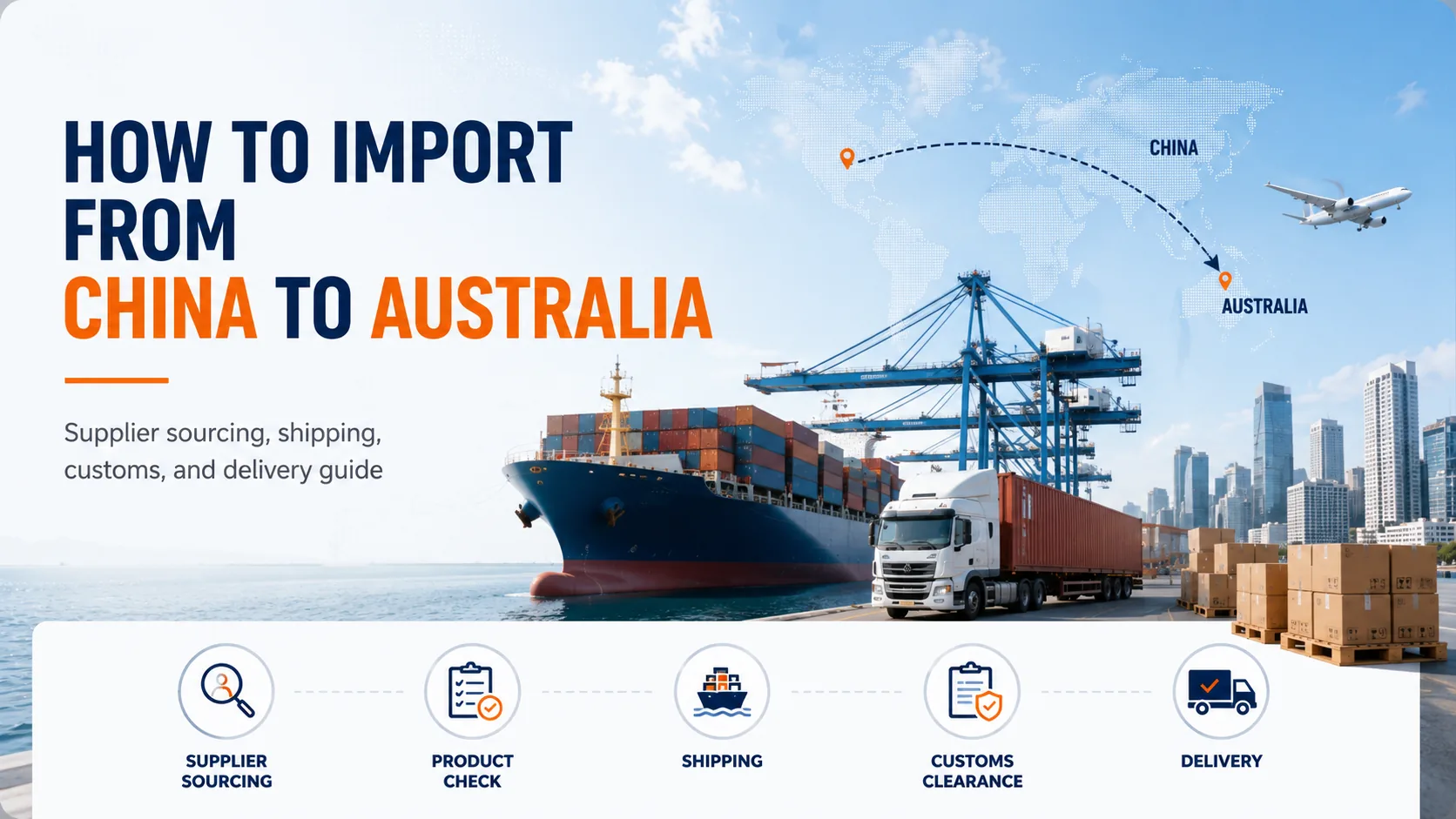
A successful import normally begins before the supplier starts mass production. Planning early gives the buyer time to identify compliance problems, compare suppliers, calculate costs, and select the right transport option.
STAGE 01
Check & Source
STAGE 02
Plan & Prepare
STAGE 03
Ship & Clear
The process may be straightforward for ordinary consumer goods but more complex for food, plant products, timber, electrical equipment, chemicals, medical products, machinery, or goods containing regulated raw materials.
The first question should not be how to ship the goods, but whether the goods can legally enter Australia and meet the requirements that apply to their intended use or sale.
A Chinese supplier may have experience exporting a product to Australia, but that does not automatically confirm compliance. Importers should check the product composition, intended use, applicable standards, labels, packaging, and any permit requirements before approving mass production.
Some imported goods are prohibited, while others can enter Australia only when specified conditions are met. Depending on the product, requirements may involve permits, registrations, testing, approvals, special labels, or supporting documentation.
Products that often require additional attention include:
Food and agricultural products
Plant and animal materials
Timber and wooden products
Chemicals and controlled substances
Electrical and electronic equipment
Medical and health-related products
Children’s products
Weapons and other controlled goods
Intellectual property can also become a border issue. Products that infringe protected trademarks, copyrights, or other intellectual property rights may be subject to enforcement action.
Importers should therefore verify the actual product rather than relying only on a supplier saying, “We have shipped this to Australia before.”
Depending on the product, imported goods may need to comply with Australian standards, consumer safety requirements, electrical rules, labelling regulations, or industry-specific controls.
Before production, confirm whether requirements apply to:
Product safety and performance
Electrical compliance
Materials or ingredients
Warning labels
Country-of-origin information
Packaging
User instructions
Mandatory product markings
Custom labels and packaging should be approved before mass production. Correcting thousands of finished units after manufacture can create unnecessary relabelling costs and shipping delays.
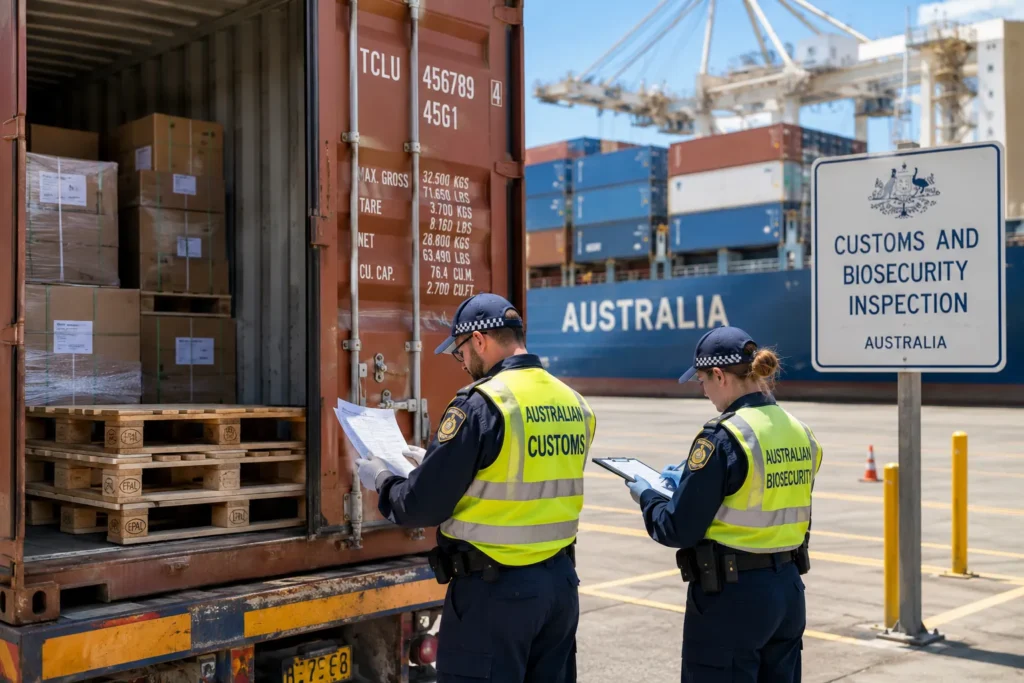
Biosecurity is particularly important when importing from China to Australia.
Products containing plant, animal, food, timber, soil, or other biological materials may be subject to import conditions, permits, treatment, inspection, or additional documentation. Australia’s BICON system is used to identify biosecurity conditions that may apply to specific goods.
Importers should check:
Product ingredients and raw materials
Plant or animal content
Timber contained in the product
Wooden pallets, crates, or dunnage
Treatment requirements
Required declarations or permits
Possible inspection on arrival
Biosecurity problems can also come from packaging or contamination. Timber, straw, soil, insects, organic residue, or contaminated containers may trigger additional checks even when the product itself is otherwise acceptable.
China offers a wide range of Chinese manufacturers, consumer goods, industrial products, and competitive pricing, but finding reliable suppliers requires more than comparing quotations.
Before paying a deposit, importers should confirm whether the business is a manufacturer or trading company, verify its registration, assess production capability, and check that payment details belong to the company being evaluated.
A practical supplier check can include:
Check the Chinese business registration
Confirm manufacturer or trading company status
Review production capability
Request samples and compare them with the final product specification
Review relevant compliance documents
Confirm specifications in writing
Verify company and bank account details
Review quality-control procedures
For a first order, follow a structured Chinese supplier verification process rather than relying only on an online marketplace profile or sales representative.
Supplier verification and product compliance are different. A legitimate manufacturer can still produce goods that fail Australian requirements if the specifications, materials, labels, or testing requirements were not correctly defined.
For customised products, importers should also consider intellectual property protection for moulds, technical drawings, formulas, trademarks, packaging designs, and proprietary product specifications.
Once the supplier and product have been confirmed, the buyer should define how responsibilities, transportation costs, risks, and payment obligations will be divided.
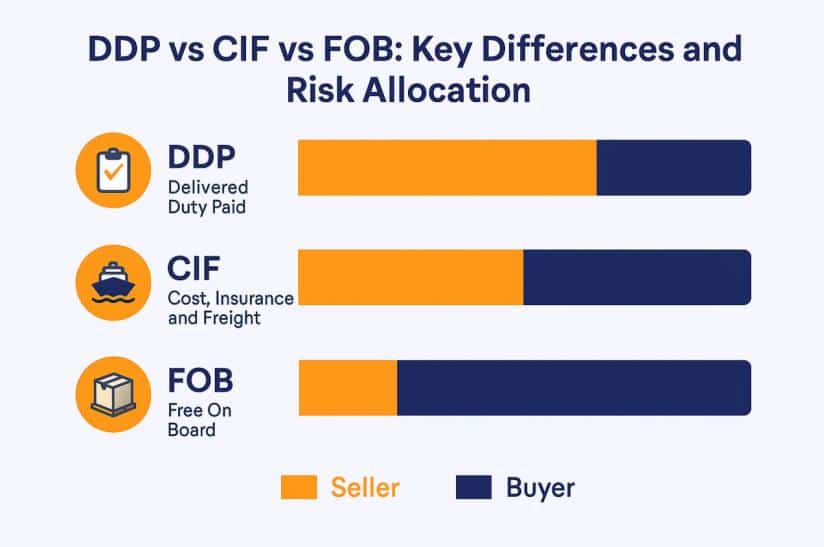
Common Incoterms used when importing from China include EXW, FOB, CIF, and DDP.
Under EXW, the buyer assumes responsibility relatively early, beginning from the supplier’s premises. FOB is commonly used when the buyer wants more control over international freight after the supplier completes the agreed export responsibilities.
CIF includes the main sea transport and insurance to the named destination port, while DDP places substantially more responsibility on the seller for delivery to the named destination.
For a detailed comparison, see DDP vs CIF vs FOB.
Incoterms do not replace Australian import regulations. Buyers should still understand who will act as the importer, arrange customs entry, pay taxes and destination charges, and coordinate final delivery.
Payment terms should be confirmed before production begins. Common methods include bank transfer, Trade Assurance, and letters of credit where appropriate.
For a new supplier, the buyer should verify beneficiary information before making a substantial payment. Particular care is needed when:
Bank details suddenly change
Payment is requested to an unrelated company
The beneficiary differs from the contracting company
A new payment account is provided immediately before transfer
The supplier puts unusual pressure on the buyer to pay quickly
International wire transfers may also involve processing time and banking fees, which should be considered when scheduling deposits and balance payments.
For more guidance, see how to pay Chinese suppliers safely.
Supplier verification confirms who you are buying from. Quality control confirms whether the actual goods meet the specification you ordered.
Depending on the value and complexity of the order, importers may use:
Approved production samples
Factory audits
During-production inspections
Pre-shipment inspections
Quantity checks
Product specification checks
Packaging inspections
Labelling verification
Container loading supervision
For larger or repeat orders, factory audits and product inspections can reduce the risk of discovering serious product quality problems after arrival.
The purchase specification should define measurable requirements such as materials, dimensions, colours, tolerances, accessories, packaging, labels, and quantity. A good sample does not automatically guarantee that mass production will meet the same standard.
The best transport option from China to Australia depends on the shipment’s weight, volume, urgency, cargo value, and delivery requirements. Importers usually choose between express courier, air freight, LCL sea freight, and FCL sea freight.
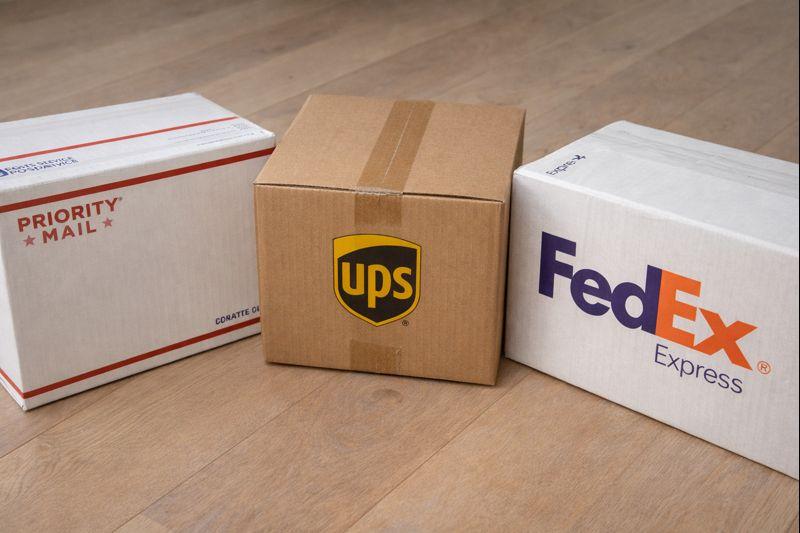
Transit Time: 3–7 days
Best for small parcels, samples, and urgent lightweight goods requiring fast door-to-door delivery.
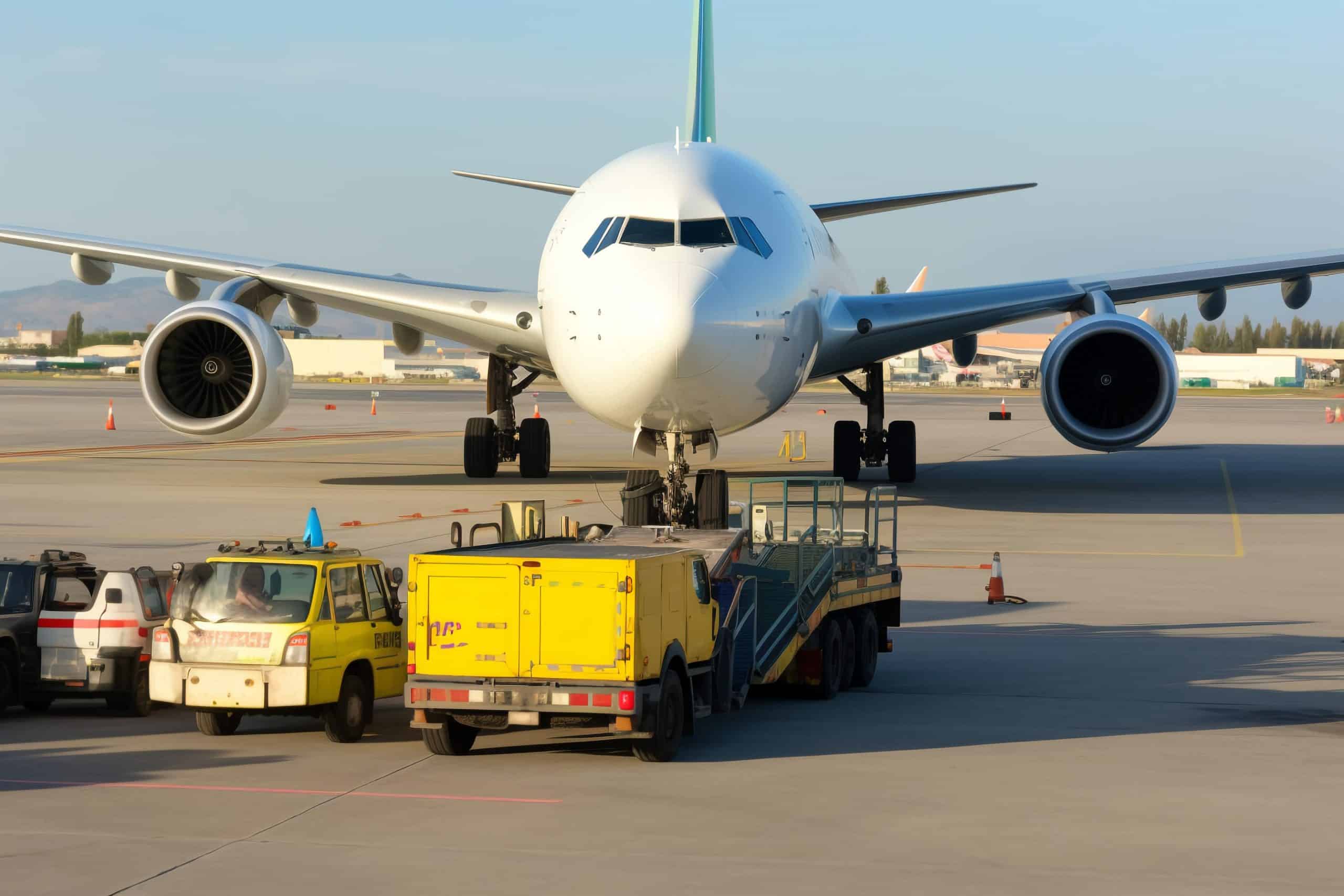
Transit Time: 5–10 days
Best for urgent, lightweight, or high-value goods that need the fastest delivery.
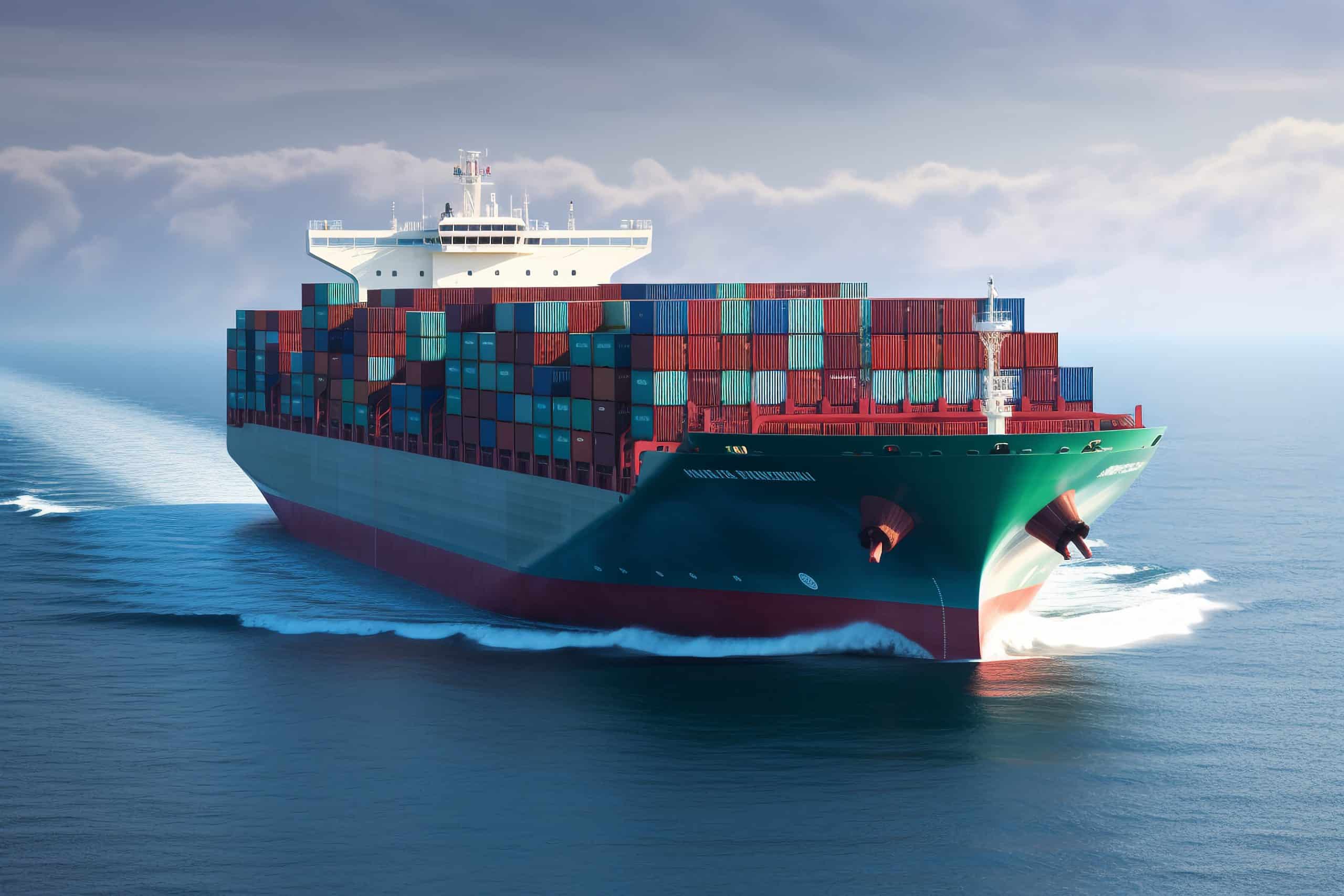
Transit Time: 15–35 days
Best for smaller-volume sea shipments that do not require a full container and prioritize lower shipping costs.
Express services such as DHL, FedEx, and UPS are suitable for samples, prototypes, spare parts, documents, and small urgent shipments.
Courier delivery is convenient because pickup, international transport, customs processing support, and final delivery can be handled through one network. However, the cost per kilogram generally becomes less competitive as cargo weight and volume increase.
Air freight is suitable when delivery speed matters but the shipment is too large or expensive for regular courier service.
Typical air cargo includes electronics, machinery parts, replacement components, fashion products, samples, and other time-sensitive commercial goods.
Air freight charges are usually based on the greater of actual weight and chargeable weight. For detailed airport options, freight rates, and chargeable-weight calculations, see air freight from China to Australia.
Sea freight, also known as ocean freight, is usually the most economical option for heavier and larger commercial shipments.
LCL shipping allows several importers to share container space, making it suitable for cargo that does not require an entire container. A full container load (FCL) gives one shipper use of the entire container and often becomes more economical as shipment volume increases.
There is no strict rule that LCL must be below 5 CBM or that FCL requires more than 15 CBM. The better choice depends on the actual volume, cargo type, container utilisation, destination charges, handling risk, and current sea freight rates.
For detailed routes, ports, FCL and LCL options, and transit times, see sea freight from China to Australia.
Customs clearance should be prepared before the cargo arrives in Australia. Importers need to confirm the product classification, customs value, applicable duty and GST, and make sure the required documents are complete.
The Australian Border Force (ABF) manages customs controls, while some shipments may also be referred for biosecurity or other regulatory checks.
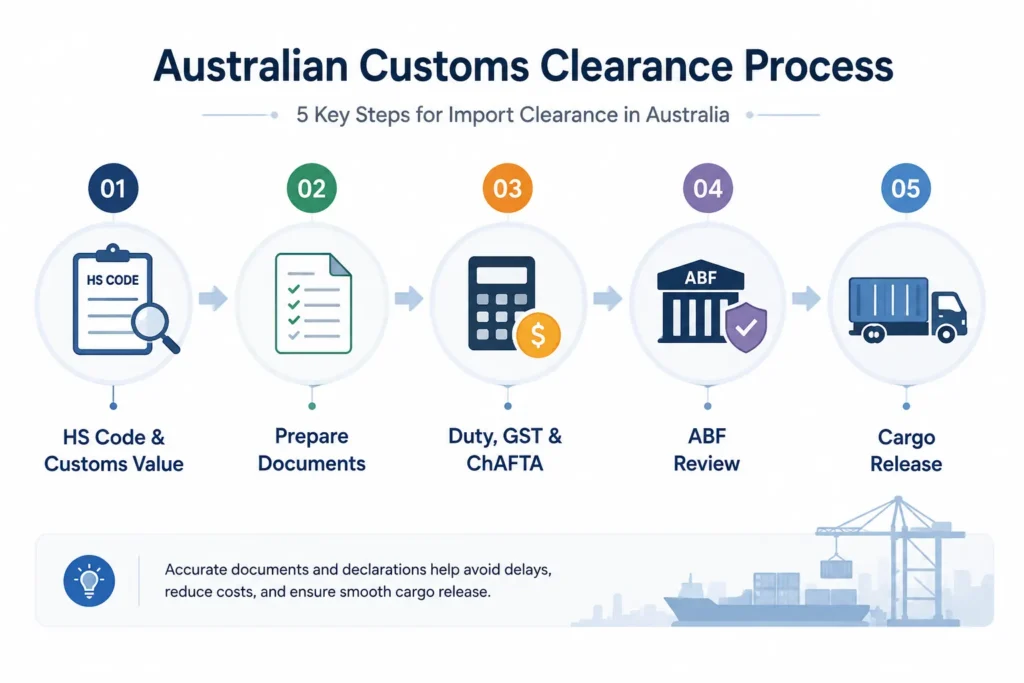
Imported goods must use the correct tariff classification. A Chinese supplier may provide an HS code for export purposes, but the importer should verify that it is suitable for Australian customs.
The customs value should match the genuine commercial transaction and be supported by documents such as the commercial invoice, payment records, product description, quantity, and Incoterms.
Incorrect classification or under-declared values can lead to additional review, delays, or penalties. The classification and customs value of the imported goods should therefore be confirmed before the shipment arrives.
For more details, see our guide to HS codes.
Customs duty depends on the product classification and applicable tariff treatment. There is no single import duty rate for all goods imported from China.
The China–Australia Free Trade Agreement (ChAFTA) may provide preferential tariff treatment, including reduced or zero customs duty, for qualifying Chinese-origin goods that meet the applicable rules of origin.
Goods purchased from a Chinese supplier do not automatically qualify. Importers should retain appropriate origin evidence where a ChAFTA tariff benefit is claimed.
Goods and Services Tax (GST) is generally 10% on taxable importations and may be calculated using the customs value together with applicable customs duty and relevant freight and insurance costs.
For Australian businesses, Goods and Services Tax treatment can also affect cash flow and the ability to claim eligible input tax credits, depending on the importer’s circumstances.
Complete shipping documents help importers declare goods consistently and reduce avoidable questions during customs processing.
Common documents include:
Commercial Invoice
Packing List
Bill of Lading or Air Waybill
Origin Documentation where applicable
Packing Declaration for relevant sea shipments
Product-specific permits or certificates
For sea freight, the packing declaration may also provide information relevant to Australian biosecurity assessment.
For goods with a customs value above AUD 1,000, a formal import declaration is generally required. After the declaration is submitted, ABF or other relevant authorities may review the shipment, assess customs duty and GST, or request further documentation, inspection, or treatment before cargo release.
A licensed customs broker can assist with more complex, regulated, or difficult-to-classify shipments.
For a broader checklist, see the documents required to import from China.
Customs release is not necessarily the end of the import process. The goods still need to move from the port, airport, or destination freight terminal to the consignee.
For LCL sea freight, cargo may first need to be deconsolidated at a destination warehouse before pickup or delivery. For FCL shipments, the container needs to be collected, delivered, unloaded, and returned to the nominated container depot within the applicable time limits.
Final delivery planning should consider:
Destination port or airport
Delivery address and postcode
Cargo size and gross weight
Pallet or container access
Unloading equipment
Delivery appointment requirements
Container return requirements
Storage, detention, or demurrage risk
Importers should provide the complete Australian delivery address when requesting a freight quotation. A port-to-port rate alone does not show the actual cost of getting cargo to the final warehouse or business address.
Importing from China to Australia can involve suppliers, trucking companies, export warehouses, airlines or shipping lines, destination agents, customs authorities, biosecurity parties, and local delivery providers.
A freight forwarder and a customs broker can both support the shipment, but they perform different functions.
A freight forwarder mainly coordinates the physical transportation and logistics process.
Freight forwarding services can include:
Supplier pickup in China
Cargo consolidation
Export handling
Air freight or sea freight
FCL and LCL shipping
Shipping documentation
Shipment tracking
Destination coordination
Final delivery
For buyers working with multiple suppliers, a freight forwarder can also arrange separate pickups and consolidate the goods before export.
A licensed customs broker focuses on Australian customs entry and customs-related compliance.
Typical services can include:
Preparing import declarations
Reviewing customs value information
Assisting with product classification
Calculating applicable customs duty and GST
Preparing supporting information
Communicating with customs authorities during clearance
Broker support can be particularly useful for high-value, regulated, technically complex, or difficult-to-classify imports.
Many commercial importers use both services.
The freight forwarder manages the movement of the cargo, while the customs broker handles customs entry and clearance matters. In many shipments, the freight forwarder can coordinate with a licensed customs broker as part of the overall logistics arrangement.
For regular or more complex imports, an experienced freight forwarder from China to Australia can help compare air freight, sea freight, consolidation, customs support, and final delivery based on the actual cargo.
Many import problems begin before the goods leave China. A low supplier price or cheap freight quotation can quickly become expensive when compliance requirements, taxes, documents, or destination charges have not been considered.
Common mistakes include:
Ordering before checking Australian requirements: Confirm product restrictions, standards, permits, labelling, and biosecurity conditions before mass production.
Using the supplier’s HS code without verification: The code used for Chinese export may not automatically be correct for Australian import processing.
Assuming ChAFTA automatically means zero duty: Eligibility depends on the goods and applicable rules of origin.
Calculating only the product price and international freight: Customs duty, GST, destination handling, broker charges, biosecurity treatment, storage, and domestic delivery can materially change the total landed cost.
Ignoring biosecurity risks: Timber packaging, natural materials, food, plant products, contamination, and certain raw materials can trigger additional requirements.
Skipping quality control: A good sample does not guarantee that mass production will meet the same specification.
Comparing quotations only by the headline freight rate: Two quotations may include very different origin charges, destination fees, customs services, and delivery scope.
Preparing incomplete or inconsistent documents: Differences between the commercial invoice, packing list, customs value, transport document, and product description can delay customs processing.
The best way to reduce risk is to check the product, supplier, landed cost, shipping arrangement, and import paperwork before the cargo is booked.
Australia does not generally require one universal import licence for most ordinary commercial goods. However, particular products may require permits, approvals, registrations, testing, or other documentation before they can be imported.
The total cost depends on the product value, shipment size, shipping mode, pickup location, Australian destination, freight cost, customs duty, GST, clearance charges, biosecurity requirements, and final delivery.
Comparing the complete landed cost is more useful than comparing freight alone.
Goods and Services Tax is generally 10% on taxable importations. Customs duty may also apply depending on the goods and available tariff treatment.
Qualifying Chinese-origin products may receive reduced or zero customs duty under ChAFTA.
Yes. Customs duty can apply to some imports from China, while qualifying goods may receive preferential tariff treatment under the China–Australia Free Trade Agreement.
The applicable duty depends on the product classification and origin requirements.
Express courier may take around 3–7 days, while air freight commonly takes around 5–10 days. LCL and FCL sea freight usually take longer, with the exact transit time depending on the origin port, destination port, sailing schedule, route, customs clearance, and final delivery arrangement.
Useful freight, customs and importing resources related to this shipping guide.
Shipping from China to Australia includes reliable sea freight and fast air shipping. Compare delivery time, shipping costs, and logistics option...
Read guide →
Shipping Cost from China to Australia (2026 Guide) Verified & Reviewed · Last updated May 2026 Shipping cost from China to Australia in 2026 star...
Read guide →
Air Freight from China to Australia Verified & Reviewed · Last updated June 2026 Air freight from China to Australia is a fast and reliable shipp...
Read guide →
Learn everything about sea freight from China to Australia, including shipping costs, transit times, FCL vs LCL, customs clearance, ocean freight...
Read guide →Freight Forwarder from China to Australia Verified & Reviewed · Last updated July 2026 Freight forwarding from China to Australia depends on your...
Learn more → Useful Resource Documents Required to Import from China (2025 Guide)Importing goods from China can be highly profitable—but only when you understand the necessary documents and import requirements. Whether you’re...
Learn more →WhatsApp us