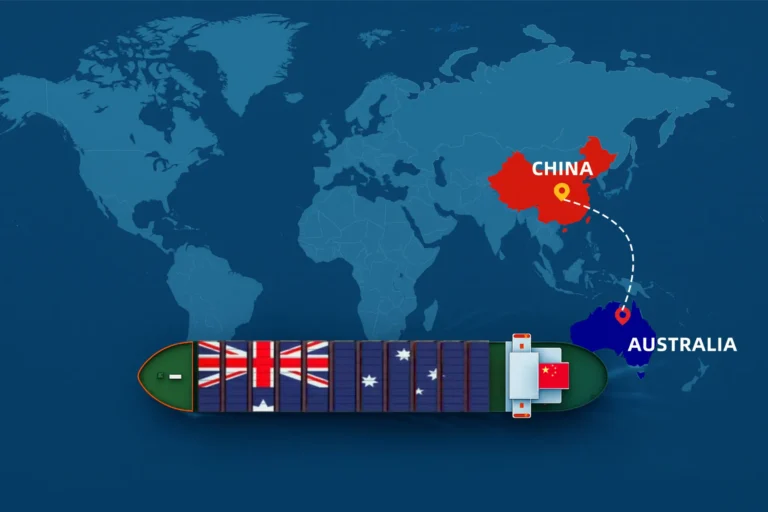
Related Guide
Shipping from China to Australia
Shipping from China to Australia includes reliable sea freight and fast air shipping. Compare delivery time, shipping costs, and logistics option...
Read guide →

Freight forwarding from China to Australia depends on your cargo type, shipping method, transit time, customs clearance, and final delivery requirements.
This guide explains how Tonlexing helps importers ship from China to Australia, covering sea freight, air freight, door-to-door shipping, DDP solutions, customs clearance, and delivery to major Australian cities such as Sydney, Melbourne, Brisbane, Perth, and Adelaide.
Shipping method
Customs Clearance
Door to Door Shipping
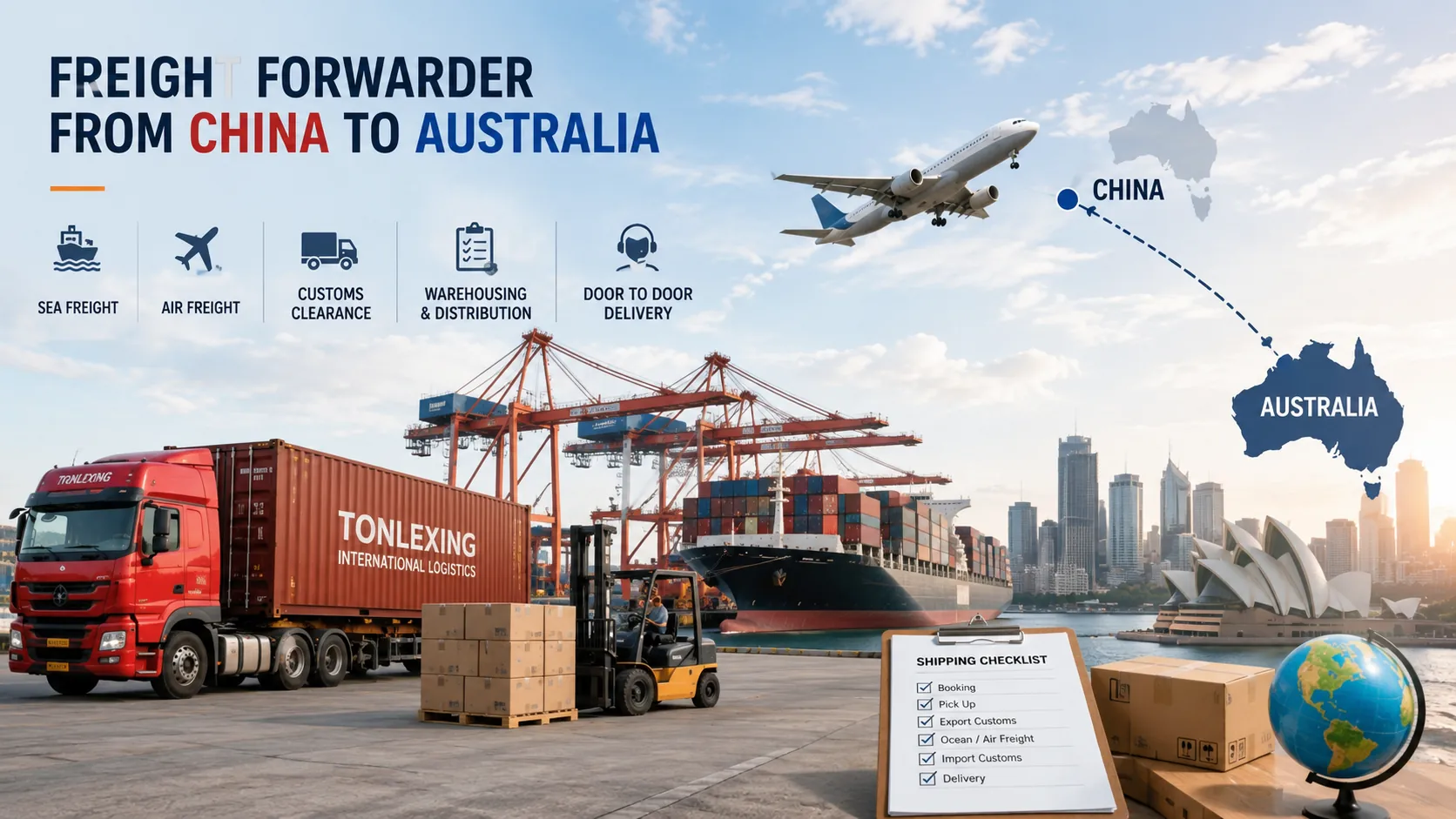
Every shipment has different logistics requirements. Small packages may move best by express or air, while pallets, machinery, furniture, and wholesale goods are normally more economical by sea. Tonlexing compares available freight services and helps customers find a practical balance between price and transit times.
Our China to Australia shipping and logistics services include:
Factory pickup from major manufacturing regions
Warehousing and consolidation at suitable China facilities
Full container and shared-container ocean services
Standard and priority air freight
Express courier services for samples and small packages
Door-to-door and DDP solutions
Export customs documentation
Customs clearance coordination in Australia
Cargo insurance support
Local road freight
Shipment updates and real time tracking when carrier data is available
A dedicated team follows each shipment from origin to destination. Customers do not need to separately manage factories, carriers, warehouse operators, customs agents, and local transport providers. This logistics support can create increased efficiency throughout the supply chain.
Sea freight is the main transport method for large commercial orders. It offers a lower cost per cubic metre than air and is suitable for retail stock, furniture, building materials, machinery, industrial products, and other non-urgent goods.
Tonlexing can arrange ocean freight from Shenzhen, Shanghai, Ningbo, Qingdao, Xiamen, Tianjin, Guangzhou, and other Chinese ports. Common destination ports include Sydney, Melbourne, Brisbane, Fremantle, and Adelaide.
Typical port-to-port transit times are often about 14 to 25 days on direct or efficient routes. The complete service may take approximately 25 to 40 days after allowing for collection, consolidation, export handling, vessel schedules, customs procedures, and inland distribution.
Actual timing depends on the route, carrier, port congestion, cargo type, and peak seasons.
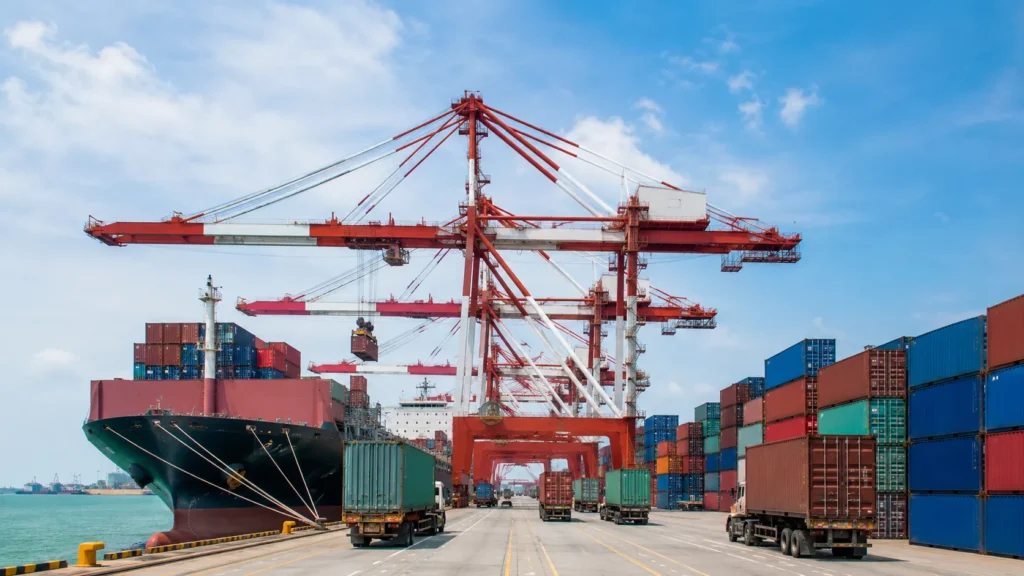
FCL gives one shipper the use of an entire 20-foot or 40-foot container. A full container load is usually suitable when the volume is large enough to justify a fixed container price or when the goods need better separation and handling control.
Standard dry containers, high-cube containers, and specialised container services are available on most major routes. These containers can be delivered to the factory for loading or packed at an approved warehouse.
The main ocean charge for FCL is based on the container rather than the space used. It is therefore generally flat whether the box is partly filled or close to capacity. Pickup, loading, weight-related charges, customs fees, and destination costs may still vary.
FCL advantages include:
Less handling during transport
Lower risk of mixing goods with other shippers
Easier loading for large cartons, pallets, and machinery
Better cost efficiency at higher volumes
More control over loading and cargo protection
LCL is designed for goods that do not require a complete container. Multiple shippers share the same containers, and each consignment is charged according to volume or chargeable weight.
The goods first move to a consolidation warehouse near the origin port. They are loaded with other orders and separated again after arrival. Because this process requires consolidation and deconsolidation, LCL normally takes a few days longer than FCL and may involve additional warehouse charges.
LCL is often suitable for shipments from 1 to 15 cubic metres. The best choice still depends on cargo density, current freight levels, destination handling, and the price difference between LCL and FCL.
| Sea Freight Option | Best Used For | Typical Total Time | Main Cost Basis |
|---|---|---|---|
| LCL | Small and medium commercial shipments | 28–40 days | Volume or chargeable weight |
| 20-foot FCL | Dense goods and medium loads | 25–38 days | Per container |
| 40-foot FCL | Large-volume commercial cargo | 25–38 days | Per container |
| 40-foot high cube | Bulky or lightweight goods | 25–38 days | Per container |
Air freight is the preferred shipping method for urgent, high-value, or time-sensitive cargo. Although it costs more than sea freight, it significantly reduces transit times and helps businesses maintain inventory levels, meet customer deadlines, or replace critical stock.
Airport-to-airport transit typically takes 3 to 7 days, while the complete shipping process generally takes 5 to 10 days after pickup, export customs clearance, airline handling, import clearance, and final delivery are included. Actual transit times vary depending on flight schedules, customs processing, and seasonal capacity.
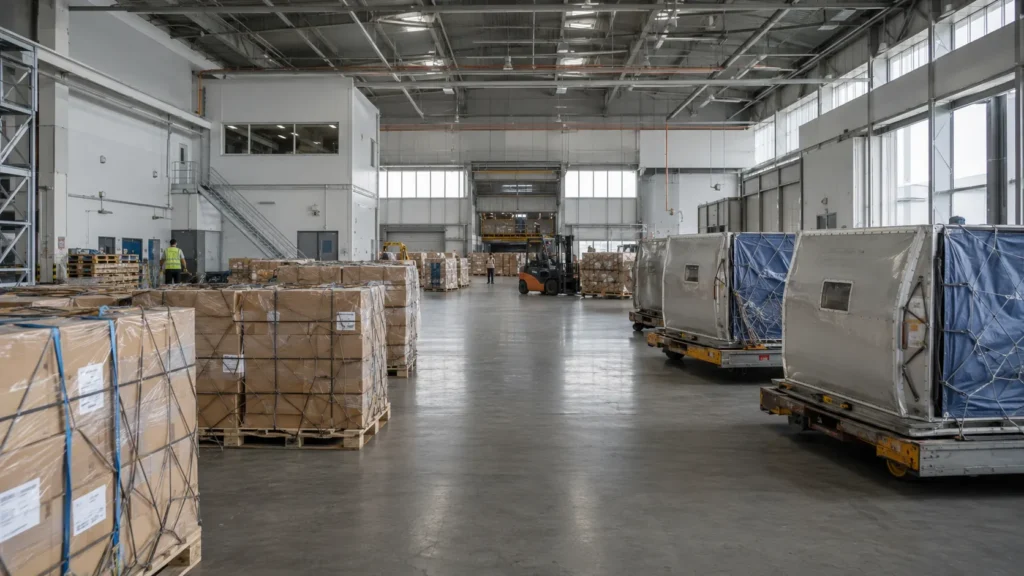
Standard air freight is the better choice for commercial cargo that requires fast delivery but does not need overnight service. Express couriers such as DHL, FedEx, and UPS are more suitable for small parcels, documents, product samples, and urgent shipments.
The table below compares the two services.
| Service | Best Used For | Typical Transit Time | Managed By |
|---|---|---|---|
| Standard air freight | Cartons, pallets, and urgent commercial cargo | 3–7 days | Freight forwarder and airline |
| Express courier | Samples, documents, and small parcels | 2–5 days | Courier network |
The most suitable option depends on shipment size, delivery urgency, and budget. For larger shipments, standard air freight is usually more economical, while express services offer greater convenience for lightweight cargo.
Air freight rates are primarily calculated using chargeable weight, which is based on whichever is greater between the actual weight and the volumetric weight. Large but lightweight cartons often cost more than expected because they occupy additional aircraft space.
The final air freight cost may also be affected by:
Cargo weight and dimensions
Flight availability and seasonal demand
Departure and destination airports
Cargo type and special handling requirements
Dangerous goods or battery restrictions
Customs clearance and local delivery services
Providing accurate dimensions, weight, and cargo details before booking allows Tonlexing to recommend the most suitable airline service and prepare a more accurate freight quotation.
Door-to-door shipping combines international transport with pickup in China and delivery to the receiver in Australia. The service can move by sea or air and is useful for businesses that want one logistics provider to manage the complete route.
Under a standard end-to-end arrangement, the importer may still be responsible for duty, GST, and other import costs. Under DDP shipping, these expenses and responsibilities are handled according to the agreed quotation and service scope.
Before confirming DDP, Tonlexing checks the product type, declared value, destination postcode, importer requirements, and channel restrictions. Not every product can use the same service.
Batteries, food, timber, chemicals, medical products, and other regulated goods may require a different route or additional paperwork.
Our team can arrange factory pickup, China warehousing, export declaration, sea or air transport, customs coordination, local transportation, and final delivery. Combining these stages under one plan can reduce communication time and make the shipping process easier to control.
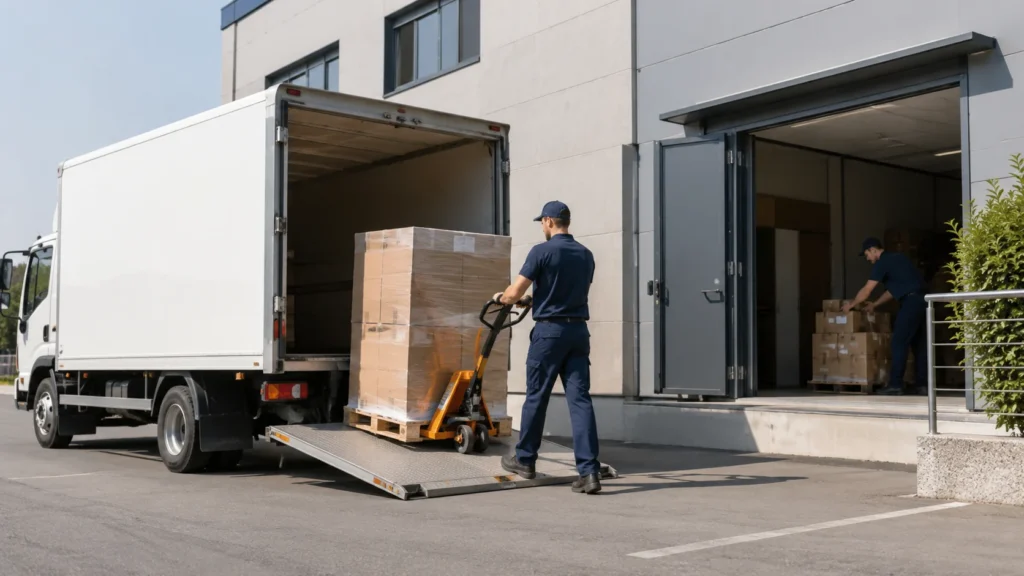
China has several major ports and export gateways serving Australia. The best route depends on factory location, volume, carrier schedule, destination city, and available capacity.
| Manufacturing Region | Common Export Gateway | Main Australian Destinations |
|---|---|---|
| Shenzhen, Dongguan, Huizhou | Yantian, Shekou, Shenzhen Airport | Sydney, Brisbane, Perth |
| Guangzhou, Foshan | Nansha, Guangzhou Airport | Brisbane and east-coast destinations |
| Shanghai, Suzhou, Hangzhou | Shanghai Port, Pudong Airport | Melbourne, Sydney, Adelaide |
| Ningbo, Yiwu | Ningbo-Zhoushan Port | Melbourne and east-coast destinations |
| Qingdao, Jinan | Qingdao Port | Brisbane and southern destinations |
| Xiamen, Quanzhou | Xiamen Port and Airport | Sydney and Melbourne |
| Tianjin, Beijing | Tianjin Port, Beijing Airport | Major Australian ports and airports |
For inland manufacturers, Tonlexing can organise truck transportation to the selected port or airport. When goods come from multiple factories, consolidation in Shenzhen, Guangzhou, Yiwu, Shanghai, or another suitable location can lower repeated pickup and documentation costs.
Some ports and routes have more frequent sailings or flights than others. Our team compares schedules in advance, especially before Chinese holidays and Australian peak seasons, to reduce the risk of limited space.
There is no fixed shipping cost from China to Australia because every shipment is different. The final price depends on the shipping method, cargo size, weight, pickup location, destination, and the services included in the quotation.
Before comparing freight quotes, importers should understand what is included in the price rather than focusing only on the lowest rate.
The following table provides general pricing for the most common shipping options. Actual freight rates change with carrier capacity, fuel costs, market demand, and seasonal fluctuations.
| Shipping Method | Typical Cost | Typical Transit Time | Best For |
|---|---|---|---|
| LCL Sea Freight | USD 35–130 per CBM | 21–31 days | Small commercial shipments |
| 20ft FCL | Request a quote | 20–27 days | Medium and large cargo |
| 40ft FCL | Request a quote | 20–27 days | High-volume shipments |
| Standard Air Freight | USD 3.5–6.0 per kg | 3–7 days | Urgent commercial cargo |
| Express Courier | USD 5.5–8.0 per kg | 2–5 days | Samples and small packages |
Air freight charges are usually based on chargeable weight, whichever is greater between the actual weight and the volumetric weight.
The international freight rate is only one part of the total shipping cost. Depending on the shipping terms and service scope, importers may also need to pay origin handling, destination charges, customs-related fees, and local delivery costs. Understanding these charges in advance helps businesses compare freight quotes more accurately and avoid unexpected expenses after the cargo arrives in Australia.
Common additional costs may include:
Origin Charges – Export documentation, cargo handling, warehousing, consolidation, and trucking from the supplier to the port or airport in China.
Destination Charges – Terminal handling, port or airport service fees, and container release charges after the shipment arrives in Australia.
Customs Clearance Fees – Customs broker service charges, import declaration fees, and other processing costs required to complete customs clearance.
Duties and GST – Import duties and the Australian Goods and Services Tax (GST), depending on the product classification and customs value.
Biosecurity Inspection Fees – Additional costs for quarantine inspections, fumigation, or treatment if required by Australian biosecurity regulations.
Final Delivery – Local road freight from the port, airport, or warehouse to the consignee’s address.
Not every shipment will incur all of these charges. The final cost depends on the cargo type, Incoterms, destination, and the services included in your freight quotation. Before booking, always confirm whether the quote covers both origin and destination charges to avoid unexpected costs after arrival.
Shipment success starts before the goods reach the port. Tonlexing uses a clear workflow to control costs and reduce delays.
We review the product description, quantity, weight, dimensions, value, supplier location, destination, and required arrival date. Sensitive goods and restrictions are checked before booking.
The team compares sea freight, air freight, express, and end-to-end options. The recommended route reflects time, budget, cargo size, and customs requirements.
Goods can be picked up from one supplier or several factories. Each factory order is received at the warehouse and checked against the information provided by the customer.
Separate purchases can be combined. We can coordinate carton reinforcement, palletising, labels, measurements, photographs, and other preparation before departure.
Tonlexing selects a suitable carrier and schedule. Early booking is especially important during peak periods because it helps protect space and reduce rollovers or sudden rate increases.
Our team checks the commercial documents, books the selected transport service, and coordinates the China export declaration.
The shipment travels by sea, air, or express. Customers receive milestone updates and real time tracking where the carrier system supports it.
Tonlexing coordinates with a licensed customs broker or authorised local partner to prepare the Australian import entry using documents supplied by the importer and exporter.
Applicable duty, GST, inspection, and processing charges must be settled before release.
After release, the goods are collected from the port, airport, terminal, or depot and delivered to the nominated address so the carrier can deliver the goods as planned.
Customs clearance and biosecurity checks are required before imported goods can be released in Australia. Preparing accurate documents and checking product restrictions before departure helps reduce inspections, storage charges, and delivery delays.
Importers must provide accurate cargo details so customs can assess duties, GST, and other import requirements. Product descriptions, quantities, values, weights, and consignee information should match across all documents.
Common documents include:
Bill of Lading or Air Waybill
Certificate of Origin when applicable
Import permits or product certificates when required
Tonlexing reviews the shipping documents before departure and coordinates clearance with local customs partners in Australia.
Australia applies strict biosecurity controls to goods and packaging that may carry pests, soil, or organic materials. Some shipments may require inspection, treatment, or additional certificates.
Higher-risk cargo includes:
Wooden pallets, crates, and dunnage
Food and agricultural products
Plant or animal materials
Used machinery and outdoor equipment
Bamboo, rattan, and natural fibre products
Wood packaging should meet ISPM 15 requirements, while containers and cargo should be clean and free from soil, insects, seeds, and plant material. Checking these requirements before shipping helps avoid treatment costs and delays after arrival.
A reliable logistics provider and forwarder should do more than book a vessel or flight. The company should understand the supplier side in China, explain destination expenses in Australia, identify restrictions before departure, and keep customers informed throughout the route.
Tonlexing provides practical freight and logistics services:
One dedicated team for the complete order
Pickup and warehousing across major China production regions
Sea, air, express, and end-to-end services
FCL, LCL, pallet, and project solutions
Supplier coordination and consolidation
Clear quotations with defined inclusions
Customs clearance support through Australian partners
Real time tracking and milestone updates where available
Local delivery coordination to Sydney, Melbourne, Brisbane, Perth, Adelaide, and regional destinations
Practical support when schedules, documents, or cargo details change
Our goal is to make freight forwarding and international logistics easier to manage. We focus on the complete logistics plan rather than selling only the cheapest line on a rate sheet.
This helps importers protect their goods, avoid unnecessary delays, and achieve more reliable delivery.
The best method depends on your cargo size, budget, and delivery deadline. Sea freight is better for large or heavy shipments, air freight is better for urgent goods, and express shipping is suitable for samples, documents, and small packages.
Air freight usually takes about 3–7 days for airport-to-airport service, while sea freight often takes about 14–25 days from port to port. Door-to-door delivery takes longer because it includes pickup, customs clearance, and final delivery.
Yes. Tonlexing can collect goods from multiple suppliers, consolidate them in one warehouse, check package details, and ship everything together to Australia. This helps reduce repeated pickup costs and makes the shipping process easier to manage.
Yes. Tonlexing can coordinate customs clearance in Australia through local partners. Importers should provide accurate invoices, packing lists, product details, HS codes, and any required certificates or permits before shipping.
Send Tonlexing your product name, supplier city, destination postcode, number of packages, gross weight, carton size, total volume, and preferred shipping method. Our team will check the route and provide a suitable sea freight, air freight, or door-to-door shipping quote.
Useful freight, customs and importing resources related to this shipping guide.
Shipping from China to Australia includes reliable sea freight and fast air shipping. Compare delivery time, shipping costs, and logistics option...
Read guide →
Shipping Cost from China to Australia (2026 Guide) Verified & Reviewed · Last updated May 2026 Shipping cost from China to Australia in 2026 star...
Read guide →
Learn everything about sea freight from China to Australia, including shipping costs, transit times, FCL vs LCL, customs clearance, ocean freight...
Read guide →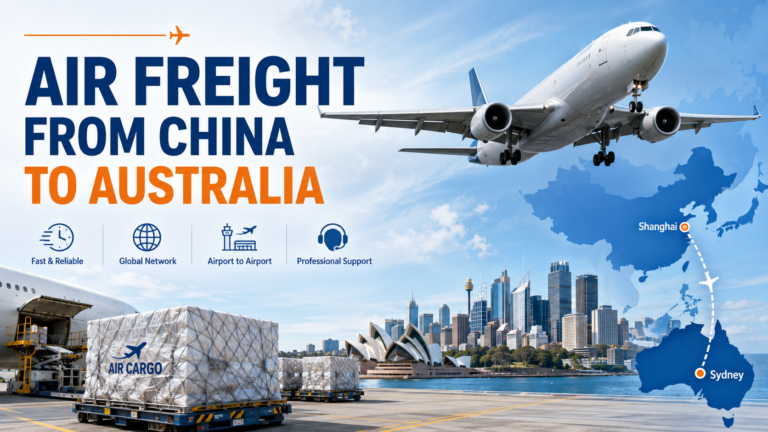
Air Freight from China to Australia Verified & Reviewed · Last updated June 2026 Air freight from China to Australia is a fast and reliable shipp...
Read guide →DDP Shipping from China to Australia Verified & Reviewed · Last updated June 2026 DDP shipping from China to Australia offers a simple door-to-do...
Learn more → Useful Resource How to Choose the Best Freight Forwarder in ChinaIn the complex world of international trade, selecting a reliable freight forwarder is a crucial step in ensuring a smooth and cost-effective sup...
Learn more →WhatsApp us