Related Guide
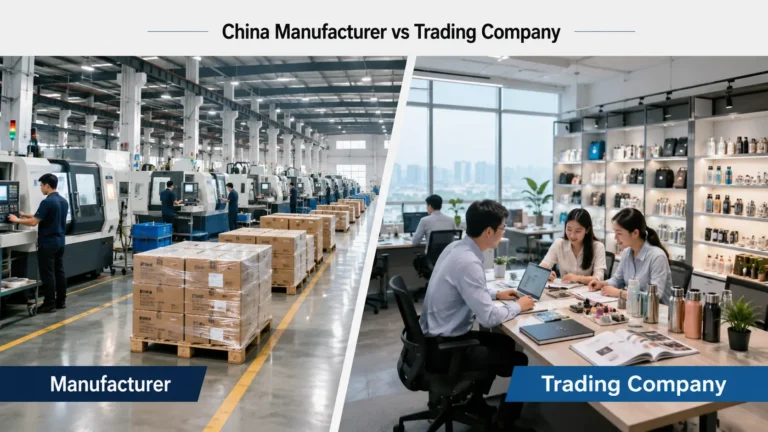
China Manufacturer vs Trading Company
China Manufacturer vs Trading Company Verified & Reviewed · Last updated July 2026 Choosing between a China manufacturer and a trading company ca...
Read guide →

Ordering product samples from China helps you check quality, materials, workmanship, functionality, and customization before committing to a bulk order.
This guide explains how to choose suppliers, request and pay for samples, arrange shipping, inspect quality, and approve the final sample before mass production.
Product Sample Costs
Supplier Selection
Sample Shipping & Inspection
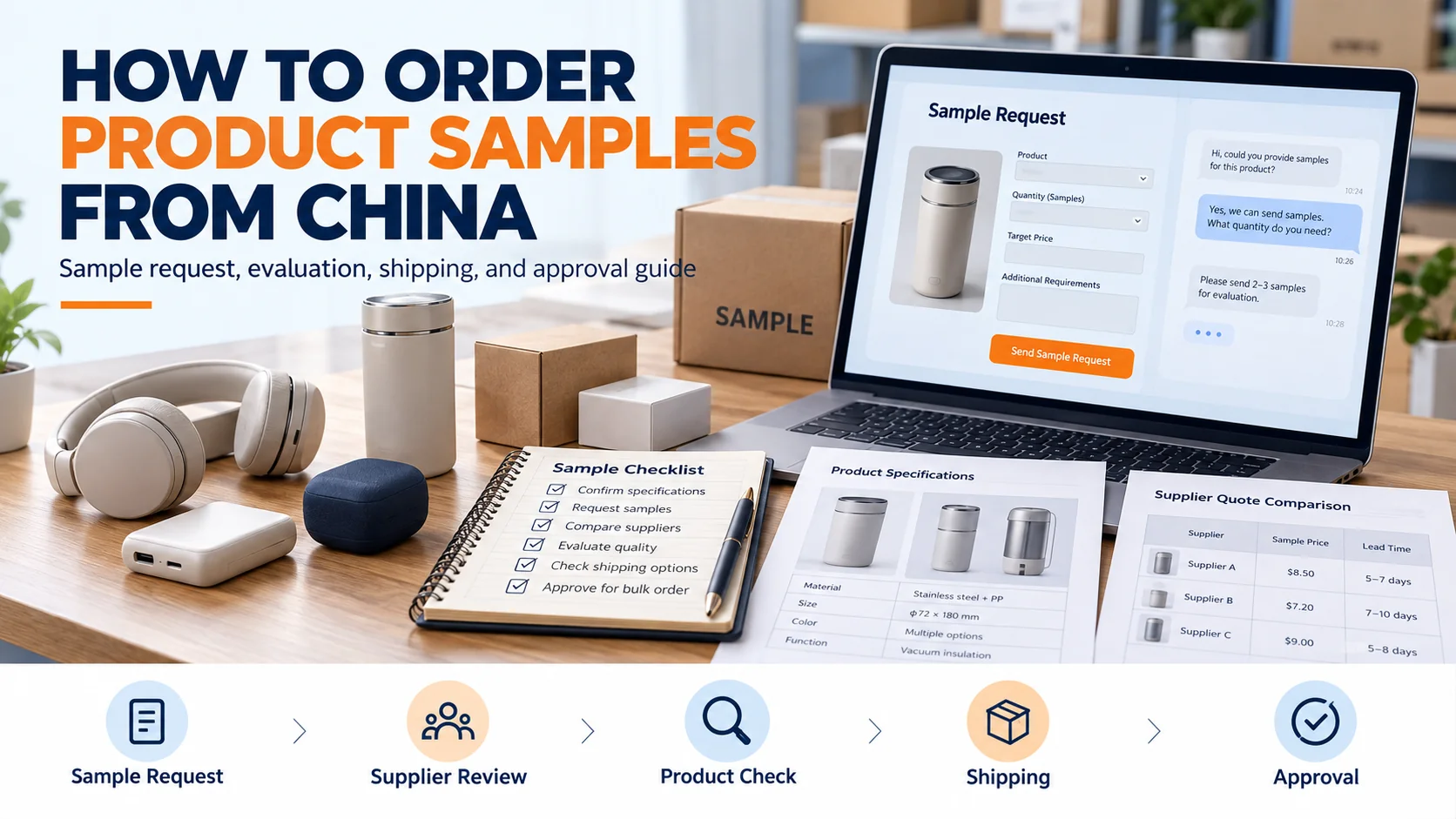
Product photos, videos, catalogs, and quotations can provide useful information, but they cannot fully show what the finished product will be like in your hands.
A physical sample allows you to check details such as:
Material and construction
Dimensions and weight
Color and surface finish
Logo and branding
Workmanship
Functionality
Packaging
Accessories
Customization accuracy
Samples are especially valuable when several suppliers appear similar during the quotation stage.
Two suppliers may quote almost the same product at a similar price, but their samples may reveal noticeable differences in material thickness, assembly, finish, packaging, or overall quality.
The sample stage can also reveal how a supplier works. Response speed, attention to detail, technical understanding, and willingness to correct problems are all useful signals before moving into a larger order.
A good sample reduces risk, but it should not be treated as a guarantee that every unit in mass production will be identical. Production quality still needs to be controlled later.
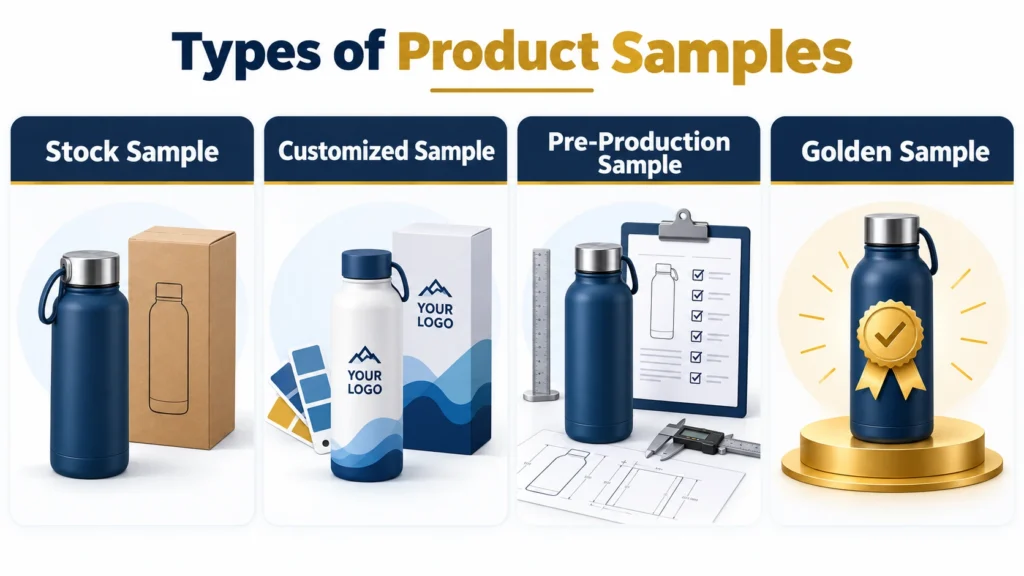
Before placing a sample order, confirm what type of sample you actually need. Different samples are used at different stages of sourcing and product development.
| Sample Type | Best For | Main Purpose |
|---|---|---|
| Stock Sample | Initial supplier screening | Check general quality and workmanship |
| Customized Sample | Private label or modified products | Verify specific design requirements |
| Pre-Production Sample | Before bulk production | Confirm the final production version |
| Golden Sample | After final approval | Serve as the quality reference |
A stock sample is an existing product that the supplier already has available.
It is useful when you want to quickly check general quality, materials, construction, or functionality before spending money on customization.
However, it may not include your final logo, packaging, color, dimensions, or other custom requirements.
A customized sample is made according to your specific requirements.
Customization may involve:
Different materials
Custom colors
Logo printing
Private labeling
Modified dimensions
Custom packaging
Functional changes
Because additional work is required, customized samples normally take longer to prepare and may include setup, printing, tooling, or development fees.
A pre-production sample is used when most product details have already been finalized.
Its purpose is to confirm the version that the supplier intends to reproduce during mass production.
At this stage, important dimensions, materials, colors, branding, packaging, and functionality should already be close to final.
A golden sample is the final approved version of the product.
It becomes the physical quality reference for later production and inspection. The more detailed approval process comes later, but at this stage it is enough to understand that the golden sample represents the standard you expect the supplier to reproduce.
The goal is not simply to find the lowest sample price. You want to identify suppliers that can meet your requirements consistently and support a future bulk order.
A practical approach is to screen potential suppliers first and then order samples from 2–3 qualified candidates.
Start by looking at whether the supplier has experience with your specific product.
You may work with:
Manufacturers, which may offer more direct control over production and customization.
Trading companies, which may be useful when sourcing several product categories or coordinating different factories.
Neither option is automatically better.
Focus on product experience, technical understanding, quality, pricing, and the ability to meet your specifications.
Before placing a sample order, check basic information such as:
Business registration
Main product categories
Production information
Relevant certifications
Export experience
Company and payment details
Marketplace badges can be useful references, but they should not replace basic supplier verification.
Sample development is also a good opportunity to evaluate how the supplier works.
Pay attention to whether they:
Understand technical requirements
Ask questions when details are unclear
Confirm important points before production
Respond within a reasonable time
Explain problems clearly
A supplier that simply replies “no problem” to every request without discussing technical details may require closer review.
When practical, order comparable samples from a small group of shortlisted suppliers.
Use the same requirements so you can compare material, workmanship, functionality, lead time, packaging, and communication under similar conditions.
The cheapest sample is not necessarily the best choice. What matters more is whether the supplier can consistently meet the required standard.
Once you have selected the suppliers you want to test, the next step is to turn your inquiry into a clear sample order.
At this stage, focus on three things: what should be made, how much it will cost, and when it will be ready.
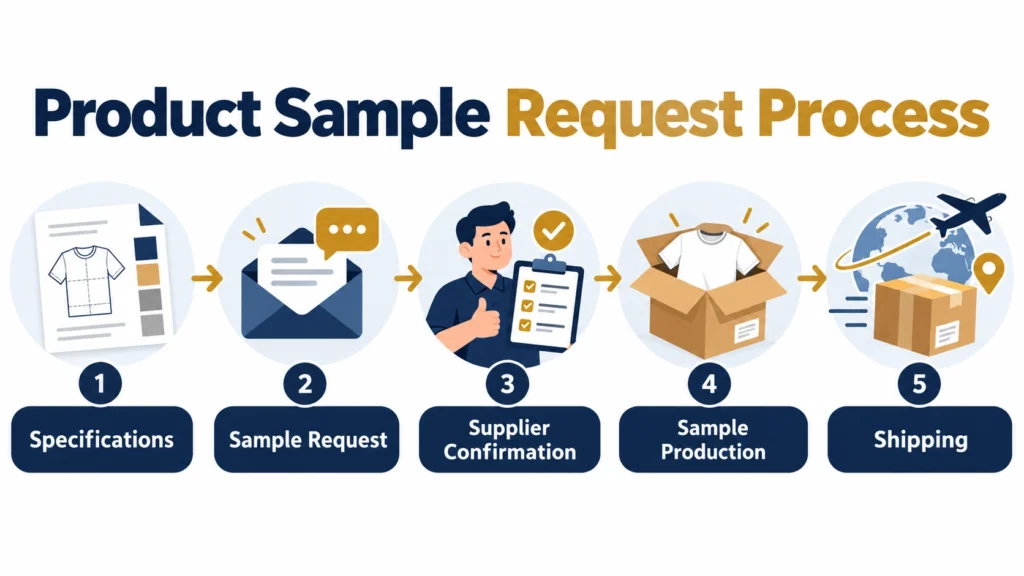
Your sample request should contain enough information for the supplier to understand what you expect.
Depending on the product, this may include:
Product name and model
Dimensions
Material
Color and finish
Logo or branding
Packaging
Accessories
Functional requirements
Tolerance requirements
Compliance requirements
For technical or customized products, attach drawings, specification sheets, reference photos, sketches, or color references where available.
Avoid subjective instructions such as “good quality” or “same as the picture.” Measurable specifications make both sample production and later inspection much easier.
Tell the supplier whether you need a stock sample, customized sample, or pre-production sample.
Also confirm how many pieces are required.
One unit may be sufficient for a basic evaluation, while additional samples may be needed for:
Functional testing
Destructive testing
Different colors or versions
Internal review by several people
Before making payment, ask the supplier to confirm:
Sample price
Customization charges
Tooling or setup fees
Sample preparation time
Package dimensions
Gross weight
Shipping cost
Payment method
Sample fee refund or credit policy, if available
This gives you a clearer view of the total cost of obtaining the sample, rather than only the product price.
The total cost of ordering product samples from China usually includes the sample fee and international shipping. For many standard products, the combined cost may range from around $30 to several hundred dollars, while newly developed or mold-based products can cost much more.
The final amount depends on the product type, customization level, sample quantity, weight, and shipping destination.
Sample fees vary depending on how much work is required to prepare the product.
Stock samples: Some suppliers provide existing samples for free, while others may charge around $10–$30 per piece.
Customized consumer products: Samples with a custom logo, color, material, or packaging may cost around $50–$150.
Complex or electronic products: Customized samples involving components, testing, or additional engineering may cost around $100–$500 or more.
Products requiring new molds: If a new mold or tooling is required, development costs may start from around $1,000 and increase depending on complexity.
Tooling or mold charges should be treated separately from the normal sample fee because they are part of product development rather than simply producing one sample.
Most small samples are shipped by express courier such as DHL, FedEx, or UPS. Shipping can sometimes cost more than the sample itself.
Typical reference ranges include:
| Sample Shipment | Estimated Shipping Cost |
|---|---|
| Small parcel under 1 kg | $30–$50 |
| Medium parcel around 1–3 kg | $50–$90 |
| Heavy or bulky sample | $100–$300+ |
Actual courier charges depend on the chargeable weight, package dimensions, destination, and product type.
| Product Type | Sample Type | Sample Fee | Shipping | Estimated Total |
|---|---|---|---|---|
| Clothing or textiles | Custom logo / material | $50–$100 | $30–$50 | $80–$150 |
| Phone accessories | Stock / logo printing | $0–$20 | $30–$40 | $30–$60 |
| Household products | Custom color / logo | $30–$80 | $40–$70 | $70–$150 |
| Small appliances | Functional sample | $150–$300 | $70–$120 | $220–$420 |
| Custom molded parts | New development | $1,000+ | Based on weight | $1,100+ |
These prices are only general references. Before paying, ask the supplier to confirm the sample fee, customization or tooling charges, preparation time, package weight and dimensions, and international shipping cost.
Some suppliers may also credit part or all of the sample fee toward a future bulk order, but this should be confirmed in writing before payment.
Common payment methods may include:
PayPal
Bank transfer
Other platform-supported methods
Before paying, confirm the supplier name, beneficiary details, sample amount, and shipping cost.
Be cautious if payment instructions suddenly change or if you are asked to send money to an unrelated personal or company account.
For larger orders, you can also read our guide on how to pay Chinese suppliers safely.
For most small sample orders, international express courier is the simplest option.
Common options include:
DHL
FedEx
UPS
Express services normally provide door-to-door delivery and shipment tracking.
For many standard routes, transit may take around 3–7 business days after pickup, although the actual delivery time depends on the destination, customs clearance, product type, and service selected.
Before shipping, confirm:
Package dimensions
Gross weight
Number of cartons
Product description
Whether the product contains batteries or restricted materials
If you are ordering samples from several factories, shipping every package separately can become expensive.
Instead, different suppliers can send the samples to one warehouse in China:
Supplier A + Supplier B + Supplier C → China Warehouse → Consolidation → International Shipping
The warehouse can combine the packages where practical and arrange one international shipment.
If you are buying from several factories, see our guide to shipping from multiple suppliers in China.
Tonlexing can also coordinate supplier pickup, China warehousing and consolidation, and international shipping.
Special handling may be required for:
Lithium batteries
Battery-powered products
Liquids
Powders
Magnetic goods
Certain chemicals
Check transportation requirements before the supplier prepares the shipment.
Samples still need to be declared correctly.
Use an accurate product description, reasonable declared value, correct quantity, and commercial invoice where required.
A shipment does not automatically become duty-free simply because it is marked as a sample. Customs treatment depends on the destination, product category, declared value, and local rules.
Regulated products may also require certificates, permits, or other compliance documents.
Product samples still need to be declared correctly to customs.
The supplier should provide an accurate product description and suitable commercial documentation where required.
Important points include:
Use an accurate product description
Declare a reasonable commercial value
State the correct quantity
Provide a commercial invoice where required
Check destination-country restrictions
Confirm whether taxes or duties may apply
A shipment does not automatically become duty-free simply because it is marked as a “sample.”
Customs treatment depends on the destination country, product category, declared value, and local import regulations.
Avoid asking the supplier to declare an artificially low value or describe goods as having no commercial value when this is not accurate.
Regulated products may also require certificates, permits, labeling, or other compliance documents even when shipped only as samples.
Once the samples arrive, inspect them against the specifications you originally sent rather than relying only on appearance. Using the same evaluation criteria for every supplier makes comparison much more meaningful.
Review the details that directly affect product quality, such as:
Dimensions and weight
Materials
Color and finish
Logo or branding
Components and accessories
Packaging
Overall workmanship
Use measuring tools where necessary, especially for products with strict tolerances.
For functional products, test the sample under realistic conditions.
Depending on the product, this may include assembly, electrical functions, fit, moving parts, load performance, durability, or compatibility.
The goal is to confirm that the sample not only looks correct but also performs as expected.
If you find an issue, document it with photos, videos, measurements, or written notes.
Instead of giving general feedback such as “the quality is not good,” explain exactly what needs to be corrected. Clear feedback makes revisions faster and reduces misunderstandings.
If you ordered samples from several suppliers, compare them side by side using the same checklist.
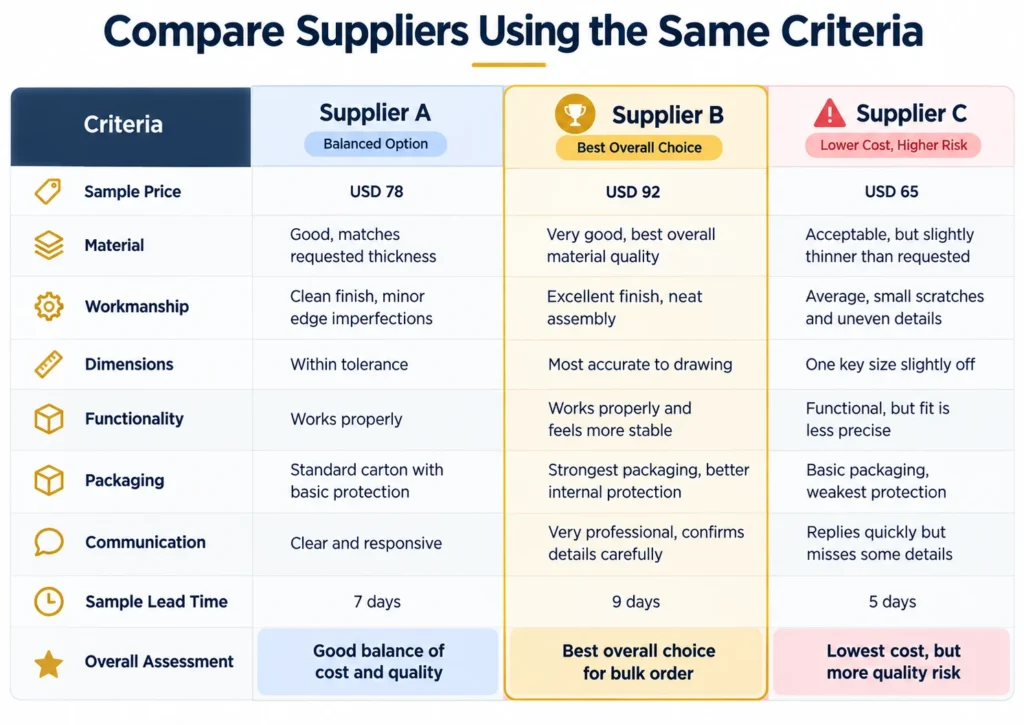
Do not compare price alone. Product quality, technical understanding, communication, and the supplier’s ability to correct problems are all important when deciding who should move forward to bulk production.
For customized products, the first sample may not be the final version.
A typical process is:
Initial Sample → Evaluation → Feedback → Revision → Final Approval → Golden Sample → Mass Production → Inspection
If revisions are required, send the supplier a clear list of changes and update the specification where necessary.
Once the final sample is approved:
Confirm the final specification in writing.
Label the approved version clearly.
Keep it as the golden sample.
Ask the supplier to retain the same approved reference.
Use it during later quality inspections.
This step matters because mass production can still introduce differences.
Raw materials may come from another batch, different workers or machines may be involved, and larger quantities can reveal quality issues that did not appear in a single sample.
For significant orders, a pre-shipment inspection in China can help check finished goods before shipment.
You can also compare the roles of a factory audit, product inspection, and container loading inspection when planning a broader quality-control process.
Even when the sample process seems simple, a few small mistakes can make the final comparison less useful.
Common mistakes include:
Sending unclear specifications — vague requirements can lead to samples that are difficult to evaluate.
Ordering from only one supplier — comparing several qualified suppliers can give you a clearer view of available quality.
Checking appearance only — dimensions, materials, functionality, and packaging may also need testing.
Giving vague feedback — use photos, measurements, and specific comments when requesting revisions.
Assuming the sample guarantees bulk quality — mass production still requires clear specifications and quality control.
Not keeping the approved sample — retain the final version as the production and inspection reference.
Avoiding these issues makes the sample stage more useful and gives you a clearer standard before moving into bulk production.
Choose suitable suppliers, decide which sample type you need, send clear requirements, confirm sample costs and lead time, pay using a traceable method, arrange shipping, and inspect the finished samples before proceeding with a larger order.
Contact the supplier through Alibaba, provide your product requirements, confirm the sample price, preparation time, customization requirements, and shipping cost, then use a suitable platform-supported payment method where available.
Not always. Suppliers may charge for the product, customization, tooling, packaging, and international shipping. Some may credit the sample fee toward a future bulk order if this is agreed in advance.
For an important new product, ordering samples from around two or three qualified suppliers usually provides a useful comparison of quality, communication, and production capability.
One unit may be sufficient for basic evaluation, but additional pieces may be needed for functional testing, destructive testing, different product versions, or internal review.
Useful freight, customs and importing resources related to this shipping guide.
China Manufacturer vs Trading Company Verified & Reviewed · Last updated July 2026 Choosing between a China manufacturer and a trading company ca...
Read guide →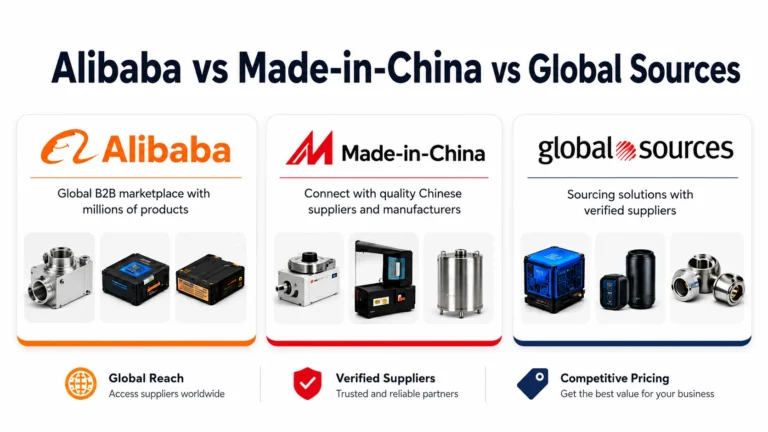
Alibaba vs Made-in-China vs Global Sources: Which Platform Is Best? Verified & Reviewed · Last updated July 2026 Alibaba, Made-in-China, and Glob...
Read guide →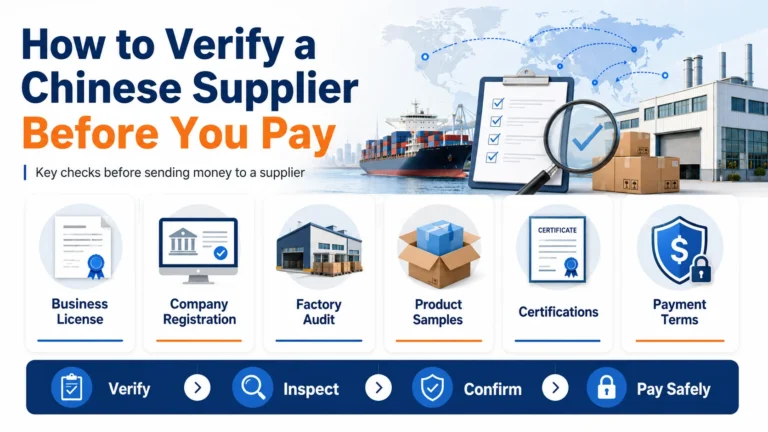
How to Verify a Chinese Supplier Before You Pay Verified & Reviewed · Last updated July 2026 Before you pay a Chinese supplier, do not rely only...
Read guide →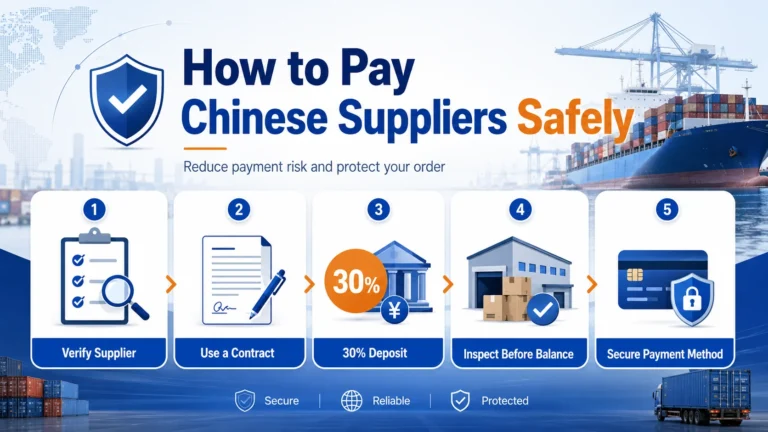
How to Pay Chinese Suppliers Safely Verified & Reviewed · Last updated July 2026 Paying Chinese suppliers safely is one of the most important ste...
Read guide →FedEx vs UPS vs DHL Rates: Which Carrier Is Cheaper in 2026? Verified & Reviewed · Last updated July 2026 FedEx vs UPS vs DHL Rates from China ca...
Learn more → Useful Resource Pre-Shipment Inspection in China for ImportersPre-Shipment Inspection in China for Importers Verified & Reviewed · Last updated July 2026 A pre-shipment inspection helps importers identify de...
Learn more →WhatsApp us