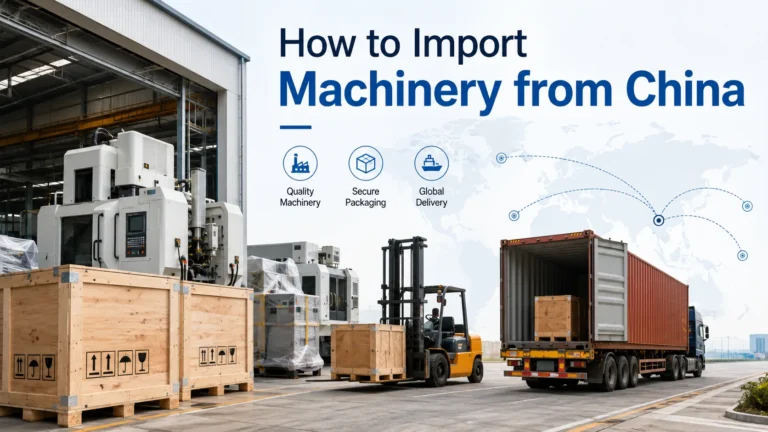
Related Guide
How to Import Machinery from China
How to Import Machinery from China Verified & Reviewed · Last updated August 2026 Importing machinery from China requires careful supplier verifi...
Read guide →

Importing gasoline and diesel construction equipment from China to the USA requires careful planning, including supplier verification, EPA compliance, shipping arrangements, and customs clearance.
This 2026 guide covers import regulations, HTS codes, duties, shipping methods, required documents, and how to choose a reliable Chinese machinery supplier.
EPA Compliance
Import Duties
Shipping Methods
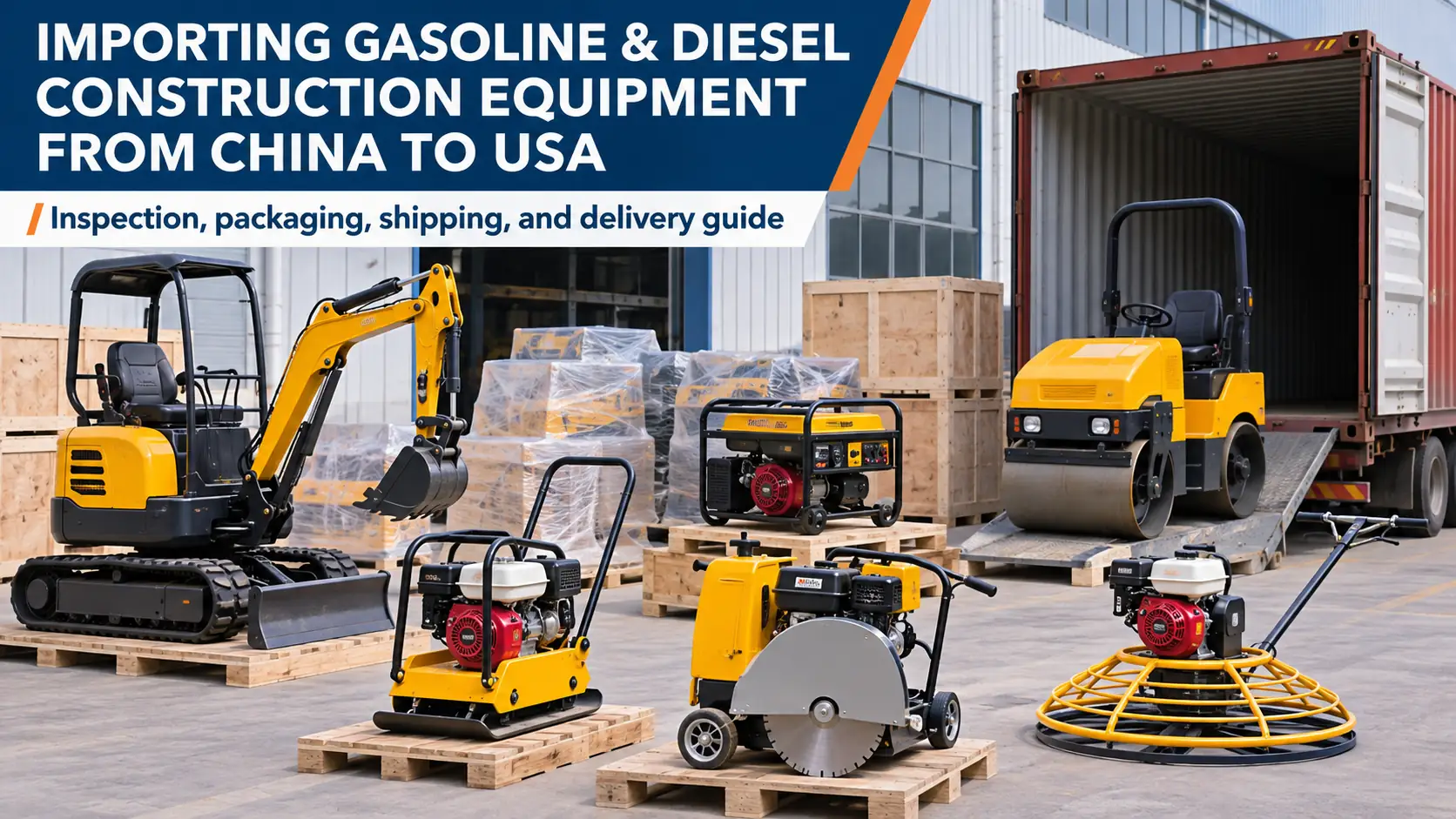
China manufactures different types of gasoline and diesel-powered machinery for construction, excavation, material handling, and industrial applications. The best choice depends on your project requirements, operating conditions, engine specifications, and purchase budget.
Diesel engines are widely used in heavy construction machinery because they provide the power and torque needed for excavation, earthmoving, and material handling.
Common products include:
Mini excavators and crawler excavators
Wheel loaders and skid steer loaders
Bulldozers and crawler tractors
Road rollers and soil compactors
Backhoe loaders
Telehandlers and material handling machines
Mini excavators are popular among landscaping contractors, utility companies, and residential construction businesses. Buyers can compare different operating weights, digging depths, bucket capacities, and engine configurations.
Gasoline engines are more commonly used in compact machinery and light-duty construction applications.
Typical products include:
Small construction pumps
Plate compactors
Concrete mixers
Compact construction machines
Selected small excavation and material handling equipment
When comparing gasoline-powered models, check engine displacement, rated power, fuel consumption, and applicable emissions standards. Similar-looking machines may have different engine classifications and certification requirements.
New machinery generally comes with clearer manufacturing records, current technical specifications, and warranty documentation.
Used machinery requires additional checks before purchase. Pay attention to:
Manufacturing year and engine model
Operating hours and maintenance records
Engine condition and emission control components
Machine dimensions and operating weight
Hydraulic system and undercarriage condition
Availability of replacement parts
For used mini excavators, confirm that the engine and identification plates are clearly documented. A machine’s age alone does not guarantee an exemption from U.S. emissions requirements.
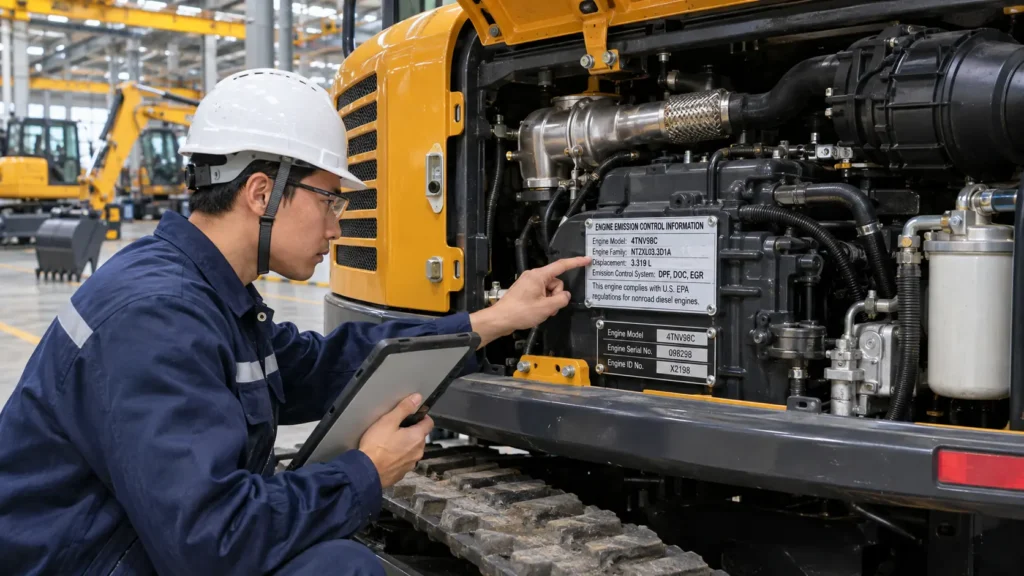
EPA emissions compliance is one of the most important considerations when importing gasoline and diesel-powered construction equipment into the United States.
The U.S. Environmental Protection Agency regulates emissions from nonroad engines installed in excavators, loaders, bulldozers, and other construction machinery. Requirements depend on engine type, rated power, displacement, production year, and applicable certification category.
Nonroad compression-ignition diesel engines are generally regulated under 40 CFR Part 1039, together with applicable provisions of Part 1068.
EPA emissions standards include different tiers, with Tier 4 requirements applying to relevant engine categories.
Before purchasing a diesel machine, request:
Engine manufacturer and model
Engine family identification
Rated power and displacement
Engine production year
EPA emission control label
Certificate of Conformity, where applicable
Do not rely solely on a supplier’s statement that an engine meets Tier 4 standards. Request the actual certification documents and confirm that they match the engine installed in the machine.
Gasoline-powered nonroad machinery uses spark-ignition engines. Different engine categories follow different EPA regulations.
40 CFR Part 1054: Covers applicable small nonroad spark-ignition engines and equipment.
40 CFR Part 1048: Covers applicable nonroad spark-ignition engines above 19 kW.
A compact gasoline-powered machine may therefore have different emissions requirements from a larger industrial machine.
Buyers should confirm the engine category and certification status before placing an order rather than assuming that all gasoline engines follow the same rules.
EPA Form 3520-21 is used to declare the emissions status of covered imported nonroad engines, including engines already installed in machinery.
Depending on the import category, buyers may need to provide:
Engine manufacturer and model
Engine family name
Engine serial number
Production year
EPA certification information
Applicable exemption documentation
The declaration is generally submitted to U.S. Customs and Border Protection (CBP) as part of the import entry process.
Certain new certified products may qualify for a documentation exception when the original engine manufacturer is the importer and the applicable certification and labeling conditions are met. Do not assume this exception applies to every machine purchased from a Chinese equipment supplier.
Used or noncertified machinery should receive an emissions compliance review before purchase. Noncompliant equipment without a valid exemption may be refused entry or require additional procedures.
For official guidance, consult the EPA engine import forms and requirements.
If the machinery will operate in California, buyers should also review applicable California Air Resources Board (CARB) requirements.
California’s In-Use Off-Road Diesel-Fueled Fleets Regulation generally covers qualifying self-propelled off-road diesel vehicles rated at 25 horsepower or greater.
Depending on the equipment and fleet, requirements may involve:
Equipment reporting through CARB’s DOORS system
Equipment identification and labeling
Fleet emissions reduction
Restrictions on adding older vehicles
Applicable operating requirements
These are primarily in-use fleet regulations, not a universal CARB import license for every machine. Confirm the requirements for the specific equipment and intended operation.
Choosing the right supplier is essential when importing machinery from China. A low purchase price does not necessarily mean good manufacturing quality or dependable after-sales support.
Before placing an order, check the supplier’s business registration, factory location, production capabilities, and export history.
Ask for:
Factory photos and production videos
Product catalogs and technical specifications
Previous export experience
References from buyers in similar markets
Warranty and after-sales service information
For larger orders, consider arranging a factory audit or using a sourcing agent to verify the manufacturer.
A reliable supplier should provide detailed specifications for every machine model.
For mini excavators, compare operating weight, digging depth, bucket capacity, hydraulic performance, and engine power.
For bulldozers, review blade width, engine power, operating weight, and undercarriage configuration. For telehandlers, check the load chart because lifting capacity changes with boom extension and operating height.
If you need custom machines or specialized configurations, confirm production capabilities and delivery schedules before signing the contract.
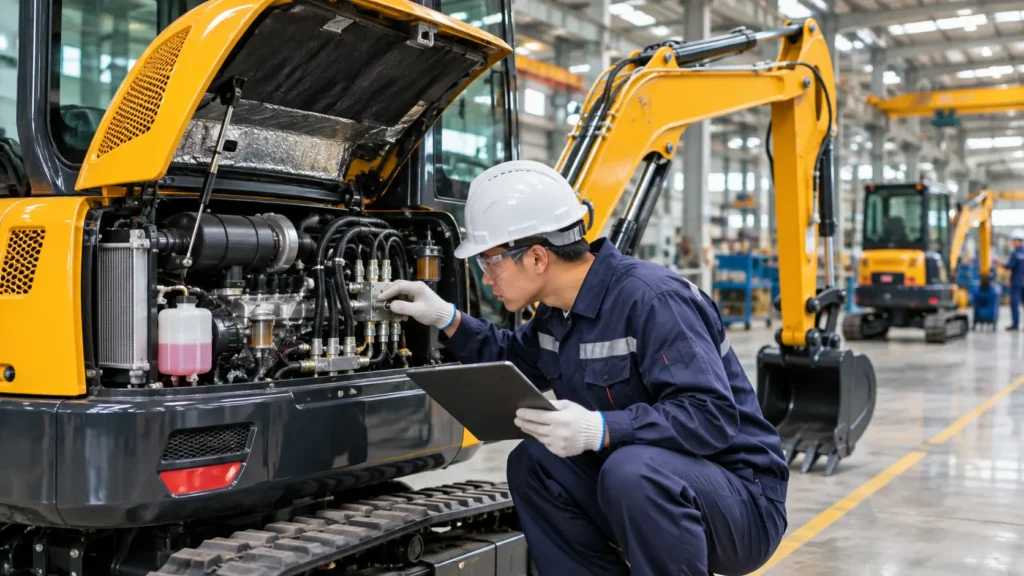
A pre-shipment inspection helps identify defects before the cargo leaves China.
For gasoline and diesel machinery, inspection should cover:
Engine starting and running performance
Hydraulic system operation
Steering and braking functions
Operating controls and safety components
Machine appearance and identification plates
Attachments and accessories
Request factory test reports and arrange a third-party inspection when necessary. This is particularly important when purchasing multiple machines or customized equipment.
For a detailed checklist, see our Pre-Shipment Inspection in China guide.
Before confirming the purchase, ask whether the supplier can provide replacement filters, hydraulic components, engine parts, and other commonly used spare parts.
Clarify warranty coverage, payment terms, production schedules, and technical assistance in the purchase contract. Also confirm whether after-sales support is available for buyers in the USA.
For international orders, agree on the payment method, such as a bank wire transfer, and establish inspection and payment milestones.
The best shipping method depends on machine dimensions, gross weight, cargo volume, loading requirements, and the final destination in the United States.
Ocean freight is generally the most practical option for heavy machinery. Air freight is more suitable for urgent spare parts and smaller components.
| Shipping Method | Best For | Main Consideration |
|---|---|---|
| FCL | Standard-sized machinery | Container dimensions and payload |
| Flat Rack | Oversized machinery | Lifting and lashing arrangements |
| Open Top | Tall or top-loaded cargo | Height and crane access |
| Ro-Ro | Self-propelled machinery | Vessel and route availability |
| Air Freight | Small parts and urgent cargo | Higher transportation cost |
FCL is suitable for machinery that fits inside standard shipping containers.
20GP: Suitable for compact machinery and smaller mini excavators when dimensions and payload permit.
40GP: Provides additional loading space for compatible machinery or multiple units.
40HQ: Offers additional internal height for suitable cargo.
Before booking, confirm machine dimensions, gross weight, loading points, and container payload limits. A machine that fits physically may still exceed the container’s permissible payload.
Large machines may not fit inside standard containers. Flat rack containers are suitable for oversized cargo, while open top containers can accommodate machinery requiring top loading or additional vertical clearance.
For oversized excavators, confirm lifting points, center of gravity, cargo securing, and port handling requirements before booking.
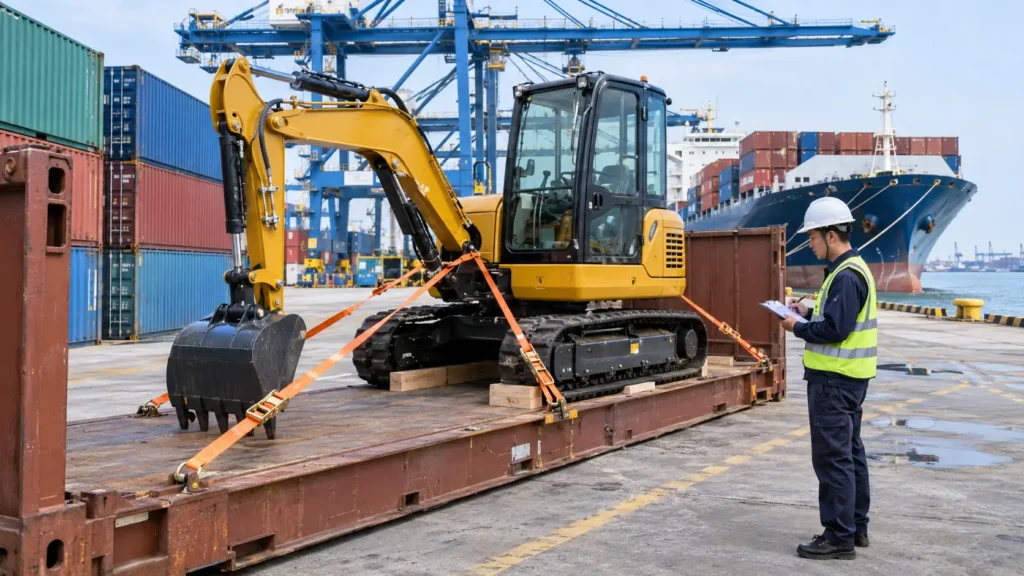
Roll-on/Roll-off (Ro-Ro) shipping is suitable for certain self-propelled machines that can safely drive onto and off the vessel.
Air freight is generally more appropriate for urgent spare parts, small components, and compact equipment rather than full-size excavators or bulldozers.
For more information about transporting large machines, read our China to USA Heavy Machinery Shipping Guide.
Before loading, coordinate cargo preparation with the supplier and freight forwarder.
Remove or separately secure loose attachments.
Protect exposed hydraulic connections and electrical components.
Secure movable parts and operating mechanisms.
Confirm battery and fuel handling requirements with the carrier.
Prepare lifting points and cargo lashing arrangements.
Photograph the machinery before and after loading.
If wooden packaging is used, ensure it complies with applicable ISPM 15 requirements. Proper preparation helps reduce damage during loading, ocean transportation, and unloading.
Importing gasoline and diesel construction machinery from China to the USA requires accurate customs documentation, correct HTS classification, and compliance with applicable U.S. import regulations. Before shipment, buyers should prepare the required documents, verify engine emissions compliance, and confirm applicable import duties.
Prepare the following documents before shipping:
Commercial Invoice: Includes the machine description, model, purchase price, HTS code, and agreed Incoterms.
Packing List: Shows machine quantity, gross weight, dimensions, package numbers, and container details.
Bill of Lading (BOL): Confirms the international transportation arrangement and shipment details.
Certificate of Origin: Identifies China as the country of origin and supports customs verification and applicable tariff treatment.
Make sure the equipment description, declared value, and country of origin are consistent across all documents.
Gasoline and diesel-powered nonroad machinery must meet applicable EPA emissions requirements before entering the United States.
Depending on the engine category, prepare:
EPA Form 3520-21: Declares the emissions status of applicable imported engines and equipment.
EPA Certificate of Conformity: Supports engine emissions certification where required.
EPA Emission Control Label: Identifies the engine’s emissions certification information.
For used machinery, clean the tracks, tires, buckets, and undercarriage before export. Remove soil, mud, and plant debris to reduce the risk of USDA agricultural inspection problems.
Most self-propelled construction machinery falls under Chapter 84 of the U.S. Harmonized Tariff Schedule (HTSUS), particularly heading 8429.
The following are common six-digit HTS classifications:
| Machinery Type | Common HTS Subheading | Description |
|---|---|---|
| Crawler Excavators | 8429.52 | Machinery with a 360-degree revolving superstructure |
| Wheel Loaders | 8429.51 | Self-propelled front-end shovel loaders |
| Bulldozers | 8429.11 / 8429.19 | Track-laying and other bulldozers |
| Road Rollers | 8429.40 | Self-propelled tamping machines and road rollers |
These rates represent general MFN base duties, not the final tax liability for Chinese-origin machinery. Additional tariffs, including Section 301 and Section 232 duties, may apply depending on the exact HTS classification and applicable trade measures.
The six-digit codes are for initial reference. Importers must confirm the complete 10-digit HTS code based on the machine’s specifications before filing a customs entry.
Check the U.S. Harmonized Tariff Schedule and consult a licensed customs broker to verify the current duty rates and additional tariffs.
For ocean shipments entering the USA, Importer Security Filing (ISF 10+2) must generally be submitted to U.S. Customs and Border Protection (CBP) at least 24 hours before vessel loading.
Importers must also arrange a customs bond to cover applicable customs obligations. The two common options are:
Single Entry Bond: Covers an individual import shipment.
Continuous Bond: Suitable for businesses importing machinery regularly throughout the year.
A customs broker typically handles the required entry documentation, including CBP Form 3461 and Form 7501, where applicable.
CBP may inspect imported machinery to verify its declared value, country of origin, HTS classification, and supporting documents. EPA or agricultural inspections may also apply depending on the equipment.
Before shipment, check that the commercial invoice, packing list, engine information, and physical cargo details are accurate. Proper documentation, equipment cleaning, and timely ISF filing help reduce customs delays and unexpected charges.
Working with an experienced freight forwarder and U.S. customs broker can help coordinate the process from export preparation in China to customs clearance and final delivery.
Importing machinery requires coordination between the manufacturer, supplier, inspection provider, freight forwarder, customs broker, and final delivery company.
Follow these steps to organize the process:
Select the machinery and verify the supplier. Confirm the model, engine specifications, purchase price, production capability, and supplier background.
Check EPA and local regulations. Verify engine certification, EPA declarations, and CARB requirements if the machinery will operate in California.
Complete pre-shipment inspection. Check engine performance, hydraulic functions, serial numbers, and overall machine condition.
Confirm the HTS code and import duties. Review tariff classification, additional duties, customs bond requirements, and total import costs.
Arrange international shipping. Choose FCL, flat rack, open top, or Ro-Ro according to dimensions and loading requirements.
Complete U.S. customs clearance and delivery. Coordinate ISF filing, customs entry, EPA documentation where applicable, cargo release, and final transportation.
Planning these steps before production is completed helps reduce documentation problems and unexpected costs.
Importing construction machinery from China involves several potential risks. Buyers should pay attention to the following issues to avoid unnecessary costs and shipping delays.
Ignoring EPA Emissions Requirements: Check the engine model, emission label, and EPA certification documents before purchasing.
Choosing a Supplier Based Only on Price: Verify the manufacturer’s production capabilities, export history, warranty, and spare parts availability.
Using the Wrong HTS Code: Confirm the correct tariff classification and applicable additional duties before calculating import costs.
Preparing Incomplete Customs Documents: Check the commercial invoice, packing list, EPA documents, and ISF filing requirements before shipment.
Ignoring Equipment Cleaning and Inspection: Remove soil, mud, and plant debris from used machinery and arrange pre-shipment inspection.
Choosing an Unsuitable Shipping Method: Confirm machine dimensions and gross weight before selecting FCL, flat rack, open top, or Ro-Ro shipping.
Shipping construction machinery from China to the USA requires careful planning, especially for heavy and oversized cargo. Tonlexing provides freight forwarding solutions to help buyers coordinate transportation, export procedures, and delivery arrangements.
Our services include:
China Supplier Pickup: Collect machinery from manufacturers and arrange transportation to the departure port.
Cargo Inspection and Preparation: Coordinate pre-shipment inspections, cargo measurements, and loading arrangements.
International Freight: Arrange FCL, flat rack, open top, and other suitable shipping methods based on machine dimensions and weight.
Customs and Final Delivery: Coordinate export documentation, work with customs brokers, and arrange transportation to the final destination.
Whether you are shipping a single mini excavator or multiple units of heavy machinery, Tonlexing can help you plan a suitable shipping solution based on your cargo, budget, and delivery requirements.
Yes. Diesel machinery can be imported if it meets applicable U.S. requirements, including EPA emissions regulations, customs classification, and documentation requirements. Verify engine certification before purchasing.
Many nonroad gasoline engines are subject to EPA emissions standards. The applicable requirements depend on engine power, displacement, and engine category. Check certification status before shipment.
Yes, but used mini excavators require additional checks. Verify the manufacturing year, engine emissions status, operating condition, maintenance records, and applicable import exemptions. Used status alone does not guarantee an EPA exemption.
Import duties depend on the HTS classification and applicable additional tariffs. Certain Chinese-origin products may be subject to Section 301 and Section 232 measures. Confirm the current tariff treatment before calculating the total import cost.
Ocean freight is generally the most practical option. FCL works for machinery that fits standard containers, while flat rack, open top, and Ro-Ro may be suitable for oversized or self-propelled cargo.
Useful freight, customs and importing resources related to this shipping guide.
How to Import Machinery from China Verified & Reviewed · Last updated August 2026 Importing machinery from China requires careful supplier verifi...
Read guide →
Shipping Agricultural Machinery from China Verified & Reviewed · Last updated July 2026 Shipping agricultural machinery from China requires caref...
Read guide →
Shipping Factory Machines from China Verified & Reviewed · Last updated July 2026 Shipping factory machines from China requires careful planning...
Read guide →
Shipping Oversized Cargo to USA Verified & Reviewed · Last updated March 2026 Shipping oversized cargo to USA depends on cargo dimensions, weight...
Read guide →Shipping Oversized Cargo from China Verified & Reviewed · Last updated February 2026 Shipping oversized cargo from China depends on cargo dimensi...
Learn more → Useful Resource Shipping from China to the USAShipping from China to the USA includes air freight, sea freight, and DDP shipping options. Compare shipping costs, transit times, and US customs...
Learn more →WhatsApp us