Related Guide
How to Import Machinery from China
How to Import Machinery from China Verified & Reviewed · Last updated August 2026 Importing machinery from China requires careful supplier verifi...
Read guide →

Importing printing machinery from China allows businesses to source digital printers, offset presses, flexographic machines, and industrial printing equipment for commercial printing and packaging.
Successful importing requires reliable suppliers, verified machine specifications, accurate customs classification, and suitable shipping arrangements. This guide covers printing machine costs, HS codes, import duties, quality inspections, and international transportation.
Printing Machine Costs
HS Codes & Import Duties
Shipping Options
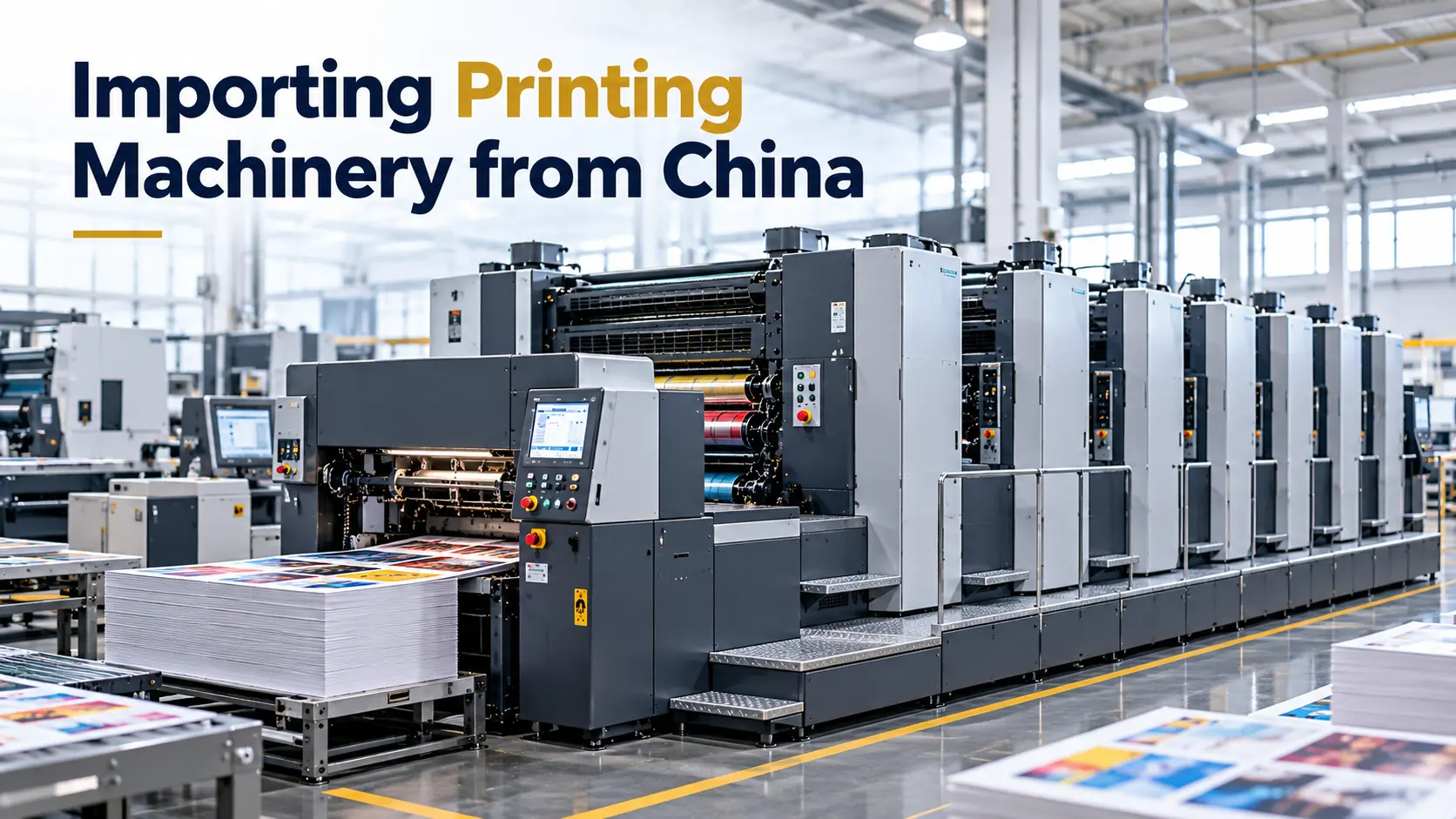
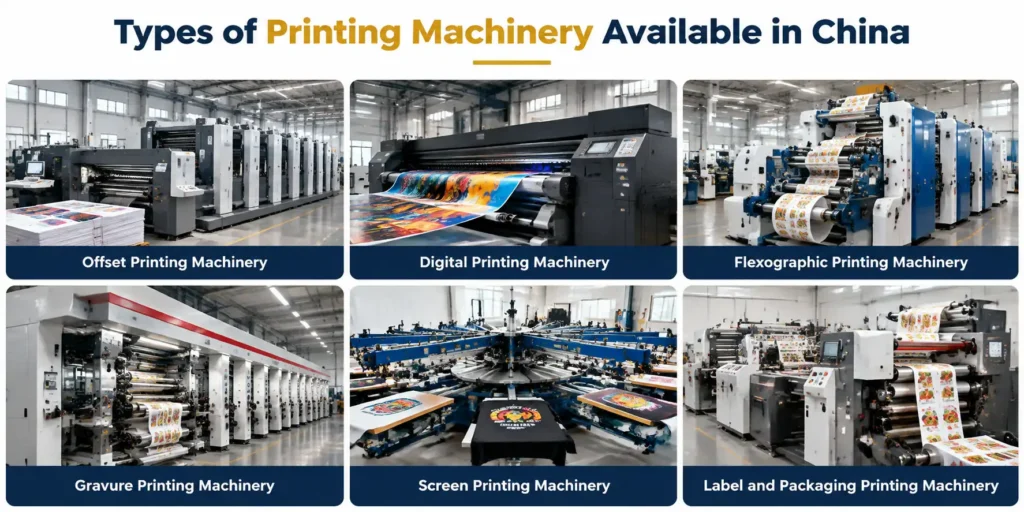
China manufactures printing equipment for different production volumes, printing materials, and industrial applications. The right machine depends on what you intend to print, the required production speed, and your available operating space.
Common printing machinery categories include:
| Printing Machine Type | Common Applications | Main Buying Considerations |
|---|---|---|
| Digital printing machines | Short-run commercial printing, labels, personalized products | Resolution, printheads, software compatibility |
| Offset printing presses | Books, magazines, brochures, commercial packaging | Sheet size, printing units, registration accuracy |
| Flexographic printing machines | Flexible packaging, labels, paper products | Printing width, color stations, substrate compatibility |
| Gravure printing machines | High-volume flexible packaging and decorative printing | Production speed, cylinder specifications, drying system |
| Screen printing machines | Textiles, promotional products, industrial applications | Printing area, automation, material compatibility |
| UV and large-format printers | Signage, display materials, rigid substrates | Ink system, bed size, curing equipment |
Digital printers may be more suitable for businesses handling customized orders and frequent design changes. Offset and flexographic machines are generally chosen for consistent, higher-volume production, depending on the material and printing process.
When comparing machines, consider:
The products and materials you intend to print
Required print quality and production capacity
Available factory space, electrical supply, and installation conditions
The cheapest machine is not necessarily the most economical choice if it requires expensive maintenance or cannot support your production requirements.
Choosing a reliable printing machinery manufacturer in China is essential for equipment quality, production performance, and long-term technical support. Major manufacturing regions include Guangdong, particularly Guangzhou and Dongguan, and Zhejiang, where buyers can find suppliers of digital printers, offset presses, flexographic machines, and packaging printing equipment.
However, manufacturers differ in technical capabilities, machine configurations, and after-sales service. Buyers should evaluate suppliers based on their actual production experience rather than price alone.
Before placing an order, confirm whether the supplier operates its own factory or works as a trading company. Both can be suitable, but direct manufacturers may offer better access to technical engineers and equipment customization.
Key checks include:
Business credentials: Verify company registration, factory location, and export experience.
Production capability: Review assembly facilities, manufacturing equipment, and quality control procedures.
Technical expertise: Confirm experience with your required printing technology and machine model.
Certifications: Request relevant safety documentation, test reports, and applicable compliance declarations.
After-sales support: Check warranty coverage, spare-parts availability, and remote technical assistance.
For expensive industrial printing equipment, independent supplier verification or an on-site factory audit can help identify potential problems before payment.
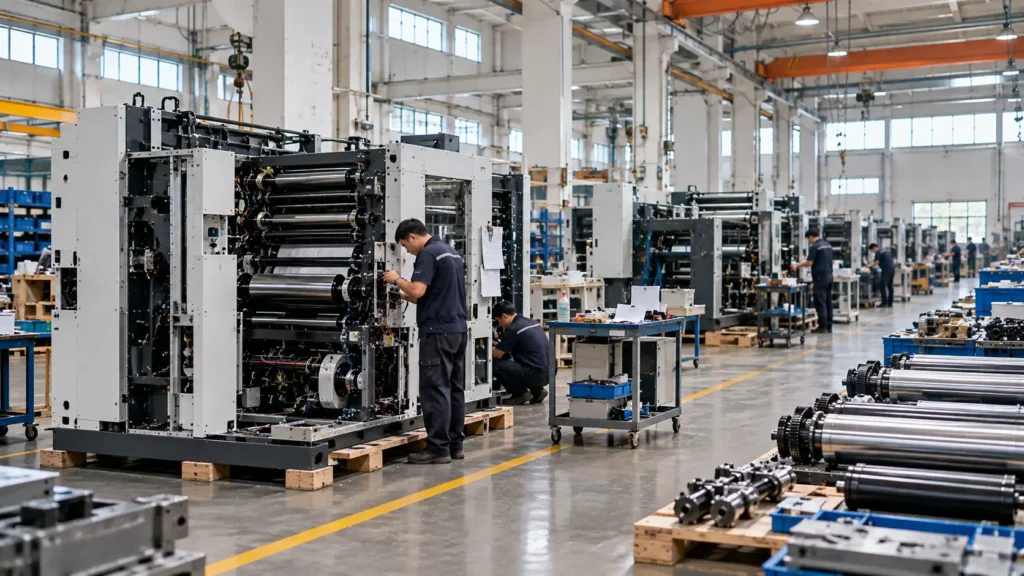
Request quotations from multiple suppliers using the same machine specifications. Compare not only the purchase price but also the included accessories, installation services, warranty conditions, and delivery terms.
Ask for a detailed quotation that identifies the machine model, production capacity, optional components, lead time, and Incoterms. Clarify payment milestones and confirm whether the supplier can provide replacement parts and technical assistance after installation.
A reliable supplier should be able to explain its equipment specifications, demonstrate machine performance, and provide clear documentation before shipment.
Printing machinery must be compatible with the buyer’s intended production process and local operating conditions. A machine that works correctly in the manufacturer’s factory may still require electrical, software, or installation modifications before use overseas.
Request a complete technical specification sheet rather than relying solely on catalog descriptions.
The essential specifications depend on the printing technology, but most buyers should review:
Printing performance: Maximum printing width, resolution, rated speed, and operating speed at acceptable quality
Color and registration: Number of color stations, alignment accuracy, and repeatability
Materials: Supported paper, film, fabric, board, or other substrates
Electrical supply: Voltage, frequency, phase configuration, and total connected load
Control systems: PLC, touchscreen language, software compatibility, and licensing
Maintenance: Printhead availability, replacement parts, cleaning procedures, and technical support
Chinese industrial equipment may be designed for 220V or 380V electrical systems operating at 50Hz, depending on the model. Buyers in countries using different electrical standards should confirm compatibility before production.
For UV or solvent-based equipment, also check ventilation, exhaust, curing, and relevant workplace safety requirements.
A factory acceptance test (FAT) allows the buyer to verify machine performance before export.
The test should use agreed operating conditions and, where practical, the buyer’s actual printing materials. For digital printers, inspect print quality, nozzle performance, color consistency, and software operation. For offset or flexographic equipment, examine registration accuracy, mechanical operation, and output at the agreed production speed.
A practical pre-shipment inspection should verify:
The correct machine model and serial number
Completed assembly and functional operation
Printing samples against agreed acceptance criteria
Safety guards, control panels, and electrical components
Included spare parts, accessories, and documentation
Export packaging and equipment condition before loading
Request photographs, test results, and a written inspection report. If problems are found, arrange corrective work and retesting before approving shipment.
Importing printing machinery from China requires accurate customs classification and compliance with the destination country’s equipment safety regulations. Requirements vary depending on the printing technology, machine specifications, and whether the equipment is new or used.
Before shipment, importers should confirm the correct HS code, applicable import duties, and required technical documentation to avoid customs delays or unexpected expenses.
Most printing equipment falls under HS Chapter 84, particularly heading 8443, which covers printing machinery, certain printers, and related equipment.
| HS Code | Printing Machinery Category |
|---|---|
| 8443.11 | Reel-fed offset printing machinery |
| 8443.13 | Other offset printing machinery |
| 8443.16 | Flexographic printing machinery |
| 8443.17 | Gravure printing machinery |
| 8443.19 | Other printing machinery within the relevant category |
| 8443.32 | Certain printers capable of connecting to a computer or network |
Digital, UV, and inkjet printers require classification based on their actual functions and technical characteristics. Importers should verify the complete national tariff code rather than relying only on a six-digit HS code.
Import duties on printing machinery from China vary by destination and the exact tariff classification. The United States, European Union, and United Kingdom apply different customs duties, additional trade measures, and import taxes.
| Destination | Base Customs Duty | Additional Considerations | Import VAT / Sales Tax |
|---|---|---|---|
| United States | Check the applicable 10-digit HTS code; rates differ across equipment types | Review Section 301 and any other applicable Chapter 99 duties | No federal VAT; state or local sales/use taxes may apply |
| European Union | Selected HS 8443 lines are 0% or 1.7%; flexographic machines under 8443.16 have a 1.7% standard third-country duty | Check TARIC measures, origin, and product conformity | Standard VAT varies by member state (currently 17%–27%) |
| United Kingdom | Check the commodity-specific UK Trade Tariff | Confirm import measures and machinery safety obligations | 20% standard VAT |
These rates are reference figures, not guaranteed import charges. The final duty depends on the full customs classification, Chinese origin, applicable additional tariffs, and import date. Eligible businesses may also account for import VAT through deferred or postponed arrangements.
Industrial printing machines must meet applicable electrical, mechanical, and operational safety requirements in the destination market.
For equipment imported into the European Union, relevant machinery may require CE marking, an EU Declaration of Conformity, and supporting technical documentation. Machinery Directive 2006/42/EC generally applies until the new Machinery Regulation (EU) 2023/1230 becomes applicable on January 20, 2027.
Before purchasing, verify:
Electrical voltage, frequency, and safety protection
Applicable equipment certifications and conformity documents
Machine guards, emergency stops, and operating instructions
Destination-country import permits or inspection requirements
For used printing machinery, additional restrictions may apply based on equipment age, condition, or destination-country regulations.
Request the manufacturer’s technical specifications, machine serial number, and relevant compliance documents before shipment. A customs broker can help confirm import requirements, while the supplier should provide the necessary equipment documentation.
The cost of importing printing machinery from China depends on the machine type, production capacity, technical configuration, shipping method, and destination country. Industrial printing machines can range from around $5,000 for smaller digital printers to $500,000 or more for large commercial printing presses.
However, the purchase price is only part of the total investment. Importers must also account for export packaging, international freight, customs duties, taxes, and final delivery.
Printing machine prices vary significantly depending on printing speed, automation, printhead technology, and machine size.
| Printing Machinery Type | Indicative Purchase Price (USD) |
|---|---|
| Digital, UV Flatbed and DTF Printers | $5,000–$36,000+ |
| Flexographic and Packaging Presses | $20,000–$150,000+ |
| Industrial Offset Printing Presses | $100,000–$500,000+ |
These ranges reflect advertised supplier prices for selected equipment configurations, not guaranteed factory quotations. High-capacity production lines can cost considerably more. Compare the included accessories, software, warranty, and installation services before selecting a supplier.
Printing machinery often requires reinforced packaging and specialized handling to protect sensitive components during transportation.
The main logistics expenses include:
Export packaging: Wooden crates, moisture protection, shock absorption, and securing of moving components.
Ocean freight: FCL or LCL shipping, depending on packed dimensions and weight. Oversized presses may require open-top containers or flat racks.
Inland transportation: Factory pickup in China and trucking from the destination port.
Heavy-lift handling: Cranes, forklifts, rigging, and equipment positioning when required.
Cargo insurance: Protection against covered transportation risks.
Freight costs depend on the shipping route, container requirements, and equipment weight. Large printing presses requiring dismantling or oversized cargo handling generally involve additional logistics expenses.
A useful cost estimate separates the machine price from origin services, freight, customs charges, and delivery. Tax treatment must be confirmed for the destination and the buyer’s circumstances.
Total landed cost = Machine price + Export preparation + Origin transport + International freight + Insurance + Customs duties + Applicable import taxes + Destination handling and delivery
Add unloading, installation, commissioning, and training to the overall project budget. Provide the packed dimensions, gross weight, pickup address, HS code, and destination when requesting a quote. You can use the freight cost calculator for initial planning, then request a shipment-specific quotation.
Shipping printing machinery from China requires careful planning because industrial printers and printing presses are often heavy, sensitive to vibration, and expensive to repair. Sea freight is generally the most practical option for large printing equipment, while smaller machines and urgent replacement parts may be transported by air.
The appropriate shipping method depends on the machine’s packed dimensions, gross weight, handling requirements, and destination.
Different printing machines require different transportation arrangements.
| Shipping Method | Suitable Printing Machinery | Key Considerations |
|---|---|---|
| LCL Shipping | Small digital printers and compact printing equipment | Lower shipment volume, additional cargo handling |
| FCL Shipping (20ft/40ft) | Offset presses, UV printers, and medium-sized machinery | Dedicated container, secure loading |
| Open Top / Flat Rack | Oversized printing presses and production equipment | Specialized lifting and cargo securing |
| Air Freight | Small printers, printheads, and urgent spare parts | Faster delivery, higher freight costs |
For suitable cargo, FCL shipping provides a dedicated container and generally involves fewer cargo transfers than LCL shipping. For out-of-gauge presses, assess oversized cargo shipping and whether parts can be safely dismantled.
Printing machinery contains sensitive components, including printheads, rollers, electronic controls, and precision alignment systems. Improper packaging can cause damage during ocean transportation.
Before shipment, the manufacturer should prepare the equipment for international transport:
Protect sensitive components: Secure printheads, rollers, and moving parts according to manufacturer instructions.
Use reinforced packaging: Apply suitable wooden crates, moisture barriers, and shock protection.
Secure heavy machinery: Use appropriate blocking, bracing, and lashing to prevent movement.
Document dismantled parts: Label removable components and retain assembly instructions.
Solid-wood export packaging should comply with applicable ISPM 15 requirements.
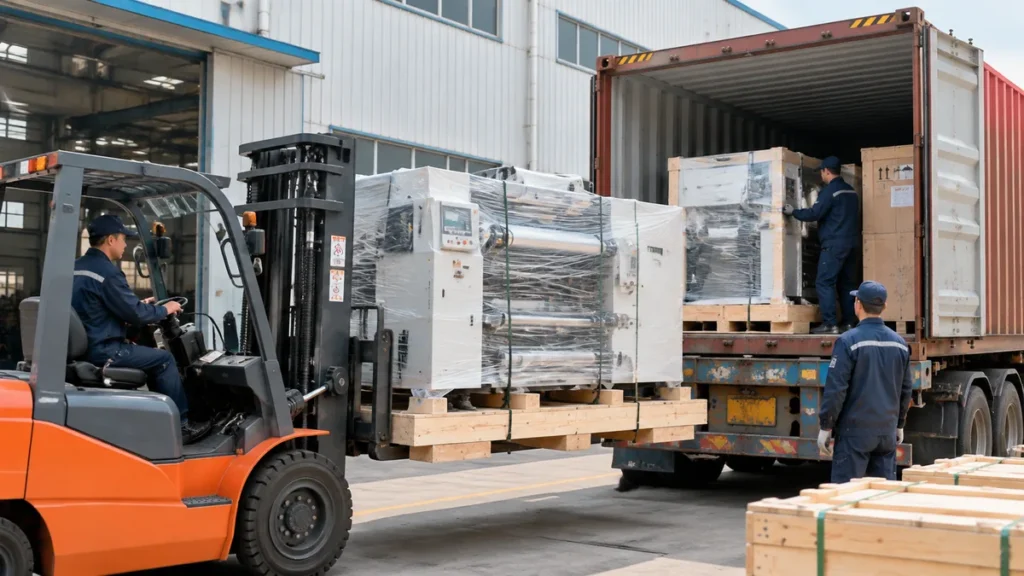
Large printing presses may require forklifts, cranes, or professional rigging teams for loading and unloading. Before booking transportation, confirm the machine’s packed dimensions, gross weight, lifting points, and center of gravity.
Importers should also coordinate factory pickup, port handling, customs clearance, and inland delivery.
For containerized shipments, FCA or FOB terms may be considered depending on the agreed delivery arrangements. FCA is often more suitable when the supplier hands the equipment over before vessel loading.
Before the shipment arrives, verify that the destination facility has sufficient access, floor capacity, and lifting equipment to receive the machine safely.
Customs documentation must identify the machines, their value, and each package clearly. Consistent model numbers, serial numbers, weights, and package descriptions help avoid mismatches between the invoice, packing list, and transport documents.
Use an international shipping documents checklist alongside these key records:
Commercial Invoice: Lists the printing machine type, model, quantity, declared transaction value, and buyer and seller details.
Packing List: Provides package dimensions, gross weight, packaging type, and details of dismantled components.
Bill of Lading (B/L) or Air Waybill (AWB): Confirms transportation details for ocean or air freight.
Certificate of Origin: May be required to establish the equipment’s origin or support applicable tariff treatment.
Import Permits: Required in destinations that regulate certain industrial machinery or used equipment.
Compliance Documents: Applicable conformity declarations, safety test reports, and technical documentation required by the destination market.
Depending on the machine and destination, importers may also need:
Technical specifications: Machine model, serial number, electrical requirements, and operating capacity.
Factory inspection report: Documents equipment condition and performance before shipment.
Used machinery records: Manufacturing year, equipment condition, and previous service history, where required.
Before shipment, confirm that the commercial invoice, packing list, and transport documents contain consistent equipment descriptions. A customs broker or freight forwarder can help review the paperwork and coordinate customs clearance at the destination.
Importing problems often arise when buyers focus on the equipment purchase price without checking technical compatibility or transportation requirements.
The following mistakes are particularly important for industrial printing machinery:
Choosing the cheapest supplier without verification: Confirm production capability, warranty obligations, and technical support before paying.
Skipping factory testing: Test the actual equipment against agreed performance requirements before export.
Ignoring destination compliance: Verify the applicable HS code, electrical requirements, and product regulations before shipment.
Using inadequate packaging: Protect precision components against vibration, moisture, impact, and improper lifting.
Underestimating total delivery costs: Budget for origin handling, freight, import charges, unloading, and installation.
The most effective prevention is to coordinate purchasing, technical inspection, customs requirements, and logistics before the equipment is packed for export.
Importing printing machinery requires coordination between the equipment supplier, packing contractor, freight forwarder, customs broker, and receiving facility.
Tonlexing helps businesses plan international transportation for printing machinery shipped from China, including container shipping, oversized cargo arrangements, and destination delivery coordination.
Depending on the shipment requirements, the logistics planning process can cover:
Reviewing packed dimensions, weights, and cargo handling needs
Comparing suitable sea freight and specialized shipping options
Coordinating pickup, loading, and international transportation
Supporting shipping documentation and customs clearance arrangements
Planning final delivery for heavy or oversized equipment
For a shipping quotation, provide the printing machine type, model, quantity, packed dimensions, gross weight, pickup location in China, destination, and expected cargo-ready date.
Many printing machines fall under HS heading 8443. The specific subheading depends on the printing method and equipment characteristics. Importers should verify the complete destination-country tariff code before customs declaration.
Printing machinery placed on the EU market may require CE marking under applicable legislation. The necessary conformity assessment and technical documentation depend on the machine and relevant rules. CE marking is not a universal requirement for every destination country.
FCL sea freight is often suitable for printing machines that fit within standard container limits. Smaller crated units may travel by LCL, while oversized presses may require open-top containers, flat racks, or project cargo handling.
Yes, in destinations that permit the import of the relevant used equipment. Requirements vary by country and may include age limits, inspections, or additional documentation. Check import eligibility and equipment condition before purchasing.
manufacturer, confirm technical specifications, conduct factory acceptance testing, check import compliance, and arrange appropriate export packaging. Coordinating transport and customs requirements before shipment can also reduce unexpected costs and delays.
Useful freight, customs and importing resources related to this shipping guide.
How to Import Machinery from China Verified & Reviewed · Last updated August 2026 Importing machinery from China requires careful supplier verifi...
Read guide →
Shipping Factory Machines from China Verified & Reviewed · Last updated July 2026 Shipping factory machines from China requires careful planning...
Read guide →
Shipping CNC Machines Verified & Reviewed · Last updated April 2026 Shipping CNC Machines from China is a complex process that requires proper pl...
Read guide →
Shipping Oversized Cargo from China Verified & Reviewed · Last updated February 2026 Shipping oversized cargo from China depends on cargo dimensi...
Read guide →Pre-Shipment Inspection in China for Importers Verified & Reviewed · Last updated July 2026 A pre-shipment inspection helps importers identify de...
Learn more → Useful Resource Documents Required to Import from China (2025 Guide)Importing goods from China can be highly profitable—but only when you understand the necessary documents and import requirements. Whether you’re...
Learn more →WhatsApp us