Send your invoice draft, packing list, HS codes, and shipping method. We’ll confirm the correct document set and quote the most suitable option for your shipment.


Shipping Documents from China to the UK
- Verified & Reviewed · Last updated February 2026
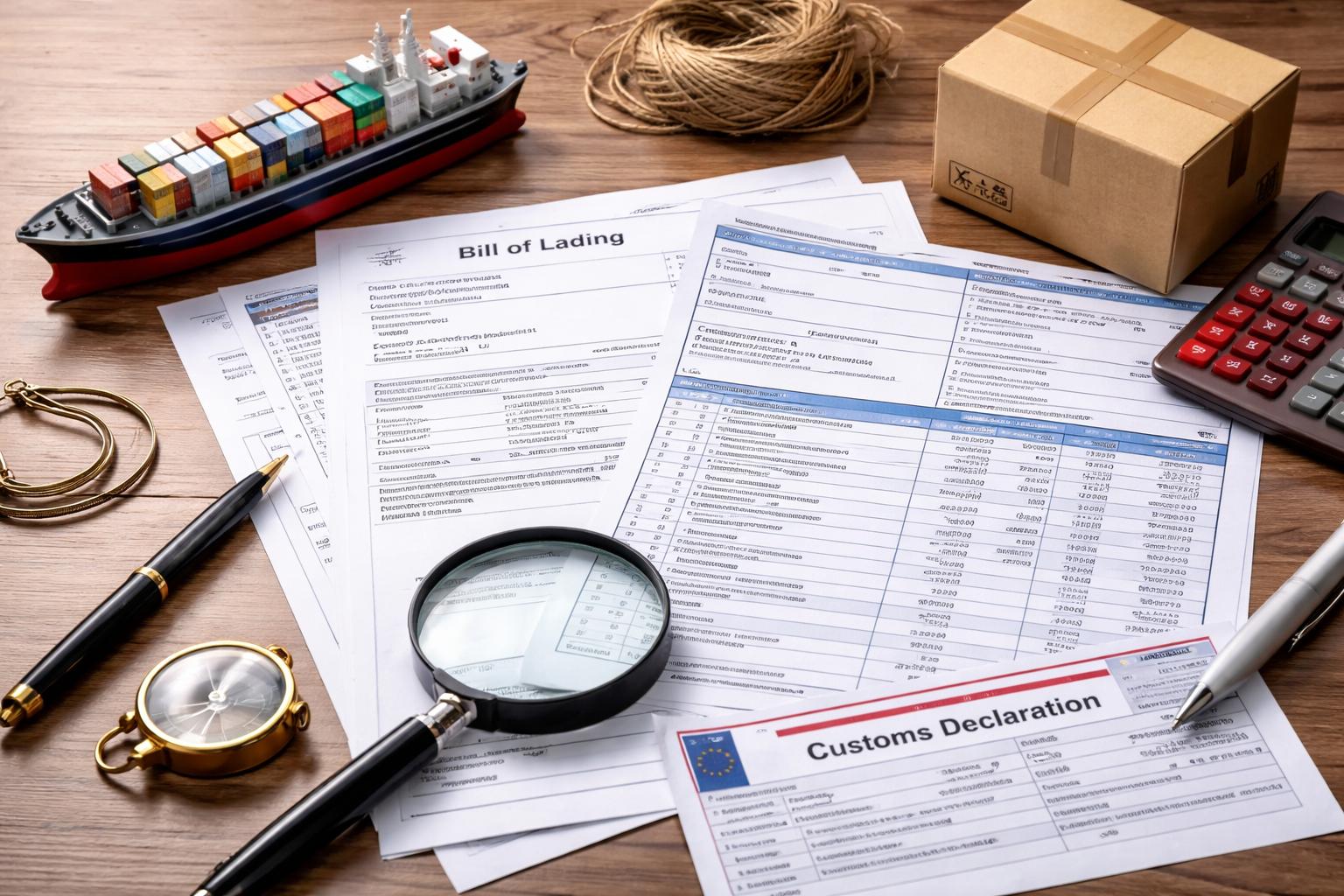
Shipping documents from China to the UK are the quickest way to protect your timeline and reduce customs delays. Most clearance issues happen when the commercial invoice, packing list, and shipping details do not match what is actually being shipped.
This 2026 guide covers the core paperwork for UK customs clearance, plus what changes for courier and parcel delivery, air freight, and sea freight. You’ll also find extra-document triggers for restricted items, dangerous goods, and lithium batteries, so your shipment can move from export customs to final delivery smoothly.
Document checklist
UK customs clearance
Shipping method
- Experienced China-based logistics specialists
10,000+ international shipments handled Global sea, air & DDP shipping solutions 24/7 shipment tracking & customer support
Table of Contents
Who Needs These Documents
This guide is for customers shipping china to the uk in three common scenarios:
Simple documents such as contracts or certificates
One parcel or small cartons via courier or express
Commercial cargo by air freight, LCL sea freight, or an FCL container
In every case, the same rule applies: UK customs clearance is smoother when paperwork is complete and consistent. If the shipment description, HS codes, or value looks unclear, UK customs may ask questions, postpone release, or apply additional checks—especially for cross border shipments.
Shipping Process Overview: From Export Customs to Final Delivery
A predictable supply chain starts with a predictable document flow.
Step 1: Confirm shipment details before booking
Finalize the product name, materials, quantity, packaging, total gross weight, total volume, commercial value, and whether the cargo includes lithium batteries, liquids, powders, magnets, or restricted items.
Step 2: Prepare the core document set
Draft the commercial invoice and packing list from the same source data so totals match.
Step 3: Export customs in China
Goods must be cleared by Chinese customs before export. If data is missing or inconsistent, export customs can slow the departure.
Step 4: International shipping and main transport
Select the right shipping method: courier, air freight, or sea freight. Your freight forwarder books space and aligns documents with the carrier requirements.
Step 5: UK customs clearance
A broker files the import entry using the HS codes, declared value, and importer identifiers. Missing data is the most common trigger for customs delays.
Step 6: Final delivery
After customs release, the shipment moves to final delivery by courier, truck, or local carrier. Door to door services bundle these steps, but they still depend on clean paperwork.
Core Shipping Documents for Every International Shipment
The commercial invoice is the key document used to calculate duties and VAT charges. It should include:
seller and buyer details
goods description that matches the product
HS codes by item line
quantity, unit price, total value, currency
Incoterms and destination terms
country of origin
Keep the description specific. “Parts” or “accessories” often triggers questions because classification becomes unclear.
The packing list details the weight, dimensions, and contents of each package. Include:
package count, package type, marks
net and gross weight
dimensions and total volume
item quantities per carton or pallet where possible
Packing list errors are common with LCL sea freight because consolidation relies on accurate CBM and handling data.
Bill of Lading or Airway Bill
The transport document confirms carriage and shipment details:
Bill of Lading for sea freight
Airway Bill for air freight
Mismatch between these documents and your invoice totals is a classic reason for customs clearance queries.
UK EORI number
A valid UK EORI number is essential for importing goods into the UK. Without it, the import entry may be delayed or cannot be filed correctly.
HS codes determine duty and VAT rates and whether any restrictions apply. Use the correct HS code for each product line and keep it consistent across documentation.
Declared value and commercial value
Declared value must reflect the commercial value. If the total value looks unrealistic, UK customs may request proof and the shipment can be held.
FCL sea freight
FCL means your goods fill one container, usually 20-foot or 40-foot. It typically requires:
commercial invoice
packing list
bill of lading
export customs information and shipping instructions
FCL reduces handling steps and can reduce damage risk.
LCL sea freight
LCL means your cargo shares space with other shipments. LCL sea freight requires the same core documents, but packing accuracy matters more:
exact carton dimensions and weights
clear marks, package count, and carton numbering
consistent totals across all files
LCL creates extra touchpoints during consolidation. If documents are inconsistent, customs delays become more likely.
Air Freight Documents: Screening, Lead Times, and Common Issues
Air freight is generally faster but more expensive than shipping by ocean. Standard air freight between China and the UK often plans around 8–10 days, then add time for UK customs clearance and delivery.
Typical air freight document set:
commercial invoice
packing list
airway bill
additional compliance files for sensitive cargo when required
If you ship lithium batteries or dangerous goods without the correct paperwork, airlines or handlers may reject the cargo before departure.
Courier and Parcel Delivery Documents
For simple document shipments, a courier service is often recommended for quick delivery. For product parcels, the same basics still apply:
accurate contents description
declared value
recipient details
courier waybill plus invoice data
Many shipping companies can deliver to the UK quickly, but customs checks still apply. If the value exceeds certain thresholds or the product is regulated, delays can happen even with express.
Door to door is a service scope, not a mode. It can use air freight or sea freight plus local pickup and final delivery.
To keep total landed cost and timelines predictable, confirm:
who is the importer for UK customs clearance
who pays duties and VAT charges
whether clearance fees and delivery are included
the final delivery address and unloading requirements
Even with door to door service, missing data in invoice or packing list is still the main source of customs delays.
Prohibited goods
The UK prohibits items such as firearms, explosives, illegal drugs, and counterfeit goods. If these appear in a shipment, the cargo may be seized and the case can lead to major delays. Do not try to “rename” items on the commercial invoice.
Restricted items
Restricted items may be legal to import, but they often require extra paperwork and may need an import license. Common examples include certain chemicals, food, and plant products. To reduce customs delays, use the correct HS code, a clear product description, and a realistic declared value.
Dangerous goods and lithium batteries
Checks are strict for dangerous goods, especially for air freight. If your cargo includes lithium batteries, battery-powered items, liquids, powders, aerosols, or chemicals, prepare documents early. An SDS/MSDS is commonly required for hazardous materials such as chemicals and many battery-related products. Missing or incomplete paperwork can stop the shipment before export customs in China or lead to carrier rejection.

When You Need Extra Documents (China → UK)
Use this quick table to identify extra paperwork based on what you ship. It is designed to prevent customs delays without making your process complicated.
| If Your Shipment Includes | Prepare This Document | Why It Gets Checked |
|---|---|---|
| Lithium batteries or battery-powered items | SDS/MSDS + battery declaration if required | Airline screening and safety compliance |
| Liquids, powders, chemicals, aerosols | SDS/MSDS | Dangerous goods risk and handling rules |
| Toys, electronics, regulated consumer goods | UKCA/CE compliance files as applicable | Product safety compliance checks |
| Food, plant products, controlled materials | Import licenses or permits if required | Restricted items and controlled goods rules |
| No commercial value documents only | Invoice with nominal value | Customs systems still require a declared value |
Duties, VAT Charges, and Postponed VAT Accounting
Import VAT
For most shipments from China to the UK, Import VAT is the main tax, and the standard rate is 20%. Some product categories may qualify for a reduced rate (5%) or zero rate (0%), depending on the goods.
How Import VAT is calculated (easy formula):
Import VAT = VAT rate × (Goods value + Freight + Insurance + Import duty)
This is why the commercial invoice value and shipping cost details matter. If the declared value is unclear, UK customs may request proof and your clearance can be delayed.
Customs duty
Customs duty is not a single fixed rate. It is determined by the product’s UK commodity code (HS code).
≤ £135: many goods are generally duty-free (no customs duty).
> £135: duty may apply, based on HS code and classification.
In practice, duty rates often range roughly from 0% to 25%, depending on the product. For example, some umbrellas can be around 4.5%, but the exact rate depends on the correct commodity code.
Gift note: Personal gifts valued £135–£630 may, in many cases, use a 2.5% flat duty rate.
Postponed VAT Accounting (PVAT)
PVAT allows eligible UK importers to record import VAT on their VAT return instead of paying it immediately at arrival, helping cash flow. Whether PVAT applies depends on the importer’s setup and how the import declaration is filed, so confirm with your broker.
Special taxes
Excise duty: applies to items like tobacco, alcohol, and some fuels and can be significant.
UK CBAM (planned): the UK plans to introduce a carbon-related charge from January 2027 for certain high-emission imports such as aluminium, cement, fertilisers, hydrogen, iron and steel.
Practical tip: To avoid incorrect VAT charges and customs delays, keep HS codes and invoice values consistent across the commercial invoice, packing list, and the import declaration.
Costs and Delays Caused by Documentation Issues
Even when the transport is on schedule, paperwork problems can still create extra costs and delays. The most common triggers are wrong HS codes, an unclear commercial invoice value, or totals that do not match between the packing list and the shipping record.
If UK customs requests clarification, the shipment can be placed on hold while you provide corrected documents or proof. This may lead to extra storage or handling fees, and it can postpone release and final delivery.
To avoid surprises, focus on total landed cost, not just the freight price. In many cases, total landed cost includes export customs support, UK customs clearance fees, duties and VAT charges, destination handling, and final delivery. Clean, consistent documents reduce the chance of unexpected charges and keep lead times stable.
Document Matching Checklist to Prevent Customs Delays
Before departure, confirm these items match across the invoice, packing list, and B/L or airway bill:
product description and HS codes
quantity and package count
gross weight and dimensions
declared value and currency
importer details and UK EORI number
If you receive a query, reply with one corrected set of documents. Multiple partial revisions often create longer delays.
Frequently Asked Questions
Do I need a UK EORI number to import from China?
Yes. For most commercial imports, the UK importer needs a UK EORI number so the broker can file the UK customs clearance entry. Without it, clearance is often delayed.
What is the #1 document mistake that causes UK customs delays?
A mismatch across documents. The commercial invoice, packing list, and bill of lading or airway bill do not align on HS codes, value, package count, weight, or dimensions.
Do I have to pay VAT or duty on a parcel from China to the UK?
Often yes, depending on the contents, HS codes, and declared value. The recipient may be responsible for VAT charges and, in some cases, customs duty or excise duty.
When should I choose air freight instead of sea freight?
Choose air freight when lead times are tight, the cargo is time-sensitive, or the shipment is relatively light. For heavier cargo, sea freight is usually more cost effective, especially as weight and volume increase.
How long does a shipment from China take to get to the UK?
It depends on the shipping method and how fast the shipment clears customs. As a general reference, air freight often takes around 8–10 days, while sea freight door to door commonly plans 30–40 days. Courier and express parcel delivery is usually faster, but the final timeline can still change due to UK customs clearance, peak seasons, and port congestion.
Related Shipping Document & UK Customs Guides
Get Your Shipping Documents Checked Before You Ship
Commercial invoice + packing list consistency check
HS codes, UK EORI, and UK customs clearance readiness
Support for batteries, restricted items, and SDS/MSDS documents