What Makes Shipping to a US Construction Site Different?
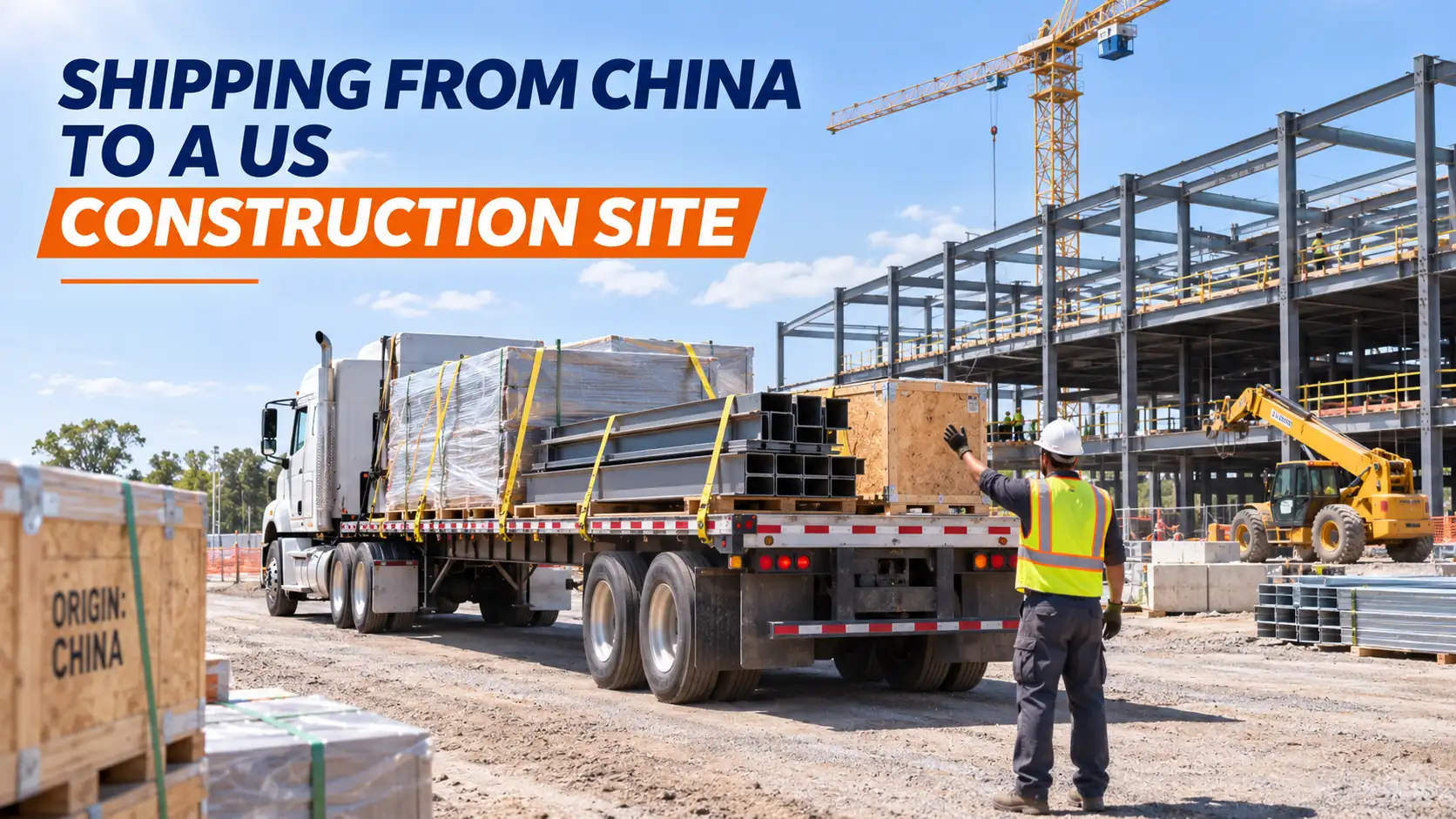
The main challenge of construction cargo transportation is not simply getting the goods to the United States. It is making sure the cargo can move from the arrival port to the actual project location without unnecessary handling, additional charges, or delivery failures.
Three site-specific factors should be considered before arranging international freight.
Site Access and Vehicle Restrictions
Construction projects may be located in urban areas, industrial zones, or developing sites where road access is limited. Narrow entrances, low overhead clearance, weight restrictions, and insufficient turning space can prevent large commercial vehicles from entering.
For example, a 40-foot container truck may be suitable for transporting cargo from a U.S. port but unsuitable for a construction site with a narrow entrance. In this situation, transferring the cargo to a smaller truck or arranging transloading at a nearby warehouse may be necessary.
Before booking transportation, confirm:
Road width and entrance clearance.
Available turning and parking space.
Vehicle and axle weight restrictions.
Whether container trucks are permitted.
Any security or site access procedures.
Unloading Conditions and Equipment Availability
Construction materials and machinery do not always arrive in standard palletized form. Some shipments require cranes, forklifts, lifting frames, or specialized handling equipment.
The unloading method should match the cargo rather than being decided after the truck arrives.
For instance, palletized electrical components may be unloaded using a forklift, while an excavator or oversized steel structure may require a crane or specialized lifting arrangement.
The receiving team should confirm equipment availability, lifting capacity, unloading space, and responsibility for unloading charges before dispatch.
Delivery Scheduling and Project Coordination
Construction deliveries are often linked to installation schedules, contractor availability, and project milestones.
If cargo arrives outside the agreed receiving window, the truck may need to wait or return later. This can result in waiting time, redelivery charges, and potential disruption to construction activities.
A delivery appointment should therefore be coordinated with the site manager or receiving department before the shipment is released for inland transportation.
What Cargo Can Be Shipped from China and What Information Is Required?
China supplies a wide range of construction materials, building components, and heavy equipment to the US market. Depending on the cargo type, dimensions, weight, and transportation requirements, shipments can be arranged through FCL, LCL, air freight, or specialized cargo services.
Common Construction Materials and Equipment Shipped from China
Typical construction cargo includes:
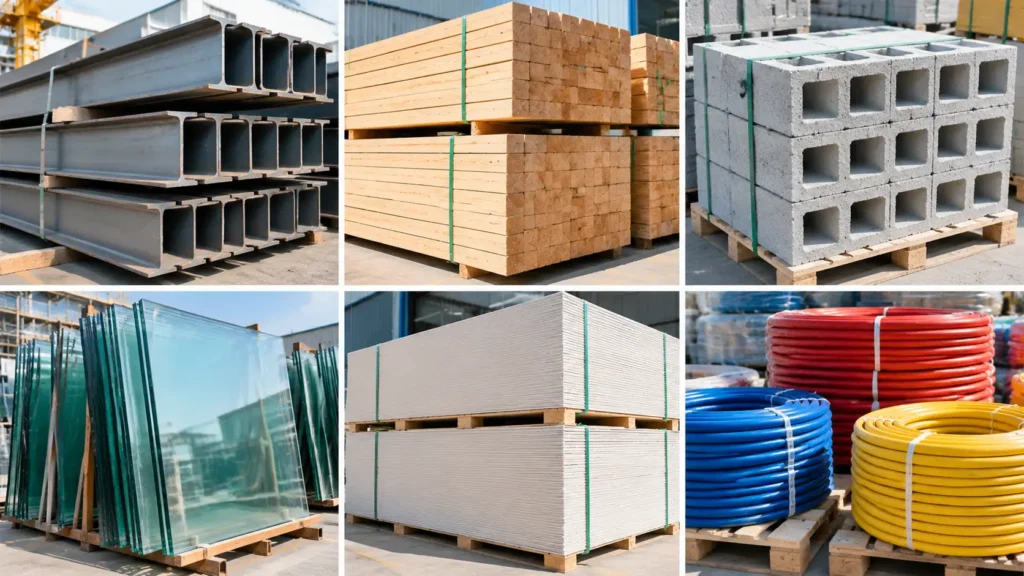
Building Materials: Steel structures, pipes, aluminum profiles, tiles, flooring, doors, and windows.
Prefabricated Components: Modular building units, wall panels, roofing materials, and assembled structures.
Construction Equipment: Excavators, wheel loaders, crushers, screening machines, and concrete machinery.
Electrical and Industrial Supplies: Generators, transformers, lighting systems, cables, and construction tools.
Most standard-sized materials can be shipped in containers, while oversized machinery or heavy components may require flat racks, open-top containers, or specialized transportation.
For more details, see our guides to shipping building materials from China to the USA and shipping heavy machinery from China to the USA.
Information Needed for a Shipping Quote
To select the right shipping method and calculate transportation costs, provide the following information:
Cargo Description: Product name, material, and photographs.
Shipment Details: Number of packages, dimensions, gross weight, and total CBM.
Origin: Supplier address or loading port in China.
Destination: US construction site address and ZIP Code.
Delivery Requirements: Preferred delivery date, unloading arrangements, and any special handling requirements.
For heavy machinery, also provide its overall dimensions, operating weight, and loading requirements. If the equipment contains batteries, fuel, or other regulated components, disclose this information before booking so the appropriate transportation requirements can be checked.
Which Shipping Method Should You Choose?
The best transportation method depends on shipment size, cargo dimensions, weight, urgency, and the receiving conditions at the construction site.
For most large construction shipments, sea freight offers a practical balance between capacity and transportation cost. Air freight is more suitable for urgent components, while oversized machinery may require specialized ocean transportation.
Sea Freight: FCL or LCL?
Sea freight is generally the preferred option for bulky construction cargo and large machinery shipments from China to the USA.
Full Container Load (FCL)
FCL is suitable when the shipment requires an entire container or when reducing cargo handling is important.
Common container options include:
20-foot container: Often suitable for dense or heavy cargo that requires less loading volume.
40-foot container: Provides greater loading volume for larger shipments.
40-foot high cube container: Offers additional internal height for compatible cargo.
FCL can reduce intermediate handling because the cargo is loaded into a container and transported as one unit. It may also simplify coordination when several products are shipped together for the same construction project.
However, container selection must consider payload limits, cargo dimensions, weight distribution, loading requirements, and applicable road restrictions in the United States.
Less Than Container Load (LCL)
LCL is appropriate when the shipment is too small to justify booking an entire container.
It is commonly used for smaller quantities of construction hardware, electrical components, replacement parts, and palletized project supplies.
Cargo from multiple suppliers can be consolidated at a warehouse in China before departure. This can be useful when an importer purchases different products from several factories.
The main consideration is additional handling. LCL shipments normally require consolidation at origin and deconsolidation at destination. The cargo may then need to be collected from a warehouse and transferred to a domestic delivery vehicle.
When comparing LCL and FCL, consider the complete transportation cost, including destination handling and inland trucking, rather than comparing only the ocean freight rate.
For a more detailed comparison, see FCL vs. LCL shipping from China to the USA.
Air Freight for Urgent Construction Components
Air freight is suitable when a missing component could delay installation, maintenance, or equipment operation.
Common examples include:
Replacement machine parts.
Electrical control systems.
Specialized tools.
Urgent maintenance supplies.
Small, high-value equipment components.
Air shipping generally costs more per kilogram than sea freight, but it can reduce transportation time for urgent shipments.
Before booking, confirm the actual chargeable weight, cargo dimensions, packaging requirements, and any airline restrictions. Batteries, liquids, chemicals, and other regulated products may require additional documentation and approval.
Flat Rack, Open Top, and Breakbulk for Oversized Cargo
Not every construction machine or structural component can fit inside a standard container.
For oversized or heavy shipments, consider the following options:
Flat Rack: Suitable for cargo that exceeds standard container dimensions or requires side loading.
Open Top: Useful for certain tall cargo items that need to be loaded from above.
Breakbulk: Suitable for large or heavy project cargo transported as individual pieces rather than inside standard containers.
The final choice depends on the cargo’s length, width, height, gross weight, lifting points, port handling capabilities, and inland transportation requirements.
How to Arrange Shipping from a Chinese Supplier to the United States
Once the cargo and transportation method have been confirmed, the next step is coordinating the shipment from the supplier’s facility to the U.S. arrival port.
A well-organized shipping process reduces unnecessary handling and helps prevent documentation or booking problems.
Supplier Pickup and Cargo Preparation
The first stage is collecting the cargo from the Chinese supplier or arranging delivery to a designated export warehouse.
Before pickup, check that:
Cargo quantities match the purchase order.
Package dimensions and gross weight are accurate.
Machinery is secured properly.
Fragile components have suitable protection.
Shipping marks and package labels are correct.
For heavy machinery, the supplier should provide loading information and confirm whether the cargo can be lifted safely using a forklift or crane.
Wooden crates and pallets used for international shipments must also meet applicable ISPM 15 requirements when required for entry into the United States.
See our guide to ISPM 15 wooden crate requirements for shipping machinery to the USA.
Export Clearance and International Booking
Before the cargo leaves China, export customs clearance must be completed using accurate shipment information.
The commercial invoice and packing list should clearly identify the products, quantities, declared values, and packaging details.
The freight forwarder then arranges the selected sea freight or air freight service according to the cargo specifications and agreed shipment terms.
For containerized cargo, the loading plan should also account for weight distribution and securing requirements. For oversized equipment, loading and port handling arrangements should be confirmed before booking.
Incoterms and Responsibilities
The shipping contract should clearly define which party is responsible for export clearance, main transportation, insurance, destination charges, and delivery arrangements.
FOB and FCA are common options in China-to-USA trade, but they are not interchangeable.
FOB is generally used for sea or inland waterway shipments when the seller delivers the goods on board the nominated vessel. FCA may be more suitable when containerized cargo is handed over to the carrier at an agreed location before being loaded onto the vessel.
The selected Incoterm, named place, and applicable edition should be stated clearly in the purchase contract.
How to Transport Cargo from a US Port to a Construction Site
After customs clearance and port release, the cargo must be transported from the U.S. port to the construction site. The best delivery option depends on the shipment type, cargo dimensions, and whether the site can accommodate a container truck.
Direct Container Delivery
If the construction site has sufficient space and unloading equipment, the container can be transported directly from the port using a container truck and chassis.
This option reduces additional handling and is suitable for projects that can receive and unload a full container. Before arranging delivery, confirm site access, receiving hours, unloading arrangements, and empty container return requirements.
Transloading and Domestic TruckingTransloading and Domestic Trucking
If a construction site cannot accommodate a full container truck, transloading may be a better option. The cargo is transferred from the shipping container to a suitable domestic truck at a nearby warehouse before final delivery.
Depending on the cargo, transportation may involve:
Flatbed trucks: For steel structures, pipes, and long construction materials.
Step deck trailers: For taller machinery and oversized components.
Lowboy trailers: For heavy equipment such as excavators and wheel loaders.
Box trucks: For smaller palletized construction supplies.
For oversized or overweight equipment, additional transportation permits and route planning may be required.
The delivery arrangement should be confirmed before the cargo leaves the port. This helps avoid unsuitable vehicles, unnecessary warehouse handling, and additional delivery charges.
For more information, see our guides to port-to-door container delivery in the USA and USA container drayage services.
How Much Does Shipping from China to a US Construction Site Cost?
The total cost of shipping from China to a US construction site depends on cargo volume, shipping method, destination port, import duties, and final delivery requirements. International freight is only part of the expense. Customs charges, port handling, inland trucking, and specialized unloading can also affect the total landed cost.
International Freight, Import Duties, and Customs Fees
Sea freight is generally more economical for heavy construction materials, while air freight is suitable for urgent parts and smaller shipments.
These are indicative rates from the provided reference, not live quotations.
In addition to freight, importers should budget for customs duties, applicable Section 301 tariffs, customs brokerage, and port fees. Actual duties depend on the product’s HTS code and applicable trade measures.
US Inland Transportation and Delivery Costs
After customs clearance, additional costs may include port drayage, chassis fees, warehouse transloading, and trucking to the construction site. Oversized machinery may require flatbed or lowboy trailers, while some deliveries need forklift or crane services.
The final cost also depends on delivery distance, site accessibility, unloading arrangements, and container return requirements.
When comparing freight quotes, check whether final delivery and unloading are included. A low ocean freight rate does not necessarily mean a lower total shipping cost.
For more details, see our guides to USA container drayage services and container chassis fees.
Shipping Routes and Transit Time from China to the USA
The shipping route from China to the USA depends on the cargo’s origin, destination, and required delivery schedule. For construction materials and heavy equipment, choosing the right U.S. arrival port is important because inland transportation can significantly affect the total delivery time and cost.
Major US Ports for Shipments from China
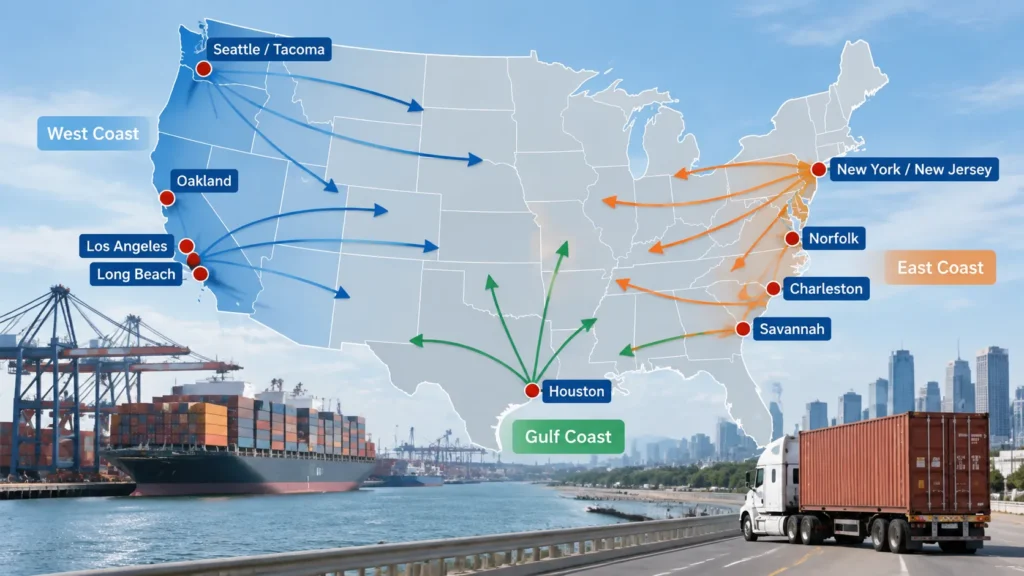
Construction cargo from China commonly arrives through three major U.S. regions:
West Coast: Los Angeles, Long Beach, Oakland, and Seattle/Tacoma. These ports are suitable for shipments destined for California and other western states.
East Coast: New York and New Jersey, and Savannah. These ports serve construction projects across the eastern United States.
Gulf Coast: Houston is an important option for cargo destined for Texas and nearby areas.
For example, Los Angeles and Long Beach are common choices for California deliveries, while Houston may be more convenient for projects in Texas. The best route should be selected by comparing ocean freight rates, vessel schedules, and inland trucking costs rather than choosing a port based on ocean transit time alone.
Estimated Transit Time from China to the USA
The transportation time varies depending on the shipping method, departure port, destination, and delivery arrangements.
Ocean FCL: Approximately 14–40 days port to port. Direct services from Shanghai to Los Angeles may take around 12–14 days.
Ocean LCL: Generally takes 5–10 days longer than FCL because of cargo consolidation and deconsolidation.
Air Freight: Typically around 5–8 days door to door, depending on the service and customs procedures.
Shipments to East Coast ports may take approximately 30–40 days by ocean freight. These are general estimates rather than guaranteed delivery times.
For construction projects, remember that port arrival does not mean the cargo has reached the jobsite. Customs clearance, terminal pickup, inland trucking, and delivery appointments must also be considered when planning the receiving schedule. Allow sufficient time for these stages, especially when materials are needed for a specific construction phase.
How to Prepare a Construction Site for Delivery
Before cargo is dispatched from a U.S. port or warehouse, the construction site should be ready to receive the shipment. Proper preparation helps prevent failed deliveries, additional trucking charges, and delays to the construction schedule.
Jobsite Receiving Checklist
Confirm the following details before arranging final delivery:
Delivery Information: Verify the complete address, ZIP Code, site contact, and phone number.
Vehicle Access: Check entrance width, overhead clearance, turning space, road restrictions, and whether container trucks or trailers are permitted.
Unloading Equipment: Arrange a suitable forklift, crane, or liftgate and confirm its lifting capacity.
Receiving Schedule: Confirm delivery appointments, receiving hours, and the availability of site personnel.
Container Return: If receiving a full container, make sure there is enough time and space for unloading and arrange the empty container return.
How to Avoid Delivery Problems
Most jobsite delivery problems can be prevented through early coordination. If the site cannot accommodate a container truck, arrange transloading or a smaller delivery vehicle before dispatch. If heavy machinery requires a crane or forklift, confirm the equipment and unloading arrangements in advance.
It is also important to coordinate the delivery date with the construction manager or receiving team, particularly when materials are needed for a specific installation stage.
After unloading, check the package quantity and visible cargo condition against the packing list. Photograph any visible damage and record discrepancies on the delivery receipt before completing acceptance.
How to Choose a Freight Forwarder for Construction Site Delivery
Choosing the right freight forwarder can make a significant difference when shipping construction materials and heavy equipment from China to the USA. In addition to competitive freight rates, importers need a provider who understands construction cargo and can coordinate transportation from the Chinese supplier to the US jobsite.
What to Look for in a Freight Forwarder
Choose a freight forwarder with experience handling construction materials, heavy machinery, and oversized cargo. They should be able to recommend suitable shipping methods, arrange export procedures, and coordinate customs clearance and inland transportation.
It is also important to check whether the quoted service covers port handling, trucking, and final jobsite delivery. Clear pricing and reliable shipment coordination can help avoid unexpected costs and delays.
Shipping from China to the USA with Tonlexing
Tonlexing International Logistics is a China-based freight forwarder providing international shipping services for construction materials, machinery, and industrial cargo.
Our services include sea freight (FCL and LCL), air freight, heavy machinery transportation, export customs clearance, and door-to-door shipping arrangements. We also help coordinate US customs clearance and destination delivery through local service partners.
Whether you are shipping a container of building materials or oversized construction equipment, Tonlexing can help assess the cargo, recommend a suitable shipping method, and arrange transportation according to your project requirements.
Contact Tonlexing with your cargo dimensions, gross weight, pickup location in China, and US construction site ZIP Code to request a shipping quote.