
Related Guide
Shipping Home Appliances from China
Shipping Home Appliances from China Verified & Reviewed · Last updated July 2026 Shipping home appliances from China requires choosing the right...
Read guide →

Shipping heat pumps from China requires careful planning around refrigerant, packing, cargo volume, carrier acceptance, and destination requirements.
Sea freight is usually best for commercial orders, while air freight suits samples or urgent shipments. Tonlexing can handle factory pickup, export, customs, and final delivery.
Sea Freight
Shipping Costs
Customs Clearance
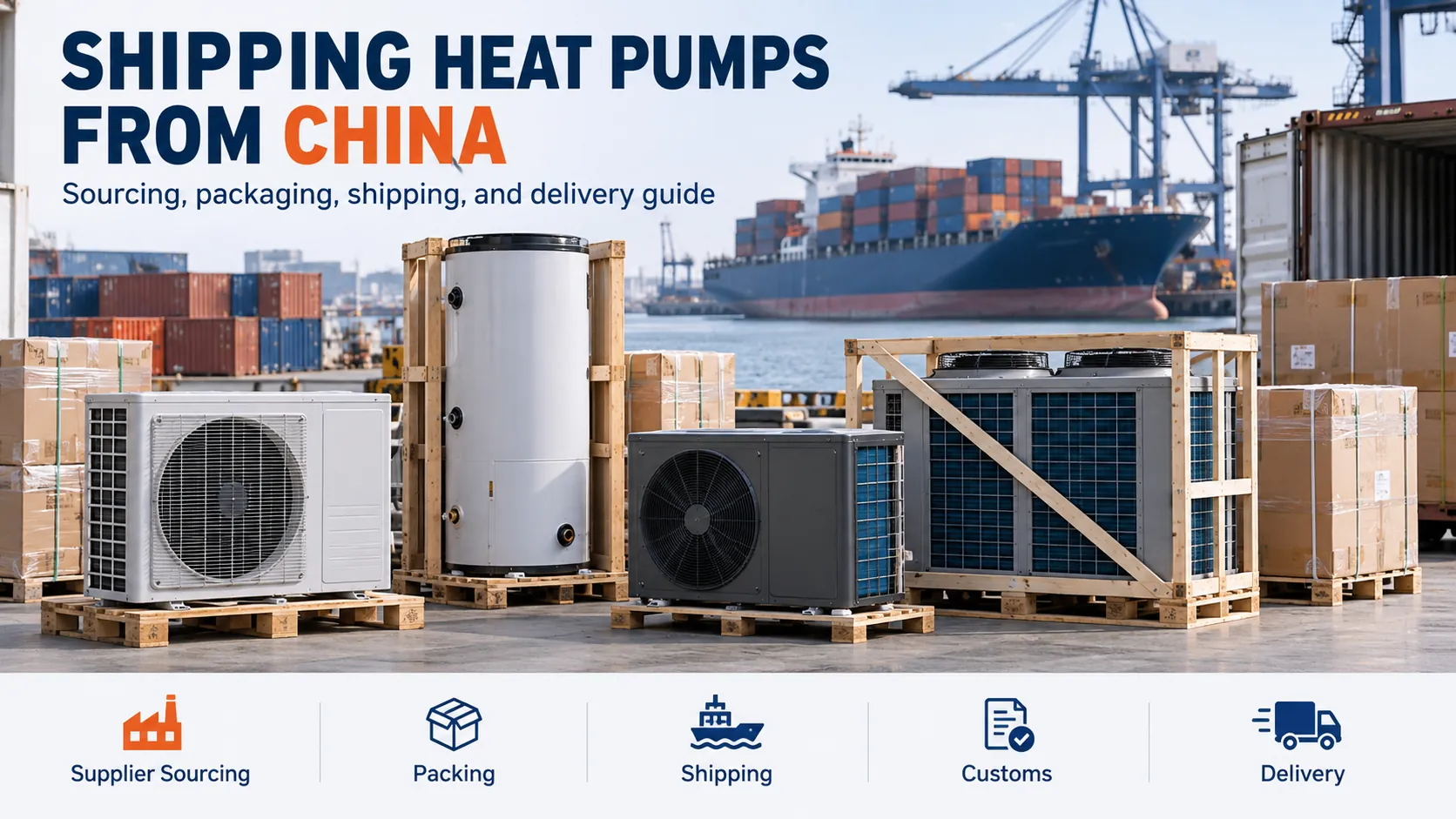
China produces a wide range of heat pump products for residential, commercial and industrial heating and cooling applications. Different designs vary in size, weight, accessories and refrigerant configuration, so the freight plan should be based on the actual model.
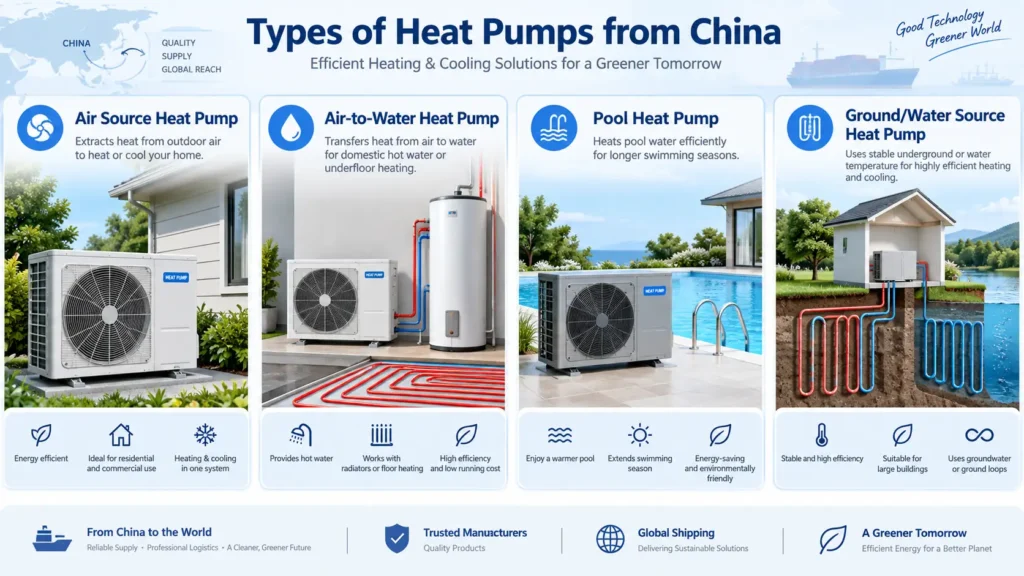
Air source heat pumps are widely used for space heating, cooling and hot water. A shipment may include one outdoor unit together with controllers, pumps, tanks, valves or fan coil units.
Air-to-water systems transfer heat to a water circuit used for underfloor heating, radiators or water heating.
Tanks and installation accessories can increase the total CBM, even when the additional equipment is relatively light.
Swimming pool heat pumps often have large cabinets and exposed heat-exchanger surfaces.
Importers commonly use reinforced cartons, pallets and corner protection for LCL shipments because the cargo may pass through several handling stages.
Ground source heat pumps and water source heat pumps are often used for larger residential or commercial projects.
Heavier units may require reinforced pallet bases or wooden cases for safe forklift handling and container loading.
| Heat Pump Type | Common Application | Main Shipping Consideration |
|---|---|---|
| Air source heat pump | Residential and commercial heating | Refrigerant and packing dimensions |
| Air-to-water heat pump | Heating and water heating | Tanks and accessories |
| Pool heat pump | Swimming pool heating | Cabinet protection |
| Ground/water source heat pump | Larger building projects | Weight and stronger packing |
Technical and compliance details should be checked before production is completed. Problems discovered later can lead to carrier rejection, customs delays or additional modification costs.
Start by confirming the refrigerant and whether the equipment is factory pre-charged.
Ask the supplier for:
Refrigerant type and charge
Technical specification sheet
SDS or related safety documents when required
Confirmation of whether separate refrigerant cylinders are included
Refrigerant requirements differ between countries and can also affect carrier acceptance.
Separate refrigerant gas cylinders may be subject to different transport requirements from gas already contained inside the equipment.
Heat pumps manufactured in China can be configured for different markets, so the standard factory version may not be suitable for every installation.
Confirm:
Voltage and frequency
Single-phase or three-phase configuration
Heating and cooling capacity
Operating temperature range
COP and efficiency data
Expected energy consumption
Connections and included accessories
Performance should be checked under realistic operating conditions, especially for air source heat pumps used in colder climates.
Comparing energy consumption under expected operating temperatures can also help importers choose between models with similar rated capacity.
Required certifications depend on the destination country and intended use.
Before ordering, ask the manufacturer which test reports, electrical safety certificates, energy-efficiency documents and labels are available for the exact model.
For commercial orders, also review the manufacturer’s production capacity, quality control process and export experience. A supplier with experience serving the destination market is usually better prepared to provide correct technical documents, labels and refrigerant information.
Pre-shipment quality checks are particularly useful for larger orders.
It can also help to review the company’s website, product specifications and export information. A manufacturer’s website may show its product range and factory capability, but buyers should still verify certificates and technical details independently.
Suppliers with experience serving customers in the US, Europe, Asia and other regions are generally more familiar with different documentation requirements.
Heat pumps require additional attention because many units contain refrigerant.
However, it is not accurate to classify every heat pump shipment in exactly the same way. Transportation requirements can depend on the refrigerant, the amount contained in the equipment, how the refrigerant is installed and the rules applied by the carrier and shipping mode.
Before booking freight, provide your freight forwarder with accurate product information.
This normally includes:
Heat pump model
Refrigerant type
Refrigerant charge
Number of units
Product specification sheet
Package dimensions and weight
Packing photos
SDS or other technical documents when requested
The forwarder can then confirm the applicable carrier requirements before space is booked.
This step is particularly important for air freight because airlines generally apply stricter acceptance procedures for cargo containing regulated substances.
Importers should also avoid shipping separate refrigerant cylinders together with the equipment without checking the requirements first. A heat pump containing refrigerant inside the equipment and a separate cylinder of refrigerant are not necessarily handled in the same way.
Providing the correct information early helps avoid booking rejection, repacking or delays after the cargo reaches the export warehouse.
The best shipping method depends on the order size, cargo volume, urgency, destination and budget.
Transit Time: Around 20–40 days
Best for large commercial orders that need better container control, less handling, and more stable loading.
Transit Time: Around 25–45 days
Best for small orders, trial shipments, or replacement equipment that do not require a full container.
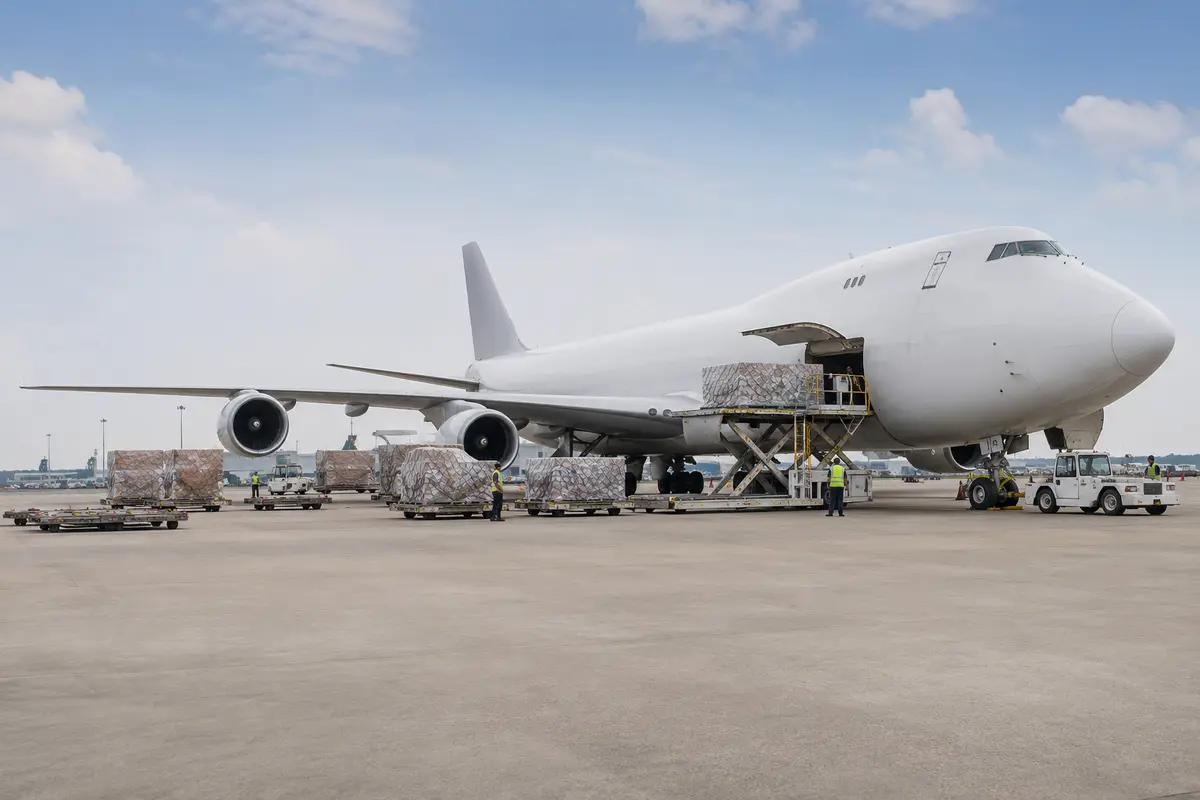
Transit Time: Around 3–7 days
Best for samples, urgent replacement equipment, and small high-value shipments that need faster delivery.
The cost of shipping heat pumps from China depends on the order size, packed volume, destination and shipping method. Small orders may move by LCL or air freight, while larger commercial orders are usually more suitable for FCL.
| Shipping Method | Reference Cost | Best For |
|---|---|---|
| LCL Sea Freight | USD 80–180/CBM | Samples and small orders |
| 20GP FCL | USD 3,500–6,700/container | Medium commercial orders |
| 40HQ FCL | USD 5,000–8,275/container | Wholesale and project orders |
| Air Freight | USD 3.50–7.00/kg | Urgent or small shipments |
These are reference ranges only. Actual rates vary by origin, destination, season, carrier capacity, cargo size and refrigerant requirements.
Heat pumps are relatively bulky, so freight should be calculated using the final packed dimensions, gross weight and total CBM. For air freight, chargeable weight may be higher than the actual weight because of the package size.
International freight is only part of the total shipping cost. Importers should also budget for:
Factory pickup in China
Export packing
Port or terminal handling
Customs clearance
Import duties and taxes
Final delivery
For an accurate quote, provide the heat pump model, quantity, packing dimensions, gross weight, refrigerant details, factory location and destination.
Shipping time depends on the destination, transport method, carrier schedule and customs process. For most commercial heat pump orders, sea freight takes several weeks, while air freight is much faster.
| Shipping Method | Typical Transit Time | Best For |
|---|---|---|
| FCL Sea Freight | 20–40 days | Large commercial orders |
| LCL Sea Freight | 25–45 days | Small and medium shipments |
| Air Freight | 3–7 days | Samples and urgent orders |
| Air Door-to-Door | 7–12 days | Time-sensitive deliveries |
| Sea Door-to-Door | 30–50 days | Larger shipments requiring final delivery |
These are general planning ranges rather than guaranteed schedules. Actual transit times vary by origin port, destination, vessel or flight availability and routing.
Heat pump shipments may take longer when additional documentation or carrier approval is required. Common factors include:
Refrigerant review and carrier acceptance
Peak-season congestion
Port or airport delays
Transshipment
Customs inspections
Missing or incorrect documents
Final delivery distance
For project orders, it is better to confirm the shipping schedule before production is completed so the heat pumps can arrive in time for installation.
Heat pumps contain compressors, heat exchangers, control boards and other sensitive parts, so export packing should protect the equipment from impact, moisture and movement during international transportation. The packing method should also allow safe forklift handling and stable container loading.
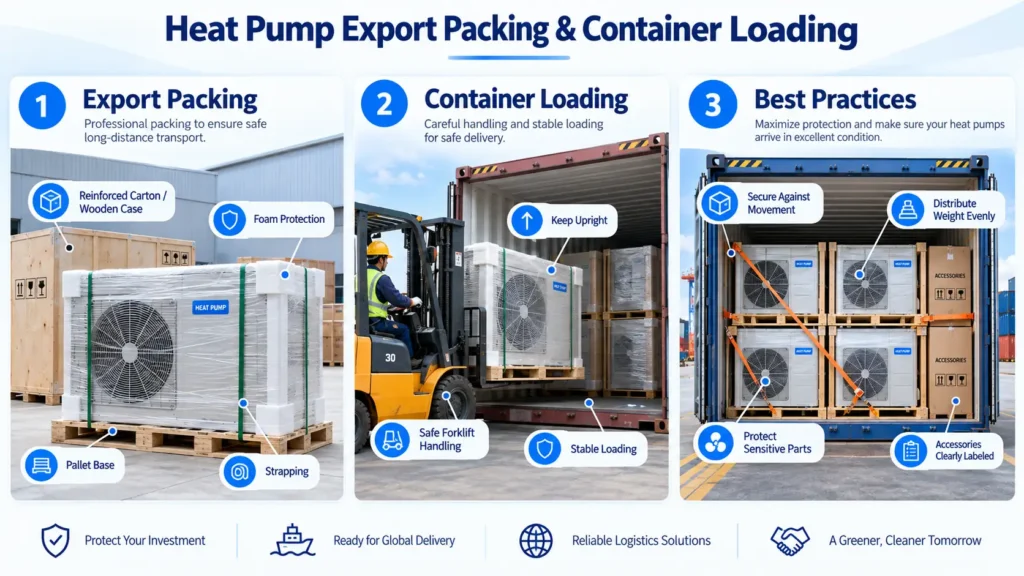
Common packing methods include:
Reinforced export cartons
Foam and corner protection
Pallet bases
Strapping and moisture-resistant wrapping
Wooden cases for heavy or sensitive models
Extra protection should be provided around condenser fins, pipe connections, control panels and other exposed components.
For heavier units, reinforced pallets or wooden cases are usually more suitable than standard cartons.
Before loading, confirm the final packing dimensions, gross weight and required orientation of each heat pump.
During container loading:
Keep units upright when required
Avoid unstable stacking
Protect heat-exchanger surfaces
Secure cargo to prevent movement
Distribute heavy units evenly
Keep accessories clearly labeled and separated
For larger orders, a loading plan should be prepared in advance to determine whether a 20GP, 40GP or 40HQ is more suitable.
Before the container is sealed, check the model, quantity, voltage, refrigerant information, accessories, outer packing and shipping marks.
Inspection and loading photos can also provide a useful record of the cargo condition before departure.
Customs clearance for heat pumps can involve both standard shipping documents and additional technical or refrigerant-related requirements. Before the cargo leaves China, the importer should confirm the correct HS code, destination-market compliance and all documents required for customs entry.
Common documents include:
Commercial Invoice – showing the buyer and seller, product description, quantity, value and Incoterm
Packing List – showing package quantity, gross weight, net weight and CBM
Bill of Lading or Air Waybill – depending on whether the shipment moves by sea or air
Certificate of Origin – when required for customs or preferential tariff treatment
Advance filing documents – such as ISF for applicable US ocean shipments
The model, quantity, value, weight and package details should remain consistent across all documents.
Heat pumps can fall under different HS codes depending on their function and system design.
Common reference classifications include:
HS Code 8418.61.00 – commonly used for heat pumps other than air-conditioning machines under heading 8415, including certain air-to-water, ground source and water source systems
HS Code 8415.10.00 / 8415.82.00 – may apply to certain air-conditioning systems with heating and cooling functions, including some split-type systems
Before shipment, ask the factory in China to provide the 10-digit Chinese export HS code used for declaration. The importer or customs broker should then confirm the corresponding tariff code required by the destination country, such as the HTS code in the US.
Because many heat pumps contain refrigerant, additional technical documents may be required.
Depending on the destination, these may include:
Refrigerant type and charge
Technical specification sheet
SDS where required
Manufacturer declaration
Electrical safety certificates
Energy-efficiency documents
Product test reports
For the US, importers should check applicable EPA refrigerant requirements together with electrical and energy-efficiency documentation.
For European markets, F-Gas requirements, CE-related documentation and energy-efficiency information may also need to be confirmed before import.
The total landed cost may include:
Import duty
VAT or other import taxes
Customs brokerage fees
Additional trade measures where applicable
For shipments entering the US, certain HVAC equipment from China may also be affected by additional tariffs such as Section 301 duties.
In European markets, VAT is normally charged in addition to customs duty.
The actual duty and tax treatment depends on the HS code, customs value and destination country, so the importer should confirm the final amount with the customs broker before shipment.
Shipping heat pumps from China usually involves several steps from factory pickup to final delivery. Confirming the refrigerant, packing and customs documents early can help avoid booking or clearance delays.
Collect the heat pump model, quantity, packing dimensions, gross weight, refrigerant type and refrigerant charge.
Confirm whether the heat pumps are packed in reinforced cartons, pallets or wooden cases. Heavier units should be suitable for forklift handling and container loading.
The freight forwarder collects the cargo from the supplier or factory in China and delivers it to the export warehouse, port or airport.
Choose the shipping method according to the order size, cargo volume and delivery schedule.
LCL for smaller shipments
FCL for larger commercial orders
Air freight for urgent or small shipments
Carrier acceptance should be confirmed in advance when the heat pumps contain refrigerant.
The supplier and freight forwarder prepare the Commercial Invoice, Packing List and other required export documents for customs declaration in China.
After customs release, the cargo is loaded onto the vessel or aircraft and transported to the destination country. Shipment tracking can be provided during transit.
After arrival, the importer or customs broker completes customs clearance, pays applicable duties and taxes, and arranges delivery to the warehouse, project site or final address.
For orders from multiple suppliers, Tonlexing can also coordinate factory pickup, consolidation, export handling and international shipping under one logistics plan.
Sea freight is usually the most practical method for commercial orders because the equipment is bulky. FCL is suitable for larger quantities, while LCL can be used for smaller shipments. Air freight is mainly used when faster delivery is required.
In many cases they can, but the refrigerant type, quantity, equipment configuration and carrier requirements should be checked before booking. Accurate refrigerant information should be provided to the freight forwarder in advance.
FCL is generally preferable for larger orders because it involves less cargo handling and provides greater control over container loading. LCL can be more economical for smaller shipments but normally requires stronger export packing.
Common documents include a Commercial Invoice, Packing List and Bill of Lading or Air Waybill. Refrigerant information, technical specifications, test reports or compliance certificates may also be required depending on the destination.
The cost depends on the packed dimensions, gross weight, quantity, refrigerant, factory location, destination, shipping method and service scope. An accurate quotation requires the actual packing information rather than only the heat pump model.
Useful freight, customs and importing resources related to this shipping guide.
Shipping Home Appliances from China Verified & Reviewed · Last updated July 2026 Shipping home appliances from China requires choosing the right...
Read guide →
Sea freight is the most cost effective shipping method for large volumes and container load cargo. It is ideal for businesses looking to reduce s...
Read guide →
Air freight from China is the best option for time sensitive and high value shipments. It offers fast delivery, reliable transit times, and effic...
Read guide →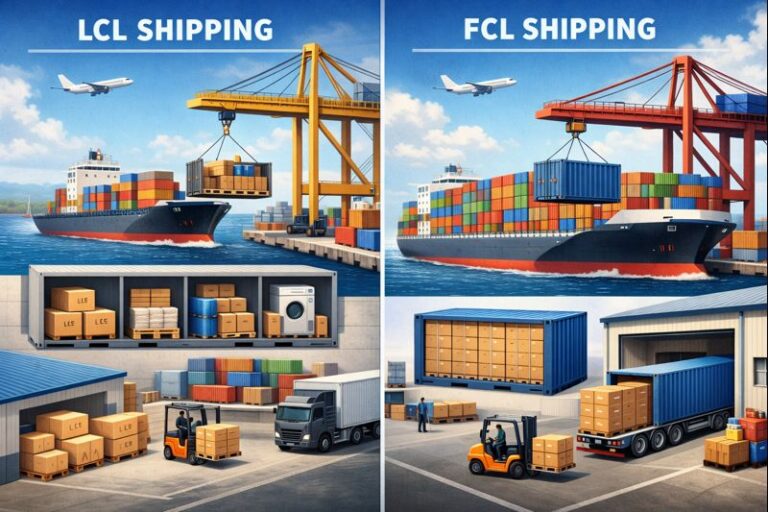
LCL vs FCL Shipping: What They Mean, Key Differences, and Which One to Choose Verified & Reviewed · Last updated January 2026 FCL vs LCL shipping...
Read guide →Shipping Dangerous Goods From China Verified & Reviewed · Last updated February 2026 Shipping dangerous goods from China requires strict complian...
Learn more → Useful Resource Pre-Shipment Inspection in China for ImportersPre-Shipment Inspection in China for Importers Verified & Reviewed · Last updated July 2026 A pre-shipment inspection helps importers identify de...
Learn more →WhatsApp us