
Related Guide
China to USA Import Duties
China to USA Import Duties: Customs Duty, Tariffs, and Import Tax Guide Verified & Reviewed · Last updated May 2026 Importing goods from China to...
Read guide →

The US de minimis exemption of up to $800 is suspended for most commercial imports in 2026. Low-value shipments must now follow applicable CBP entry procedures and may be subject to import duties and customs fees based on product classification, country of origin, and transportation method.
This guide covers the latest US de minimis rules, the $2,500 informal entry threshold, customs procedures, import duties, and requirements for low-value shipments.
US De Minimis Rules 2026
$800 De Minimis Exemption
US Customs Duties
The de minimis exemption is a customs provision that historically allowed qualifying low-value imports to enter the United States without paying import duties or completing the standard customs entry process.
It was established under Section 321 of the Tariff Act of 1930, codified at 19 U.S.C. § 1321. Under the previous rule, qualifying goods with an aggregate fair retail value of $800 or less, imported by one person on one day, could generally receive duty-free treatment.
The US de minimis threshold increased over time:
Before 2016, the general threshold was $200.
In 2016, the Trade Facilitation and Trade Enforcement Act increased it to $800.
From 2016 through early 2025, qualifying low-value imports generally benefited from duty-free treatment.
The exemption became particularly important for cross-border e-commerce businesses, online retailers, and international sellers shipping individual orders directly to US customers.
However, the original Section 321 duty exemption should not be confused with informal customs entry procedures under 19 U.S.C. § 1498, which remain relevant for certain shipments valued at $2,500 or less.
The United States introduced several policy and regulatory changes between 2025 and 2026, progressively suspending the general $800 exemption.
May 2, 2025 – China and Hong Kong
The United States suspended de minimis duty-free treatment for qualifying low-value imports from China and Hong Kong.
August 29, 2025 – All Countries
Executive Order 14324 extended the suspension to most commercial imports from all countries, regardless of shipment value or transportation method.
February 24, 2026 – Continued Suspension
Executive Order 14388 continued the suspension of duty-free de minimis treatment, including for international postal shipments, and updated the arrangements for collecting duties on postal imports.
June 24, 2026 – CBP Regulatory Changes
CBP published two interim final rules implementing the indefinite suspension in its regulations:
Non-postal shipments: The suspension applies to goods arriving by air, express courier, sea, and other non-postal transportation methods.
Postal shipments: CBP separately suspended the exemption for international mail and established a new postal informal entry process.
The new postal entry procedures became effective on July 24, 2026.
These changes mean that importers can no longer rely on the previous $800 exemption when planning ordinary commercial shipments.
No. The general $800 de minimis duty-free exemption is suspended for most commercial imports entering the United States in 2026.
This applies to qualifying commercial goods from China, Europe, Southeast Asia, and other countries. Express courier, air freight, ocean freight, and international postal shipments are also affected.
The general suspension covers most commercial imports arriving through:
International express courier services such as DHL, FedEx, and UPS.
Air freight shipments.
Ocean freight shipments.
International postal shipments.
Other commercial transportation methods.
However, postal and non-postal shipments follow different customs entry procedures.
The suspension of the general $800 exemption does not eliminate every separate statutory customs exemption.
Two important categories remain available under Section 321:
Qualifying gifts sent by individuals outside the United States to individuals in the United States may still receive duty-free treatment.
The general statutory threshold is $100, with a $200 threshold for qualifying gifts from the Virgin Islands, Guam, and American Samoa.
Certain personal or household articles accompanying eligible travelers arriving in the United States may qualify for a separate exemption of up to $200.
These exceptions do not cover ordinary commercial purchases, business imports, or routine e-commerce orders.
The suspension in 2026 is separate from a future statutory change.
The One Big Beautiful Bill Act, enacted on July 4, 2025, provides that Section 321(a)(2)(C), which contains the general $800 exemption, will be removed effective July 1, 2027.
Therefore, importers should distinguish between the current suspension of the exemption and its scheduled statutory removal in 2027.
Although the $800 exemption is suspended, eligible low-value shipments can still use informal customs entry procedures.
Under 19 U.S.C. § 1498, the general informal entry threshold is $2,500 or less. This is a procedural threshold, not a duty-free allowance.
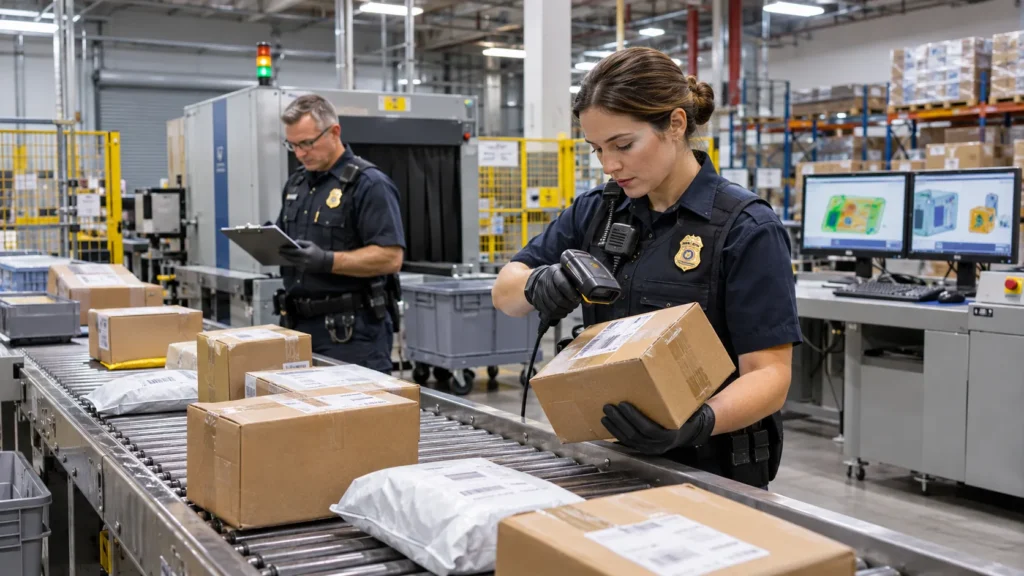
Entry Type 11 is the general informal entry procedure commonly used for eligible non-postal commercial shipments valued at $2,500 or less.
The entry process generally requires:
Identifying the imported goods and country of origin.
Determining the correct HTSUS classification.
Declaring the accurate customs value.
Submitting the required customs entry information.
Paying applicable duties and fees.
Completing any required inspections or regulatory checks.
Shipments exceeding $2,500 generally require formal entry. Certain regulated products may also require formal entry regardless of value.
International postal shipments follow a separate CBP process.
Under the June 24, 2026 interim final rule, eligible postal shipments valued at $2,500 or less may use the new postal informal entry procedure.
The filing process requires additional information, including:
Filer code and customs bond number.
Merchandise description and country of origin.
Applicable 10-digit HTSUS classification.
Customs value and duty rate.
Carrier, tracking number, arrival port, and arrival date.
The authorized filer must submit an International Mail Duty Worksheet to CBP and pay applicable duties by the seventh day of the month following the shipment’s arrival.
A basic importation and entry bond, either a single transaction bond or continuous bond, is also required.
| Entry Method | General Value Range | Main Requirements |
|---|---|---|
| Entry Type 11 | Up to $2,500 | Eligible non-postal shipments and applicable duties |
| Postal Informal Entry | Up to $2,500 | Eligible international mail, additional shipment data and bond |
| Formal Entry | Generally over $2,500 | Formal customs documentation and applicable duties |
The $2,500 threshold does not guarantee informal entry eligibility. Certain products subject to regulatory controls, quotas, or other special requirements may require formal entry.
For more information about customs declarations, documentation, and cargo release, see our customs clearance from China to the USA guide.
CBP introduced additional measures in the second half of 2026 to improve electronic processing and monitoring of low-value imports. Importers should distinguish between current procedures, voluntary tests, and proposed regulations.
On September 22, 2026, CBP began testing Entry Type 13, also known as Informal Mail Entry.
The voluntary test provides an electronic alternative through the Automated Commercial Environment (ACE) for eligible international postal shipments valued at $2,500 or less.
It is designed to improve shipment data collection and customs processing.
Entry Type 13 is currently a voluntary test, not a universal mandatory replacement for existing postal entry procedures.
On October 8, 2026, CBP published its Low-Value Shipments proposed rule.
The proposal includes several changes:
Mandatory electronic filing for eligible informal entries.
Filing upon or before the date of importation.
Additional final deliver-to party information.
Updated customs bond requirements.
A new electronic informal mail entry process.
The proposal also addresses additional shipment information and tracking requirements for international mail.
As of November 3, 2026, the rule remains a proposal. The public comment deadline is December 7, 2026. Importers should not treat these proposed requirements as fully effective regulations.
On October 22, 2026, CBP extended certain formal entry compliance requirements for international postal shipments to January 20, 2027.
The extension covers specific merchandise subject to Partner Government Agency requirements, Chapter 98 or Chapter 99 duties, or qualifying duty-free claims under Chapter 98 or a Free Trade Agreement.
This extension gives affected importers and logistics providers more time to prepare. It does not restore the $800 exemption or postpone general duty collection requirements.
With the suspension of the US de minimis exemption, most commercial imports valued at $800 or less are subject to applicable customs duties and processing fees. The actual cost depends on product classification, country of origin, customs value, and transportation method.
Import duties are determined by the product’s 10-digit HTSUS code and declared customs value. Additional duties may also apply:
Standard Tariffs: Based on the product’s classification and country of origin.
Section 301 Duties: Additional tariffs on certain products originating in China.
Other Trade Measures: Applicable Section 232, antidumping, and countervailing duties.
For eligible informal entries, CBP processing fees depend on the filing method. FY2027 rates effective October 1, 2026, are:
| Filing Method | Fee Per Entry |
|---|---|
| Automated electronic filing | $2.77 |
| Manual filing, not prepared by CBP | $8.30 |
| Manual filing prepared by CBP | $12.45 |
These are alternative processing fees, not cumulative charges. Formal entries use a separate MPF calculation of 0.3464% of entered value, subject to the FY2027 minimum of $34.58 and maximum of $670.86.
International postal shipments have separate fee treatment and should not automatically be charged the standard informal-entry MPF.
The HMF applies to qualifying commercial cargo unloaded from commercial vessels at covered US ports.
Ocean Freight: 0.125% of the cargo’s commercial value.
Air Freight: Not subject to HMF.
| Fee Type | Rate / Cost | Applicable To |
|---|---|---|
| Import Duties | Varies by HTSUS code | Dutiable imports |
| Section 301 Tariffs | Varies by product | Applicable Chinese-origin goods |
| Automated MPF | $2.77 | Eligible informal entries |
| Manual MPF | $8.30 | Eligible informal entries |
| CBP-Prepared MPF | $12.45 | Eligible informal entries |
| HMF | 0.125% | Qualifying ocean shipments |
These charges are separate from international freight, customs broker service fees, and final delivery costs. For a detailed breakdown of tariff rates and import charges, see our guide to China to USA import duties.
Importers should prepare accurate shipment information before sending goods to the United States. Proper documentation and customs classification help reduce clearance delays and unexpected costs.
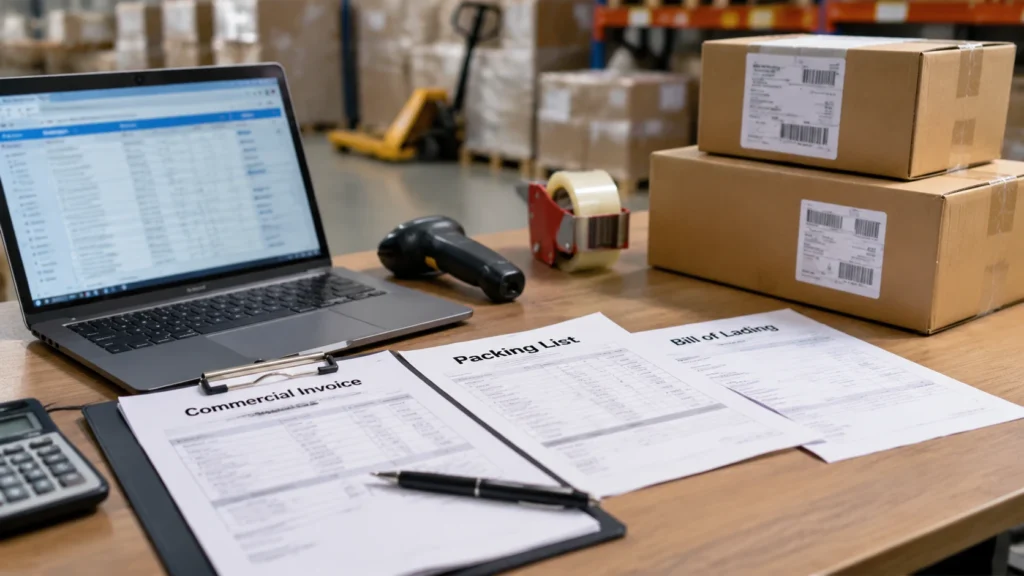
Prepare an accurate product description, quantity, unit value, and country of origin. Avoid vague descriptions or incorrect origin declarations.
Identify the appropriate HTSUS code for each product and verify the applicable duty rate and additional tariffs. See our guide to HTS codes for imports from China.
Depending on the shipment and entry procedure, prepare the required documents:
Commercial invoice
Packing list
Air waybill or bill of lading
Product certificates or permits, if applicable
See our guide to documents required to import from China.
Confirm whether the shipment qualifies for informal entry or requires formal customs entry. International postal shipments must follow the applicable CBP postal procedures.
Coordinate with the carrier or customs broker to submit the required entry information and pay applicable duties and fees. After customs release, arrange final delivery to the consignee or warehouse.
The suspension of the US de minimis exemption has changed the cost and customs requirements for businesses importing low-value goods.
Low-value commercial shipments may now incur import duties and customs processing fees that were previously avoided under the $800 exemption. Businesses selling inexpensive products should review their pricing, shipping charges, and profit margins.
Sellers using direct-to-consumer shipping models may need to reconsider their fulfillment arrangements. Some businesses may compare individual parcel shipments with consolidated freight, bulk imports, and US-based warehouse fulfillment.
The right approach depends on order volume, product value, inventory turnover, and total landed costs. Changing the shipping method does not automatically eliminate applicable import duties.
Businesses must ensure that product descriptions, HTSUS codes, declared values, and country-of-origin details are accurate before shipment.
They should also confirm who will act as the Importer of Record (IOR) and take responsibility for customs declarations and applicable duties. Businesses without a US entity can learn more about non-resident importer of record requirements in the USA.
Importers should avoid several common mistakes when shipping low-value goods to the United States:
Assuming goods under $800 are duty-free: The general commercial de minimis exemption is suspended.
Confusing $2,500 with a duty-free threshold: This is an informal entry value threshold, not an exemption from import duties.
Using incorrect HTSUS codes: Incorrect classification can result in duty discrepancies and customs delays.
Declaring an incorrect country of origin: The origin must reflect the applicable customs origin rules.
Treating postal and courier shipments identically: International mail has separate entry and reporting procedures.
Ignoring additional tariffs: Some products are subject to additional duties or regulatory requirements regardless of their value.
Accurate customs information and proper entry procedures are essential for maintaining compliance under the 2026 US de minimis rules.
The general $800 de minimis duty-free exemption is suspended for most commercial imports in 2026. Qualifying gifts and certain personal goods accompanying travelers may still benefit from separate statutory exemptions.
No. The $800 exemption is suspended for most commercial imports from all countries and through all transportation methods. Applicable duties and customs entry requirements still depend on the product and shipment.
The US government cited concerns about the increasing volume of low-value imports, customs revenue collection, shipment transparency, unlawful imports, and product safety. The policy changes also aim to improve customs enforcement and shipment data collection.
Yes. Commercial shipments valued below $800 are no longer automatically exempt from customs entry and applicable duties. They must follow the appropriate entry procedures based on transportation method, product type, and value.
Yes. International postal shipments follow a separate CBP informal entry process. Eligible shipments valued at $2,500 or less may use the postal informal entry procedure or, where qualified, participate in the voluntary Entry Type 13 test. Certain goods still require formal entry.
Useful freight, customs and importing resources related to this shipping guide.
China to USA Import Duties: Customs Duty, Tariffs, and Import Tax Guide Verified & Reviewed · Last updated May 2026 Importing goods from China to...
Read guide →
Importer of Record IOR in the USA Verified & Reviewed · Last updated March 2026 Importer of Record (IOR) in the USA determines who is legally res...
Read guide →
Customs Bond for USA Imports: The Complete Guide Verified & Reviewed · Last updated March 2026 If you import into the United States, a customs bo...
Read guide →
Customs Clearance Step by Step: The Complete Process Verified & Reviewed · Last updated February 2026 Customs clearance step by step helps intern...
Read guide →How to Avoid Customs Holds When Shipping From China to the USA Verified & Reviewed · Last updated January 2026 Customs holds are rarely random. T...
Learn more → Useful Resource Shipping from China to the USAShipping from China to the USA includes air freight, sea freight, and DDP shipping options. Compare shipping costs, transit times, and US customs...
Learn more →WhatsApp us