Related Guide
Shipping from China to Australia
Shipping from China to Australia includes reliable sea freight and fast air shipping. Compare delivery time, shipping costs, and logistics option...
Read guide →

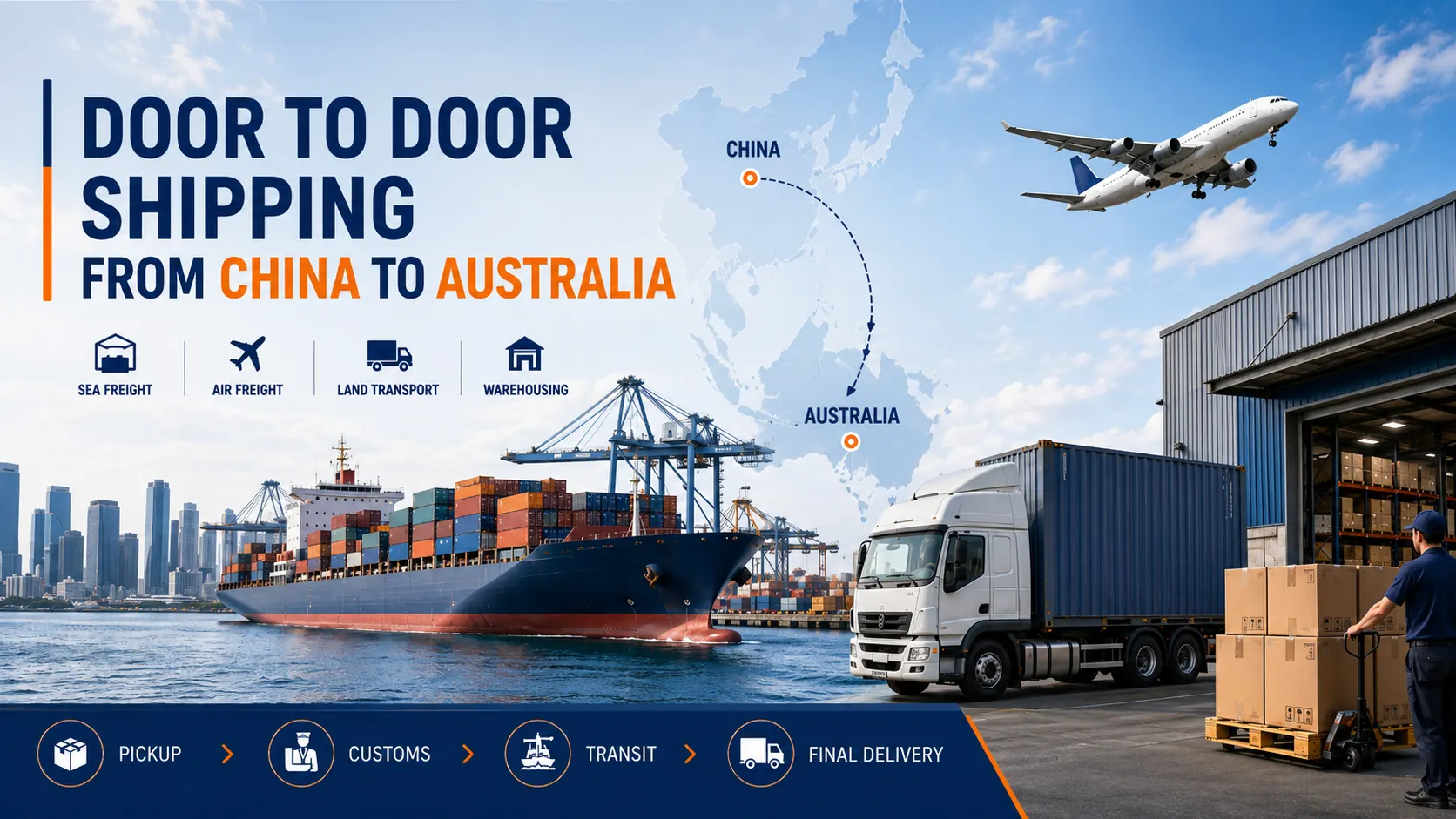
Door to door shipping from China to Australia covers supplier pickup, international freight, customs clearance, and final delivery under one coordinated service.
Cargo can move by courier, air freight, LCL, or FCL. The best option depends on cargo size, urgency, and destination, while importers must confirm whether duty, GST, and biosecurity charges are included under DDP, DAP, or another agreed service.
Shipping Methods
Costs & Transit Times
DDP / DAP Terms
The following table shows the latest July 2026 reference rates provided for China to Australia shipping. These prices are intended for initial budgeting and comparison rather than as guaranteed flat rates.
| Shipping method | July 2026 reference price | Typical planning time | Best suited to |
|---|---|---|---|
| Air freight, 0–45 kg | About US$60/kg | About 3–10 days | Samples and very small urgent shipments |
| Air freight, 45–100 kg | About US$29/kg | About 3–10 days | Small commercial shipments |
| Air freight, 100–300 kg | About US$13/kg | About 3–10 days | Medium-sized urgent cargo |
| Air freight, 300–500 kg | About US$11/kg | About 3–10 days | Larger time-sensitive shipments |
| Other quoted air freight category | From about US$10/kg | About 3–10 days | Larger general cargo |
| LCL sea freight | About US$790–895 per quoted shipment | About 25–45 days | Cargo that does not fill a container |
| 40ft FCL sea freight | About US$7,550–9,250 per container | About 22–40 days | Large-volume commercial shipments |
The LCL range is based on the shipment conditions used in Tonlexing Logistics’ July 2026 rate chart. It should not be interpreted as a universal per-CBM price. The 40ft container figures are peak-season port-to-port reference rates rather than complete door-to-door prices.
The final Australia shipping cost may also include supplier pickup, export handling, customs clearance, customs duty, GST, biosecurity inspection, destination handling and final transport. Cargo type, dimensions, shipping routes, carrier capacity and delivery location can all affect the price.
Tonlexing Logistics Insight: Compare the complete delivered cost, not only the air or ocean freight rate. A low port-to-port price may become more expensive after customs, destination fees and local delivery are added.
Send Tonlexing Logistics your packing list, Chinese pickup address and Australian postcode to request a route-specific freight quote.
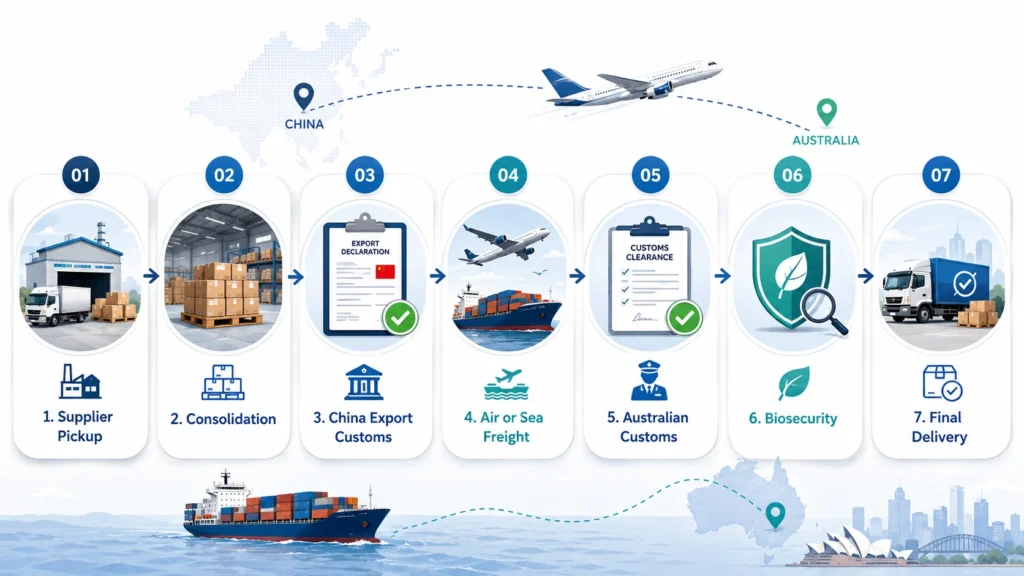
Door to door shipping from China to Australia generally begins when the freight forwarder collects the goods from the Chinese supplier or receives them at an origin warehouse. It ends when the shipment reaches the delivery location stated in the quotation.
A comprehensive logistics service may include:
Pickup from one or several Chinese suppliers
Warehouse receiving and cargo consolidation
Carton checking, repacking or palletising
China export customs declaration
International shipping by air or sea
Arrival handling at an Australian airport or port
Customs clearance coordination
Biosecurity inspection or treatment coordination
Duty and GST handling under an agreed DDP service
Final delivery to a home, business, warehouse or fulfilment centre
Not every quotation includes cargo insurance, customs examinations, quarantine treatment, storage, demurrage, detention, tail-lift service or remote-area surcharges. The importer should request a written list of inclusions and exclusions.
The delivery address should also be clearly defined. A quotation for delivery to central Melbourne is not automatically valid for a regional location in Western Australia or the Northern Territory.
Choosing the correct shipping method requires more than comparing a price per kilogram or container. Importers should consider the cargo’s value, weight, dimensions, delivery deadline and handling requirements.
Rail freight may be used for inland movement within China, but it cannot cover the international leg between China and Australia. The goods must cross that leg by air or sea.
| Option | Main advantage | Main limitation | Suitable cargo |
|---|---|---|---|
| International courier | Fast and simple for small parcels | Expensive for heavy or bulky boxes | Documents, samples and small urgent orders |
| Standard air freight | Fast for commercial cargo | Higher cost than sea freight | Electronics, parts and urgent inventory |
| LCL shipping | Pay for shared container space | More handling and consolidation time | Several cartons, pallets or smaller orders |
| FCL shipping | Entire container for one importer | Requires enough cargo to justify the container | Furniture, machinery and wholesale goods |
Express delivery through an international courier is normally used for documents, samples and small boxes. Courier networks combine pickup, international transportation, parcel customs processing and final delivery.
The price is usually based on whichever is higher: actual gross weight or volumetric weight. Large lightweight boxes can therefore cost more than expected.
Courier shipping is most practical when the cargo is urgent, meets parcel-size limits and does not need pallet or oversized handling.
Standard air freight is suitable for commercial shipments that are too large for economical courier delivery but still require a short transit time.
Common air cargo includes:
Electronics and components
Machinery parts
Fashion and seasonal products
E-commerce inventory
High-value general cargo
Urgent production materials
Air freight normally takes about 3–10 days when origin handling, the flight, customs clearance and local delivery are considered. The flight itself may be much shorter, but airport handling and the final delivery process must also be included.
Rates are calculated according to chargeable weight. Product classification can also affect the price because batteries, liquids, powders, magnets and other special cargo may require a different shipping channel.
More route and charging information is available in the air freight from China to Australia guide.
LCL shipping allows cargo from several importers to share a container. Goods are consolidated at an origin warehouse and separated again after reaching Australia.
It is commonly used for:
Several cartons or pallets
Furniture and home products
Lighting and building materials
Retail inventory
Small machinery
Goods collected from multiple suppliers
LCL is normally calculated by CBM or a weight-to-measure rule, subject to minimum charges. It can take longer than FCL because cargo must pass through consolidation and deconsolidation facilities.
Importers should not compare only the ocean freight line. Destination warehouse handling, documentation, customs clearance and local delivery can represent a significant part of the total LCL cost.
FCL means the importer uses an entire container. Common equipment includes 20ft, 40ft and 40HQ containers.
This shipping method is usually more practical for:
Large wholesale orders
Furniture
Machinery
Building materials
Commercial equipment
High-volume retail cargo
FCL normally involves less shared handling than LCL and does not require destination deconsolidation. This can make the process faster, but FCL is not guaranteed to be quicker on every route.
Selected direct sea freight routes from China to Australia may take approximately 22–26 days port to port. Complete delivery takes longer because China pickup, export handling, customs clearance and local transport must be added.
For larger shipments, compare both LCL and container quotations. The 20ft and 40ft container shipping cost guide explains the main container options in more detail.
A successful shipment begins before cargo leaves the Chinese supplier. Product restrictions, packing conditions and document requirements should be reviewed before carrier space is booked.
Provide the product name, material, intended use, number of boxes, packed dimensions, gross weight, commercial value and HS code if available.
The enquiry should also include the supplier address, cargo-ready date and complete Australian delivery postcode. A city name alone is not enough to calculate final transport accurately.
The freight forwarder compares courier, air freight, LCL and FCL according to the cargo volume, urgency and budget.
For some orders, split shipping is practical. An urgent quantity can move by air while the remaining stock moves by sea freight at a lower cost.
The quotation should state who handles import customs clearance, customs duty, GST and biosecurity charges.
It should also explain whether examination, treatment, storage, redelivery, waiting time, tail-lift and unloading are included.
The cargo may be collected from one Chinese supplier or received from several factories at a consolidation warehouse.
Combining orders can reduce repeated minimum charges and simplify international shipping documents. Each delivery should be checked against the packing list before the consolidated shipment leaves China.
Commercial cargo normally requires:
Commercial invoice
Packing list
Bill of lading or air waybill
Product description
Declared value
HS code when available
Origin or product certificates when required
The package count, weight, value and product description should remain consistent across the documents. Descriptions such as “parts,” “accessories” or “samples” may be too vague for accurate customs classification.
The freight forwarder coordinates the China export declaration and delivers the cargo to the selected airline, courier company or ocean carrier.
Shipping delays can result from carrier capacity, weather, transshipment, port congestion and peak seasons. Production and shipping schedules should include extra time around major Chinese factory closures, especially Lunar New Year.
After the shipment reaches Australia, the appointed customs broker or destination agent completes the import procedures covered by the quotation.
Once customs and biosecurity requirements are satisfied, the cargo can be released for delivery to Sydney, Melbourne, Brisbane, Adelaide, Perth or another agreed location.
A broader overview is available in Tonlexing’s shipping from China to Australia guide.
Door-to-door describes the physical transport scope, while Incoterms allocate responsibilities between the seller and buyer in international trade.
DDP and DAP can both involve transportation to a named Australian place, but they do not allocate import responsibility in the same way.
| Term | Import clearance | Customs duty and GST | Transport to named place | Unloading |
|---|---|---|---|---|
| DDP | Seller’s responsibility | Seller’s responsibility | Arranged by seller | Normally handled by buyer |
| DAP | Buyer’s responsibility | Buyer’s responsibility | Arranged by seller | Normally handled by buyer |
| Standard door-to-door quote | Must be confirmed | Must be confirmed | Normally included | Must be confirmed |
Under Incoterms 2020, DDP places import clearance responsibility on the seller, while under DAP the buyer normally completes the import formalities and pays the relevant import charges. Delivery under DAP occurs before unloading.
A DDP quotation should still identify:
The named delivery location
The cargo covered by the price
Customs duty and GST treatment
Biosecurity scope
Residential or warehouse delivery conditions
Exceptional charges that remain excluded
DDP should not be interpreted as meaning every possible inspection, treatment, storage or redelivery fee is automatically included.
The DDP shipping from China to Australia guide provides a more detailed explanation of duty-paid air and sea services.
Australian clearance requirements depend on the product, customs value, tariff classification, origin and biosecurity risk. These issues should be checked before the goods are collected from the Chinese supplier.
Goods with a customs value above AUD1,000 generally require an Import Declaration, sometimes informally called a customs entry. Relevant duties, taxes and charges, including an import processing charge, may need to be paid before release.
The importer or customs broker normally needs accurate information about the goods, including their value, origin, composition and intended use.
Goods below AUD1,000 should not automatically be described as free from every tax or import requirement. GST may apply to low-value consumer goods through the overseas seller or marketplace, while alcohol, tobacco and controlled products follow additional rules.
Goods valued over AUD1,000 do not simply incur GST equal to 10% of the supplier’s invoice.
GST on a taxable importation is 10% of the value of the taxable importation. This value can include the customs value, customs duty and relevant international transport and insurance amounts.
Customs duty depends on the tariff classification, country of origin and whether a concession or preferential trade arrangement applies. Importers should not assume every Chinese product has the same duty rate.
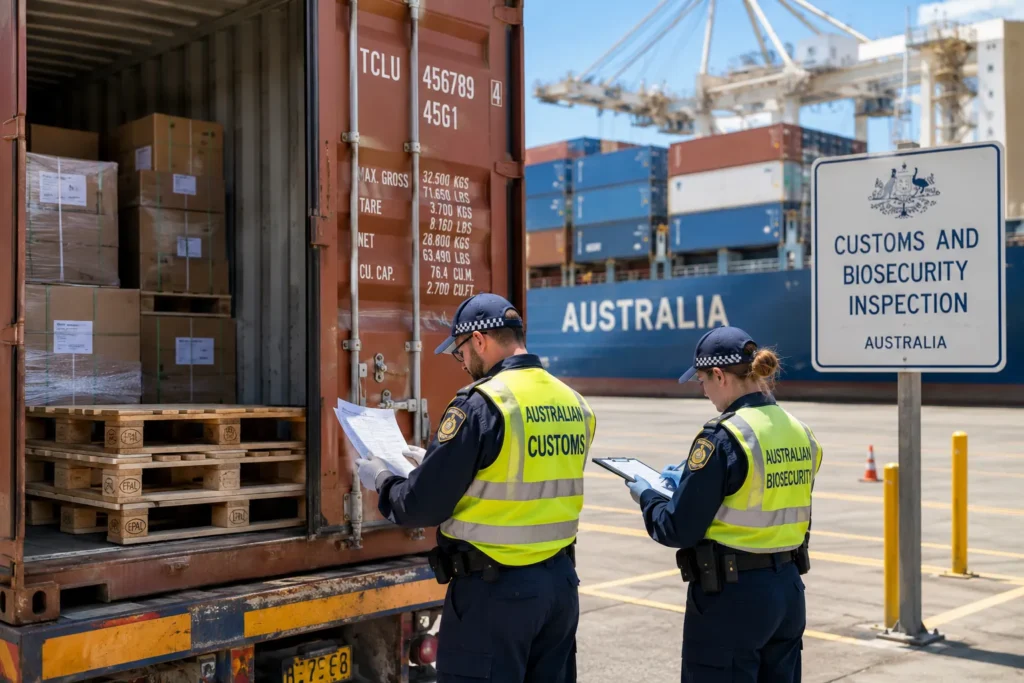
Australia’s BICON system identifies the import conditions that apply to different products. Depending on the goods, an import permit, treatment certificate, inspection or other supporting documents may be required.
Products requiring additional attention include:
Timber and bamboo products
Solid timber pallets and crates
Food and agricultural goods
Plants and seeds
Animal-derived materials
Used machinery
Outdoor equipment
Cargo contaminated with soil or organic matter
Timber packaging that supports international cargo must meet the relevant biosecurity conditions. Even treated packaging may be examined if there are signs of insects, bark, soil or other contamination.
Medicines and therapeutic goods cannot always move as ordinary general cargo. Therapeutic goods generally need to be included in the Australian Register of Therapeutic Goods unless an exemption, approval or other lawful pathway applies.
Certain steroids, hormones and controlled substances are prohibited imports unless the required permit has been obtained. Import permits cannot normally be issued retrospectively after the goods have been intercepted.
Tonlexing Logistics Insight: Check both the product and its packaging before shipping. A normal commercial product can still be delayed because of untreated timber, contaminated packaging, missing permits or an incomplete product description.
The final Australian location directly affects the price and transport arrangement. A commercial warehouse with a loading dock is different from a residential address, construction site or remote delivery point.
Residential freight may require a smaller vehicle, tail-lift equipment, telephone confirmation or a delivery appointment.
Standard delivery does not normally include carrying boxes upstairs, unpacking, installation or disposal of packaging. These requirements must be confirmed before the shipment arrives.
For delivery to a business or warehouse, provide:
Opening hours
Contact name and telephone number
Forklift or loading dock availability
Maximum truck size
Pallet restrictions
Appointment requirements
Unloading arrangements
Incomplete delivery instructions can result in waiting, redelivery or storage fees.
An Amazon FBA warehouse or third-party logistics facility may require specific carton labels, pallet dimensions, booking references and delivery appointments.
These requirements should be obtained before packing in China. Otherwise, the cargo may require relabelling or repalletising after arrival.
Deliveries to regional Western Australia, the Northern Territory and other remote locations can involve longer domestic transport, limited carrier schedules and additional fees.
Always provide the complete postcode during the enquiry. Freight to central Sydney or Melbourne cannot be priced in the same way as freight to a remote business or residential location.
Unexpected charges usually result from incomplete information or comparisons between quotations with different scopes. Importers should review the whole shipping process rather than focusing only on the lowest main freight price.
Common mistakes include:
Comparing port-to-port freight with door-to-door freight.
The lower price may exclude destination handling, customs clearance and local transport.
Assuming every DDP quote includes every possible charge.
Inspection, treatment, storage, waiting time and special delivery may remain payable.
Using estimated package dimensions.
Air freight uses chargeable weight, while LCL sea freight uses cargo volume. Final packing can change the cost.
Providing a vague product description.
Customs and biosecurity decisions depend on the product’s material, function and ingredients.
Ignoring the delivery conditions.
A residential location without unloading equipment cannot be handled like a warehouse with a forklift.
Booking too close to the required arrival date.
Production delays, carrier schedules, customs examinations and peak seasons can affect transit time.
Choosing LCL based only on the ocean freight rate.
For larger volumes, FCL may provide a better total cost after destination handling is included.
Using old online prices.
Shipping costs change with carrier capacity, fuel, route demand and seasonal conditions. Compare quotations from the same period and with the same service scope.
Tonlexing Logistics coordinates international courier, air freight, LCL, FCL and DDP shipping from China to Australia.
Depending on the confirmed quotation, the service can cover supplier pickup, multi-supplier consolidation, export customs handling, international shipping, Australian clearance coordination and final delivery.
Tonlexing can plan freight for:
Residential addresses
Commercial offices and stores
Warehouses and distribution centres
Amazon FBA and 3PL facilities
Metropolitan and selected regional locations
The route is selected according to the actual shipping needs. Urgent, high-value or smaller cargo may move by air, while large and heavy shipments are usually more economical by sea.
No single flat rate applies to every shipment. The final price requires packed dimensions, gross weight, product details, supplier location and the Australian delivery postcode.
Ready to arrange door to door shipping from China to Australia? Send Tonlexing Logistics your packing list, product description, pickup location and final postcode to receive a route-specific quotation.
Based on the July 2026 reference chart, air freight is approximately US$10–60/kg depending on the weight category. LCL reference quotations are approximately US$790–895 for the shipment profiles used in the chart, while peak-season port-to-port rates for a 40ft container are approximately US$7,550–9,250.
The final cost depends on China pickup, cargo dimensions, customs scope, duty, GST, biosecurity and the Australian delivery address.
Selected direct sea freight routes commonly take around 22–26 days port to port. A complete door-to-door shipment generally requires more time because it also includes pickup, export handling, consolidation or container loading, customs clearance and final delivery.
LCL commonly takes longer than FCL because it requires consolidation and deconsolidation.
It can include customs clearance, but the quotation must state the exact arrangement.
Under DDP, the seller is responsible for import clearance and the applicable duty and taxes. Under DAP, the buyer normally handles import clearance and pays the import charges.
Goods valued over AUD1,000 generally require an Import Declaration, but GST is not calculated simply as 10% of the supplier invoice.
For a taxable importation, GST is 10% of the value of the taxable importation, which can include customs value, duty and relevant transport and insurance costs.
FCL is normally more suitable for larger shipments that can efficiently use an entire container. It involves less shared handling and avoids LCL deconsolidation.
LCL is practical for smaller shipments because the importer pays for shared container space. The decision should be based on total delivered cost rather than cargo volume alone.
Useful freight, customs and importing resources related to this shipping guide.
Shipping from China to Australia includes reliable sea freight and fast air shipping. Compare delivery time, shipping costs, and logistics option...
Read guide →
Shipping Cost from China to Australia (2026 Guide) Verified & Reviewed · Last updated May 2026 Shipping cost from China to Australia in 2026 star...
Read guide →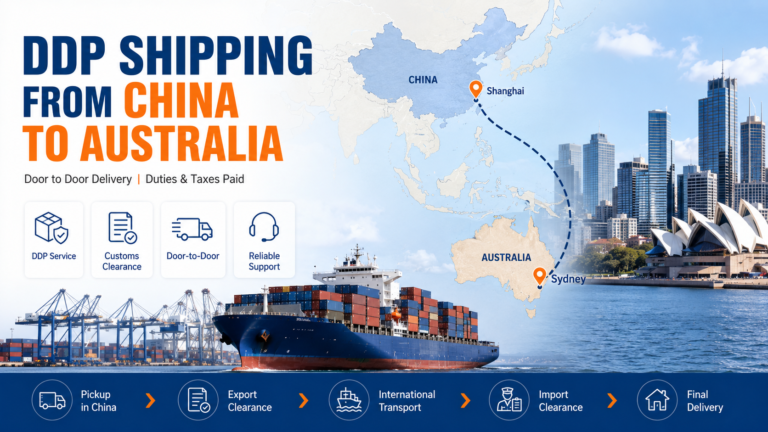
DDP Shipping from China to Australia Verified & Reviewed · Last updated June 2026 DDP shipping from China to Australia offers a simple door-to-do...
Read guide →
Learn everything about sea freight from China to Australia, including shipping costs, transit times, FCL vs LCL, customs clearance, ocean freight...
Read guide →Air Freight from China to Australia Verified & Reviewed · Last updated June 2026 Air freight from China to Australia is a fast and reliable shipp...
Learn more → Useful Resource Freight Forwarder from China to AustraliaFreight Forwarder from China to Australia Verified & Reviewed · Last updated July 2026 Freight forwarding from China to Australia depends on your...
Learn more →WhatsApp us