How to Find Reliable Suppliers in China

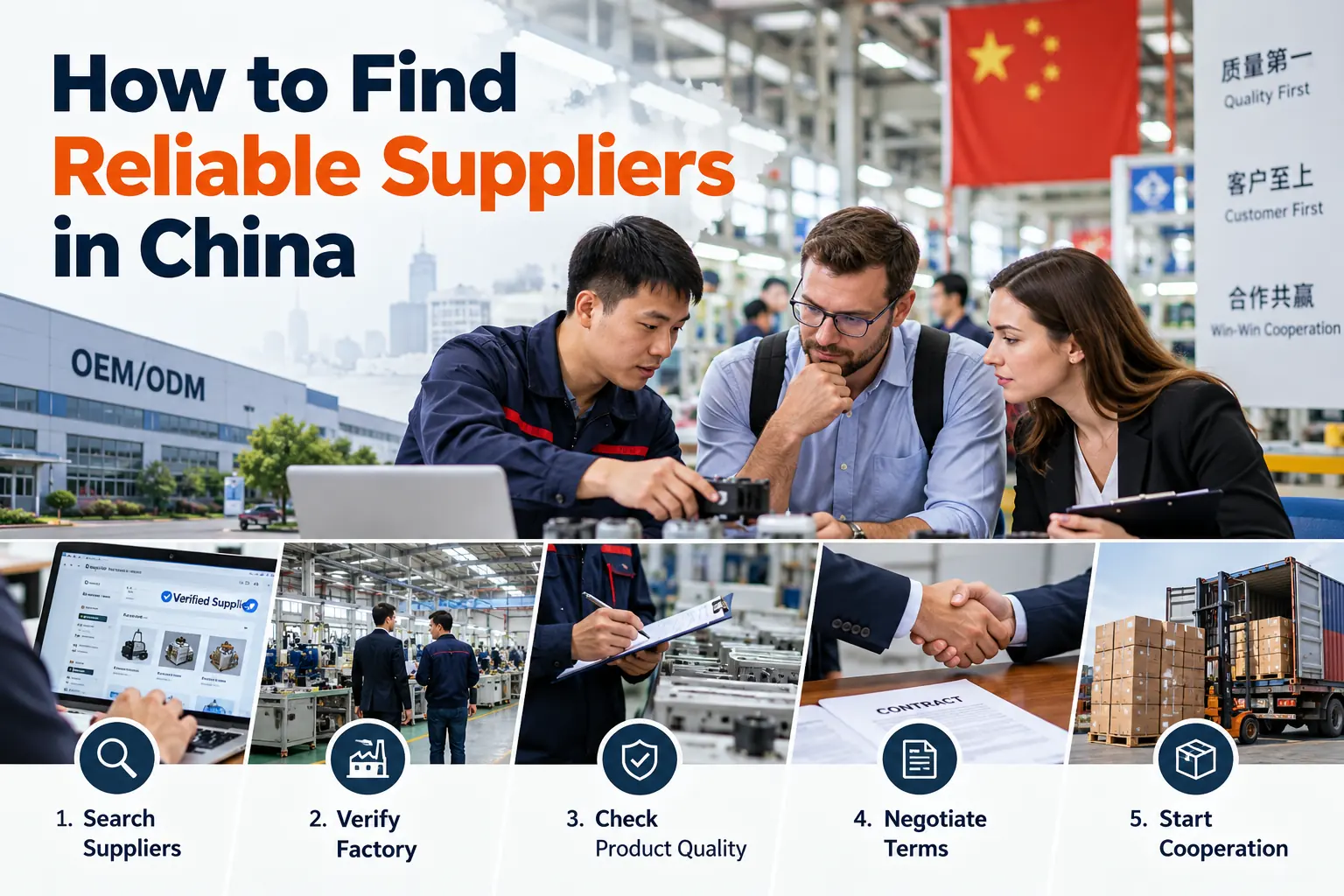
Finding reliable suppliers in China requires more than comparing prices. Buyers should verify the supplier’s business information, production capability, product quality, and payment terms before placing an order.

This guide explains how to find, compare, and verify Chinese suppliers, order samples, manage quality control, and reduce sourcing risks before shipment.

Find Suppliers

Verify Suppliers

Quality Control

How to find reliable suppliers in China sourcing process
10,000+ international shipments handled    Global sea, air & DDP shipping solutions    24/7 shipment tracking & customer support

Table of Contents

Define Your Product Requirements Before Searching

Before contacting suppliers, clarify exactly what you need. Clear product requirements make it easier to compare quotations and reduce misunderstandings later in the sourcing process.

If you simply ask suppliers for a price without providing enough product details, different companies may quote different materials, specifications, packaging, or quality levels. The prices may look comparable even though the products are not.

Your initial sourcing brief should normally include:

  • Product name and model

  • Materials

  • Dimensions

  • Technical specifications

  • Expected order quantities

  • Packaging requirements

  • Branding or customization

  • Certification requirements

  • Target delivery time

  • Destination market

For customized products, drawings, reference images, CAD files, or specification sheets can help suppliers understand the project more accurately.

Clear specifications also make it easier to evaluate product quality later. The same requirements can be used when comparing samples, confirming production, and conducting quality control before shipment.

Where to Find Reliable Suppliers in China

There is no single sourcing channel that works best for every product. Most buyers use several methods to build an initial list of suppliers and then compare the strongest candidates.

B2B Marketplaces

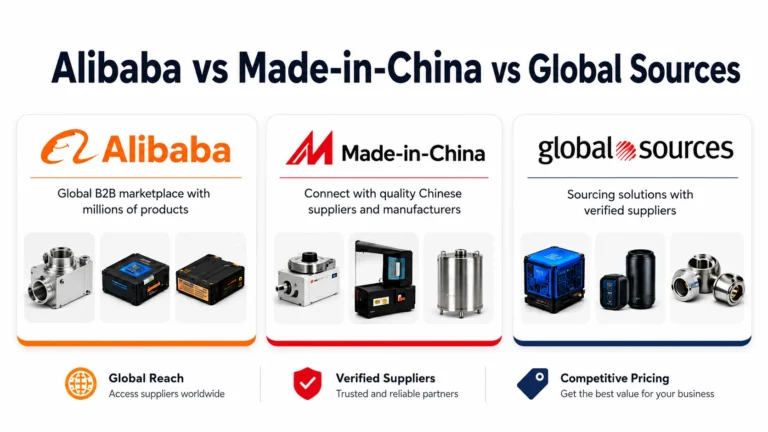
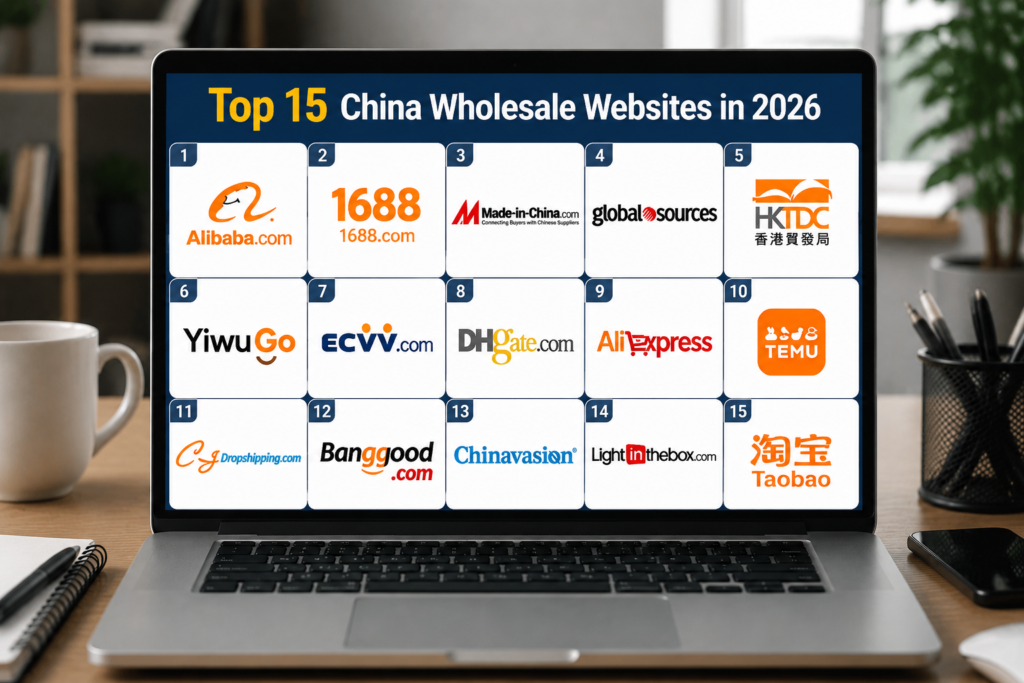
B2B marketplaces are often the first place businesses start when sourcing from China. They provide access to a wide range of Chinese suppliers, manufacturers, trading companies, and sellers.

Sourcing ChannelBest ForMain AdvantagesWhat to Check
AlibabaMost international buyersLarge supplier base and easy communicationSupplier identity and product capability
Global SourcesExport-oriented sourcingStrong international supplier networkProduct specialization and experience
Made-in-ChinaMachinery and industrial productsGood coverage of manufacturers in ChinaFactory capability and certifications
1688Domestic China sourcingBroad product range and local-market pricingLanguage, payment and export arrangements

A B2B marketplace is useful for supplier discovery, but it should not be the only form of verification. Marketplace badges, transaction records, and company profiles can help with initial screening, but they do not guarantee product quality or production capability.

Trade Shows and Other Sourcing Channels

Trade shows allow buyers to compare products and communicate directly with suppliers. The Canton Fair is one of the best-known trade shows in China, while many industries also have specialized exhibitions.

Trade shows can be useful for:

  • Viewing physical samples

  • Comparing several manufacturers

  • Discussing product details face to face

  • Evaluating communication

  • Discovering new product categories

Other sourcing strategies include Google searches, LinkedIn, industry directories, referrals, social media, local networks, and sourcing agents.

Searching phrases such as product name + manufacturer China or product name + factory China can also help you find manufacturers that are less active on large B2B platforms.

Manufacturer, Trading Company, or Sourcing Agent?

Finding reliable suppliers in China also means understanding what type of company you are working with.

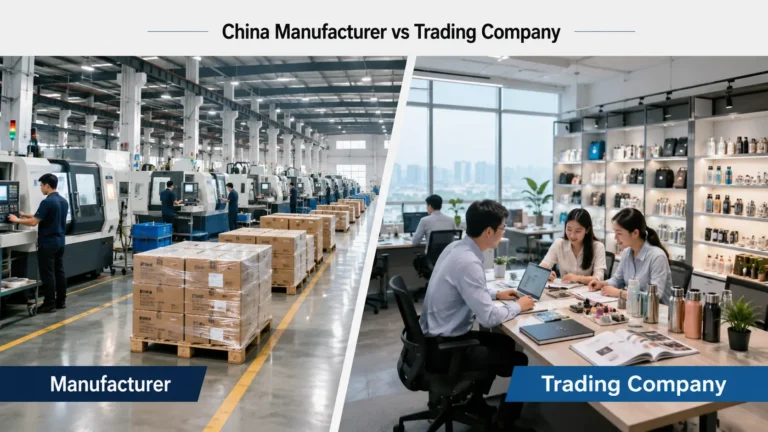
A manufacturer produces goods directly. A trading company sources products from one or more factories. A sourcing agent helps buyers identify suppliers and coordinate the sourcing process.

Supplier TypeMain StrengthsPossible LimitationsSuitable For
ManufacturerDirect production control and customizationMay have higher MOQ or narrower product rangeCustomized and repeat orders
Trading CompanyAccess to multiple factories and productsLess direct production controlMixed-product sourcing
Sourcing AgentLocal communication and coordinationAdditional service costBuyers needing support in China

A direct factory is not automatically more reliable than a trading company. Some manufacturers have strong production capabilities but weak communication or limited export experience. Professional trading companies may provide better coordination when buyers need several types of goods from different factories.

Finding the right manufacturer in China depends on your order size, product complexity, customization requirements, and long-term sourcing strategy.

If you work with a sourcing agent, confirm how the service is paid for and whether the agent receives commissions from suppliers. Transparency is important when building long-term partnerships.

How to Verify a Chinese Supplier

Supplier verification is one of the most important steps when learning how to find reliable suppliers in China. Before making a significant payment, you should confirm the company’s legal identity, production capabilities, product experience, and commercial information.

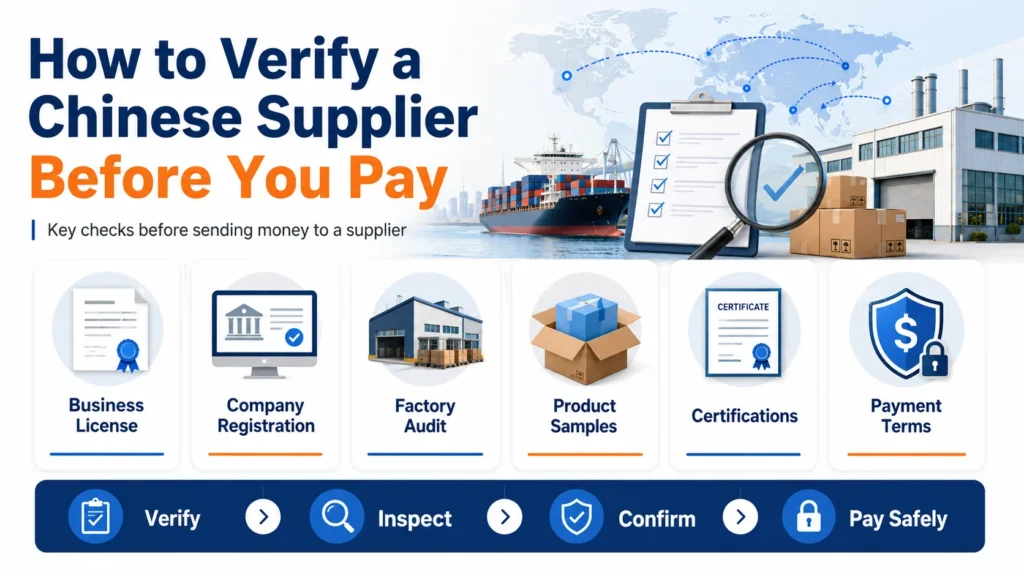
How to verify a Chinese supplier before you pay, including business license checks, company registration, bank account matching, factory audit, and red flags.

Check the Business License

Ask the supplier to provide its Chinese business license. Business licenses can help confirm the legal company behind the quotation and give you basic company information.

Check details such as:

  • Official Chinese company name

  • Unified Social Credit Code

  • Registered address

  • Legal representative

  • Business scope

  • Company registration status

The company name should be consistent across the quotation, Proforma Invoice, contract, and other commercial documents.

A valid business registration confirms that the business exists, but it does not prove that the company manufactures your product or has reliable quality control procedures.

Verify Production Capabilities

Ask where the product is actually manufactured and which processes are completed in-house.

A capable supplier should be able to explain its production process, equipment, factory location, production capacity, subcontracted work, and expected delivery timelines.

Factory photos, production videos, technical documents, and previous products can help you understand the supplier’s production capabilities.

For businesses considering a long-term relationship, factory visits or factory audits can provide deeper verification.

Product specialization also matters. A factory that has experience manufacturing your specific product may be more suitable than a business offering a very wide range of unrelated products.

Review Communication and Commercial Information

Communication is another important part of supplier verification. Language barriers and different communication styles can create misunderstandings about product details, packaging, quality standards, and production requirements.

Reliable Chinese suppliers should be willing to confirm important information in writing and answer technical questions clearly.

Before payment, compare the names and information shown on:

  • Business license

  • Quotation

  • Proforma Invoice

  • Purchase contract

  • Bank beneficiary details

  • B2B marketplace profile

Different company names do not always indicate a problem because some suppliers use a separate export company. However, the relationship should be explained clearly before payment.

Compare Quotations, MOQs, and Samples

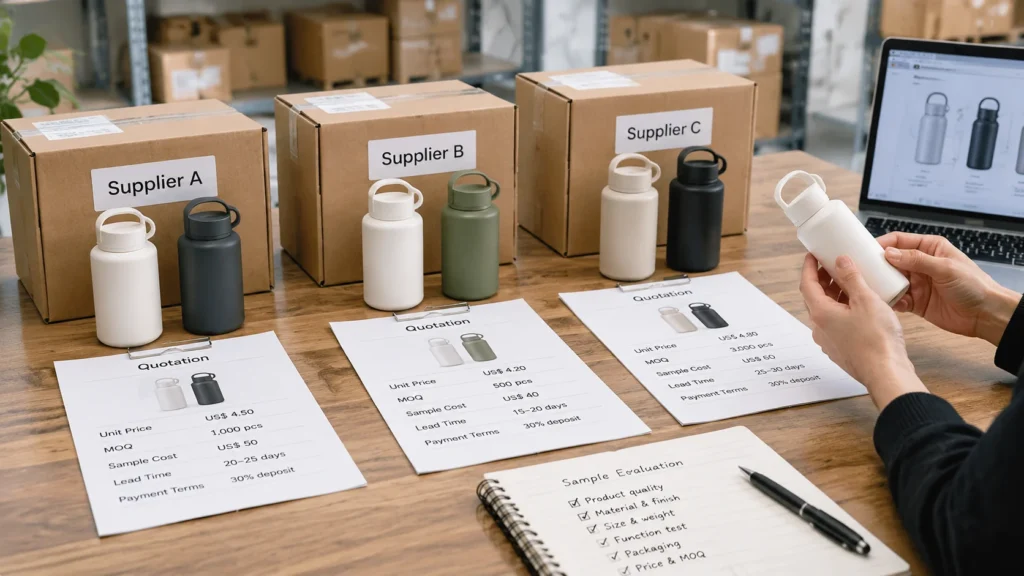
Once several suppliers have passed the initial screening, compare them using the same product requirements. The lowest quotation is not always the best offer because different suppliers may be quoting different materials, packaging standards, production methods, or quality levels.

Compare Quotations on the Same Basis

Send the same RFQ to each shortlisted supplier. This makes it easier to compare production costs and commercial terms accurately.

A supplier comparison should cover more than unit price.

ItemWhat to Compare
Unit PriceSame specification and quantity
MOQMinimum quantity per model or color
SampleSample cost and lead time
ToolingMold or development costs
ProductionCapacity and lead time
PackagingStandard or customized export packaging
Payment TermsDeposit and balance conditions
QualityInspection and defect handling

Send the same RFQ to each shortlisted supplier. This makes it easier to compare production costs and commercial terms accurately.

A supplier comparison should cover more than unit price.

Review MOQ and Production Requirements

MOQ may depend on the product, material, color, model, or level of customization. Some manufacturers apply one minimum quantity to the whole order, while others use separate minimums for each SKU.

Before confirming the order, clarify whether the supplier can support your expected volume now and in the future.

For long-term sourcing, production capacity is particularly important. A supplier may be suitable for a small first order but unable to support larger repeat orders as the business grows.

Order Samples Before Mass Production

Samples allow buyers to check whether the supplier can meet the agreed product requirements before committing to a larger order.

Depending on the product, review:

  • Material

  • Dimensions

  • Color

  • Finish

  • Function

  • Branding

  • Labeling

  • Packaging

Customized products may require several sample revisions. Once the final version is approved, keep the approved sample, drawings, or specification sheet as the reference for production.

Factory Audits and Quality Control

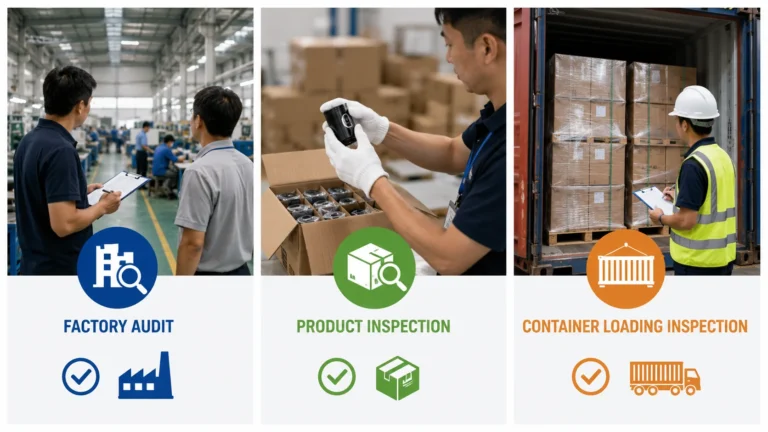
Factory audits and quality control serve different purposes. A factory audit helps confirm whether the supplier has the equipment, production capacity, processes, and management systems needed for your order. Quality control focuses on whether the actual goods meet the agreed specifications.

For new suppliers, customized products, high-value orders, or long-term sourcing projects, both methods may be useful.

Factory Audits

A factory audit gives buyers a clearer view of how the supplier operates instead of relying only on online profiles or sales information.

An audit may review:

  • Production equipment and manufacturing processes

  • Production capacity and workforce

  • Raw-material management

  • Quality control procedures

  • Warehouse and storage conditions

  • Production records and documentation

Factory audits can also help determine whether important processes are completed in-house or subcontracted to other factories.

Product Inspections

Even a capable factory can produce defective goods, so product inspection is still important. The appropriate inspection stage depends on the order value, product complexity, and supplier history.

Common inspection stages include:

  • Pre-Production Inspection to confirm materials and specifications

  • During Production Inspection to identify problems during manufacturing

  • Pre-Shipment Inspection to check finished goods before shipping

  • Container Loading Check to verify quantities, packaging, and loading conditions

Not every order requires every inspection stage.

Quality control works best when the standards are defined before production starts. Materials, dimensions, tolerances, appearance, functions, labeling, packaging, and acceptable defects should be documented whenever possible.

Supplier verification confirms who you are buying from, while quality control confirms whether the goods match what you ordered.

Payment Terms, Contracts, and Supplier Red Flags

Clear payment terms and written agreements help reduce sourcing risks. Before production begins, buyers should understand when payments are due, what the supplier must deliver, and how problems will be handled.

Confirm Payment Terms

Payment terms can vary depending on the product, order value, customization, and supplier relationship.

Before paying, confirm:

  • Deposit and balance schedule

  • Payment method

  • Bank beneficiary information

  • Conditions linked to inspection or shipment

Buyers may use bank transfers, platform protection, escrow services, or other agreed payment methods depending on the transaction.

If bank information changes unexpectedly, verify the new details before transferring funds.

Put Important Requirements in Writing

A Proforma Invoice or purchase contract should clearly define the commercial terms and product requirements.

Important information may include product specifications, quantity, price, payment terms, Incoterm, production time, packaging, inspection requirements, shipping documents, and handling of non-conforming goods.

For customized products, approved samples or technical drawings can also be attached to the agreement.

Avoid vague wording such as “standard quality” when measurable quality standards can be documented.

Watch for Supplier Red Flags

Some warning signs should trigger additional verification before the sourcing process continues.

Be cautious if a supplier:

  • Refuses reasonable business verification

  • Requests payment to an unexplained personal account

  • Frequently changes company or bank information

  • Provides certificates that do not match the product

  • Gives vague or incomplete quotations

  • Changes product specifications after confirmation

  • Refuses reasonable samples or inspections

One warning sign does not automatically mean a supplier is unreliable, but unresolved inconsistencies should be checked before further payment.

From Supplier Approval to Shipping From China

Finding a reliable supplier is only one part of sourcing from China. Once production is confirmed, buyers still need to manage inspection, export packing, pickup, shipping documents, and freight arrangements.

A typical workflow is:

China Rail Hub → Eurasian Rail Corridor → Central European Rail Terminal → Czech Republic → Final Delivery

Before the goods leave the factory, confirm that the finished products match the approved specifications and that packaging, quantities, labels, carton marks, weights, and dimensions are correct. If products are sourced from several factories, cargo can be consolidated in one warehouse before export to simplify checking and shipment planning.

Common shipping documents may include the commercial invoice, packing list, bill of lading or air waybill, and any product-specific certificates required by the destination market.

The shipping method should be selected based on cargo size, weight, urgency, destination, and budget. Depending on the shipment, options may include express, air freight, sea freight, rail freight, or road freight.

Connecting supplier management with quality control and logistics helps make the entire sourcing process more organized and predictable.

Frequently Asked Questions