
Related Guide
How to import and ship furniture from China?
Importing furniture from China has become a profitable venture for retailers, interior designers, and business owners worldwide. As China is the...
Read guide →An added benefit for eligible new customers shipping with Tonlexing.
Check Eligibility & Get a Quote →Subject to cargo eligibility, insurer approval and policy terms.
Coverage and insured value depend on the cargo, route and written insurer confirmation before shipment. Policy exclusions, deductibles and claims terms apply. The US$500,000 figure is a maximum coverage limit, not a guaranteed claim payment. Insurance premiums are not represented as free unless expressly confirmed in your quote.


Importing furniture from China to the UK gives businesses access to a wide range of designs, materials, and competitive prices, from solid wood furniture to upholstered sofas and office furniture.
This guide covers supplier sourcing, UK import requirements, shipping methods, costs, and delivery arrangements.
Furniture Sourcing
UK Import Requirements
Shipping Costs & Transit
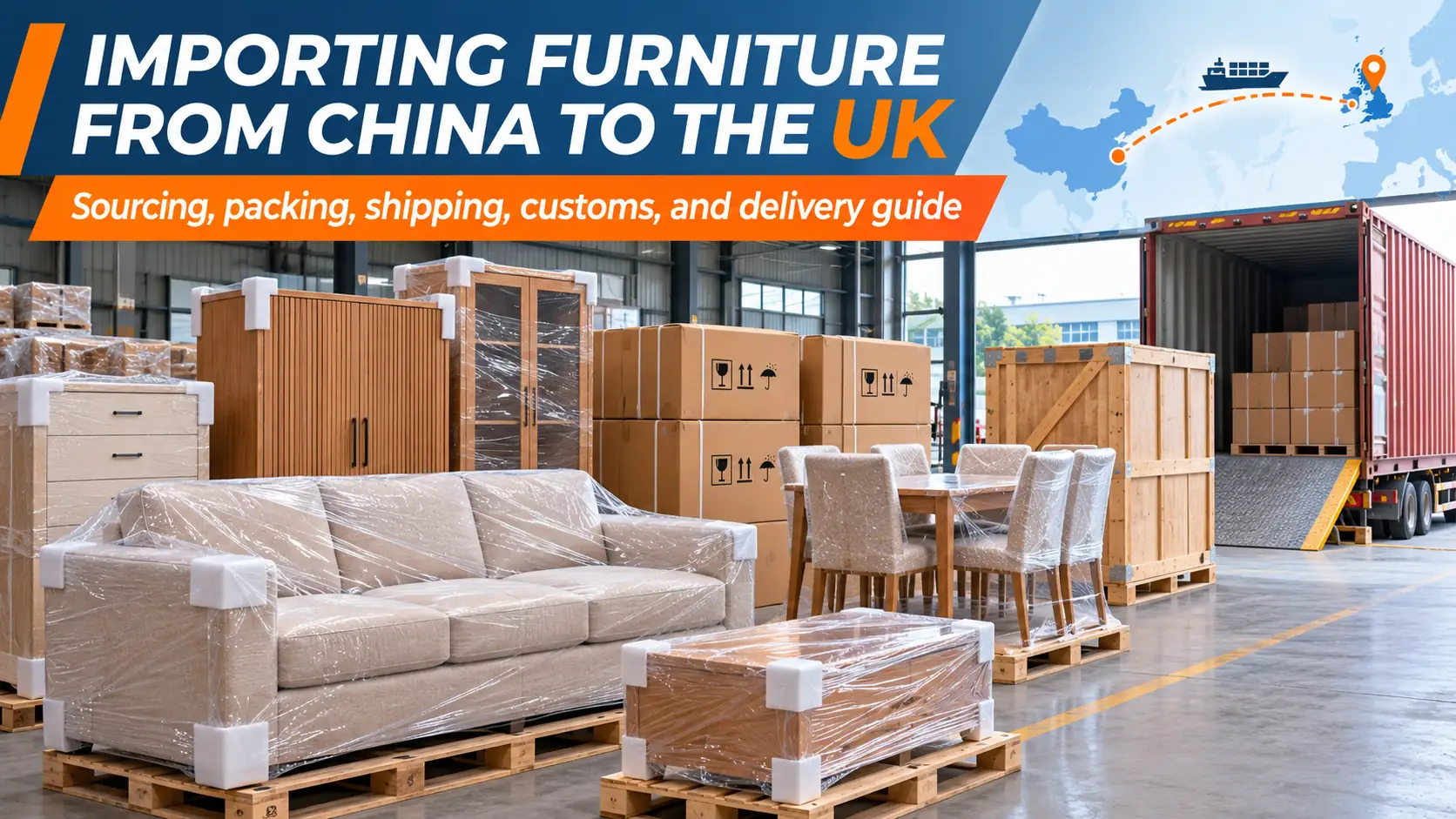
China manufactures a wide range of furniture for residential, commercial, and outdoor use. Different furniture types involve different materials, production methods, packaging requirements, and customs classifications.
Common products imported from China include:
Wooden furniture: Solid wood furniture, engineered wood cabinets, wardrobes, beds, bookshelves, and dining tables. Buyers should check wood species, board thickness, surface finishes, and construction quality.
Upholstered furniture: Sofas, sofa beds, armchairs, dining chairs, and padded seating made with fabric, leather, foam, and other filling materials.
Office furniture: Office chairs, ergonomic chairs, desks, conference tables, filing cabinets, and workstation systems.
Metal furniture: Steel or aluminium tables, shelving units, outdoor seating, and furniture with metal legs or frames.
Outdoor furniture: Rattan furniture, garden tables, patio chairs, and weather-resistant seating.
Bedroom and dining furniture: Bed frames, bedside tables, coffee tables, bar stools, dining chairs, and wardrobes.
Children’s furniture: Children’s beds, desks, chairs, and storage units, which may have additional product safety considerations.
Materials can affect customs classification, product compliance, packaging, and shipping costs. For example, a solid wood dining table may require different handling from a flat-packed engineered wood cabinet.
Before placing an order, confirm the product dimensions, materials, intended use, and finished specifications with the manufacturer.

Choosing the right supplier is an important part of sourcing furniture from China. A low purchase price does not necessarily represent good value if the factory cannot maintain consistent quality or meet the agreed production schedule.
Several regions in China have established furniture manufacturing industries.
Foshan, Guangdong, is particularly well known for residential furniture, including sofas, dining tables, dining chairs, and flat-packed products. The wider Pearl River Delta also has a large network of furniture factories, component suppliers, and packaging providers.
Buyers can find Chinese furniture manufacturers through several channels:
Online platforms: Alibaba and other B2B marketplaces allow buyers to compare furniture suppliers, product specifications, minimum order quantities, and quotations.
China International Furniture Fair (CIFF): This major industry exhibition provides opportunities to meet manufacturers, compare new designs, and discuss sourcing requirements.
Direct factory visits: Visiting a furniture factory allows buyers to inspect production equipment, materials, workshops, and manufacturing capabilities.
Sourcing agents: Local sourcing companies can help identify suitable Chinese factories, coordinate samples, and communicate with multiple suppliers.
For businesses planning to sell furniture in the UK, working with manufacturers familiar with export packaging and overseas product requirements can make purchasing and shipping easier.
Before confirming an order, compare suppliers based on more than their quotations.
Manufacturing capabilities: Check whether the factory produces the required furniture types and has the necessary equipment and production capacity.
Product samples: Request samples to assess materials, dimensions, colours, finishes, and workmanship.
Minimum order quantity: Confirm whether the MOQ matches your purchasing volume and target market.
Pricing structure: Compare unit prices using the same materials, specifications, packaging, and order quantities.
Supplier reliability: Review export experience, production capacity, communication, and previous customer references.
Production lead time: Agree on realistic manufacturing and delivery schedules before making payment.
Some suppliers are direct manufacturers, while others are trading companies working with several Chinese factories. Both can be suitable, depending on the order. The important point is to understand who is responsible for production, quality control, and product documentation.
Furniture quality should be checked during production rather than only when the goods are ready for export.
For larger orders, approve a reference sample and provide clear specifications covering dimensions, materials, colours, hardware, surface treatments, and packaging.
A pre-shipment inspection can help identify problems before the cargo leaves China. Important inspection points include:
Frame stability, joints, screws, and connecting hardware
Solid wood quality, engineered wood thickness, and surface finishing
Upholstery stitching, foam condition, and fabric colour
Metal frames, metal legs, and protective coatings
Tempered glass panels and other fragile components
Product dimensions, assembly instructions, and accessories
Carton strength and packaging condition
For upholstered furniture, also review relevant test reports and material specifications to check whether the products meet the requirements of the intended UK market.
Agreeing on inspection procedures and acceptable defect levels before production helps reduce disputes between buyers and suppliers.
Furniture imports into the UK are subject to customs procedures, taxes, and product safety rules. Requirements vary according to the product’s materials, construction, and intended use. These should be considered during purchasing and production, not only when the shipment reaches the UK.
Fire safety is particularly important when importing sofas, armchairs, sofa beds, and other covered upholstered domestic furniture.
The Furniture and Furnishings (Fire) (Safety) Regulations 1988, as amended, establish flammability requirements for products within their scope. The foam, filling materials, upholstery fabric, and other components can all affect whether the finished product meets the applicable requirements.
Buyers should discuss these specifications with the Chinese manufacturer before production. Relevant test reports may reference:
BS EN 1021-1: Cigarette ignition testing
BS EN 1021-2: Match-flame ignition testing
The applicable testing requirements depend on the furniture and its regulatory scope, so these standards should not be treated as universal certification requirements for every product.
The 2025 amendments came into force on 30 October 2025. They removed the requirement for display labels on new products, while permanent labelling requirements remain for covered furniture. The amendments also changed the scope of the regulations for certain baby and children’s products.
Furniture materials may also fall under UK REACH requirements. Chemicals used in foam, adhesives, fabrics, and surface coatings may need to be assessed against applicable restrictions and substance requirements. A generic REACH certificate does not automatically demonstrate that every component complies.

For solid wood furniture, timber legality is another consideration. Under the UK Timber Regulations, businesses first placing covered timber products on the Great Britain market must carry out due diligence to establish that the wood was legally harvested.
Buyers may need information from their Chinese furniture supplier about timber species, quantities, country of harvest, and supporting evidence of legal sourcing.
ISPM 15 is a separate requirement concerning wooden packaging used in international shipping, rather than the furniture itself. If a shipment uses solid wood pallets, crates, or dunnage, the packaging generally needs approved treatment and the appropriate ISPM 15 mark for entry into Great Britain.
Plywood and other processed wood packaging are generally exempt from these solid wood packaging requirements.
Businesses importing furniture commercially into Great Britain generally need a GB EORI number to complete customs declarations. For Northern Ireland, different EORI arrangements may apply depending on the customs procedure and movement of goods.
UK import declarations are submitted through the Customs Declaration Service (CDS). Importers can handle the process themselves or appoint a customs broker to arrange customs entry and clearance.
The main shipping documents include:
Commercial Invoice: Shows the seller, buyer, product descriptions, quantities, unit prices, and total shipment value.
Packing List: Details carton numbers, package dimensions, gross weight, net weight, and cargo contents.
Bill of Lading: Issued for sea freight shipments as evidence of the contract of carriage and receipt of cargo.
EORI Number: Identifies the relevant economic operator for applicable UK customs procedures.
Product Test Reports: Relevant fire safety and material compliance evidence where applicable.
Timber Due Diligence Records: Required where the importer has obligations under the applicable timber regulations.
Product descriptions should be specific. For example, “wooden dining table” or “upholstered office chair” provides more useful classification information than simply declaring the goods as “furniture”.
A freight forwarder can coordinate transportation and shipping documents, while a customs broker can assist with customs declarations and clearance. These services can be arranged together or separately.
Import duty on furniture from China depends on the UK commodity code, materials, construction, and intended use. Indicative rates for some furniture categories include:
Wooden, metal, plastic, and upholstered furniture: Many common categories have a 0% duty rate.
Bamboo, rattan, and cane furniture: Certain categories carry a 4% duty rate.
Fitted wooden kitchen units: Some classifications may attract 2% duty.
These are indicative rates, not blanket rates. Check the specific commodity code in the UK Trade Tariff before shipping.
Import VAT: 20% is generally charged on furniture imports. The calculation includes:
Customs value of the goods
Applicable Customs Duty
Relevant transport and insurance costs
Other expenses included under HMRC valuation rules
VAT-registered businesses may use Postponed VAT Accounting (PVA) to report import VAT on their VAT returns instead of paying it immediately at the border, subject to the applicable VAT recovery rules.
The right shipping method depends on cargo volume, furniture dimensions, value, and delivery requirements. Sea freight is generally the preferred option for commercial furniture shipments because it can accommodate bulky products at a lower transportation cost than air freight.
Full Container Load (FCL) shipping is suitable for businesses importing large quantities of furniture or enough cargo to use a 20ft or 40ft container.
FCL provides dedicated container space, making it easier to arrange loading plans and reduce handling associated with shared cargo.
It is particularly suitable for:
Large orders from one furniture manufacturer
Bulk shipments for furniture retailers
Heavy or oversized furniture
Products requiring careful loading arrangements
A full container load can offer better transportation costs per unit when shipment volume is sufficient.
Before booking, confirm the container’s internal dimensions, maximum payload, and loading requirements. Furniture should be arranged to minimise unused space without placing excessive pressure on cartons or fragile components.
Less Than Container Load (LCL) shipping is suitable when your cargo does not require an entire container.
Your furniture shares container space with goods from other importers. The cargo is collected and consolidated at a warehouse in China before being loaded into a container.
LCL is useful for smaller orders, product collections, and businesses purchasing from multiple suppliers. It allows importers to ship furniture without waiting until they have enough goods to fill a full container.
However, LCL cargo usually involves additional warehouse handling during consolidation and deconsolidation. Furniture packaging should provide adequate protection against scratches, pressure, and impact.
When comparing LCL quotations, check the minimum chargeable volume, warehouse fees, destination CFS charges, and final delivery arrangements.
Air freight is mainly suitable for small, high-value, or urgent furniture shipments, such as samples, replacement components, and selected lightweight products.
Charges are generally based on chargeable weight, which considers both actual weight and volumetric weight. Because furniture can take up considerable space, this option is usually less economical for large commercial orders.
Sea freight transit time depends on the Chinese departure port, UK destination port, shipping line, vessel schedule, and routing.
For planning purposes, many FCL services take around 30–40 days port to port. LCL shipments may take longer because of warehouse receiving, consolidation, and deconsolidation.
Major UK gateways for furniture shipments include Felixstowe, Southampton, and London Gateway.
Port-to-port transit time does not include factory collection, export customs, destination handling, UK customs clearance, or inland transportation. Confirm the actual sailing schedule and estimated arrival date with your freight forwarder before making delivery commitments.
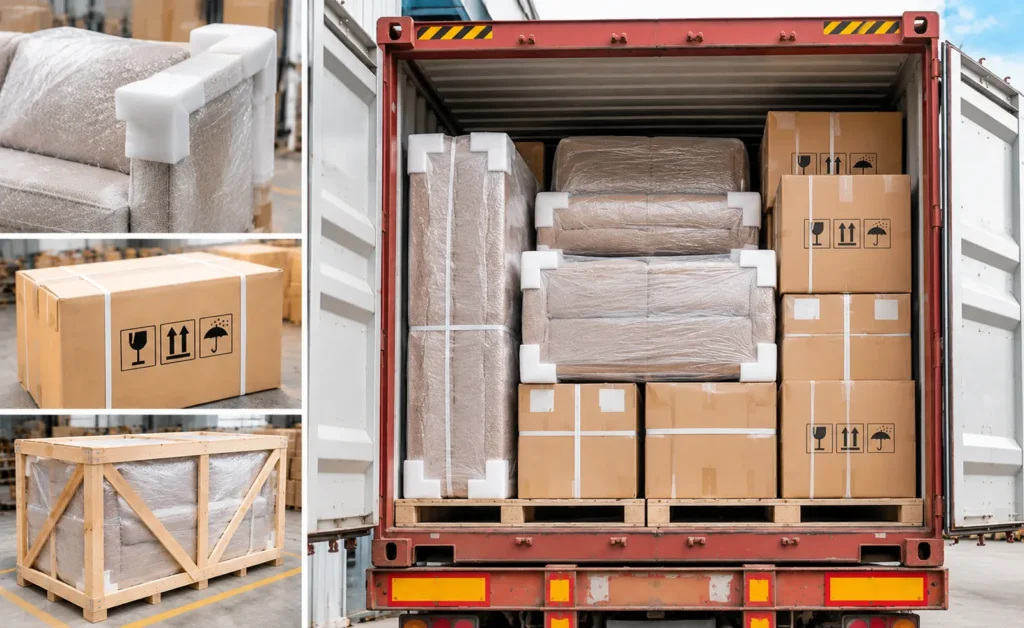
Furniture packaging needs to protect products against moisture, impact, scratches, and movement during transportation. This is particularly important for upholstered furniture, solid wood products, glass components, and flat-packed items.
Before cargo collection, coordinate the following with the furniture supplier:
Disassembly: Remove detachable legs, handles, and other components where possible to reduce shipping volume.
Surface protection: Use foam sheets, protective film, or suitable materials to prevent scratches.
Corner protection: Reinforce table corners, cabinet edges, and other vulnerable areas.
Fragile components: Secure tempered glass panels, mirrors, and decorative components separately.
Moisture protection: Use suitable moisture-resistant packaging and ensure products are dry before packing.
Carton identification: Clearly mark product models, quantities, carton numbers, and handling instructions.
For flat-packed furniture, check that screws, fittings, accessories, and assembly instructions are packed correctly.
If wooden pallets or crates are used, confirm whether they are solid wood and whether ISPM 15 treatment and marking are required.
The total cost of importing furniture from China to the UK can be around 30%–50% higher than the factory price after adding international freight, port charges, customs clearance, import duties, and other expenses. This is only a rough budgeting estimate. The actual increase depends on shipment volume, furniture value, shipping method, destination charges, and tax arrangements.
Ocean freight is usually the largest logistics expense after the furniture purchase itself. LCL is suitable for smaller shipments, while FCL is generally more practical for larger orders.
| Shipping Method | Best For | Typical Ocean Freight Cost | Transit Time |
|---|---|---|---|
| LCL (Shared Container) | Small orders under approximately 15–20 CBM | $70–$150 per CBM (£55–£120) | 35–45 days |
| 20ft Container (FCL) | Medium-sized orders, approximately 28 CBM | $1,700–$2,800 (£1,350–£2,200) | 30–40 days |
| 40ft High Cube (FCL) | Large commercial orders, approximately 68 CBM | $2,800–$4,600 (£2,200–£3,650) | 30–40 days |
Note: These are indicative ocean freight estimates, not fixed quotations. Actual rates fluctuate with seasonal demand, shipping routes, carrier availability, and market conditions. Transit times are estimates and may change due to transshipment or route disruptions. LCL shipments may also incur higher destination warehouse handling charges per CBM than FCL shipments.
Ocean freight is only one part of the total import cost. Buyers should also budget for expenses at both ends of the shipping route.
China origin charges: Factory collection, warehouse receiving, cargo consolidation, export handling, and documentation.
UK destination charges: Terminal handling, port charges, LCL deconsolidation, and warehouse handling.
Customs clearance: Customs broker fees, declaration charges, and other applicable clearance expenses.
Import duties and VAT: Customs Duty depends on the furniture’s commodity code, while the standard UK import VAT rate is 20%.
UK inland delivery: Transportation from the arrival port or warehouse to the final delivery address.
Unloading costs: Forklift rental, labour, or specialist equipment may be needed for heavy furniture and large shipments.
For example, a shipment of large dining tables or solid wood cabinets may require more container space than expected because of its dimensions and protective packaging. The delivery location also matters, particularly if the site has limited access or requires special unloading arrangements.
A useful way to estimate the real cost of furniture imports is:
Total Landed Cost = Furniture Purchase Price + China Origin Charges + Ocean Freight + UK Destination Charges + Customs Duty + Import VAT + Inland Delivery Costs
When comparing LCL and FCL, consider both the freight rate and additional handling fees. For shipments approaching 15–20 CBM, it is worth comparing LCL quotations with a 20ft container rate to see which option offers better overall value.
Once the supplier, product specifications, and shipping method have been confirmed, the import process can be organised into six main steps:
Select furniture suppliers: Compare Chinese manufacturers, product specifications, quotations, and production capabilities.
Confirm the order: Approve samples, materials, dimensions, quantities, packaging, and payment terms.
Complete production and inspection: Monitor manufacturing and arrange quality control before shipment.
Collect and consolidate cargo: Arrange collection from the furniture factory. If purchasing from multiple suppliers, send the goods to a designated warehouse for consolidation where practical.
Arrange international shipping: Select FCL or LCL according to cargo volume, delivery requirements, and budget. Coordinate bookings and shipping documents with the freight forwarder and shipping line.
Complete UK customs clearance and delivery: Prepare the customs declaration, settle applicable charges, arrange cargo release, and organise transportation to the final address.
For businesses sourcing furniture from several Chinese factories, warehouse consolidation can simplify shipping arrangements. Products from different suppliers can be received, checked, combined, and prepared for one export shipment.
A freight forwarder can coordinate supplier collections, warehouse operations, export documentation, ocean freight, customs clearance arrangements, and UK delivery. Agreeing on responsibilities and charges before booking helps avoid unexpected costs later.
Import duty depends on the furniture’s UK commodity code, materials, construction, and country of origin. Many common furniture classifications have a 0% rate, while certain bamboo, rattan, and cane furniture categories may attract 4%. Always check the UK Trade Tariff for the exact product classification.
Yes, furniture imports may be subject to UK Customs Duty. The applicable rate depends on the commodity code and relevant tariff measures. Not all furniture products have the same duty rate.
The standard UK VAT rate is 20%. Import VAT is generally calculated using the customs value together with applicable Customs Duty and relevant additional costs. VAT-registered businesses may be eligible to use Postponed VAT Accounting.
Yes. Individuals can import furniture from China for personal use, provided they meet the applicable customs and product safety requirements. Import VAT and any applicable Customs Duty may still be payable. EORI requirements depend on the importer’s circumstances and the type of customs declaration.
Upholstered domestic furniture covered by the Furniture and Furnishings (Fire) (Safety) Regulations 1988 must meet the applicable flammability requirements. Importers should check the materials used, obtain relevant test evidence, and ensure that permanent labelling requirements are met before placing covered products on the UK market.
Useful freight, customs and importing resources related to this shipping guide.
Importing furniture from China has become a profitable venture for retailers, interior designers, and business owners worldwide. As China is the...
Read guide →
How to Source Furniture from Foshan and Ship Overseas Verified & Reviewed · Last updated July 2026 Sourcing furniture from Foshan gives internati...
Read guide →
Explore sea freight from China to UK, including sea freight costs, transit times, ocean freight options, customs clearance, full container load...
Read guide →
FCL vs LCL Shipping to the UK: Costs & Transit Times Verified & Reviewed · Last updated February 2026 FCL vs LCL shipping to the UK affects total...
Read guide →How to Import from China to the UK: Complete Business Guide Verified & Reviewed · Last updated June 2026 Importing from China to the UK involves...
Learn more → Useful Resource Shipping Cost from China to UK (2026 Guide)Shipping Cost from China to UK (2026 Guide) Verified & Reviewed · Last updated June 2026 Shipping cost from China to UK in 2026 typically ranges...
Learn more →WhatsApp us