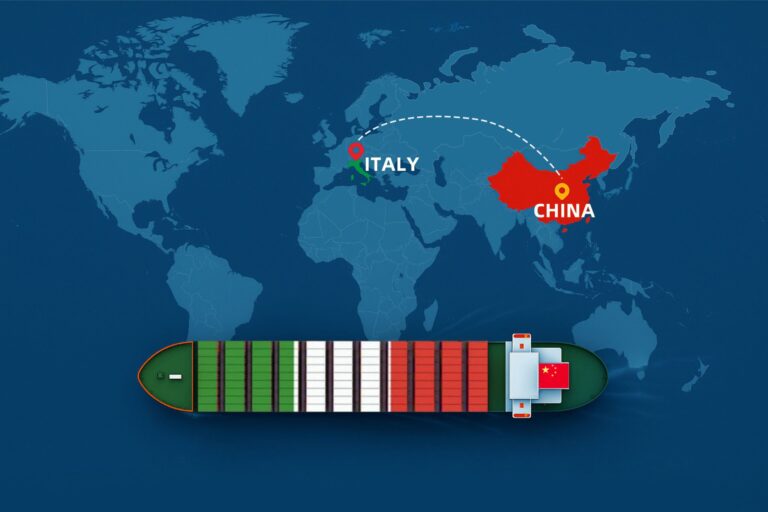


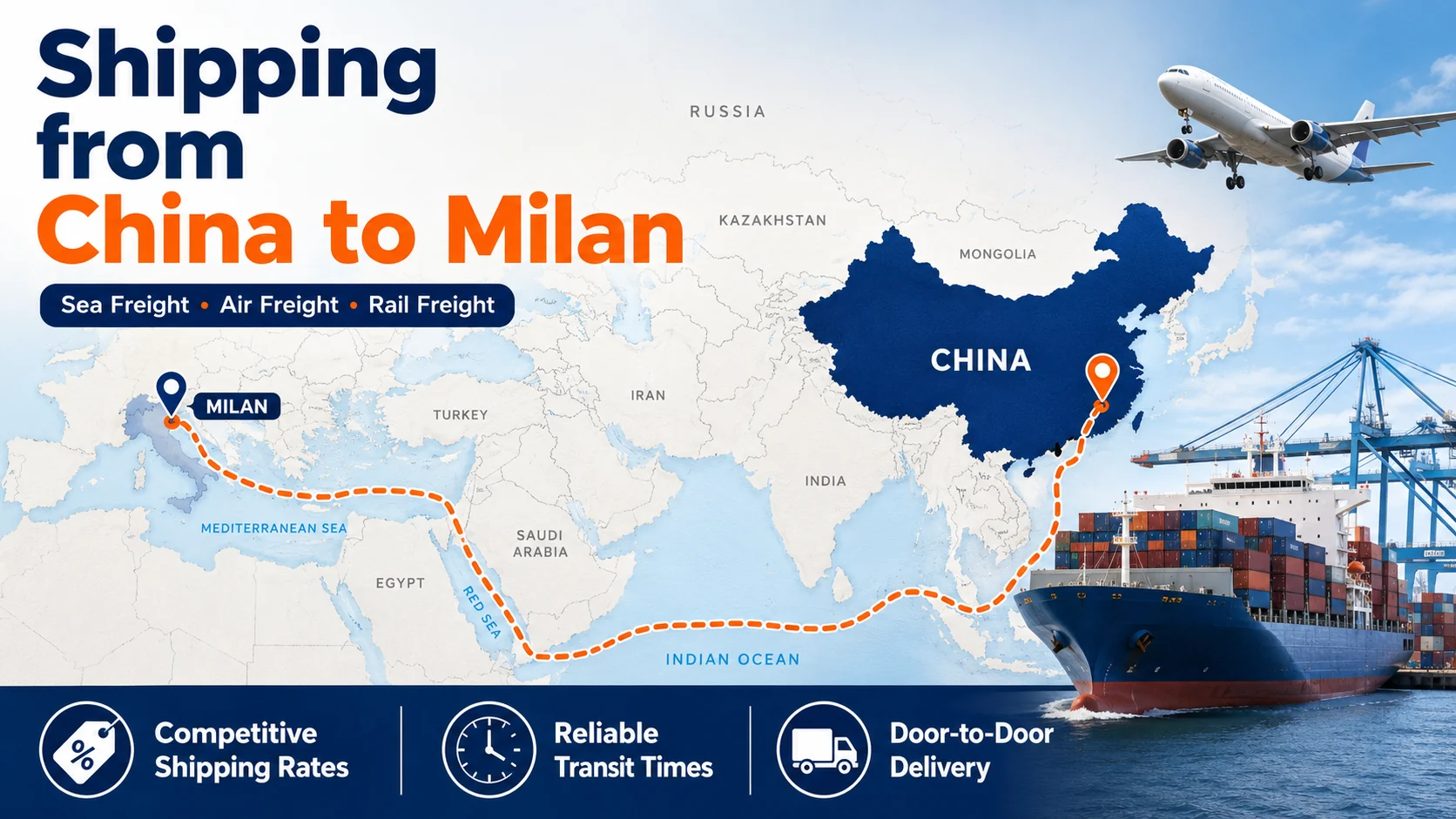
Shipping from China to Milan
- Verified & Reviewed · Last updated June 2026
Shipping from China to Milan can be arranged by express courier, air freight, rail freight, sea freight, and door to door shipping. Costs vary depending on cargo size, shipping method, chargeable weight, customs clearance, and final delivery address in Milan.
This guide explains shipping costs, transit time, air cargo via Milan Malpensa Airport, ocean freight through Italian ports such as Genoa and La Spezia, rail freight options, import duty, VAT, EORI requirements, and how to choose the right freight forwarder for China to Italy shipments.
Shipping method / Mode
Transit time range
Customs Clearance
- Experienced China-based logistics specialists
10,000+ international shipments handled Global sea, air & DDP shipping solutions 24/7 shipment tracking & customer support
Table of Contents
Shipping from China to Milan: Main Options
Shipping from China to Milan can be arranged by express courier, air freight, sea freight, rail freight, or door to door shipping. Each transportation method has a different balance of cost, speed, and cargo handling requirements.
For urgent shipments, express shipping and air freight are usually the best choices. For large-volume cargo, sea freight and ocean freight are more cost effective. For medium cargo that needs faster transit than ocean shipping, rail freight can be a useful option.
Common options include:
Express courier for samples, documents, and small parcels
Air freight for urgent shipments and high value goods
Sea freight for heavy cargo and full container load shipments
Rail freight for balanced cost and transit time
Door to door shipping for importers who want one logistics provider to manage the entire logistics process
Shipping Costs from China to Milan
Shipping costs from China to Milan vary depending on cargo size, actual weight, volumetric weight, departure city, shipping method, customs procedures, fuel surcharge, container space, and delivery address in Milan.
Air freight cost is usually calculated by chargeable weight. Sea freight is usually calculated by CBM for LCL cargo or by container type for FCL cargo. Express courier also uses dimensional weight pricing, which means package volume can affect the final shipping costs.
| Shipping Method | Estimated Cost | Best For |
|---|---|---|
| Express Courier | USD 8–14 per kg | Samples, documents, small parcels |
| Air Freight | USD 4.50–9.00 per kg | Urgent shipments, air cargo, high value goods |
| Air Freight Door to Door | USD 6–10 per kg | Time sensitive cargo with final delivery |
| Rail Freight | USD 180–260 per CBM | Medium-volume cargo |
| Sea Freight LCL | USD 60–120 per CBM | Small and medium ocean freight |
| 20ft Container Load | USD 2,300–3,200 | Heavy cargo, full container load |
| 40HQ Container Load | USD 3,800–5,200 | Large-volume commercial cargo |
These freight rates are general references only. Actual prices may vary depending on market demand, airline space, cargo ships, port congestion, Italian customs inspection, and final delivery requirements.
Express Shipping from China to Milan
Express shipping is the fastest and simplest way to move small parcels from China to Milan. It is commonly used for samples, replacement parts, documents, e-commerce parcels, and urgent shipments that require fast delivery.
Major express courier companies can provide direct delivery from suppliers in China to the consignee’s address in Milan. Express shipping from China to Italy usually takes 3 to 7 days, depending on customs clearance and the delivery postcode.
Express courier is suitable when:
The shipment is small and urgent
The cargo value is high but the volume is limited
The importer wants simple door to door delivery
The package does not require complex customs procedures
For larger shipments above 100 kg, air freight services are often more cost effective than express courier.
Air Freight from China to Milan
Air freight is one of the most reliable shipping options for time sensitive cargo from China to Milan. It is widely used for electronics, fashion products, medical supplies, machinery parts, automotive components, and other high value goods.
Air freight from China to Italy usually takes 3 to 7 days. Airport-to-airport service can be faster, but the consignee needs to arrange customs clearance and local pickup. Door to door air freight is easier because the freight forwarder manages pickup, export declaration, air cargo transport, Italian customs clearance, and final delivery.
Major Airports for Air Cargo
Most air cargo to Milan arrives at Milan Malpensa Airport, which is the main cargo airport serving Milan and northern Italy. Some shipments may also move through Rome Fiumicino Airport or other European hubs before being delivered by road freight to Milan.
Common departure airports in China include:
Beijing Capital International Airport
Zhengzhou Xinzheng International Airport
Air China and other international airlines operate regular routes connecting China to Italy and Europe. The final routing depends on flight space, cargo type, and delivery times.
When Air Freight Is the Best Choice
Air freight is best when the shipment is urgent but too large for express courier. It gives importers faster transit than sea freight while keeping better cost control than courier services for medium-weight cargo.
Air freight is usually suitable for:
Cargo over 100 kg
High value goods
Urgent replacement parts
Fashion and seasonal products
Electronics and commercial samples
Shipments requiring timely delivery
Sea Freight from China to Milan
Sea freight from China to Milan is the most cost effective shipping method for large-volume cargo, heavy goods, and full container load shipments. Since Milan is an inland city, ocean freight usually arrives at Italian Mediterranean ports first, then moves by truck or rail to the final destination in northern Italy.
This shipping method is widely used for furniture, machinery, building materials, textiles, packaging products, household goods, and other commercial cargo that does not require urgent delivery. Compared with air freight, sea freight has a longer transit time but offers much lower shipping costs for bulky or heavy goods.
LCL Sea Freight from China to Milan
LCL sea freight is suitable when your cargo does not fill a full container. In this shipping method, your goods are consolidated with other shipments in one container and charged by CBM.
LCL is usually a good option for shipments from 1 CBM to around 15 CBM. It is cheaper than air freight, but the total shipping time is longer because the cargo needs consolidation, ocean shipping, unloading, customs clearance, and final delivery to Milan.
LCL sea freight is suitable for:
Small and medium-volume cargo
Importers with limited inventory volume
Goods from multiple suppliers in China
Shipments that are not time sensitive
Cargo that needs a lower cost than air freight
FCL Sea Freight from China to Milan
FCL means full container load. It is suitable when you have enough cargo to use an entire shipping container. For many importers, FCL is the preferred option when cargo volume exceeds 15 CBM or when products require greater protection during transportation.
Compared with LCL shipping, FCL reduces cargo handling and minimizes the risk of damage, contamination, or shipment mix-ups. It also provides more flexibility in terms of loading arrangements, container sealing, sailing schedules, and inland delivery planning.
The most commonly used container types include:
- 20GP Container – Suitable for heavy cargo with relatively lower volume, such as machinery parts, metal products, and industrial equipment.
- 40GP Container – A popular choice for general cargo that requires more loading space than a 20ft container.
- 40HQ Container – Offers additional height and is ideal for bulky goods, furniture, textiles, consumer products, and large-volume shipments.
FCL sea freight is widely used by manufacturers, wholesalers, retailers, and e-commerce businesses shipping large quantities of goods from China to Milan. It often provides better cost efficiency per unit and faster cargo handling at both origin and destination compared with consolidated LCL shipments.
Major Ports for Ocean Freight to Milan
Ocean freight from China to Milan usually moves through major Chinese ports and Italian Mediterranean ports. Since Milan is an inland city, containers first arrive at seaports in Italy and are then transported by truck or rail to their final destination in northern Italy.
Major departure ports in China:
- Shanghai Port
- Ningbo-Zhoushan Port
- Shenzhen Port
- Guangzhou Port
- Qingdao Port
- Tianjin Port
- Xiamen Port
- Hong Kong Port
Major arrival ports for Milan cargo:
- Genoa Port
- La Spezia Port
- Trieste Port
- Venice Port
- Livorno Port
Among these ports, Genoa and La Spezia are the most commonly used gateways for cargo destined for Milan because they offer efficient road freight connections and convenient access to northern Italy. The final routing depends on the departure port, carrier schedule, transit time requirements, and inland delivery arrangements.
Sea Freight Transit Time to Milan
Sea freight from China to Italy usually takes 20 to 35 days port to port. When customs clearance, cargo handling, port operations, and inland delivery to Milan are included, the total shipping time is usually 30 to 45+ days.
Transit time may vary depending on:
Departure port in China
Arrival port in Italy
Vessel schedule and transshipment route
Port congestion
Italian customs clearance
Inland delivery arrangement to Milan
For importers who want lower shipping costs and can accept longer delivery times, sea freight is usually the best shipping method from China to Milan.
Rail Freight from China to Milan
Rail freight is a middle option between air freight and sea freight. It is faster than ocean freight and cheaper than air freight, making it suitable for importers who want balanced delivery times and shipping costs.
Rail freight from China to Italy usually takes 18 to 24 days. Cargo can depart from Chinese rail hubs such as Xi’an, Chengdu, Chongqing, Zhengzhou, Wuhan, and Yiwu. After entering Europe, the cargo may move through central Europe or northern Italy before final delivery to Milan.
Rail freight is often suitable for:
Consumer goods
Machinery parts
Electronics
Textiles
Medium-volume cargo
Shipments that need faster transit than sea freight
However, rail freight is not suitable for every cargo type. Oversized cargo, dangerous goods, and products requiring special EU regulations should be checked before booking.

Door to Door Shipping from China to Milan
Door to door shipping is a convenient solution for importers who want one freight partner to manage the entire logistics process. Instead of arranging pickup, export, international freight shipping, customs clearance, and final delivery separately, the freight forwarder handles everything.
Door to door service can be arranged by express, air freight, sea freight, or rail freight. It is especially useful for Amazon Italy sellers, e-commerce companies, wholesalers, and businesses that do not have their own customs broker in Italy.
A complete door to door service may include:
Pickup from supplier or factory in China
Export customs declaration
International transportation
Import customs clearance in Italy
Import duty and VAT coordination
Cargo insurance if required
Final delivery to Milan
Door to door shipping simplifies logistics for both businesses and individuals, especially when shipping goods from multiple suppliers in China.
DDP and DDU Shipping to Milan
DDP and DDU are two common service terms used when shipping from China to Milan. The main difference is who is responsible for import customs clearance, import duty, VAT, and destination charges in Italy.
| Item | DDP Shipping to Milan | DDU Shipping to Milan |
|---|---|---|
| Customs Clearance | Handled by the freight forwarder | Handled by the importer or customs broker |
| Import Duty & VAT | Included or arranged before delivery | Paid by the importer after arrival |
| Best For | Importers who want simple door to door shipping | Importers with an EORI number and customs broker |
| Main Advantage | Easier process and clearer landed cost | More control over customs and tax payment |
DDP is usually better for small businesses, Amazon Italy sellers, and importers who want one freight partner to manage the entire logistics process. DDU is more suitable for companies that already have import experience in Italy.
Customs Clearance in Italy
Customs clearance is an important part of shipping goods from China to Milan. Italian customs follows the Union Customs Code and EU regulations. All products entering the EU must have a tariff code, correct documentation, and accurate declared value.
Proper documentation is essential for smooth customs clearance. Incomplete documents, incorrect HS code, unclear product descriptions, or missing certificates can cause customs clearance delays.
Required Customs Documents
Before shipping from China to Milan, the importer should prepare the necessary documentation in advance. The commercial invoice and packing list must match the actual cargo details.
Common documents include:
Packing list
Bill of lading or air waybill
EORI number
Product description
Declared customs value
Certificate or license if required
CE documents for regulated products
An EORI number is mandatory for importing goods into Italy. Without a valid EORI number, customs procedures may be delayed.
Italian Customs, Import Duty and VAT
Import duty from China to Italy usually ranges from 0% to 25%, depending on the HS code and product category. Italy also applies 22% import VAT to most shipments entering the country.
Some products may also be subject to anti dumping duties, especially when they fall under EU trade protection measures. Anti dumping duties can significantly increase the landed cost, so it is important to check the HS code before shipping.
Import VAT is usually calculated based on customs value, international freight cost, insurance, and import duty. If DDP shipping is selected, the freight forwarder may include duty and VAT handling in the total shipping solution.
Shipping Time from China to Milan
Shipping time from China to Milan depends on the shipping method, route, customs clearance, cargo handling, airline space, vessel schedule, and final destination address.
Express shipping usually provides the fastest delivery, while sea freight offers the lowest cost for larger cargo. Rail freight gives a balance between speed and price.
Typical transit time:
Express shipping: 3–7 days
Air freight: 3–7 days
Air freight door to door: 5–10 days
Rail freight: 18–24 days
Sea freight port to port: 20–35 days
Sea freight to Milan with customs and inland delivery: 30–45+ days
Shipping from Guangzhou to Milan by sea usually takes about 20 to 30 days port to port, depending on the vessel route and Mediterranean gateway. Total delivery time may be longer after customs clearance and inland delivery are included.
How to Avoid Delays and Reduce Costs
To avoid delays, importers should prepare accurate documents before cargo departure. The product name, HS code, declared value, weight, dimensions, carton quantity, and consignee details should be consistent across all documents.
For regulated goods, make sure the product meets EU regulations before shipping. Some products require CE certification, test reports, import licenses, labels, or other necessary documentation.
To reduce shipping costs:
Consolidate goods from multiple suppliers
Avoid oversized packaging
Compare air freight, rail freight, and sea freight
Book earlier during peak season
Confirm import duty and anti dumping duties before shipping
Choose the right container load option
Add cargo insurance for fragile or high value goods
Good planning helps reduce extra charges, avoid delays, and ensure timely delivery to Milan.
Why Choose a Freight Forwarder for China to Italy Shipping
A professional freight forwarder can help importers manage the entire logistics process from China to Italy. This includes pickup, consolidation, export handling, international logistics, customs clearance, cargo insurance, and final delivery.
A reliable freight partner can compare different shipping options, provide realistic transit time, check customs procedures, and help control total shipping costs. This is especially important for importers shipping goods regularly from China to Milan.
A good freight forwarder should provide:
Clear freight rates
Multiple shipping options
Air freight services
Sea freight and ocean freight booking
Rail freight solutions
Door to door delivery
Italian customs support
Tracking updates
Advice on import duty and VAT
For businesses importing from China to Italy, working with an experienced logistics provider can reduce risk and improve delivery reliability.
Frequently Asked Questions
How much does shipping from China to Milan cost?
Shipping costs from China to Milan depend on cargo size, shipping method, route, and delivery address. Air freight usually costs around USD 4.50–9.00 per kg, LCL sea freight may cost around USD 60–120 per CBM, and full container load shipping depends on container type and market freight rates.
What is the cheapest way to ship from China to Milan?
Sea freight is usually the cheapest shipping method for large-volume cargo. LCL is suitable for smaller shipments, while full container load service is better for cargo over 15 CBM.
What is the fastest shipping method to Milan?
Express shipping and air freight are the fastest options. Express courier usually delivers in 3 to 7 days, while air freight from China to Italy also takes around 3 to 7 days depending on route and customs clearance.
Which airport is used for air cargo to Milan?
Milan Malpensa Airport is the main airport for air cargo to Milan. Some shipments may also transit through Rome Fiumicino Airport or other European hubs before final delivery.
How long does sea freight take from China to Milan?
Sea freight from China to Italy usually takes 20 to 35 days port to port. When customs clearance and inland delivery to Milan are included, the total shipping time is usually 30 to 45+ days.
Related Logistics Guides
Useful freight, customs and importing resources related to this shipping guide.
Related Guide
Shipping Cost from China to Italy
Shipping Cost from China to Italy (2026 Guide) Verified & Reviewed · Last updated April 2026 Shipping cost from China to Italy in 2026 typically...
Read guide →
Related Guide
Sea Freight from China to Italy
Sea Freight from China to Italy: Cost, Transit Time, Ports & Customs Guide Verified & Reviewed · Last updated June 2026 Sea freight from China to...
Read guide →
Related Guide
Air Freight from China to Italy
If you’re looking for the fastest and most secure way to ship goods from China to Italy, air freight is your ideal solution. With increasing trad...
Read guide →
Useful Resource
How Long Does It Take to Ship from China to Italy?
How Long Does It Take to Ship from China to Italy is a question many importers ask when planning their supply chain. Shipping from China to Italy...
Learn more → Useful Resource DDP Shipping from China to ItalyDDP shipping from China to Italy is the most efficient solution for importers seeking all-inclusive logistics with no customs hassle or hidden fe...
Learn more →