
Shipping Solar Inverters from China

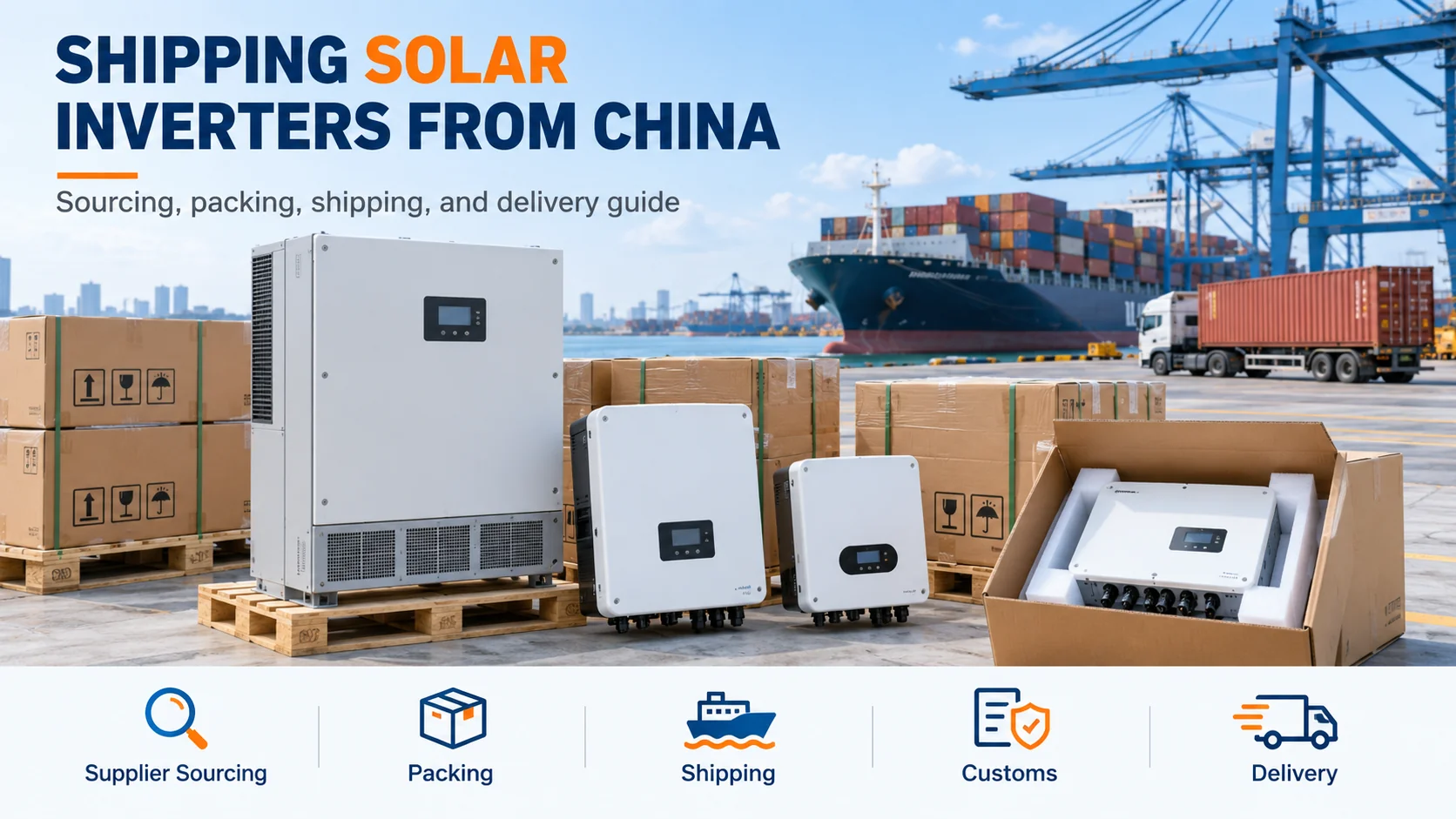
Shipping solar inverters from China requires more planning than ordinary cargo because these products are sensitive electronic equipment that can be affected by moisture, vibration, and improper handling during transit.

Learn about supplier selection, shipping methods, export documents, customs clearance, and compliance requirements for importing solar inverters from China safely and efficiently.

Shipping Methods

Shipping Costs

Customs Documents

Shipping solar inverters from China with international freight solutions
10,000+ international shipments handled    Global sea, air & DDP shipping solutions    24/7 shipment tracking & customer support

Table of Contents

Why Import Solar Inverters from China?

China has developed a complete renewable energy supply chain covering solar panels, solar inverters, battery storage systems and related electrical components. This makes China an important sourcing market for businesses looking for reliable solar equipment.

Importing solar inverters from China can provide several advantages:

  • Wide selection of inverter models and power capacities

  • Competitive manufacturing costs

  • OEM and customized production options

  • Experienced solar equipment manufacturers

  • Integration with solar power systems and energy storage solutions

However, product price is only one part of the total import cost. Buyers also need to consider supplier reliability, product quality, shipping arrangements and local regulations.

Advantages of Sourcing Solar Inverters from China

Chinese manufacturers supply solar inverters for different applications, from small residential installations to large commercial projects.

Common advantages include:

  • Mature manufacturing capabilities

  • Flexible production options

  • Experience with international exports

  • Availability of replacement parts and technical support

For businesses importing complete solar solutions, coordinating solar inverters with other components such as solar panels and battery storage can improve supply chain efficiency.

Solar Equipment Supply Chain in China

Solar inverter shipments are often part of a larger solar equipment order, which may include:

  • Solar panels

  • Energy storage systems

  • Lithium batteries

  • Mounting components

  • Monitoring equipment

Understanding the complete supply chain helps importers plan transportation, documentation and delivery requirements more effectively.

Solar Inverter Shipping Overview

Before arranging transportation, importers should understand the basic shipping characteristics of solar inverters.

ItemDetails
ProductSolar inverter
Cargo typeElectronic equipment
Main shipping methodsSea freight, air freight and express
Pricing factorsWeight, volume, destination and service level
Main concernsPackaging, documentation and compliance

Solar inverters are generally shipped as general cargo, but special requirements may apply when the shipment includes lithium batteries or other regulated components.

Types of Solar Inverters Available from China

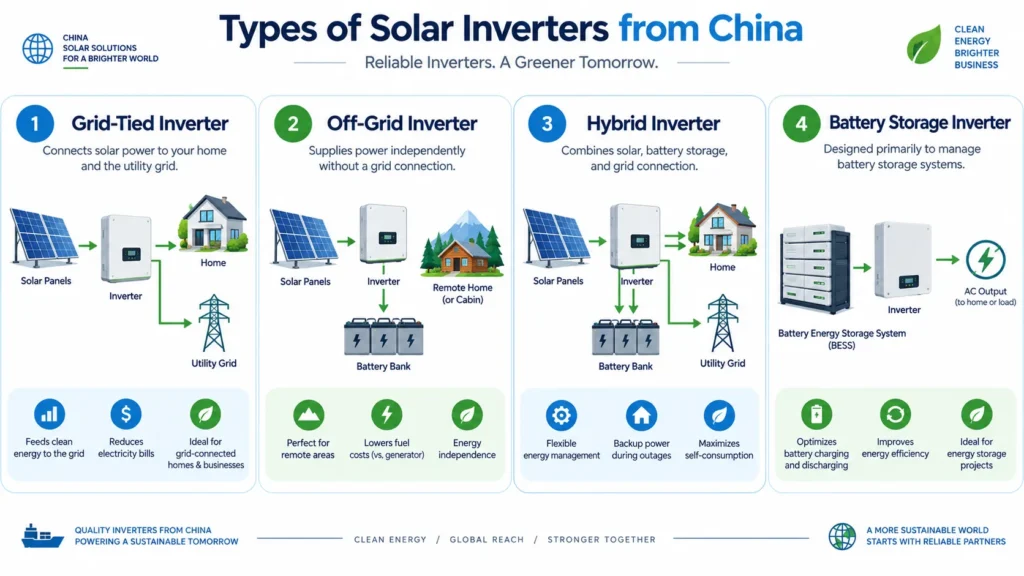
Solar inverters are designed for different energy applications. Choosing the correct inverter type before shipping helps avoid installation and compatibility problems.

Types of solar inverters from China including grid-tied, off-grid, hybrid and battery storage inverters

Grid-Tied Solar Inverters

Grid-tied inverters are connected to the public electricity network and are commonly used for residential, commercial and industrial solar systems.

Before import, buyers should confirm:

  • Local grid standards

  • Voltage and frequency requirements

  • Required certifications

Off-Grid Solar Inverters

Off-grid inverters are designed for independent solar systems without direct connection to the utility grid.

They are commonly used in:

  • Remote areas

  • Backup power systems

  • Independent solar projects

These systems are often combined with battery storage, so battery compatibility should be confirmed before shipment.

Hybrid Solar Inverters with Battery Storage

Hybrid solar inverters combine solar power generation with energy storage.

They are commonly used for systems requiring:

  • Backup power

  • Energy storage

  • Improved energy management

When hybrid inverters are shipped with lithium batteries, additional transportation and documentation requirements may apply.

How to Choose a Reliable Solar Inverter Supplier in China

Choosing the right supplier is an important step when importing solar inverters. A reliable manufacturer should provide clear product information, quality documentation and export experience.

Verify Factory Capability and Export Experience

Before placing an order, buyers should check:

  • Factory location

  • Production capacity

  • Manufacturing experience

  • Export history

  • Quality control procedures

Working with an experienced supplier can reduce risks related to inconsistent quality, delivery delays and after-sales issues.

Check Certifications and Testing Reports

Solar inverters must meet electrical safety and performance requirements in the destination market.

Depending on the country, buyers may need to confirm:

  • CE certification

  • UL certification

  • FCC requirements

  • IEC testing reports

  • Local grid approvals

Certification requirements vary by destination, so they should be confirmed before production and shipment.

Avoid Supplier Risks

Before making payment, importers should verify:

  • Product specifications

  • Warranty terms

  • Technical support

  • Export documentation capability

Clear communication with the supplier helps prevent problems during production and delivery.

Shipping Methods for Solar Inverters from China

Solar inverters can be transported by sea freight, air freight or express shipping depending on shipment size, urgency and destination.

Sea Freight for Solar Inverter Shipments

Sea freight is the most common method for commercial solar inverter shipments because it provides higher capacity and lower transportation costs.

It is suitable for:

  • Distributor orders

  • Solar installation projects

  • Large inventory shipments

Importers can choose:

For most commercial solar inverter imports, sea freight provides the best balance between cost and capacity.

Air Freight for Urgent Orders

Air freight is suitable when delivery speed is more important than transportation cost.

Typical applications include:

  • Samples

  • Replacement units

  • Urgent project requirements

Because solar inverters are relatively heavy electronic products, air freight costs are usually higher than sea transportation.

Express Shipping for Small Quantities

Express services are mainly used for:

  • Testing samples

  • Small accessories

  • Small replacement shipments

For regular commercial orders, sea or air freight is usually more practical.

Solar Inverter Shipping Costs from China

The cost of shipping solar inverters from China depends on multiple factors, including shipment size, transportation method and destination requirements.

Importers should evaluate the complete landed cost instead of only comparing basic freight charges.

Factors Affecting Shipping Costs

Main factors include:

  • Shipment weight and volume

  • Shipping method

  • Departure and destination ports

  • Packaging requirements

  • Delivery location

  • Required logistics services

Solar inverter shipments may require additional handling because the products contain sensitive electronic components.

Sea Freight vs Air Freight Cost Considerations

Sea freight is generally preferred for:

  • Large orders

  • Commercial projects

  • Regular inventory shipments

Air freight is more suitable for:

  • Samples

  • Urgent replacement units

  • Small high-value shipments

Choosing the correct transportation method depends on the balance between cost, delivery time and project requirements.

Additional Import Costs

Besides freight charges, importers should consider:

  • Export handling fees

  • Customs clearance charges

  • Import duties and taxes

  • Port handling fees

  • Local delivery costs

A complete cost calculation helps businesses understand the real import expense.

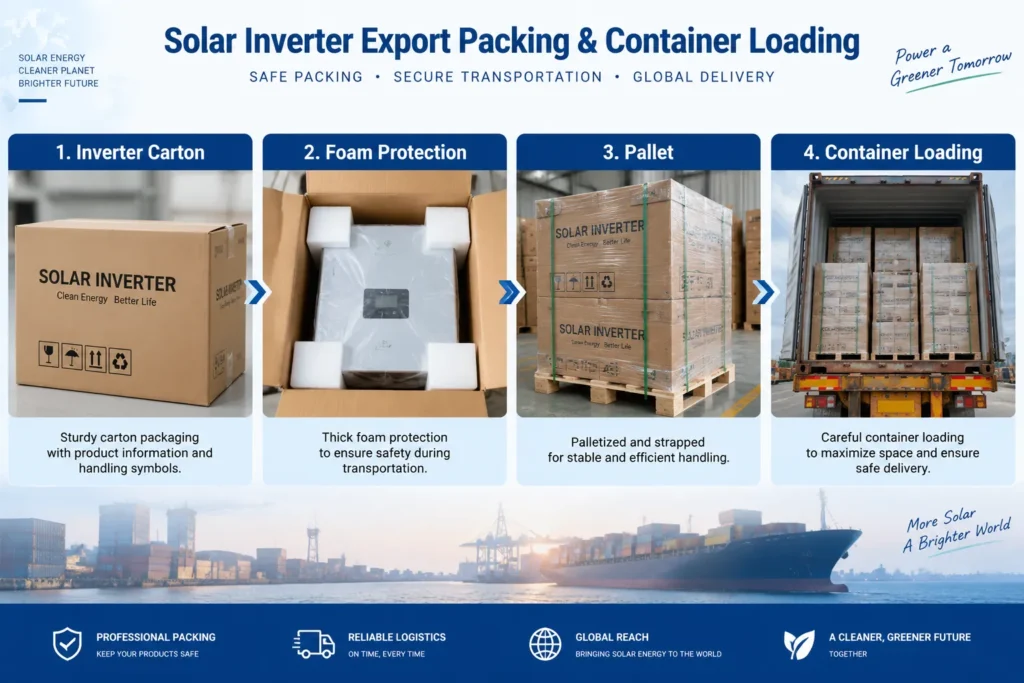
Solar Inverter Export Packing and Loading

Solar inverters contain electronic components that require proper protection during international transportation.

Protecting Sensitive Electronic Components

Export packaging should help protect against:

  • Moisture

  • Shock

  • Vibration

  • Long-distance handling

Common protection methods include:

  • Reinforced cartons

  • Foam cushioning

  • Pallet packaging

  • Moisture protection materials

Container Loading Requirements

For larger shipments, proper loading helps improve cargo safety and space utilization.

Important considerations include:

  • Stable pallet arrangement

  • Weight distribution

  • Secure positioning

  • Protection during unloading

A suitable packing and loading plan reduces the risk of damage during transportation.

Customs Clearance and Documents for Solar Inverter Imports

Solar inverter shipments require accurate documents and correct product information to complete customs clearance smoothly. Preparing the required paperwork before shipping helps reduce delays and inspection issues.

Essential Shipping Documents for Solar Inverters

Common documents required for import include:

  • Commercial Invoice – showing product details, quantity, value and seller information

  • Packing List – including package dimensions, weight and shipment details

  • Bill of Lading (B/L) or Air Waybill (AWB) – confirming transportation information

  • Certificate of Origin – required for some destinations

  • Product Documents – such as specifications or test reports when needed

HS Code and Import Declaration Requirements

Solar inverters must be correctly classified for customs declaration.

The applicable HS code may depend on:

  • Product design

  • Power capacity

  • Importing country requirements

Importers should confirm classification requirements before shipment to avoid incorrect declarations.

Additional Documents for Hybrid Inverters with Batteries

When solar inverters are shipped together with lithium batteries, additional documents may be required.

These may include:

Solar Inverter Compliance Requirements

Compliance requirements vary depending on the destination market and application.

Certification Requirements for Different Markets

Common requirements may include:

  • CE marking

  • Electrical safety compliance

  • Grid connection standards

  • UL certification

  • FCC requirements

  • Local electrical regulations

Other Markets

Countries in Asia, the Middle East, Africa and Latin America may have additional approval requirements.

Grid Compatibility and Safety Requirements

Before shipment, buyers should confirm:

  • Voltage requirements

  • Frequency standards

  • Grid connection compatibility

  • Required local approvals

Checking compliance before shipping helps prevent installation problems after arrival.

Why Choose Tonlexing for Solar Inverter Shipping from China?

Shipping solar inverters internationally requires coordination between suppliers, carriers and customs procedures.

Tonlexing provides logistics support for businesses importing solar equipment from China, including:

  • Factory pickup coordination

  • Export documentation support

  • Sea freight solutions

  • Air freight arrangements

  • Customs clearance assistance

  • Door-to-door delivery options

Whether you are importing solar inverters for distribution, installation projects or complete energy systems, a professional logistics partner can help simplify the shipping process.

Contact Tonlexing for a customized solar inverter shipping solution from China.

Frequently Asked Questions