

If you’re comparing 20ft & 40ft container shipping costs from China to Mauritania, you’re not just shopping for a single rate. You’re comparing the full shipping process: ocean freight rates, origin handling, destination charges at the port, paperwork, and the time risk created by routing and clearance.
In 2026, container shipping rates for china to mauritania still vary depending on carrier capacity, equipment availability, and the shipping route you book. This guide focuses on FCL pricing for shipping containers (20ft/40ft), then covers shipping method choices, customs clearance, and how to lock down competitive shipping rates without sacrificing timely delivery.
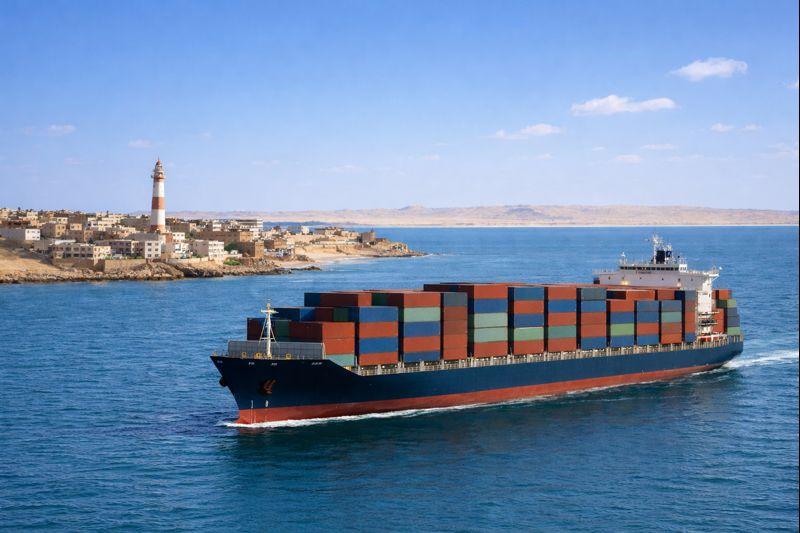
Quick Cost Ranges for Shipping Containers
Below are typical planning ranges for container shipping prices on the china to mauritania lane. These are estimates for sea freight and can change week to week.
| Container size | Typical range (USD) | Best for |
|---|---|---|
| 20ft container (FCL) | 2,500–5,500 | Dense cargo, heavy cartons, machinery parts |
| 40ft container (FCL) | 3,500–7,500+ | Higher volume, better unit cost |
| 40HQ container (FCL) | Usually slightly higher | Bulky but light cargo |
These numbers help you plan, but your real shipping costs depend on what’s included origin fees, destination fees, inland delivery, and timing .
Major Container Ports for China–Mauritania Shipments
Choosing the right loading port in China and the right destination port in Mauritania affects both cost and schedule. Port selection changes sailing frequency, transshipment stability, and inland trucking distance after release.
Main container ports in China
Common China loading ports used for Mauritania-bound container shipments include:
In practice, the “best” China port is usually the one closest to your supplier region and has stable weekly space on the selected shipping route.
Main ports in Mauritania
Mauritania has two key gateways depending on where your consignee is located:
- Nouakchott Port (Port of Friendship)
The primary gateway for most containerized cargo and general imports, serving the capital and main distribution flows. For many importers, Nouakchott is the default destination port. - Nouadhibou Port
Often considered when the consignee is closer to the north, or when a specific carrier routing/schedule fits better. Some shippers also compare Nouadhibou when inland trucking distance can be reduced.
How to choose the right destination port
If your receiver is in or near the capital region, Nouakchott port is usually the simplest choice. If your receiver is farther north, ask your freight forwarder to quote Nouakchott vs Nouadhibou side-by-side, including port charges and inland delivery, so you can compare the true all-in shipping cost.
What You’re Really Paying For: Freight Shipping Cost Components
When buyers ask “How much is a 20ft or 40ft container?”, they often get only the ocean line price. But real freight shipping totals include multiple layers.
Origin Charges in China
Common items include:
- terminal handling / port handling
- local trucking (factory → port)
- export customs filing
- export documentation
If you’re buying under EXW/FOB, these origin charges may show separately.
Ocean Freight (Main Leg)
This is the “headline rate” people quote first:
- Ocean freight for 20ft / 40ft / 40HQ
- Sometimes plus carrier-related extras (depending on how the quote is built)
It’s important—but it’s not the whole bill.
Destination Charges in Mauritania
These are the costs to receive and release the container after arrival. Typical items include:
- Destination terminal/port handling (THC)
- Documentation & release (DO/telex release processing, paperwork)
- Local agent/service fees
At Nouakchott, destination charges can be a meaningful portion of the total—so treat them as a core cost, not an afterthought.
Optional Final Delivery (Door Delivery)
If you need inland transport:
- trucking from Nouakchott port to your warehouse
- scheduling and unloading coordination
This is where transport costs can swing widely based on distance, access, and delivery constraints.
How Transport Costs Are Calculated
A practical way to compare quotes is to request the pricing in “blocks” so you can see where the money goes. Ask your freight forwarder for:
- China origin charges
- Ocean linehaul (ocean freight rates)
- Mauritania destination charges
- Inland trucking (final delivery) if needed
This makes it clear how transport costs calculated and prevents confusion when two offers look similar.
Shipment Details You Must Provide to Get Accurate Container Shipping Rates
To receive accurate container shipping rates , provide complete shipment details:
- Cargo name + usage
- Total cartons/pallets
- Total weight (KG)
- Total volume (CBM)
- Pick-up city in China
- Destination: Nouakchott port or Nouadhibou
- Preferred ready date
- Any special requirements (battery, liquid, fragile, wood packaging)
For non-standard cargo, tell your forwarder early:
- flat rack needs
- reefer containers needs
These equipment types can change the freight rates substantially.
Why China to Mauritania Rates Change So Much
Even on the same lane, freight rates can move fast due to:
- vessel space and equipment availability (20ft/40ft shortages)
- carrier schedule changes through a major hub
- peak shipping seasons
- congestion at origin or Nouakchott port
- documentation or compliance issues that slow the shipping process
A reliable freight forwarder doesn’t just quote a number—they explain risk points that impact timely delivery and total shipping costs.
Common Shipping Route Options
A good freight forwarder will offer multiple shipping route choices instead of a single rate. Typical patterns are:
- South China port → major hub → Nouakchott port
- East China port → major hub → Nouakchott port
- China → major hub → Nouadhibou
When comparing shipping companies, prioritize:
- sailing frequency (weekly vs less frequent)
- connection risk at the major hub
- realistic total time, not marketing time
This is how you get competitive shipping rates without sacrificing reliability.
Transit Times: Average Shipping Time from China to Mauritania
For china to mauritania container shipments, the average transit time is usually:
- Port-to-port (FCL): ~28–45 days
- It can be longer if there’s a tight connection at a major hub or congestion at the destination port
What changes your shipping time:
- which China port you load from
- the carrier’s shipping route
- whether your container is rolled to the next sailing
- customs release speed and local pickup timing
If you care about timely delivery, don’t just ask “ETA.” Ask your forwarder for the full routing plus the next 2 sailings, so you can compare reliability.
FCL Container Load vs LCL: Which Shipping Option Is Best?
FCL (Full Container Load)
FCL is best when you have large shipments, higher-value goods, or you want fewer touchpoints.
Why FCL wins:
- simpler shipping process
- lower damage risk for containerized cargo
- faster release (often) because there’s no deconsolidation step
- clearer cost control for shipping costs
LCL (Less Than Container Load)
LCL is built for smaller shipments that don’t justify a full container.
What to watch with LCL:
- LCL is priced by CBM/ton and often adds extra destination handling
- more steps (consolidation + deconsolidation) = higher delay risk
- “cheap LCL freight” can become expensive after destination fees
Simple decision rule: If you’re close to filling meaningful space, ask your freight forwarder to quote both:
- LCL total (door or port)
- 20ft container FCL total
Sometimes FCL is only a little higher but reduces risk.
Explore more shipping guides:
- LCL vs FCL Shipping: What They Mean, Key Differences, and Which One to Choose
- 20ft & 40ft Container Shipping Costs from China to Morocco
- 20ft & 40ft Container Shipping Costs from China to Egypt (2025 Guide)
- 20ft & 40ft Container Shipping Costs from China to France
- 20ft & 40ft Container Shipping Costs from China to Spain

20ft vs 40ft: How to Choose the Right Container
Choose a 20ft container if:
- your cargo is heavy (dense goods, heavy machinery, metal parts)
- you will hit weight limits before you use all volume
- you want tighter cost control for a smaller load
Choose a 40ft container if:
- your cargo is light and bulky
- you want better cost per CBM
- you need more loading flexibility
This choice impacts both container shipping prices and the practical handling at the port and warehouse.
Specialized Equipment: Flat Rack and Reefer Containers
Flat Rack
If you’re shipping oversized items (machinery, long cargo, irregular shapes), you may need a flat rack.
Flat rack impacts:
- freight rates (higher than standard)
- port handling rules
- stowage and lashing requirements
Reefer Containers
If you ship perishable goods, you may need reefer containers .
Reefer impacts:
- equipment availability
- power connection fees at terminals
- monitoring and compliance requirements
If you think you need a flat rack or reefer, tell your forwarder at the quoting stage—special equipment changes pricing and booking feasibility, and late disclosure usually leads to re-quoting and delays.
Sea Freight vs Air Freight: Picking the Right Shipping Method
Sea Freight
Sea freight is the default choice for most China → Mauritania shipments because it offers the best cost per unit when you’re moving volume.
Best for:
- most commercial imports
- cost-sensitive shipments
- bulk goods and planned replenishment
If you’re shipping high-volume cargo and your timeline is flexible, sea freight is usually the most cost-effective option for international shipping.
Air Freight
Air freight is less about “cheaper” and more about “avoiding downtime.” You use it when speed protects sales, production, or project timelines.
Best for:
- urgent replenishment and emergency parts
- high-value cargo in smaller quantities
- situations where delay costs more than the freight
A practical strategy many importers use is mixed mode: ship the main volume by sea, then send a small top-up by air to cover demand while the container is in transit.
Competitive Shipping Rates: How to Compare Quotes Like a Pro
When two quotes look similar, the winner is usually the one with fewer hidden gaps. Use these checks to compare competitive shipping rates fairly:
- Same scope: Are both offers port-to-port or door-to-door?
- Same origin charges: Pickup, terminal handling, export filing—are they included or separate?
- Same destination charges: Does it include destination THC, documentation/release, and local agent fees at Nouakchott/Nouadhibou?
- Free time: What is the included free time for demurrage/detention, and what’s the daily rate after?
- Customs clearance: Included or separate—and who pays taxes/fees?
- Inland trucking: If you need final delivery, is trucking included, and are waiting/unloading fees defined?
- Routing clarity: Ask for the full shipping route and the next 1–2 sailings, not just a single ETA.
A clean quote is not just “lower.” It’s the one that matches scope, shows the full cost breakdown, and reduces surprise charges at the port.
The Shipping Process: Step-by-Step Overview (FCL)
A typical container shipping process for China → Mauritania looks like this:
- Confirm booking with a freight forwarder
- Arrange pickup and deliver container to port
- Handle export filing + export documentation
- Load vessel and issue B/L
- Sail via chosen shipping route (maybe through a major hub)
- Arrive at Nouakchott port
- Pay destination charges + complete customs clearance
- Release container and arrange final delivery or pickup
Part 3 will go deeper into customs clearance, import customs clearance, required import documents, and the practical “avoid delays” checklist.
Customs Clearance and Import Documents
On China → Mauritania moves, customs clearance is where time and money can slip. Treat import documents as part of the plan, not a last step.
A typical clearance process looks like this:
- vessel arrives and manifest is filed
- submit import documents
- customs reviews classification/value and may request support
- inspection may be triggered depending on cargo and policy
- pay duties/taxes/fees and obtain release
- arrange pickup and final delivery
If your goal is timely delivery, prepare documents before ETA. When documents are late, your shipping containers sit at the port, and port storage/detention risk grows.
Import documents checklist
Most shipments require the following documents:
- Commercial invoice
- Packing list
- Bill of Lading (B/L)
- Certificates/permits if the cargo category requires them
- Any supporting paperwork requested by Mauritania customs
Keep cargo descriptions consistent across paperwork. That small detail helps ensure compliance and reduces back-and-forth.
How to Reduce Shipping Costs Without Increasing Risk
Rates move for various factors—capacity, equipment, port congestion, and connection stability. You can’t control the market, but you can control your process.
Practical ways to lower total shipping costs:
- Choose the right loading port for your supplier region to reduce inland pickup and origin handling swings.
- Book earlier to avoid rollovers, limited space, and peak-week premiums.
- Match container size to weight/CBM (don’t pay for space you can’t use, and don’t overload a 20ft with heavy cargo).
- Finalize documents early to keep customs clearance smooth and avoid port storage risk.
- Plan fast pickup at the destination port to reduce storage, demurrage, and detention exposure.
- If you need trucking, confirm unloading tools and delivery schedule in advance to avoid waiting charges and re-delivery costs.
When transporting goods internationally, the “cheapest rate” is rarely the cheapest outcome—the best savings usually come from fewer delays, fewer changes, and cleaner execution.
Choosing a Freight Forwarder and Shipping Companies
A strong freight forwarder doesn’t just quote—they manage routing, documents, and risk across multiple shipping companies. On China–Mauritania lanes, the forwarder’s value shows up in execution: stable bookings, fewer re-quotes, faster issue resolution, and smoother release coordination at the port.
What to look for:
- ability to propose 2 routing options
- transparent quote breakdown and realistic transit times
- document discipline
- proactive updates during transshipment at the major hub
- strong local handling for Nouakchott/Nouadhibou release
In short, a forwarder’s reputation is built on preventing problems before they become costs. Choosing a partner like Tonlexing means you’re not only buying a rate—you’re buying smoother handoffs, cleaner documents, and better control when schedules change.
FAQ: China to Mauritania Container Shipping
How much does it cost to ship a 20ft container from China to Mauritania?
For many weeks in 2026, 20ft FCL container shipping prices often fall in the USD 2,500–5,500 range for the main sea leg, but total shipping costs depend on origin/destination charges and whether you need final delivery.
What is the 40ft container shipping cost from China to Mauritania?
40ft FCL container shipping rates often plan around USD 3,500–7,500+ for the main ocean leg. Always confirm destination fees at the port and free time to avoid detention.
How long is sea freight from China to Nouakchott port?
Typical transit times are often ~28–45 days port-to-port. The average transit time shifts based on schedule and connection reliability at the major hub.
Should I ship to Nouakchott port or choose another destination port?
For most general cargo, Nouakchott port is the primary destination port. If your receiver is closer to the north, pricing Nouadhibou may reduce inland transport costs. Ask your forwarder to compare both options.
What shipment details do I need for accurate quotes?
Good shipment details include cargo name, cartons/pallets, weight, CBM, pickup city, discharge port, ready date, and any special handling. Clean data helps carriers assign the right shipping containers and reduces re-quoting.
When should I consider flat rack or reefer containers?
Use a flat rack for oversized cargo that can’t fit standard boxes. Choose reefer containers for perishable goods or temperature-sensitive cargo. Both require earlier booking and can change your freight rates.
Is air freight worth it for China to Mauritania?
Air freight can be worth it for urgent items when you need fast delivery. Many importers ship a small urgent batch by air and the rest via sea freight to balance speed and budget.
What are the most common customs clearance delays in Mauritania?
Common causes include inconsistent cargo descriptions, missing certificates for regulated goods, valuation/HS questions, or late submission of import documents. Submitting paperwork before ETA usually helps speed import customs clearance and reduce port storage risk.
How do I avoid demurrage/detention at the port?
Confirm free time, prepare customs clearance documents early, and schedule trucking before arrival. Even a short pickup delay can increase total shipping costs quickly—especially in peak weeks.