Related Guide
Shipping from Multiple Suppliers in China
Shipping from Multiple Suppliers in China Verified & Reviewed · Last updated May 2026 Shipping from multiple suppliers in China can be difficult...
Read guide →

Buying from multiple Canton Fair suppliers helps importers compare Chinese manufacturers and source different products in Guangzhou, but managing separate orders, payments, production schedules, and shipments can be challenging.
Consolidating goods through one freight forwarder and warehouse in China can simplify logistics and reduce shipping costs. This 2026 guide covers supplier verification, payment terms, cargo consolidation, customs clearance, and international shipping.
Supplier Verification
Cargo Consolidation
Shipping Costs
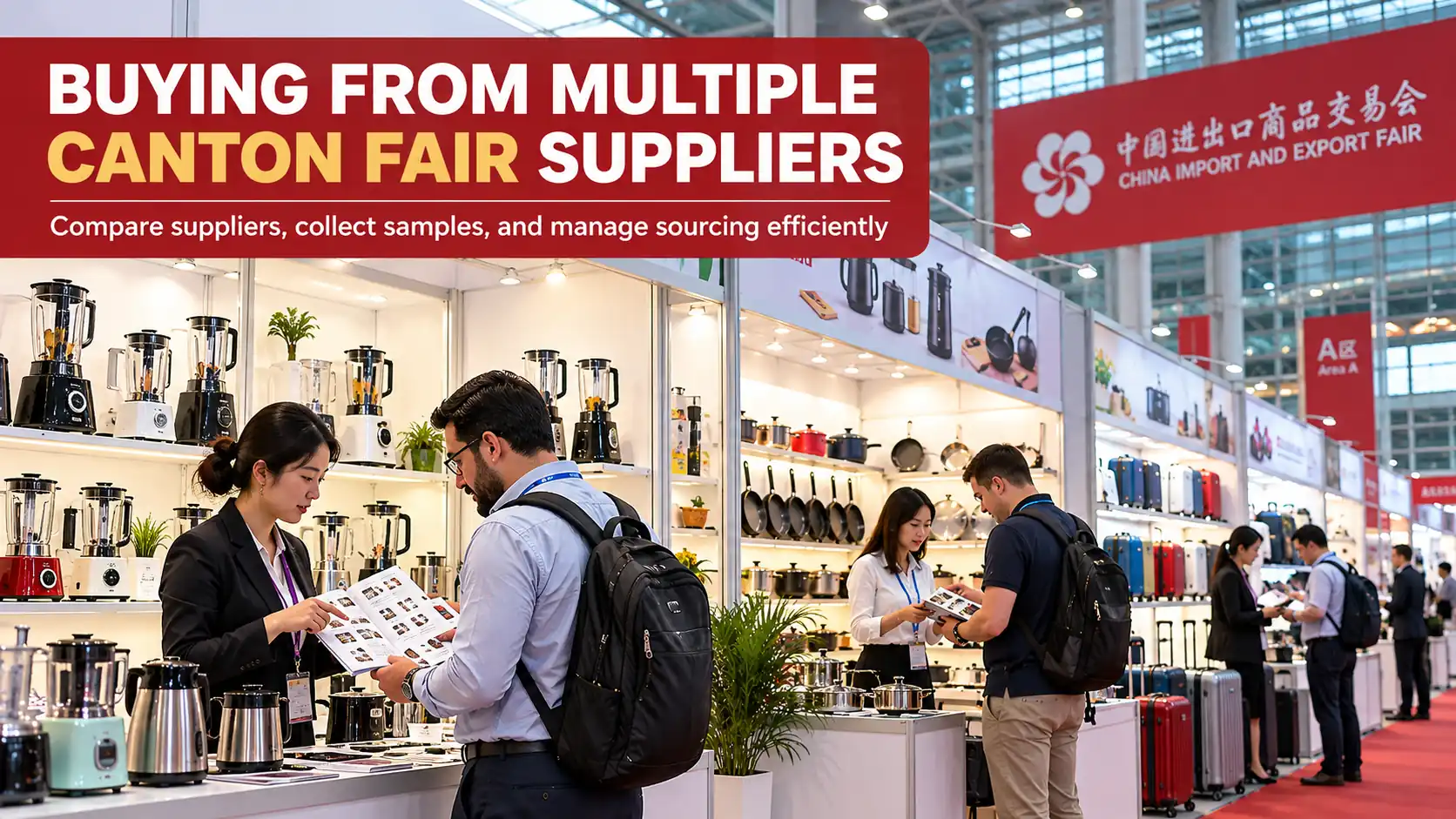
Yes. Buyers attending the Canton Fair in Guangzhou can place orders with different exhibitors and arrange combined shipping after the goods are ready.
The Canton Fair is held twice a year and brings together Chinese manufacturers and trading companies across electronics, machinery, furniture, textiles, and other consumer goods. For international buyers, the fair offers an opportunity to compare suppliers, explore new products, and establish business relationships.
Buying from different exhibitors helps importers compare product quality, negotiate prices, diversify suppliers, and source complementary products.
However, purchasing from multiple factories does not automatically create one combined order or shipment.
Each supplier may have different:
Minimum order quantities (MOQ) and product specifications
Production lead times and payment terms
Factory locations and delivery arrangements
Packaging, inspection, and documentation requirements
For example, an importer sourcing lighting products, furniture, and home decorations from three factories may receive three separate invoices and delivery schedules.
The buyer can still arrange buyer’s consolidation, where goods from different suppliers are collected at a warehouse before international shipping.
This approach is especially useful for importers building mixed-product orders without enough cargo from each supplier to fill an entire container.
A successful sourcing plan begins before arriving at the Canton Fair Complex in Guangzhou.
Buyers should identify their target product categories, prepare purchasing requirements, and decide how orders will be coordinated after the exhibition.
The 140th Autumn Canton Fair runs from October 15 to November 4, 2026, across three exhibition phases.
| Canton Fair Phase | Dates in 2026 | Main Product Categories |
|---|---|---|
| Phase 1 | October 15–19 | Electronics, machinery, vehicles, hardware, and electrical products |
| Phase 2 | October 23–27 | Furniture, building materials, housewares, gifts, and decorations |
| Phase 3 | October 31–November 4 | Clothing, footwear, toys, textiles, personal care, and consumer products |
Buyers sourcing products across several categories may need to attend different phases or contact exhibitors online.
The official Canton Fair website and app provide exhibitor information, product searches, exhibition layouts, and buyer services.
Before attending the fair, prepare a sourcing plan with target products, specifications, estimated order quantities, acceptable prices, and preferred delivery dates.
You should also consider whether the products will eventually be shipped together.
Meeting dozens of suppliers at the Canton Fair can make it difficult to remember prices, product details, and negotiation terms.
Record supplier information immediately after each meeting rather than relying only on business cards.
| Information | What to Record |
|---|---|
| Supplier details | Company name, booth number, contact, factory location |
| Product specifications | Model, materials, dimensions, packaging |
| MOQ | Minimum order quantity per product |
| Quotation | Unit price, currency, Incoterms, named delivery location |
| Payment terms | Deposit, balance, payment method |
| Production schedule | Lead time and estimated cargo-ready date |
| Shipping details | Carton quantity, gross weight, estimated CBM |
| Quality requirements | Samples, inspection criteria, certifications |
Use WeChat or email to confirm important discussions in writing.
Taking photos of product samples and booth information can also help identify suppliers when comparing quotations after the exhibition.
When buying from multiple Canton Fair suppliers, verifying manufacturers and negotiating clear purchase terms can help reduce sourcing risks, payment disputes, and shipping delays.
Before placing orders, buyers should confirm supplier credentials, product specifications, minimum order quantities (MOQ), payment terms, and delivery responsibilities. This is especially important when working with several factories for the first time.

Not every Canton Fair exhibitor is a direct manufacturer. Some are trading companies that source products from other factories.
Before confirming an order, request the supplier’s business license, registered company name, factory address, and relevant product certifications. For larger orders, consider visiting the factory or arranging an independent audit to verify production capabilities.
Compare the following details across suppliers:
MOQ: Confirm minimum order quantities and whether smaller trial orders are available.
Product specifications: Check materials, dimensions, quality standards, and packaging requirements.
Production lead time: Confirm realistic completion dates and available capacity.
Quality control: Agree on sample approval, inspection requirements, and defect handling.
Factory location: Identify pickup addresses and domestic transportation requirements.
MOQ varies by product category and manufacturer. Some factories may require hundreds or thousands of units, particularly for customized products.
Request written quotations using the same specifications and order quantities to make supplier comparisons more accurate.
Different suppliers may offer different payment schedules and delivery conditions. Before paying a deposit, confirm the total order value, payment milestones, production deadlines, and responsibilities for shipping.
For international buyers, common Incoterms include:
EXW (Ex Works): The buyer arranges collection from the agreed location and assumes most transportation responsibilities.
FCA (Free Carrier): The supplier delivers goods to the nominated carrier or person at the agreed location and handles export clearance where applicable.
FOB (Free On Board): The supplier delivers goods on board the vessel at the named port of shipment.
For multi-supplier consolidation, FCA at a named consolidation warehouse may be suitable when the supplier is responsible for delivering goods there. The correct terms depend on the agreed transportation and export arrangements.
Keep separate purchase orders and payment records for each supplier. Verify bank account details before transferring funds, and avoid paying the full order value before completing the agreed quality checks unless the commercial terms require otherwise.
Clear payment and delivery agreements make it easier to coordinate purchases from multiple factories and prepare goods for consolidated shipping.
When buying from multiple Canton Fair suppliers, arranging separate international shipments for every order can increase freight costs and complicate logistics.
Buyer’s consolidation allows goods from different factories to be collected at one warehouse in China, checked, and combined for international shipping. This can reduce duplicated handling and transportation expenses while simplifying shipment coordination.
The process typically involves supplier pickup, warehouse receiving, cargo inspection, consolidation, and LCL or FCL shipping.
The warehouse location should depend on where your suppliers are based and which port you plan to use for international shipping.
For suppliers in southern China, Guangzhou and Shenzhen are common consolidation locations. Warehouses in Yiwu, Ningbo, or Shanghai may be more practical for factories in eastern China.
A freight forwarder can coordinate domestic trucking, warehouse receiving, temporary storage, and shipment preparation.
Choosing a warehouse close to most suppliers can help reduce inland transportation costs and unnecessary handling.
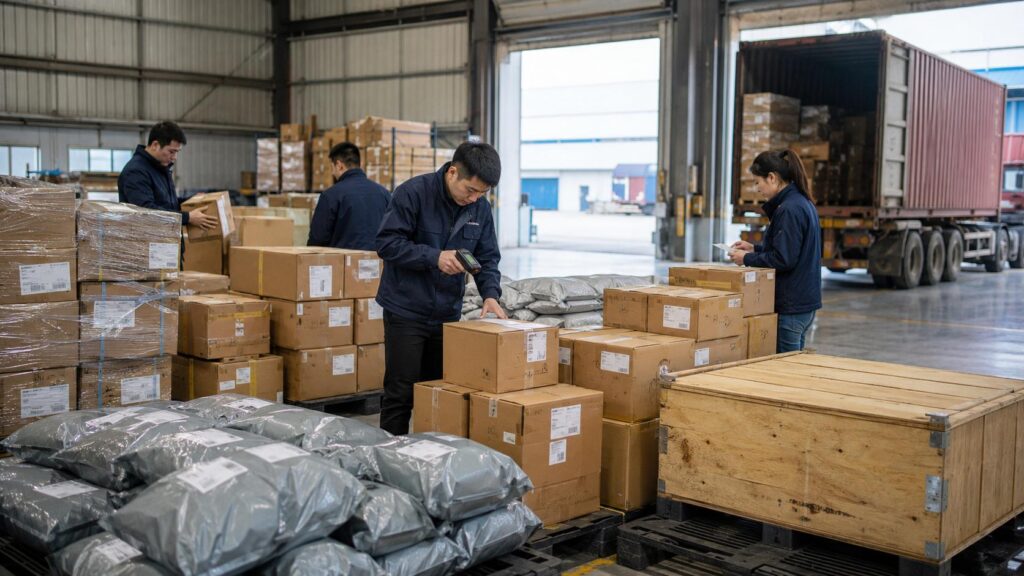
Different suppliers often have different production schedules, so it is important to coordinate cargo-ready dates before arranging shipment.
Ask each supplier to deliver the goods to the designated warehouse with clear carton labels, supplier details, and an accurate packing list.
When goods arrive, the warehouse should verify:
Cargo quantity: Check received cartons against packing lists.
Packaging condition: Identify visible damage or missing labels.
Weight and volume: Confirm shipment dimensions, gross weight, and CBM.
Delivery status: Track completed and outstanding supplier deliveries.
Product quality inspections should ideally be completed before goods leave each factory. Warehouse checks mainly confirm quantities, packaging, and shipping information.
Once all required goods have arrived and discrepancies are resolved, the cargo can be prepared for consolidation.
After receiving goods from all suppliers, the freight forwarder calculates the total shipment volume and determines the most suitable shipping method.
| Shipping Method | Suitable Cargo | Main Advantage |
|---|---|---|
| LCL Shipping | Smaller combined shipments | Pay for shared container space |
| FCL Shipping | Larger consolidated orders | Dedicated container with fewer cargo transfers |
| Air Freight | Urgent or high-value goods | Faster international transportation |
Consolidating goods does not necessarily mean booking a full container. Smaller combined orders can still move as LCL cargo, while larger shipments may be suitable for FCL.
The final choice depends on total CBM, cargo weight, destination, shipping schedule, and product compatibility.
Tonlexing can coordinate supplier pickups, warehouse consolidation, and international freight from China. Contact our team with your supplier locations, cargo volume, and destination to compare shipping options.
When shipping goods from multiple Canton Fair suppliers, accurate documentation is essential for smooth customs clearance.
Even if products from different factories are consolidated into one shipment, each supplier’s goods must be properly documented. Product descriptions, quantities, declared values, and packing details should match the actual cargo.
Before shipping, collect the necessary documents from each supplier:
Commercial Invoice: Lists product descriptions, quantities, prices, and transaction values.
Packing List: Shows carton quantities, gross weight, dimensions, and packaging details.
Purchase Order: Confirms the agreed products, quantities, and purchasing terms.
Product Certificates: Provides relevant compliance or testing documents when required.
Export Documents: Supports export customs declarations and related procedures.
The consolidation warehouse can prepare a combined cargo summary showing the total cartons, weight, and CBM from all suppliers.
However, combining goods into one shipment does not automatically eliminate the need for separate supplier invoices or customs records.
Yes. Goods purchased from multiple suppliers can sometimes move under a single Bill of Lading (B/L) when shipped through one coordinated freight arrangement.
However, one Bill of Lading does not necessarily mean one commercial invoice or customs declaration. Requirements depend on the exporter, importer, product categories, and applicable customs regulations.
For example, goods purchased from three independent factories may be shipped in one container while retaining separate commercial invoices for each supplier.
Before shipment, confirm the HS codes, product descriptions, declared values, and country of origin for all goods.
A freight forwarder can coordinate shipping documentation and work with the responsible customs broker or declarant to help prevent clearance delays and unnecessary costs.
Buying from multiple Canton Fair suppliers can increase logistics costs because each factory has separate delivery schedules, pickup requirements, and shipping documents.
Consolidating goods at one warehouse in China can reduce duplicated freight and handling expenses, but buyers must also consider domestic transportation, storage, inspections, and consolidation fees.
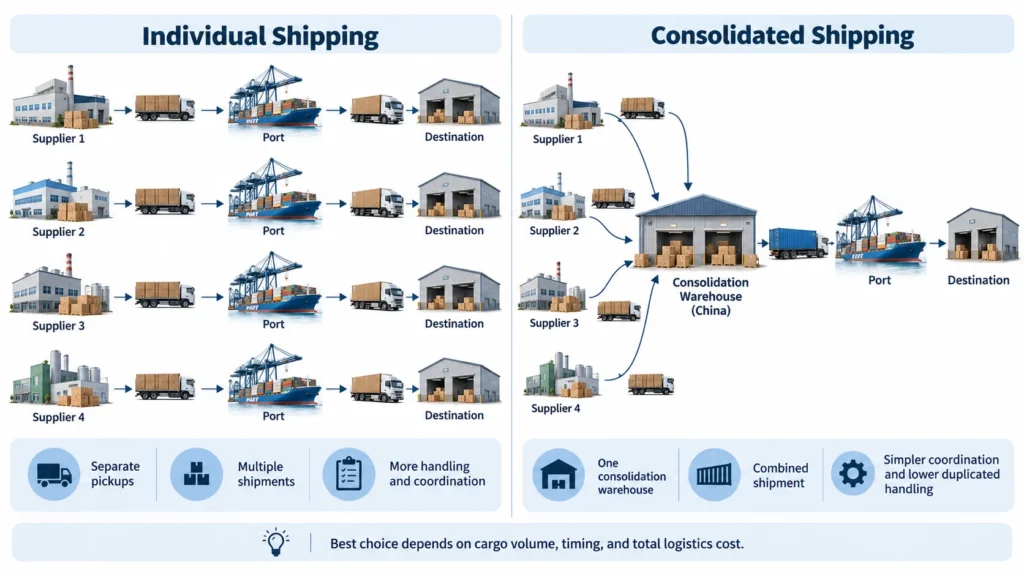
For example, an importer purchasing 15 CBM of goods from four suppliers can arrange four separate LCL shipments or combine the cargo into one consolidated shipment.
Shipping separately:
Multiple freight bookings and origin handling charges
Separate destination handling and delivery arrangements
More shipment tracking and documentation work
Consolidated shipping:
Goods collected from four factories at one warehouse
Combined cargo handling and shipment preparation
One coordinated LCL or FCL shipment, depending on cost and cargo requirements
Consolidation may reduce total logistics costs, but FCL is not automatically cheaper than LCL for 15 CBM. The best option depends on freight rates, warehouse charges, destination fees, and delivery requirements.
When working with several suppliers, buyers may need additional services beyond international freight.
Sourcing agent fees: Some sourcing agents charge approximately 3%–7% of the total purchase value, depending on the services provided. These may include supplier communication, order tracking, payment coordination, and quality inspections.
Warehouse consolidation fees: Freight forwarders may charge for cargo receiving, unloading, storage, repacking, and container loading. As an illustrative rate, warehouse storage may cost around $2–$5 per CBM per day after any free-storage period, although actual charges vary by warehouse and location.
Buyers working directly with factories can arrange freight consolidation without hiring a separate sourcing agent.
To compare shipping options accurately, request quotations covering the complete logistics process:
Origin costs: Factory pickup, domestic trucking, and warehouse handling
Consolidation costs: Storage, inspection, repacking, and loading
International freight: LCL or FCL transportation charges
Destination costs: Terminal handling, customs brokerage, and local delivery
Customs duties, taxes, and declaration requirements should also be considered when calculating the total landed cost. Combining goods into one container does not automatically eliminate separate customs entries.
The lowest ocean freight rate does not always mean the lowest total shipping cost. Compare all origin and destination charges before deciding whether to consolidate orders.
Tonlexing can help coordinate supplier pickups, warehouse consolidation, and international freight. Contact our team with your supplier locations, cargo volume, and destination to request a detailed shipping quotation.
When buying from multiple Canton Fair suppliers, the total delivery time depends on production schedules, quality inspections, warehouse consolidation, and international transportation.
The main challenge is coordinating different cargo-ready dates. If one supplier finishes production later than the others, the entire consolidated shipment may be delayed.
After confirming purchase orders, ask every supplier to provide a production timeline and estimated delivery date.
A typical multi-supplier shipping process includes:
Order confirmation: Finalize product specifications, quantities, payment terms, and production schedules.
Production and inspection: Monitor manufacturing progress and complete required quality checks.
Warehouse delivery: Arrange factory pickups and transport finished goods to the consolidation warehouse.
Cargo consolidation: Verify received cartons, combine shipments, and prepare shipping documents.
International shipping: Book LCL or FCL transportation and arrange customs clearance and destination delivery.
Production lead times vary by product type, order quantity, and customization requirements. International transit times also depend on the shipping route and transport method.
For example, if three suppliers complete production within 20 days but the fourth requires 35 days, the completed goods may need to remain in storage for an additional 15 days.
Importers generally have two options:
Wait for all suppliers: Consolidate everything into one shipment, but consider additional storage costs and delivery delays.
Ship completed goods first: Arrange separate departures for urgent products while the remaining orders are still in production.
To avoid unnecessary waiting, establish a cargo receiving deadline and confirm each supplier’s progress before booking transportation.
Planning warehouse deliveries and shipping schedules in advance helps reduce storage costs and keeps consolidated orders moving efficiently.
Buying from multiple Canton Fair suppliers requires careful coordination to avoid extra costs, quality problems, and shipping delays.
Choosing suppliers based only on price: Compare product quality, MOQ, lead times, and supplier credentials.
Skipping supplier verification: Check business licenses, factory locations, and manufacturing capabilities before payment.
Ignoring production schedules: Track cargo-ready dates and set clear warehouse delivery deadlines.
Skipping quality inspections: Inspect products before factory dispatch and verify cartons upon warehouse arrival.
Arranging logistics too late: Plan supplier pickups, cargo consolidation, and international shipping in advance.
A clear sourcing plan and early logistics coordination help buyers reduce risks, control costs, and avoid shipping delays.
Buying from multiple Canton Fair suppliers requires coordination between manufacturers, warehouses, freight forwarders, and customs service providers.
Tonlexing provides freight forwarding and China warehousing and consolidation services to support importers sourcing products from several suppliers.
Depending on shipment requirements, our team can help coordinate:
Supplier pickup and domestic transportation arrangements
Warehouse receiving, storage, and cargo consolidation
Packing list reconciliation and shipment preparation
LCL, FCL, and air freight arrangements
Export shipping documentation and customs coordination
International transportation and destination delivery arrangements
Whether you are buying from two factories or coordinating a larger network of Chinese suppliers, an organized shipping plan can help reduce unnecessary handling, improve cargo visibility, and simplify transportation management.
Contact Tonlexing for a multi-supplier shipping quotation. Share your supplier locations, estimated cargo volume, products, and destination to discuss the most suitable consolidation and freight options.
Yes. Goods from multiple exhibitors can be collected at a consolidation warehouse and shipped together when the cargo, documentation, and transport requirements are compatible.
No. You can negotiate directly with manufacturers and appoint a freight forwarder to coordinate transportation. A sourcing agent may be useful if you need additional supplier management, purchasing, or quality-control support.
Consolidation can reduce duplicated international freight and handling costs, especially for compatible small shipments. However, pickup, storage, inspection, and consolidation charges must be included before deciding.
Yes. Cargo from several Chinese suppliers can be loaded into one container when it meets transport and regulatory requirements. Supplier invoices and customs documentation must still be handled correctly.
You can hold completed goods at a warehouse or ship them separately. Compare the extra storage charges, shipping costs, and delivery impact before making a decision.
Useful freight, customs and importing resources related to this shipping guide.
Shipping from Multiple Suppliers in China Verified & Reviewed · Last updated May 2026 Shipping from multiple suppliers in China can be difficult...
Read guide →
Warehouse Consolidation in China — Faster, Smarter Global Shipping A consolidation warehouse combines cargo from multiple suppliers into one ship...
Read guide →
Tonlexing provides freight forwarding services in Guangzhou, China, including sea, air, rail, consolidation, customs clearance and door-to-door l...
Read guide →
How to Negotiate with Chinese Suppliers Verified & Reviewed · Last updated September 2026 Negotiating with Chinese suppliers involves more than a...
Read guide →How to Find Reliable Suppliers in China Verified & Reviewed · Last updated September 2026 Finding reliable suppliers in China requires more than...
Learn more → Useful Resource China Sourcing Trip GuideChina Sourcing Trip Guide Verified & Reviewed · Last updated June 2026 China Sourcing Trip Guide for importers: A sourcing trip to China can be o...
Learn more →WhatsApp us