Related Guide
Shipping from China to Saudi Arabia
Shipping from China to Saudi Arabia covers air freight, sea freight, and DDP shipping services. Learn about shipping costs, customs clearance, an...
Read guide →

Shipping from China to Saudi Arabia requires the right freight forwarder to manage air freight, sea freight, customs clearance, and final delivery.
This guide explains how to choose a freight forwarder from China to Saudi Arabia, compare express, air, LCL, FCL, and DDP shipping, estimate costs and transit times, and prepare for SABER, ZATCA, and Saudi customs requirements.
Air & Sea Freight
Shipping Cost & Transit Time
Customs Clearance
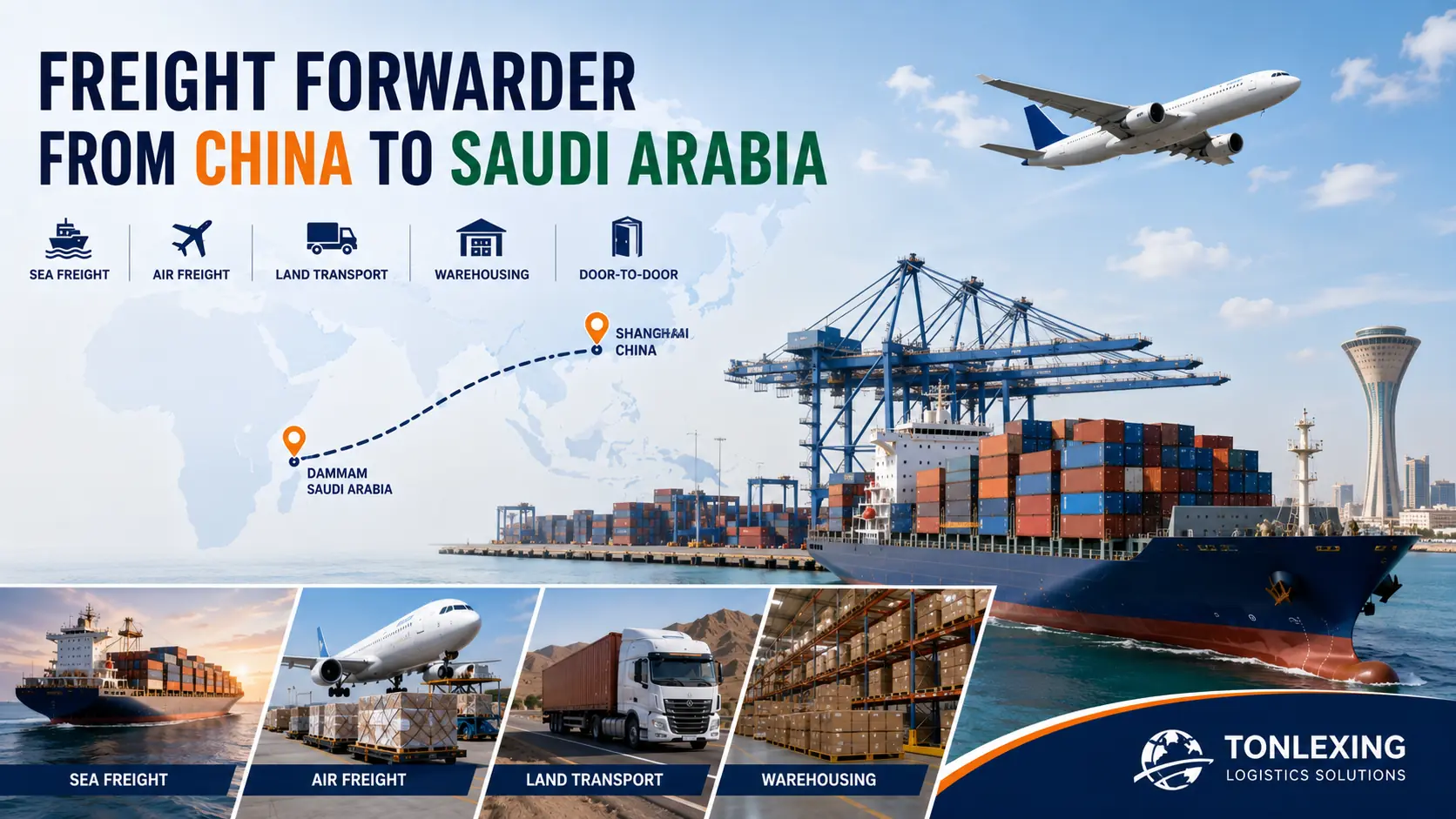
Air freight is normally selected for urgent shipments, high-value goods, spare parts, electronics, and cargo with a strict delivery deadline. Sea freight is generally more cost effective for heavy goods, industrial equipment, bulk cargo, and larger commercial orders.
Importers can choose from:
Express courier for samples and small parcels
Air freight for urgent commercial cargo
LCL shipping for smaller sea freight shipments
FCL shipping for larger container loads
Door-to-door shipping for coordinated pickup and delivery
DDP shipping where customs duties and import arrangements can be included
Exact air freight and sea freight transit times depend on the departure city, destination, flight or sailing schedule, port congestion, customs process, and final delivery location.
| Shipping Method | Reference Time | Minimum Charge | Best For |
|---|---|---|---|
| Express Courier | 3–5 days | 0.5 kg | Samples and small urgent parcels |
| Standard Air Freight | 5–7 days | 45 kg | Urgent commercial cargo |
| Sea Freight LCL | 18–35 days | 1 CBM | Smaller heavy or bulky shipments |
| Sea Freight FCL | 18–35 days | One container | Large-volume cargo |
| Air Freight DDP | 8–12 days | From 21 kg | Urgent door-to-door shipments |
| Sea Freight DDP | 25–40 days | 1–2 CBM | Cost-effective door-to-door shipping |
These are reference times rather than guaranteed schedules. Actual delivery depends on cargo readiness, route availability, customs clearance, and the final Saudi address.
Need help choosing a shipping method? Send Tonlexing Logistics the product name, carton dimensions, total weight, China pickup address, and Saudi delivery postcode for a suitable air, sea, or door-to-door recommendation.
Freight forwarding involves coordinating multiple companies and transport stages across the international supply chain.
Depending on the agreed service scope, a freight forwarder may arrange:
Factory pickup in China
Warehouse receiving and cargo inspection
Export clearance
FCL or LCL container shipping
Air cargo booking
Ocean freight or air freight documentation
Saudi customs clearance coordination
Customs duties and tax handling where applicable
Inland transport and final delivery
Tracking and regular shipment updates
A freight forwarder should also identify potential compliance risks before the cargo is shipped. This includes checking whether the product may require SABER documentation, SFDA approval, special labeling, an import permit, or additional customs documents.
However, the freight forwarder does not replace the Saudi importer’s legal responsibilities. The consignee should confirm that it is permitted to import the goods and that all product approvals are available before departure.
A strong freight forwarder should offer multiple shipping methods rather than pushing every importer toward the same route.
Shipping methods should be chosen according to the shipment size, urgency, destination, budget, and customs requirements.
Express courier is suitable for samples, documents, replacement parts, and small parcels. Services are commonly arranged through networks such as DHL, FedEx, or Aramex.
Before booking, confirm whether the cargo contains batteries, liquids, powders, magnets, or other restricted items. Duties, remote-area fees, and volumetric weight may also affect the final cost.
Express shipping is convenient, but it usually becomes less cost effective as the shipment grows in weight or volume.
Air freight is commonly used for urgent orders, electronics, automotive parts, machinery components, and high-value shipments.
Charges are based on chargeable weight. The freight forwarder compares the actual gross weight with the volumetric weight and uses the higher figure. Standard air freight usually has a minimum chargeable weight of 45 kg.
The average reference time is around 5–7 days. Air freight DDP generally takes 8–12 days and may start from 21 kg, depending on the service channel.
The quotation should clearly state whether it includes:
Pickup and export clearance in China
Airport handling and main air freight
Saudi customs clearance
Duties and taxes
Final delivery
Sea freight is generally used for larger, heavier, or less urgent shipments. It is often the most practical option for furniture, building materials, machinery, industrial equipment, commercial stock, and bulk cargo.
Ocean freight services are divided into LCL and FCL shipping.
LCL shipping allows cargo from several importers to share one container. It is suitable when the goods do not require a full container load.
LCL cargo normally passes through additional consolidation and deconsolidation stages. Importers should therefore consider:
China warehouse fees
Export handling
Ocean freight
Destination handling
Deconsolidation charges
Saudi customs clearance
Final delivery
LCL shipping may be economical for smaller shipments, but there is no universal rule that every shipment under 10 CBM should use LCL. Cargo density, minimum charges, destination fees, handling risks, and delivery requirements must also be considered.
FCL shipping gives one importer exclusive use of a container. It is generally suitable for larger orders, high-volume cargo, or goods that require greater control during ocean shipping.
Full container load shipping may reduce the number of handling stages compared with LCL shipments. It can also simplify loading plans for fragile products, industrial equipment, palletized cargo, and irregular packages.
Common equipment may include:
Open-top or flat-rack equipment for oversized cargo
Reefer containers for temperature-controlled goods
The correct container should be selected according to cargo dimensions, weight distribution, loading feasibility, and Saudi port requirements.
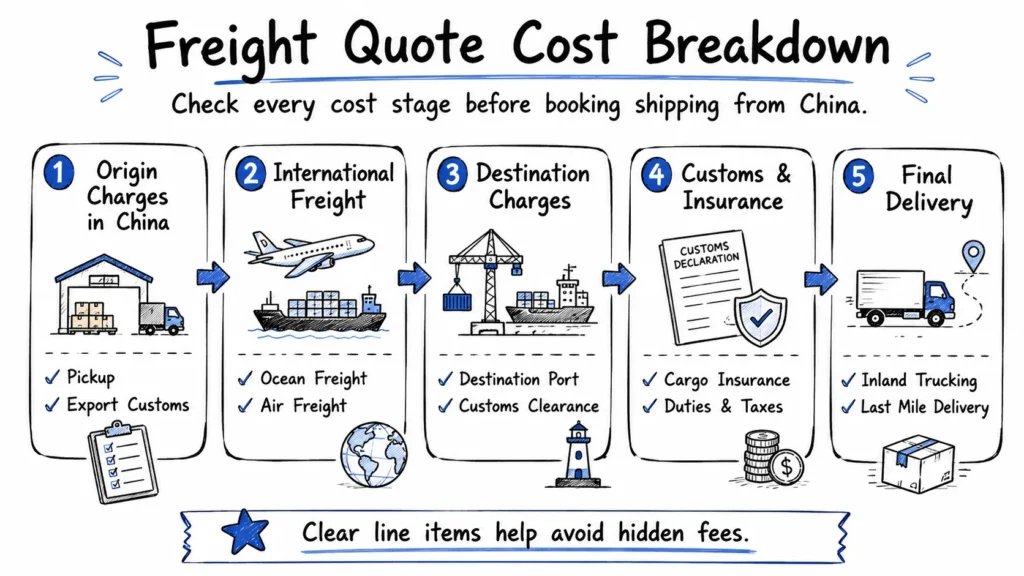
The route should be selected according to the supplier’s location in China and the final destination in Saudi Arabia.
Common departure locations include:
Using the nearest port or international airport may reduce domestic trucking costs, but it is not always the fastest or most cost effective option. Sailing frequency, direct flights, available capacity, and destination charges should also be compared.
Major Saudi ports used for international shipping may include:
Jeddah Islamic Port
King Abdulaziz Port in Dammam
Other Saudi ports selected according to the cargo and destination
Jeddah Islamic Port is often considered for cargo moving to western Saudi Arabia, while Dammam may be suitable for eastern destinations and some inland deliveries.
The right sea freight option should be selected according to the final delivery city rather than the port name alone.
The main Saudi air cargo gateways include:
King Khalid International Airport, Riyadh, RUH
King Abdulaziz International Airport, Jeddah, JED
King Fahd International Airport, Dammam, DMM
Riyadh is suitable for central Saudi Arabia, Jeddah serves western regions, and Dammam is commonly used for eastern commercial and industrial destinations.
Air freight may move on direct services operated by carriers such as Saudia Cargo, China Southern Airlines, or YTO Cargo Airlines. Transit routes may connect through Dubai, Doha, or Abu Dhabi.
Direct flights can reduce handling and transit time, but transit services may offer better space availability or pricing. Flight schedules and cargo acceptance should be reconfirmed when the goods are ready.
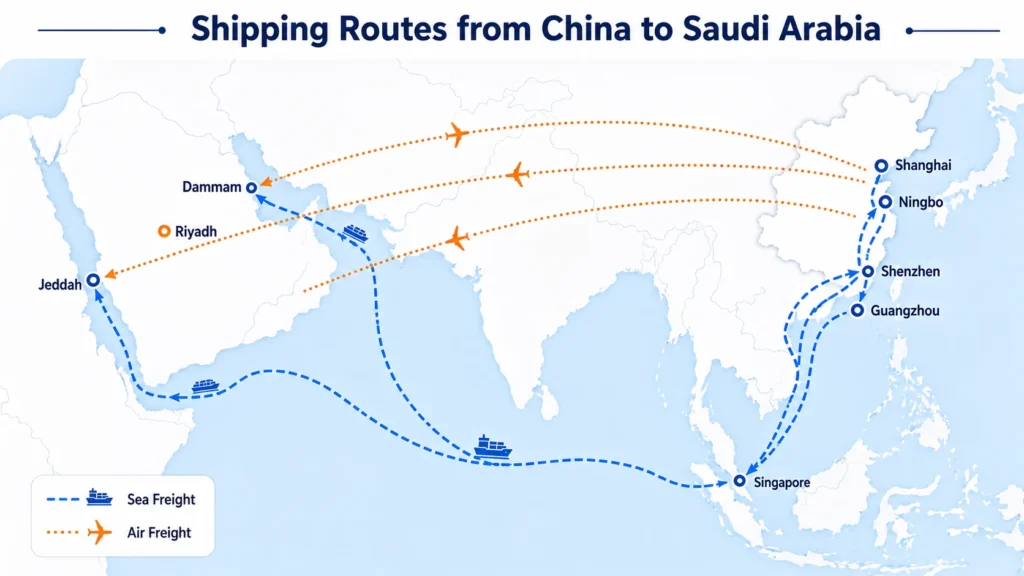
Shipping costs cannot be calculated accurately from the product name alone. The final rate depends on cargo weight and volume, shipping method, origin city, destination, customs requirements, and delivery scope.
If your supplier has provided carton dimensions but not the total shipment volume, use our CBM Calculator to calculate the cubic metres before comparing LCL, FCL, and sea freight DDP options.
The following figures are reference rates and should be reconfirmed when the cargo is ready.
| Shipping Method | Reference Cost | Pricing Basis |
|---|---|---|
| Express Courier | USD 5–8/kg | Chargeable weight |
| Standard Air Freight | USD 3–5.50/kg | Chargeable weight |
| Urgent or High-Value Air Freight | USD 5–8/kg | Chargeable weight |
| LCL Sea Freight | USD 20–110/CBM | Cargo volume |
| 20ft FCL | USD 5,085–6,215 | Per container |
| 40ft FCL | USD 6,615–8,085 | Per container |
| Air Freight DDP | USD 4–9/kg | Chargeable weight |
| Sea Freight DDP | USD 150–280/CBM | Cargo volume |
The international freight charge is only one part of the total shipping cost. A complete quotation may include the following items:
Air freight may move on direct services operated by carriers such as Saudia Cargo, China Southern Airlines, or YTO Cargo Airlines. Transit routes may connect through Dubai, Doha, or Abu Dhabi.
Direct flights can reduce handling and transit time, but transit services may offer better space availability or pricing. Flight schedules and cargo acceptance should be reconfirmed when the goods are ready.
Customs clearance is a critical part of shipping from China to Saudi Arabia. Accurate documents and early compliance checks can help reduce customs delays, storage charges, and requests for additional information after arrival.
Saudi customs and import tax procedures are administered through ZATCA. The Saudi importer or appointed customs broker should confirm the importer registration, HS Code, declared value, applicable duties, and supporting documents before the cargo arrives.
Clearance should not be treated as automatic. The product description, customs value, commercial documents, and importer information must match the actual shipment.
Many regulated products must comply with Saudi technical regulations and may require conformity documentation through the SABER platform.
Products commonly subject to additional review include:
Machinery
Textiles
Automotive products
Household goods
The exact requirement depends on the HS Code, product specification, and applicable SASO regulation. Importers should confirm whether a Product Certificate of Conformity or Shipment Certificate of Conformity is required before booking.
The Saudi Food and Drug Authority regulates certain food, pharmaceutical, medical, cosmetic, and health-related products.
Before shipping, the importer should verify:
Whether the product falls under SFDA supervision
Whether registration or approval is required
Whether an import permit is needed
Which documents must accompany the shipment
Whether labeling, ingredient, or shelf-life rules apply
SFDA approval is not required for every product. However, regulated cargo should not leave China until the importer confirms that all necessary approvals are available.
International freight is only one part of the total landed cost.
Importers may also need to budget for:
Saudi VAT: generally 15% of the applicable taxable import value
Customs duties: commonly around 5% for many products, while some categories may be subject to higher rates
SABER platform and certification costs: approximately SAR 350–500 per product model, excluding additional conformity, testing, or certificate charges
Customs brokerage
Port or airport handling
Inspection-related fees
Storage, demurrage, or detention
Final inland delivery
The actual customs duty rate must be checked according to the HS Code and current Saudi regulations.
Ask each supplier for the final packing list, carton dimensions, gross weight, cargo photos, pickup address, and cargo-ready date.
The information should reflect the completed export packaging.
Before booking, confirm whether the goods are subject to:
SABER conformity requirements
SASO technical regulations
SFDA approval
Import licensing
Arabic labeling
Country-of-origin marking
Battery or dangerous-goods restrictions
Confirm whether the supplier is selling under EXW, FOB, CIF, CFR, DAP, or DDP.
The Incoterm determines which costs and responsibilities belong to the seller and which belong to the importer.
CIF does not normally include Saudi customs clearance or delivery to the final address.
Compare air freight, sea freight, FCL shipping, LCL shipping, express courier, and door-to-door shipping using the same shipment information.
Consider:
Required delivery date
Shipment size
Chargeable weight
Total landed cost
Product value
Handling risk
Customs requirements
The freight forwarder collects the goods or asks the suppliers to deliver them to a China warehouse.
For cargo from several suppliers, the warehouse can coordinate:
Carton receiving
Quantity checking
Shipping mark review
Cargo photography
Labeling
Repacking
Palletizing where appropriate
Shipment consolidation
Palletizing is useful for some cargo, but it should be selected according to the product, handling requirements, weight, and destination—not presented as a universal legal requirement.
The freight forwarder arranges export declaration and delivers the cargo to the appropriate port, airport, or carrier warehouse.
Export documents should match the physical cargo and the supplier’s commercial documents.
After departure, the forwarder should provide regular updates, including:
Booking confirmation
Departure information
Estimated arrival
Delay notifications
Document status
Customs preparation requirements
Before arrival, the importer or customs broker should receive the required documents.
Any issue involving the HS Code, customs value, conformity documents, or importer registration should be resolved as early as possible.
After customs release, the cargo can be delivered to the consignee’s warehouse, shop, office, project site, or other agreed address.
Confirm whether the delivery price includes:
Port or airport pickup
Trucking
Delivery appointment
Unloading
Waiting time
Remote-area charges
Proof of delivery
Door-to-door shipping coordinates the movement of cargo from the supplier or warehouse in China to the consignee’s address in Saudi Arabia. Depending on the agreed service scope, it may cover pickup, export clearance, international freight, destination handling, Saudi customs clearance, and final delivery.
DDP shipping includes a broader range of responsibilities. Customs duties, VAT, and import clearance are normally included in the agreed quotation, making it useful for buyers who prefer not to arrange customs and local delivery separately.
DDP is not available for every product or destination. Before booking, the quotation should clearly state:
Customs duties and VAT included in the rate
Accepted products and cargo restrictions
SABER or SFDA-related charges
Customs inspection and storage exclusions
Delivery coverage and remote-area fees
Import documents available after clearance
DDP simplifies the shipping process, but it does not remove Saudi product compliance requirements. Goods subject to SABER, SASO, SFDA, labeling, or import permits must still meet the applicable rules before departure.
Compare DDP quotations by their full service scope rather than the price per kilogram or CBM alone. A lower rate may exclude certification, inspections, storage, or delivery outside major Saudi cities.
Many shipping problems begin before the cargo leaves China. Importers should review the full service scope, cargo details, and Saudi compliance requirements before confirming a booking.
Choosing a freight forwarder only by price: A low rate may exclude pickup, export clearance, destination handling, customs clearance, or final delivery. Compare the total service scope rather than the headline freight charge.
Shipping before checking product compliance: Confirm SABER, SASO, SFDA, labeling, and import permit requirements before departure.
Assuming sea freight is always the cheapest: Minimum charges, destination fees, and inland delivery can make air freight more practical for some smaller shipments.
Treating a three-day flight as the total delivery time: The full process also includes pickup, warehouse handling, export clearance, flight scheduling, Saudi customs clearance, and final delivery.
Using estimated carton dimensions: Incorrect dimensions can increase the chargeable weight and change the final air freight cost.
Assuming every shipment below 10 CBM should use LCL: Cargo density, destination charges, handling risk, delivery requirements, and available FCL rates should also be compared.
Treating DDP as an unrestricted service: Product category, shipment value, customs documents, importer arrangements, and delivery area may affect eligibility.
Ignoring cargo insurance: Carrier liability may not cover the full shipment value. Insurance is worth considering for fragile, valuable, customized, or difficult-to-replace goods.
Tonlexing Logistics helps importers coordinate shipments from China to Saudi Arabia from the initial cargo review through final delivery. Before recommending a route, the team checks the product type, packing details, shipment size, delivery deadline, and customs requirements.
Depending on the shipment, support may include:
Supplier pickup and warehouse receiving in China
Cargo consolidation from multiple suppliers
Export clearance and shipping document coordination
Air freight, LCL, and FCL shipping
Cargo insurance and special handling
Saudi customs clearance coordination
Door-to-door and DDP shipping for eligible cargo
Final delivery to Riyadh, Jeddah, Dammam, or other destinations
The goal is not simply to offer the lowest freight rate. Tonlexing compares the complete shipping scope, including origin charges, international freight, destination handling, customs requirements, and final delivery.
For regulated or special cargo, the shipment is reviewed before booking so that potential SABER, SFDA, battery, dangerous-goods, labeling, or documentation issues can be identified early.
To request a quotation, provide the product name, carton dimensions, total weight, CBM, pickup address in China, delivery postcode in Saudi Arabia, and required customs service.
International express usually takes around 3–5 days, while standard air freight takes approximately 5–7 days. Air freight DDP generally requires 8–12 days.
Sea freight commonly takes around 18–35 days, depending on the origin port, Saudi destination, carrier schedule, transshipment route, and customs clearance. Door-to-door delivery may take longer than port-to-port transit.
Reference shipping costs include:
Express courier: USD 5–8/kg
Standard air freight: USD 3–5.50/kg
LCL sea freight: USD 20–110/CBM
20ft FCL: USD 5,085–6,215
40ft FCL: USD 6,615–8,085
Air freight DDP: USD 4–9/kg
Sea freight DDP: USD 150–280/CBM
Final rates depend on cargo dimensions, weight, product type, departure city, delivery address, customs requirements, and available capacity.
Sea freight is usually the most cost-effective option for heavy, bulky, or large-volume cargo. LCL shipping is suitable for smaller shipments, while FCL can offer better value when the cargo requires most or all of a container.
For small urgent shipments, express courier or air freight may still provide a better overall solution despite the higher rate per kilogram.
Air freight is charged according to chargeable weight. The forwarder compares the shipment’s actual gross weight with its volumetric weight and uses the higher figure.
Standard air freight normally has a minimum chargeable weight of 45 kg. Large but lightweight cartons may therefore cost more than expected.
The main Saudi container gateways include Jeddah Islamic Port and King Abdulaziz Port in Dammam.
Jeddah is commonly used for western Saudi Arabia, while Dammam serves eastern industrial areas and may also be considered for cargo moving inland to Riyadh.
Useful freight, customs and importing resources related to this shipping guide.
Shipping from China to Saudi Arabia covers air freight, sea freight, and DDP shipping services. Learn about shipping costs, customs clearance, an...
Read guide →
Shipping Cost from China to Saudi Arabia (2026 Guide) Verified & Reviewed · Last updated June 2026 Shipping costs from China to Saudi Arabia usua...
Read guide →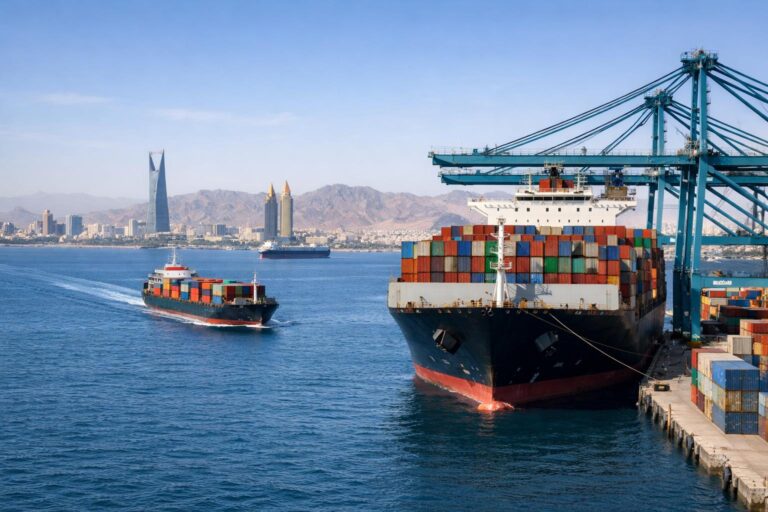
Sea Freight from China to Saudi Arabia Verified & Reviewed · Last updated April 2026 Sea freight from China to Saudi Arabia is one of the most pr...
Read guide →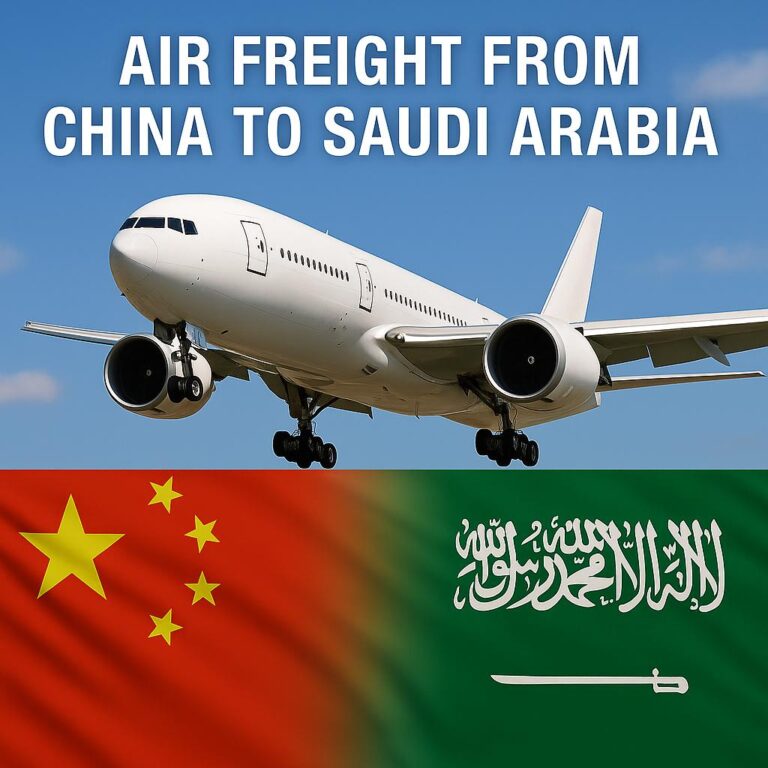
Shipping by air remains one of the most efficient and reliable ways to move goods between China and Saudi Arabia. The major ports in both countri...
Read guide →DDP Shipping from China to Saudi Arabia Verified & Reviewed · Last updated June 2026 DDP shipping from China to Saudi Arabia is a convenient door...
Learn more → Useful Resource How to Choose the Best Freight Forwarder in ChinaIn the complex world of international trade, selecting a reliable freight forwarder is a crucial step in ensuring a smooth and cost-effective sup...
Learn more →WhatsApp us