
Related Guide
How to import and ship furniture from China?
Importing furniture from China has become a profitable venture for retailers, interior designers, and business owners worldwide. As China is the...
Read guide →

Shipping furniture from China to Germany requires the right shipping method, proper packing, accurate documents, and smooth customs clearance.
This guide explains how to ship furniture from China to Germany, covering LCL, full container load, rail transport, air freight, DDP door-to-door shipping, transit time, costs, import duties, and final delivery.
Shipping method / Mode
Transit time range
DDP / Door to Door

For most importers, sea freight is the most cost effective option because bulky goods take up a lot of container space. Small orders usually move by LCL, while larger orders are often better as a full container load. Rail transport is useful when you need faster delivery than ocean freight, while air freight is mainly used for samples, replacement parts, or urgent high-value items.
| Shipping Method | Best For | Typical Transit Time | Cost Level |
|---|---|---|---|
| LCL Shipping | Small orders and samples | 30–45 days | Low to medium |
| Full Container Load | Bulk orders and project cargo | 25–40 days | Best for volume |
| Rail Transport | Medium-volume cargo needing faster delivery | 18–28 days | Medium |
| Air Freight | Samples and urgent small items | 3–7 days | High |
| DDP Shipping | Door-to-door service with tax handling | Depends on mode | All-in cost |
The cheapest route is not always the safest. A good plan should balance cost efficiency, packing quality, container utilization, risk management, customs procedures, and delivery conditions in Germany.
Shipping furniture from China requires a clear process. If product details, packing, documents, or delivery requirements are not confirmed early, the shipment may face customs delays, hidden fees, storage charges, or cargo damage.
Before booking freight, confirm the supplier’s location, product type, material, quantity, packing method, production timeline, and trade terms. If you buy from multiple suppliers, warehouse consolidation in China may be needed before loading.
Prepare these details before requesting a quote:
Supplier address in China
Product name and material
Number of cartons or packages
Gross weight and packed dimensions
Trade term such as EXW, FOB, CIF, DAP, or DDP
Delivery postcode in Germany
Cargo photos if available
Choosing Incoterms clearly is important. FOB, EXW, CIF, DAP, and DDP define who is responsible for pickup, export handling, international shipping, customs clearance, duty payment, and final delivery.
The best shipping method depends on cargo volume, budget, and delivery time. Small furniture orders are usually shipped by LCL, while larger shipments are better handled by full container load. Rail transport is suitable when faster delivery is needed, and air freight is mainly used for samples or urgent small items.
For buyers who want a simpler process, DDP shipping can include freight, customs clearance, tax handling, and delivery under one service.
Furniture should be packed properly before international shipping. Weak cartons, poor corner protection, or missing moisture control can cause scratches, broken panels, cracked glass, or carton collapse during transit.
For fragile items such as glass, marble, mirrors, and decorative pieces, stronger packing or wooden crates may be needed. For large or customized orders, a pre-shipment inspection can help check product quality, quantity, labels, and packing condition before departure.
Furniture imports require accurate documents for export customs in China and import customs clearance in Germany. The commercial invoice and packing list should match the actual cargo details, including product name, value, quantity, dimensions, weight, and CBM.
Common documents include:
Commercial invoice
Packing list
Bill of lading or rail waybill
HS code
EORI number
Certificate of origin if required
ISPM 15 details if solid wood packaging is used
After customs clearance, domestic delivery is arranged to the final address in Germany. Before shipping, confirm whether the quote includes curbside delivery, appointment delivery, unloading, upstairs delivery, or unpacking.
Finding the right supplier is one of the most important steps before shipping furniture from China to Germany. A low product price is not enough if the supplier cannot provide consistent quality, correct packing, or complete export documents.
Many importers use Alibaba and other B2B platforms to connect with Chinese manufacturers. Buyers can also work with sourcing agents, visit factories, or attend trade fairs such as the China International Furniture Fair for supplier networking and product comparison.
When selecting a supplier, check:
Business license and factory background
Whether the supplier is a factory or trading company
Export experience with Germany or the EU
Product material and production ability
Sample availability before bulk orders
Packing standard for international shipping
Communication speed and after-sales support
On B2B platforms, filters such as Verified Supplier can help with initial screening, but they should not replace sample checking, factory verification, or pre shipment inspections.
Different options suit different cargo sizes and delivery timelines. For bulky products, cost efficiency and cargo safety are usually more important than speed alone.
LCL shipping is suitable for small furniture orders that do not fill a full container. Your cargo shares container space with other shipments, and the cost is usually calculated by CBM. This option is practical for sample shipments, small orders, and mixed products from one or several suppliers.
Because LCL cargo involves consolidation and deconsolidation, furniture should be packed carefully before shipping. Strong cartons, corner protection, pallets, and moisture protection can reduce the risk of damage during handling.
LCL is usually suitable when:
The shipment is small
The cargo volume is below around 15 CBM
You do not need a full container
You want to control shipping costs for small orders
Full container load shipping is better for larger furniture orders. Your goods use an entire container, which gives better loading control and reduces handling compared with LCL shipping. This method is commonly used for commercial furniture imports, project orders, and regular shipments from China to Germany.
A 20ft container is often used for heavier cargo, while a 40ft or 40HQ container is better for bulky furniture such as sofas, beds, wardrobes, cabinets, and flat-pack furniture. If the shipment is over around 15 CBM, full container shipping may be more cost-effective than LCL.
Rail transport is faster than sea freight and usually cheaper than air freight. It is a good option for medium-volume shipments that need a shorter transit time but do not justify the high cost of air shipping.
This method is often used for flat-pack furniture, e-commerce stock, retail replenishment, and time-sensitive commercial orders. After arrival at German rail hubs such as Duisburg, inland delivery can be arranged to Frankfurt, Berlin, Munich, Hamburg, Cologne, Stuttgart, and other cities.
Air freight is the fastest shipping method, but it is not commonly used for standard furniture because bulky cargo creates high volumetric weight. Even if the actual weight is low, large furniture pieces can be expensive to ship by air.
Air freight is mainly suitable for:
Furniture samples
Replacement parts
Small high-value items
Hardware and accessories
Urgent showroom pieces
For most commercial furniture shipments, sea freight or rail transport is usually more practical and cost-effective.

Furniture from China to Germany is mainly shipped by sea freight, rail transport, or air freight. Sea freight is the most common option for bulky furniture, while rail is faster and air is mainly used for urgent samples.
Most sea freight shipments depart from Shanghai, Ningbo, Shenzhen, Guangzhou, Qingdao, or Xiamen and arrive at Hamburg or Bremerhaven. Rail shipments usually depart from inland hubs such as Xi’an, Chengdu, Chongqing, Zhengzhou, or Yiwu and arrive at Duisburg or Hamburg. Air shipments normally arrive at Frankfurt or Munich.
Shipping Method | Estimated Transit Time | Main Arrival Points |
|---|---|---|
Sea Freight LCL | 30–45 days | Hamburg, Bremerhaven |
Sea Freight FCL | 25–40 days | Hamburg, Bremerhaven |
Rail Transport | 18–28 days | Duisburg, Hamburg |
Air Freight | 3–7 days | Frankfurt, Munich |
DDP Door-to-Door | 30–50 days | Final address in Germany |
Transit time may change due to peak season, Chinese New Year, port congestion, customs inspection, or final delivery distance in Germany.
Furniture shipping costs from China to Germany are usually calculated by CBM for LCL shipments or by container for FCL shipments. As a general reference, LCL sea freight may cost around USD 80–180 per CBM, while a full container may range from USD 2,500–5,800+, depending on the route, season, cargo volume, and service scope.
Shipping Option | Estimated Cost Reference | Best For |
|---|---|---|
LCL Sea Freight | USD 80–180 per CBM | Small furniture orders |
20ft Container | USD 2,500–3,800 | Heavy or compact furniture |
40ft Container | USD 3,800–5,800+ | Large furniture shipments |
Rail Freight | Higher than sea freight | Faster medium-volume cargo |
Air Freight | Charged by kg or volumetric weight | Samples and urgent items |
DDP Shipping | Quoted by CBM or shipment | Door-to-door delivery |
The final cost is not only the freight rate. Importers should also consider pickup in China, export handling, destination charges, customs clearance, import duties, VAT, inland transportation, and final delivery in Germany.
Customs clearance is a key step when shipping furniture from China to Germany. To avoid delays, the HS code, declared value, commercial invoice, and packing list should match the actual cargo.
Most furniture imports require standard shipping and customs documents. These documents help customs confirm the cargo details, value, origin, and importer information.
Common documents include:
Commercial invoice
Packing list
Bill of lading or rail waybill
HS code
Certificate of origin if required
EORI number
Product material description
ISPM 15 details if solid wood packaging is used
The commercial invoice should show the buyer, seller, product name, quantity, value, currency, and trade terms. The packing list should show package quantity, dimensions, weight, and CBM.
Most standard furniture carries a relatively low duty rate in the EU. You can look up the exact percentage using the German customs tariff system (TARIC):
Wooden Furniture (Living/Dining/Bedroom): 0% to 3% (HS Code 9403.50 / 9403.60)
Metal Furniture: 0% (HS Code 9403.20)
Upholstered Seating (Sofas, Armchairs): 0% to 2.7% (HS Code 9401.61)
An EORI number is required for EU customs procedures. Businesses importing furniture into Germany should prepare it before the goods arrive.
A customs broker or experienced freight forwarder can help check documents, submit the import declaration, communicate with customs officials, and arrange duty payment. This is especially useful for first-time importers, DDP service, and shipments with multiple furniture types.
Furniture sold in Germany may need to meet relevant EU safety, chemical, and material requirements. Requirements vary depending on product type, material, and usage.
If solid wood pallets, crates, or dunnage are used for packing, they should meet ISPM 15 requirements to avoid inspection delays at the EU border.
DDP shipping is a practical option if you want one freight forwarder to handle the full process from China to Germany. The service can include pickup from the supplier, export handling, international freight, German customs clearance, tax and duty arrangement, and final delivery.
For furniture shipments, DDP is especially useful when you do not have your own customs broker in Germany or you want a clearer landed cost before shipping. It can reduce communication work and make the process easier for first-time importers.
DDP shipping is suitable for:
Small and medium furniture orders
Buyers without import experience
E-commerce sellers
Door-to-door delivery requests
Shipments that need customs and tax support
Before using DDP, confirm what is included in the quote. Some DDP rates include only basic curbside delivery, while unloading, appointment delivery, upstairs delivery, or unpacking may cost extra.
Proper packing is essential when shipping furniture from China to Germany. During transit, cargo may be moved multiple times between factories, warehouses, ports, containers, and delivery vehicles. Good packing helps reduce the risk of scratches, moisture damage, broken corners, and handling damage.
The packing method should be based on the furniture type. Flat-pack furniture is usually easier and more cost-effective to ship because it takes up less space. Fragile items such as glass tables, marble tops, mirrors, and decorative pieces often require additional protection or wooden crating.
Common packing materials include:
Export cartons
Foam sheets and corner protectors
Bubble wrap
Plastic wrapping
Pallets
Wooden crates for fragile items
If solid wood pallets or wooden crates are used, they should comply with ISPM 15 requirements to avoid customs issues when entering Germany.
Before shipping, it is also worth confirming that the packaging dimensions provided by the supplier are accurate. Better packing design can improve container utilization, reduce shipping costs, and help protect the furniture throughout the journey.
Shipping furniture from China to Germany needs careful planning because the cargo is bulky, fragile, and often supplied by different factories. Tonlexing works as a reliable freight forwarder for furniture shipments, helping importers choose the right route, prepare proper documentation, arrange customs clearance, and manage delivery in Germany.
We support LCL, full container shipping, rail service, air freight for samples, and DDP door-to-door solutions based on your cargo volume, budget, and delivery timeline.
Tonlexing can help with:
Supplier pickup and consolidation in China
LCL and container shipping
Rail and air solutions
DDP service and customs support
Packing advice for fragile furniture
Final delivery in Germany
To get a quote, send us the supplier address, delivery postcode, furniture type, package quantity, weight, dimensions, total CBM, and cargo photos if available.
Shipping by sea is usually the cheapest way to move furniture from China to Germany. LCL is suitable for small shipments, while FCL shipping is better for larger orders with enough cargo volume.
The main documents include commercial invoice, packing list, bill of lading or rail waybill, HS code, EORI number, product material details, and certificate of origin if required. Wooden packaging may also need ISPM 15 compliance.
Export packing costs vary by product type and protection level. Basic carton packing may be included by the supplier, while reinforced packing, palletizing, or wooden crating may cost extra. For fragile furniture, export packing can sometimes range from USD 50–200 per CBM.
Ocean freight usually takes around 25–45 days, depending on the departure port, vessel schedule, customs process, and delivery address. During peak seasons or port congestion, full door-to-door transit may sometimes take up to 60 days.
Yes. Businesses importing goods into Germany generally need an EORI number for EU customs operations. This number is used to identify the importer during import, export, and transit procedures.
Furniture imports are classified by Harmonized System codes. The HS code helps determine the duty rate, customs requirements, and product classification. Wooden furniture, metal furniture, sofas, office furniture, and bedroom furniture may use different HS codes.
Imported furniture entering Germany is normally subject to import VAT. The standard German import VAT rate is 19%, and customs duties may also apply depending on the HS code, material, origin, and customs value.
Useful freight, customs and importing resources related to this shipping guide.
Importing furniture from China has become a profitable venture for retailers, interior designers, and business owners worldwide. As China is the...
Read guide →
How to Source Furniture from Foshan and Ship Overseas Verified & Reviewed · Last updated July 2026 Sourcing furniture from Foshan gives internati...
Read guide →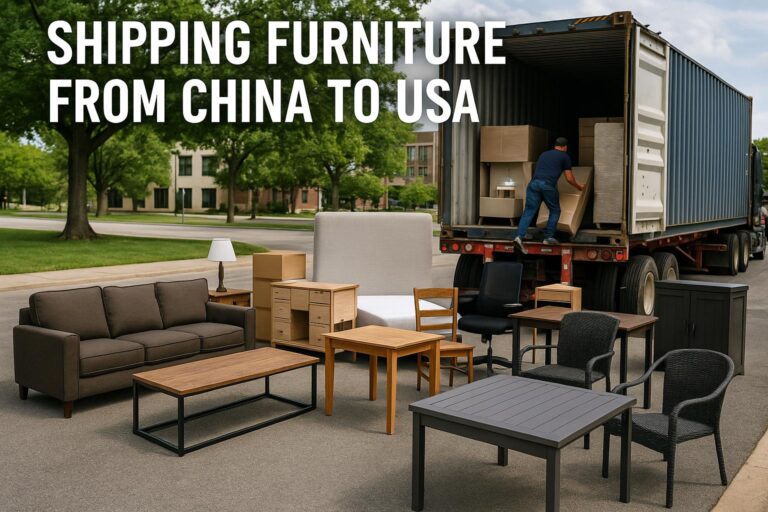
Shipping furniture from China to USA is one of the most in-demand logistics services in today’s global trade market. In recent years, large-scale...
Read guide →
How to Ship Furniture to Canada Verified & Reviewed · Last updated January 2026 Shipping furniture to Canada is easiest when you follow one order...
Read guide →Hotel Furniture Shipping from China: 2026 Comprehensive Guide Verified & Reviewed · Last updated May 2026 Shipping hotel furniture from China req...
Learn more → Useful Resource Shipping Office Furniture from China: Costs, Methods, Customs & Delivery GuideLearn how to ship office furniture from China by sea freight, air freight, FCL, LCL, and door-to-door delivery. Compare costs, customs clearance...
Learn more →WhatsApp us