
Related Guide
Electronics Import and Shipping Guide from China
Importing electronics from China has become a lucrative business opportunity for companies and individuals worldwide. China is the global leader...
Read guide →

Shenzhen is one of China’s leading electronics sourcing hubs, offering direct access to electronic components, circuit boards, mobile accessories, networking equipment, LED products, smart devices, and industrial electronics.
This guide explains how to source electronics from Shenzhen and ship overseas, covering Shenzhen electronics markets, supplier verification, product inspection, compliance requirements, lithium battery shipping, export documentation, customs clearance, and international shipping options.
Electronics Markets
Supplier Verification
Shipping Options
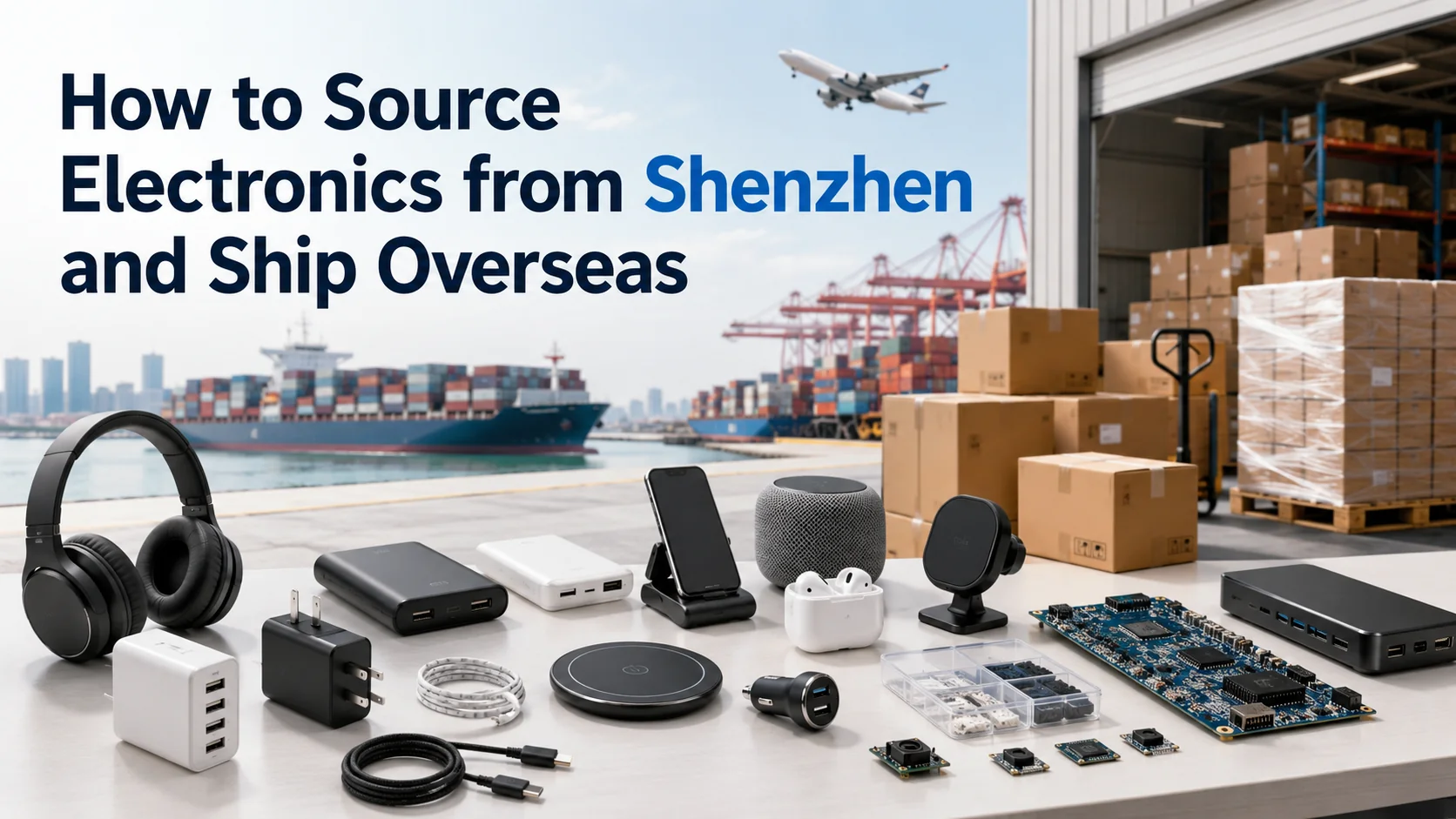
Shenzhen is often called the Silicon Valley of Hardware and is widely viewed as China’s electronics capital because design, engineering, components, assembly, testing, packaging, and logistics are concentrated within the same region.
Its electronics market network covers more than 200,000 square meters and includes over 40 major electronics markets. Huaqiangbei alone reportedly contained around 38,000 businesses as of 2020, ranging from small component vendors to wholesalers, distributors, repair specialists, and product developers.
Shenzhen’s proximity to Hong Kong also supports international trade. Depending on the departure point and border crossing, some transport connections take about 30 minutes. This gives suppliers convenient access to Hong Kong’s airport, financial services, trading companies, and international logistics network.
Electronics produced or traded through Shenzhen are shipped to major markets including Europe, the United States, Southeast Asia, and South America.
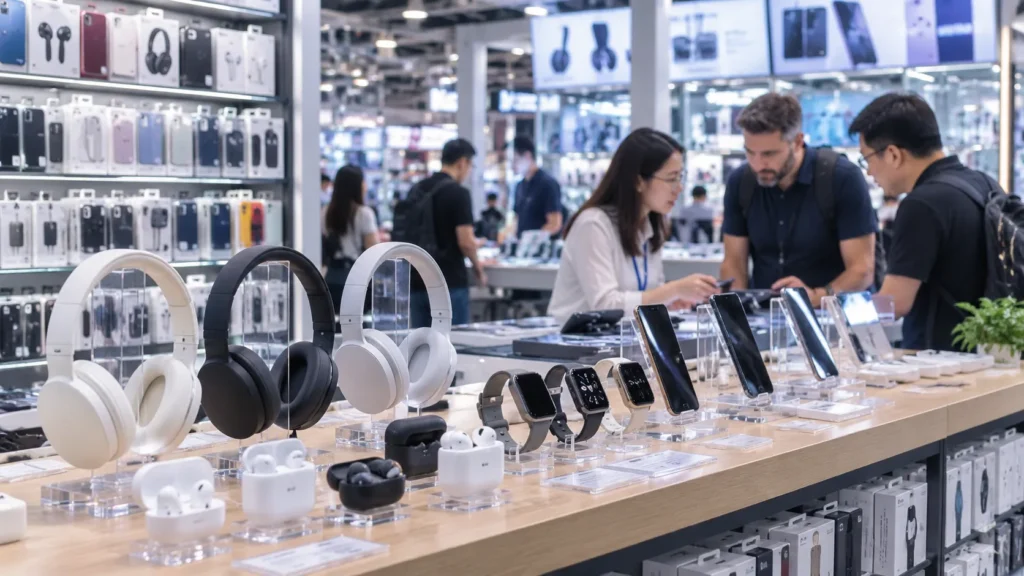
Shenzhen supports both finished products and individual electronic components. Buyers can source standard inventory, customize existing designs, or work with factories to develop their own products.
Common categories include:
Electronic components and circuit boards
Mobile phones and accessories
Chargers, cables, adapters, and power supplies
Smart watches and wearable devices
Networking equipment
Security cameras and access-control products
Smart home devices
Consumer electronics
Industrial electronics
LED strips, decorative lighting, and commercial lighting
The same product may be available in many quality levels. Two chargers or smart devices can look almost identical while using different chips, batteries, cables, plastics, firmware, and safety protection.
For that reason, product prices should never be compared without checking the full specification.
Buyers can source through physical markets, direct manufacturers, online platforms, trading companies, and local sourcing agents. Each channel serves a different purpose.
Huaqiangbei is the best-known electronics market area in Shenzhen. It is not one building but a large commercial district containing multiple specialized markets.
Buyers can find components, phone parts, repair tools, cables, computer accessories, LED products, speakers, security devices, development boards, and emerging consumer electronics.
The district is particularly useful for:
Comparing products from multiple suppliers
Purchasing samples
Finding uncommon components
Studying product trends
Buying small quantities
Meeting component suppliers directly
Huaqiangbei offers enormous variety, but buyers should not assume that every vendor is a manufacturer. Many sellers are wholesalers, distributors, agents, or traders sourcing from several factories.
Before placing a bulk order, ask who manufactures the product, where production takes place, and whether the seller can maintain the same specification for repeat orders.
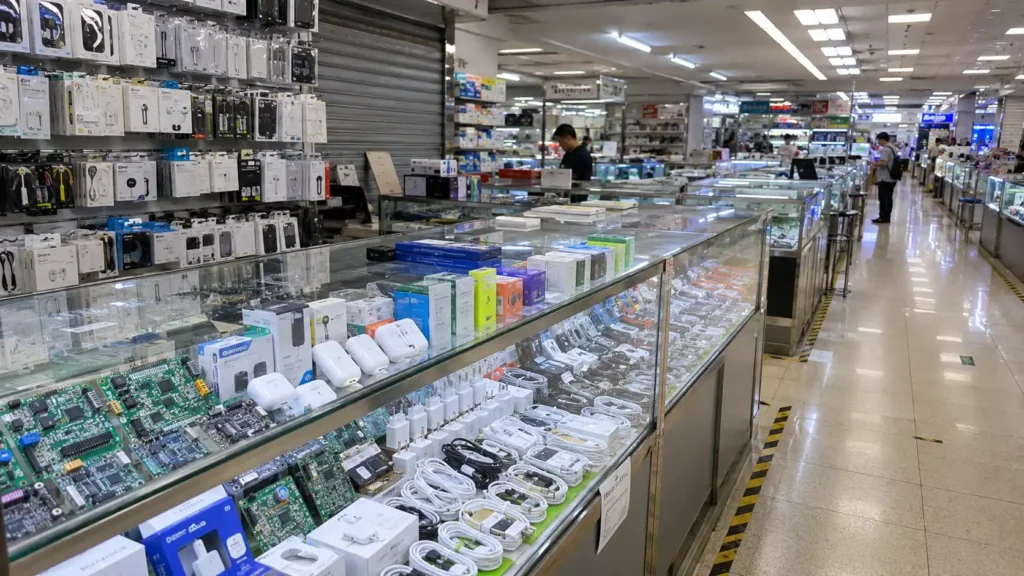
SEG Electronics Market is one of Huaqiangbei’s most recognized buildings. It is known for electronic components, computer parts, tools, connectors, development products, and technical accessories.
When comparing suppliers across multiple buildings, record the supplier name, stall number, product code, quoted specification, price, and sample version. Similar-looking samples can easily become mixed during testing.
Direct factories are usually better suited to private-label products, customized packaging, OEM production, ODM development, and repeat bulk orders.
Many factories serving Shenzhen are located in nearby Dongguan, where manufacturing costs and industrial space may be more suitable. A company may operate a showroom in Shenzhen while handling production in Dongguan.
This arrangement is common, but the buyer should verify the actual factory location and the relationship between the sales company, manufacturer, certificate holder, and payment account.
Online platforms such as Alibaba, Made-in-China, and Global Sources can also help identify suppliers. Their verification systems are useful for initial screening, but they do not guarantee factory ownership, stable quality, genuine certificates, or reliable after-sales support.
Before contacting electronics suppliers in Shenzhen, buyers should clearly define what they need. A detailed product requirement helps suppliers provide accurate quotations and reduces misunderstandings during production.
Many sourcing problems happen because buyers compare prices without confirming whether suppliers are quoting the same product specification. Two products with a similar appearance may use different components, materials, battery capacity, software versions, or quality standards.
A clear product brief should include:
Product model or category
Technical specifications and key functions
Materials and dimensions
Required components or chipset preferences
Battery type and capacity, if applicable
Packaging and labeling requirements
Required certifications for the destination market
Order quantity and target delivery date
For customized electronics, buyers should also clarify requirements such as logo printing, firmware changes, private labeling, product colors, accessories, and retail packaging.
Providing detailed requirements helps suppliers understand the project better and makes it easier to compare quotations from different vendors. It also reduces the risk of receiving products that do not match expectations after production begins.
For overseas buyers, product preparation is the foundation of successful sourcing. Clear specifications make supplier communication smoother, improve quality control, and help determine the most suitable shipping and compliance requirements before the goods leave China.
A professional website or sales presentation does not always mean that a supplier is reliable. Before placing a bulk order, buyers should verify the company background, production capability, payment details, and certifications.
Request the supplier’s registered company name and business license. Check the company address, business scope, operating status, and whether the payment account matches the contract details.
For larger orders, buyers should also confirm:
Factory location and production capability
Quality control procedures
Testing capability
Export experience
Whether production is outsourced
A video factory tour can provide an initial understanding, while an independent audit is more suitable for high-value or long-term cooperation.
Electronics may require CE, FCC, RoHS, or battery-related documents depending on the product and destination market.
Buyers should verify that certificates match the actual product by checking the manufacturer, model, testing standard, laboratory, and issue date. Incorrect or unrelated documents can cause problems during customs clearance or product sales.
After selecting a potential supplier, the next step is confirming whether the actual product meets the required standard. For electronics, quality cannot be judged only by product photos, descriptions, or supplier promises.
A proper sample and inspection process helps buyers reduce risks before placing large orders and ensures that the final shipment matches expectations.
Samples allow buyers to evaluate the actual product before committing to large quantities.
During sample evaluation, buyers should check:
Product functions and performance
Component quality and specifications
Battery performance, if applicable
Software or firmware functions
Accessories and packaging
Product labeling and appearance
For customized electronics, the approved sample should become the reference standard for mass production. Any changes to components, materials, software, or design should be confirmed before manufacturing begins.
A detailed sample review can prevent common problems such as receiving products with different components, lower-quality materials, or unexpected functions.
For larger orders, inspections should not wait until the goods are completed. Checking production at different stages helps identify problems earlier and reduces correction costs.
Depending on the order size and product complexity, buyers may consider:
Pre-production inspection: Confirm materials, components, specifications, and production requirements before manufacturing starts.
During-production inspection: Check assembly quality, production consistency, and potential defects while goods are being manufactured.
Pre-shipment inspection: Verify final quantity, appearance, functions, packaging, and shipping information before release.
This process is especially useful when working with new suppliers or placing customized electronics orders.
Electronics can have hidden quality issues that are difficult to identify from the outside. Products with similar appearances may use different chips, batteries, internal components, or firmware versions.
Common risks include:
Component substitution
Inconsistent product performance
Incorrect battery specifications
Poor assembly quality
Missing accessories
Packaging differences
Clear product specifications and inspection standards are important when working with multiple suppliers.
A reliable quality control process helps buyers reduce returns, avoid unexpected costs, and ensure that the final shipment matches the approved sample.
Before shipping electronics overseas, buyers need to confirm that the products meet the regulations of the destination market. Compliance requirements can affect product design, certification, labeling, packaging, and even whether the shipment can enter the country.
Checking these requirements before production is much easier and less expensive than correcting problems after the goods are completed.
Different electronic products may require different approvals depending on their functions, components, and destination countries.
Common compliance areas include:
Electrical safety requirements
Electromagnetic compatibility
Wireless communication regulations
Hazardous substance restrictions
Energy efficiency standards
Product labeling requirements
Battery safety requirements
For example, electronics sold in Europe may require CE-related documentation and RoHS compliance, while wireless products entering the United States may require FCC approval.
Buyers should confirm that the certificates match the actual product model, manufacturer, and testing requirements. A certificate issued for a similar product may not be valid for the goods being imported.
Some electronic components and technologies may be subject to export controls depending on their specifications, end use, destination country, or buyer information.
Products that may require additional review can include:
Advanced semiconductor components
Telecommunications equipment
Encryption-related products
Certain sensors and industrial electronics
High-performance computing components
For most consumer electronics, export restrictions are not an issue. However, buyers sourcing specialized components should confirm requirements before shipment.
Working with experienced suppliers and logistics partners can help identify potential compliance issues early and prevent delays during export or import procedures.
Choosing the right shipping method from Shenzhen depends on the shipment size, product value, delivery time, battery requirements, and destination country.
A small sample order and a large commercial shipment require different transportation solutions. Buyers should compare not only freight rates but also total logistics costs, handling requirements, and delivery expectations.
| Shipping Method | Typical Transit Time | Best Suited For | Main Cost Factor |
|---|---|---|---|
| DHL, FedEx, and UPS | 3–5 business days | Samples, prototypes, urgent parts | Dimensional weight |
| Air Freight | 5–10 days | Medium-sized and high-value electronics | Chargeable weight |
| Sea Freight LCL/FCL | 15–40 days | Bulk orders and large shipments | Volume and container space |
| Rail Freight to Europe | 15–25 days | Shipments between China and European markets | Weight and volume |
Express courier is the fastest option for small electronics shipments. It is commonly used for samples, prototypes, replacement parts, and urgent orders.
The main advantages are:
Fast delivery
Simple shipping process
Easy tracking
However, costs increase quickly for heavier or larger cartons because couriers usually charge based on the higher value between actual weight and dimensional weight.
Air freight provides a balance between speed and cost for medium-sized or high-value electronics shipments.
It is commonly used for:
Electronic components
Networking equipment
Consumer electronics
Urgent inventory replenishment
Shipments may depart from Shenzhen Bao’an International Airport or nearby airports depending on the route and carrier.
Air freight is faster than sea shipping but has stricter requirements for product information, cargo dimensions, and battery-related shipments.
Sea freight is usually the most economical option for large electronics shipments, including retail inventory, industrial electronics, LED products, and bulk orders.
Major export gateways include Yantian Port and Shekou Port, which connect Shenzhen with global markets.
LCL allows buyers to share container space with other shipments. It is suitable for smaller commercial orders that do not require a full container.
It is often used by buyers sourcing from multiple suppliers or testing new products before larger orders.
FCL is suitable for larger shipments that require dedicated container space.
Benefits include:
Better cost efficiency for high-volume orders
Less cargo handling
More control over shipment arrangements
Rail freight is mainly used for shipments between China and European markets. It offers a middle option between air freight and sea freight in terms of speed and cost.
It can be considered for:
Commercial electronics shipments
Inventory replenishment
Cargo requiring faster delivery than sea freight
However, rail freight is mainly suitable for Europe and is not commonly used for destinations such as North America, Australia, or South America.
Proper packaging and shipment consolidation are important parts of exporting electronics from Shenzhen. Electronic products are often sensitive to moisture, impact, vibration, static electricity, and rough handling during international transportation.
A product that passes factory inspection can still be damaged if it is not packaged correctly before shipping. Buyers should confirm packaging requirements with suppliers before production, especially for fragile, high-value, or battery-powered electronics.
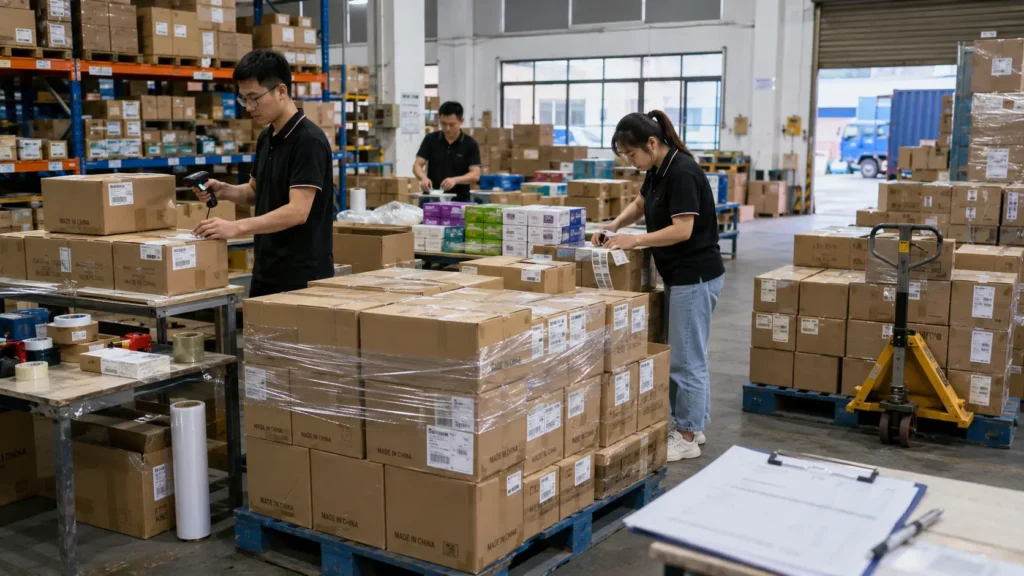
The packaging method should match the product type, transportation method, and destination requirements.
Common protective measures include:
Anti-static protection for circuit boards, chips, and sensitive components
Foam inserts and molded trays to prevent movement inside cartons
Moisture protection such as desiccants and waterproof wrapping
Strong export cartons for long-distance transportation
Corner protection and palletizing for heavy or fragile shipments
For products such as LED lighting, networking equipment, displays, and industrial electronics, packaging should consider product weight, structure, and vulnerability. Heavy equipment should not rely on standard cartons, while delicate components may require additional internal protection.
Many international buyers source electronics from multiple suppliers in Shenzhen, Huaqiangbei, Dongguan, or other nearby manufacturing areas.
Shipping each supplier’s goods separately can increase transportation costs and make customs management more complicated. A consolidation service allows buyers to send products to one warehouse before export.
The consolidation process may include:
Receiving goods from different suppliers
Checking carton quantities and product information
Separating and labeling different orders
Repacking when necessary
Combining shipments into fewer cartons or pallets
Preparing final shipping documents
This approach is especially useful for buyers purchasing different electronic products, components, or accessories from several vendors.
Exporting electronics from Shenzhen requires accurate documentation and proper customs preparation. Unlike ordinary goods, electronic products may involve additional requirements related to product classification, batteries, certifications, and destination-country regulations.
A typical electronics shipment from Shenzhen may require:
Commercial Invoice
Includes product description, quantity, unit value, total value, currency, and buyer and seller information. The description should be specific enough for customs classification.
Packing List
Provides carton details, dimensions, gross weight, net weight, and product quantities. This document should match the actual shipment.
Bill of Lading or Air Waybill
Issued by the carrier as proof of shipment and used for transportation and cargo release procedures.
Certificate of Origin
May be required by certain countries to confirm where the goods were manufactured and determine applicable trade policies.
Product Compliance Documents
Depending on the product type and destination market, buyers may need CE, FCC, RoHS, battery reports, or other supporting documents.
Before shipment, buyers should make sure that all documents contain consistent information, including product names, quantities, models, and company details.
The HS code determines how customs authorities classify the product and directly affects import duties, restrictions, and documentation requirements.
Electronics can be difficult to classify because similar-looking products may have different HS codes depending on their function.
For example:
A standalone display and a complete monitor may have different classifications.
A wireless device may require additional consideration because of its communication functions.
A circuit board may be classified differently depending on whether it is a component or part of a complete machine.
When preparing customs documents:
Use an accurate product description
Confirm the correct HS code before shipping
Declare the actual commercial value
Avoid vague descriptions such as “electronics” or “parts”
Under-declaring cargo value to reduce duties can create customs risks. Customs authorities may request additional evidence when the declared value does not match the product type, quantity, or market price.
Many electronics shipped from Shenzhen contain lithium batteries, which require additional attention during transportation.
Common battery-related documents include:
UN38.3 Test Summary
Confirms that lithium batteries have passed required transportation safety tests.
Material Safety Data Sheet (MSDS)
Provides battery composition, handling information, and safety guidance.
Battery Specification or Transport Declaration
Helps carriers evaluate whether the shipment meets air or sea transportation requirements.
Battery requirements vary depending on:
Battery type
Battery capacity
Whether batteries are installed in equipment
Shipping method
Airline or carrier rules
Destination regulations
Buyers should provide battery information before requesting shipping rates. Declaring battery details only after booking may result in rejected cargo or additional costs.
The Incoterm selected between buyer and supplier determines who handles export procedures, transportation responsibilities, and certain costs.
Common options include:
EXW (Ex Works)
The buyer takes responsibility from the supplier’s location, including pickup, export arrangements, international shipping, and import procedures. This gives buyers more control but requires stronger logistics coordination.
FOB (Free On Board)
The supplier handles export clearance and delivers the goods to the departure port. The buyer manages international transportation and import clearance.
DDP (Delivered Duty Paid)
The seller or logistics provider manages transportation, customs clearance, duties, and final delivery. This can simplify the process for buyers who prefer a door-to-door solution.
The best choice depends on the buyer’s experience, destination country, shipment size, and required level of control.
Sourcing electronics from Shenzhen often involves working with multiple suppliers, different production locations, complex documentation, and strict shipping requirements. A local freight forwarder can help connect these steps by managing the logistics process from supplier pickup to overseas delivery.
A professional Shenzhen freight forwarder can assist with:
Supplier pickup and cargo collection
Arrange pickup from different suppliers and factories, reducing the need for buyers to coordinate with multiple local vendors.
Warehouse receiving and shipment consolidation
Receive products from multiple suppliers, check carton quantities, organize storage, and combine shipments into one export shipment to reduce unnecessary logistics costs.
Packaging and cargo preparation
Check packaging conditions, provide repacking or palletizing services when needed, and help prepare electronics for international transportation.
Battery and compliance review
Review lithium battery information, product documents, and shipping requirements before booking. This helps avoid problems caused by undeclared batteries or incomplete documentation.
Export customs and shipping arrangements
Handle export procedures, prepare shipping documents, and select suitable transportation options including express, air freight, sea freight, LCL, FCL, and door-to-door delivery.
For electronics buyers, the right freight forwarder is not only a transportation provider. A reliable logistics partner helps reduce communication problems, prevent documentation mistakes, improve shipment visibility, and make the entire sourcing process from Shenzhen more efficient.
Tonlexing helps international buyers ship electronics from Shenzhen and nearby manufacturing areas with services including supplier pickup, warehouse consolidation, air freight, sea freight, customs support, and door-to-door delivery.
Yes. Shenzhen provides access to components, finished electronics, engineering services, factories, testing companies, and export logistics within one regional supply chain.
Work with verified suppliers, request traceability records, confirm part numbers and date codes, inspect random units, and arrange technical testing for critical components.
Yes, but compliant battery documents, packaging, declarations, and carrier approval may be required.
Sea freight is generally the most economical method for bulk orders. Express and air freight are more suitable for smaller or urgent shipments.
Yes. A warehouse or freight forwarder can collect cargo from multiple vendors, verify carton quantities, consolidate the shipment, and prepare final shipping documents.
Useful freight, customs and importing resources related to this shipping guide.
Importing electronics from China has become a lucrative business opportunity for companies and individuals worldwide. China is the global leader...
Read guide →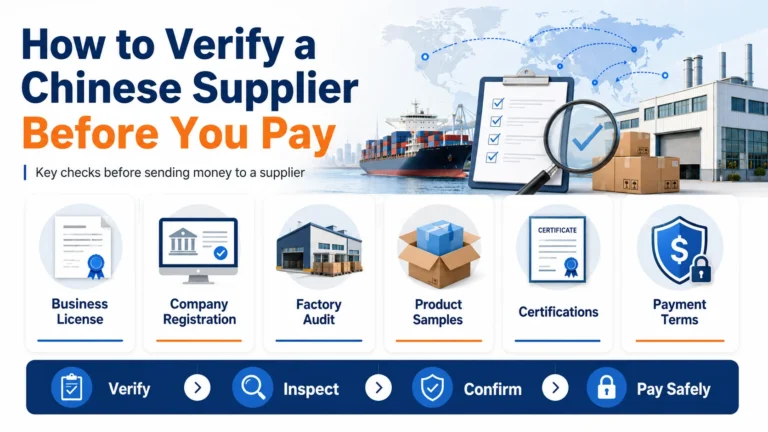
How to Verify a Chinese Supplier Before You Pay Verified & Reviewed · Last updated July 2026 Before you pay a Chinese supplier, do not rely only...
Read guide →
China Sourcing Trip Guide Verified & Reviewed · Last updated June 2026 China Sourcing Trip Guide for importers: A sourcing trip to China can be o...
Read guide →
China Warehouse Consolidation Service Verified & Reviewed · Last updated May 2026 China warehouse consolidation service helps importers collect g...
Read guide →Importing and shipping lithium batteries from China requires more preparation than moving ordinary cargo. Lithium batteries are regulated as dang...
Learn more → Useful Resource Documents Required to Import from China (2025 Guide)Importing goods from China can be highly profitable—but only when you understand the necessary documents and import requirements. Whether you’re...
Learn more →WhatsApp us